Atlas Drops a Pinky to Make a Factory Hand
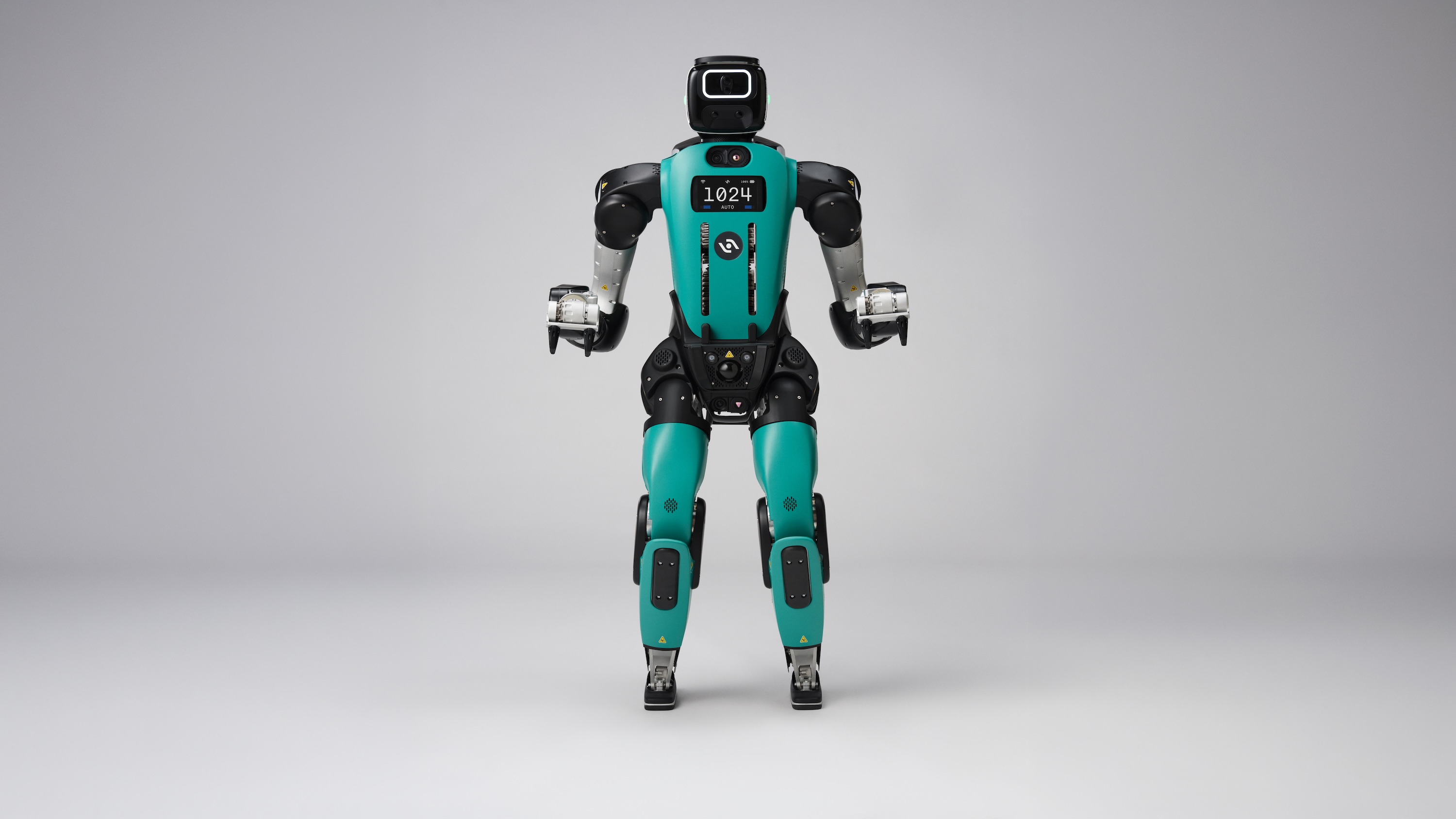
Boston Dynamics put a 13-joint, four-finger hand on Atlas. Korean business press carried the disclosure on 2 October, a day after the local reveal.

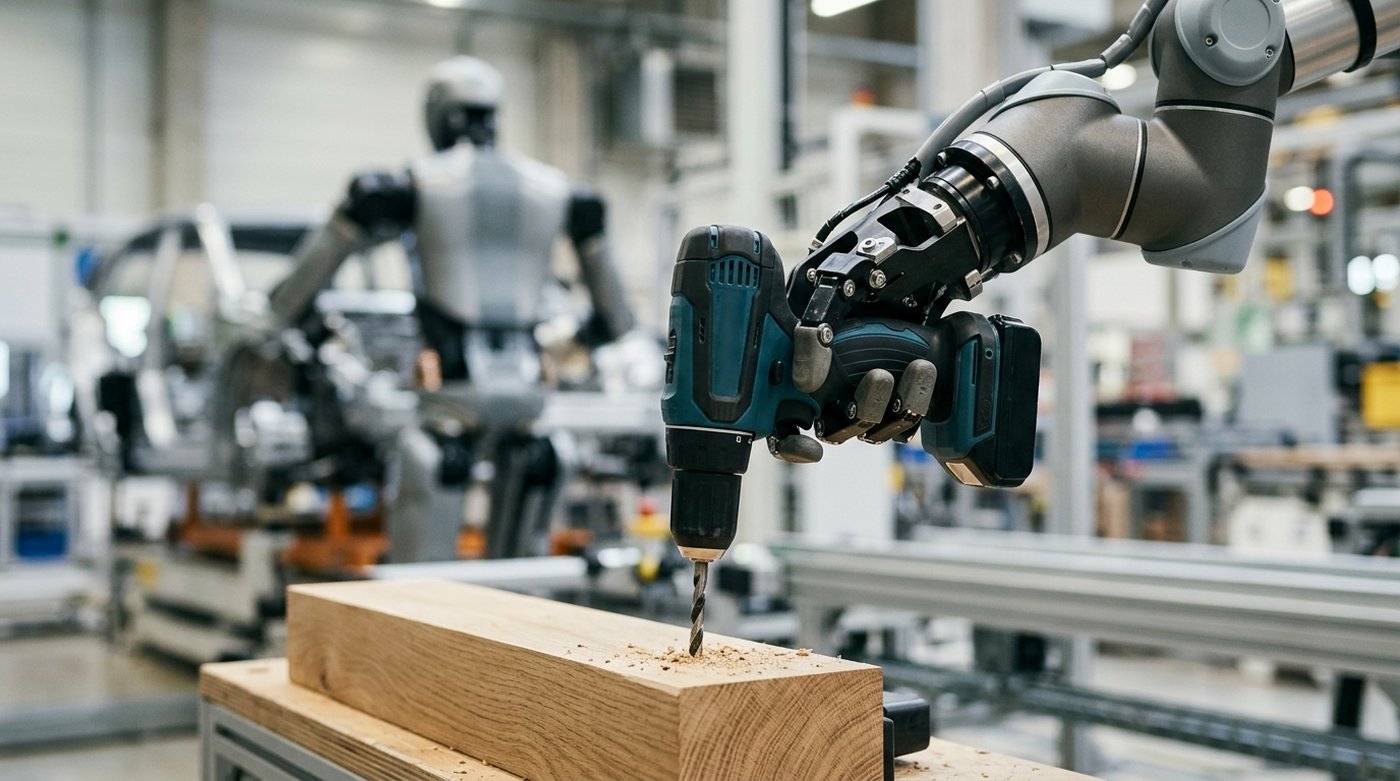
Boston Dynamics published a four-finger hand for Atlas on 1 October 2026, raising the design from seven degrees of freedom on GR2 to 13 on GR3. Hyundai Motor Group's robotics unit showed the hand seating a drill bit, boring wood, and turning a nut. Korean business press carried the disclosure on 2 October.
Thirteen joints, and one finger left off
The count is specific. The thumb has four degrees of freedom. Each of the other three fingers has three. Boston Dynamics says that split supports a pinch that can slide a small part against the thumb, a tripolar grip that still allows the object to move, and a wrap around a tool handle that leaves a finger free to press a trigger.
The missing digit is a design decision, not an unfinished prototype. In a company video, engineers said chief technology officer Zach Jackowski asked the team to tape a pinky to the neighboring finger for a day. The extra reach did not justify three more actuators, the power they draw, or the mass they add. IEEE Spectrum, reporting the same disclosure, framed the hand as built for production rather than resemblance: actuators sit in the joints, a pack can be swapped, and there are no exposed tendons.
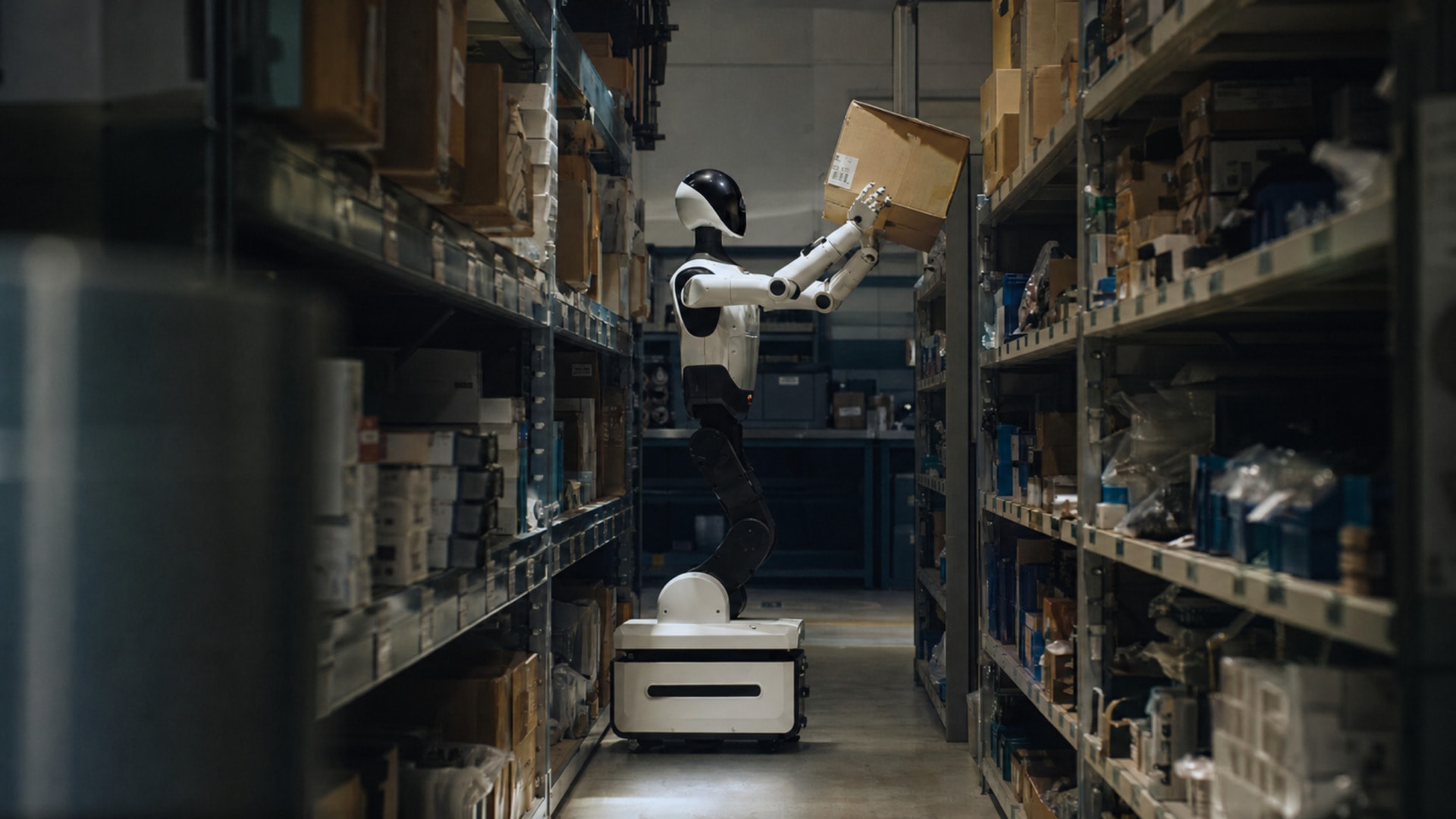
Boston Dynamics also ties the hand to the current Atlas body, which it describes as an agile humanoid with a payload above 100 pounds and a layout intended for volume manufacturing. The hand is slightly larger than an average human hand and, on the company's account, a bit stronger. Joints are backdrivable, so a hard impact can move the finger instead of stripping a gearbox, and contact force can be read through proprioception rather than a separate skin of sensors.
A demo is not a shift on the line
The published tasks are representative, and Boston Dynamics says so. Object reorientation, in the company's telling, stands in for the tool use and part mating it wants later. The video shows a drill bit seated in a chuck, a hole bored in wood, a nut turned by the fingertips, thin sticks rotated, and two golf balls handled at once. Those are controlled demonstrations. They are not a published cycle time, a yield rate, or a count of hands in service.
Hyundai's deployment calendar sits further out. Seoul Economic Daily, citing the group's robotics plan, says Atlas is aimed at parts sequencing at Hyundai Motor Group Metaplant America in Georgia from 2028, with a wider parts-assembly role targeted for 2030. Training for automotive work is tied to the Robotics Metaplant Application Center at that site. Neither date is a start of production for this hand, and neither source states how many hands will be built.
What the disclosure does change is the manufacturing argument. A five-finger copy of a human hand is easy to explain and hard to build at scale. A four-finger hand with one actuator type, encapsulated joints, and a geometry the company says can be simulated cleanly is a bet that reinforcement learning can close the skill gap that the missing pinky opens. RobotAIGeek has already reported the opening of Atlas training at the Georgia metaplant. This hand is the hardware that training will have to prove, not a second announcement of the plant itself.
Simulation is the production plan
Boston Dynamics is unusually explicit about why the mechanism looks the way it does. In the same video, engineers list three things a simulator has to get right before a policy trained in software is worth running on metal: the geometry of links and joints, the dynamics of friction, torque, and backlash, and the contact behavior when a finger meets a part. They say the team worked the match from both directions, changing the hand so it could be simulated, not only tuning the simulator until it flattered the hand.
That is a different claim from "the robot used a drill." A hand that can be modeled cleanly is a hand a learning system can practice on overnight. A hand full of cable stretch and tendon slack is a hand that has to be taught on the physical robot, one slow grasp at a time. The company says the new actuators are transparent to force and motion, so a push from the environment shows up in the joint and a commanded motion arrives without a long mechanical argument in between. If that holds, the training stack can use high-rate proprioception rather than a fragile skin of tactile sensors as the first feedback loop.
The design search itself is evidence of how unsettled the category still is. The team says it tested one thumb against two, and a pinky against none, using simulation, printed mockups, and the taped-finger day. None of those trials produced a published benchmark against human grasp taxonomies, and none should be read as one. The useful point for a buyer is narrower. Hyundai is not waiting for a perfect anthropomorphic hand before it reserves factory work for Atlas. It is freezing a simpler hand now, then asking a training center to find out which automotive tasks that hand can actually finish.
Korea's coverage on 2 October is what makes the item a same-day story for this desk. Asia Business Daily, Seoul Economic Daily, and Aju Press all date the underlying Boston Dynamics reveal to 1 October local time and treat the four-finger choice as the news, not as a footnote to the Georgia plant. Aju Press notes that its English text was machine-translated. The degree-of-freedom split and the task list match the company video, so those facts do not depend on the translation. Color about "science fiction" in secondary headlines does not belong in the record.
Contract value, unit price, and annual volume were not disclosed. A comparison of the two public hand generations is in the accompanying workbook. Unavailable commercial fields are marked N/A.
This article is for informational purposes only and does not constitute investment, legal, or purchasing advice. Figures are drawn from company and Tier 1 press disclosures and may be revised.