AGIBOT Puts X2 Humanoids to Work in 100 ASD Retail Stores
AGIBOT deployed 100 X2 humanoid robots as sales assistants across 100 ASD cookware stores in China, testing whether a humanoid can handle unscripted retail interaction at scale rather than a single repeated warehouse task.

One hundred humanoid robots. One hundred cookware stores. Zero pilot-phase hedging.
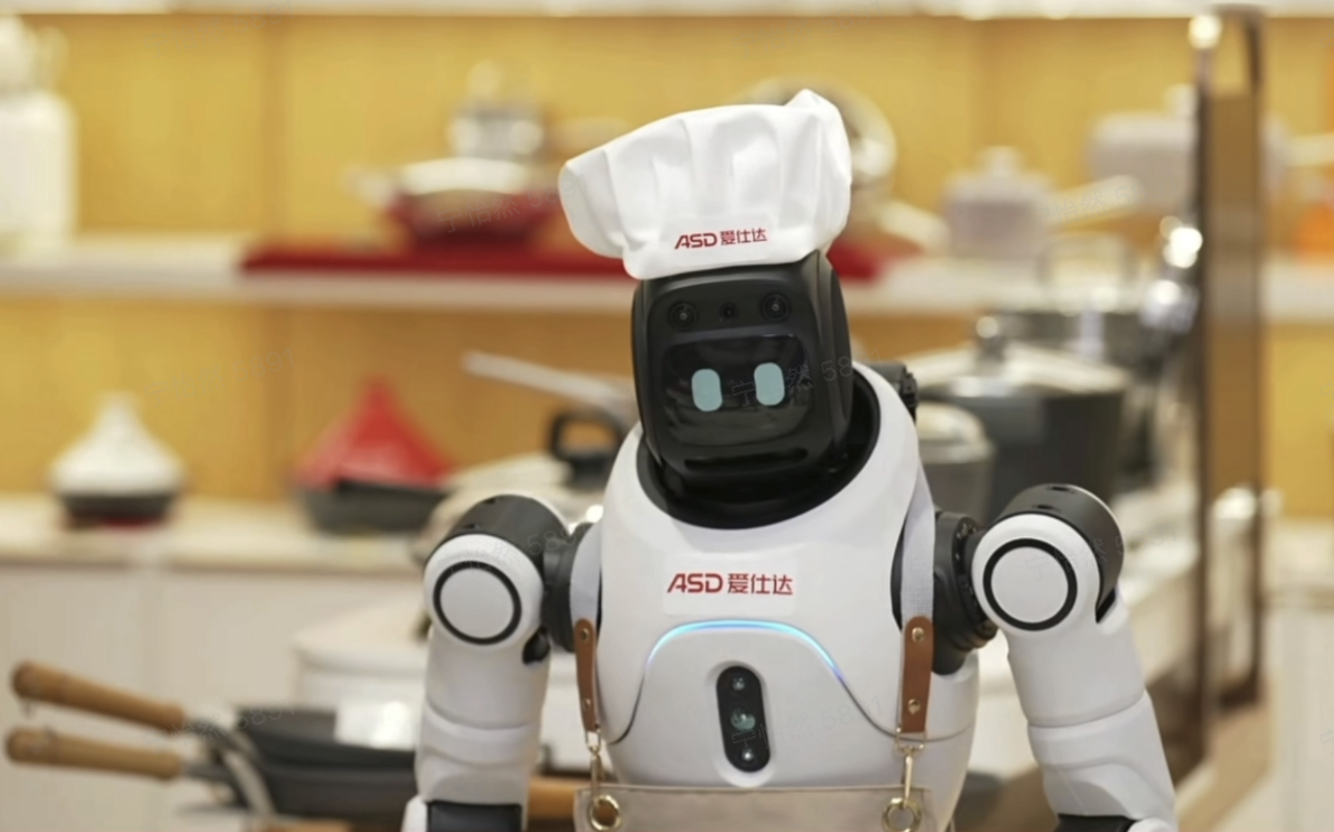
AGIBOT said Monday that its X2 humanoid robots are now working as sales assistants inside 100 retail stores operated by ASD, the Wenling-based cookware manufacturer, across cities including Shanghai and Wuxi. The robots greet shoppers, assess their needs, explain differences between cookware lines, recommend specific products and guide customers to the right shelf before handing off to a human employee for the sale. AGIBOT is livestreaming the stores through Wednesday so buyers can watch the robots work an ordinary retail floor rather than a staged demo.
Founded in 1987 and headquartered in Wenling, Zhejiang, ASD (Shenzhen-listed as 002403) built its business on woks, pressure cookers and small kitchen appliances under the brand name Aishida before adding its own robotics manufacturing arm across plants in Wenling, Anlu and Jiaxing. That second identity matters here. ASD is not a retailer testing a gimmick. It already makes robot bodies and robot-application hardware for a living, which helps explain why it agreed to turn 100 of its own stores into a live commercial floor for someone else's humanoid platform rather than confining the experiment to a lab or a single flagship location.
Retail Is the Wrong Kind of Hard for a Humanoid
Warehouse and factory deployments reward a robot for repeating the same motion thousands of times inside a fixed layout. Retail punishes that pattern. Every customer who walks into an ASD store wants something slightly different: a smaller wok for a studio kitchen, a pressure cooker that will not whistle at 6 a.m., a gift set under a specific budget. AGIBOT's own framing of the deployment leans into that gap directly rather than around it.
"Retail environments present a very different challenge from controlled demonstrations," said Zhihui Peng, AGIBOT's co-founder, president and chief technology officer. "Humanoid robots need to interact with different customers, respond to a wide range of needs and work alongside store employees throughout the day."
That is a materially harder brief than most of the humanoid deployments China has announced this year. A robot that welds the same seam on a car door 400 times a shift can fail quietly overnight and get patched before the next one starts. A robot that misreads a customer's tone, recommends the wrong pot or blocks an aisle during a Saturday rush fails in front of the person ASD is trying to sell to, in real time, with no do-over. AGIBOT is betting its "Three Intelligences in One" architecture, which pairs locomotion, interaction and manipulation intelligence inside one control stack, can hold up under that kind of unscripted pressure across 100 simultaneous locations rather than a single showcase site built to flatter the robot.
Why A Cookware Company Bought In First
Retailers do not usually lead humanoid adoption. Automakers, logistics operators and electronics assemblers have moved first because their floors are structured and the return on a single repeated task is easier to model. ASD's own manufacturing exposure to robotics likely lowered that bar. A company that already builds robot hardware has fewer illusions about what a humanoid can and cannot do on day one, and it has an internal case for treating a 100-store rollout as both a customer-facing bet and a stress test of the supply chain it is helping build for other clients.
For AGIBOT, landing a partner with that profile is more useful than another single flagship store. Retail sales-assist work does not require a robot to lift 30 kilograms or survive a wet warehouse floor. It requires consistent uptime, a tolerable failure mode when the robot gets something wrong and enough natural interaction that a customer does not simply walk past it toward a human clerk instead. Scaling to 100 stores immediately, instead of one pilot location, is also a signal aimed less at consumers and more at the next enterprise buyer watching from outside the kitchenware aisle: procurement teams in general retail, hospitality and healthcare who have been waiting to see a humanoid handle unscripted human contact at volume before committing budget of their own.
The Production Number Behind the Store Count
AGIBOT said it had produced 20,000 robots in total by September 2026, spanning humanoids, quadrupeds, dexterous manipulation systems and commercial cleaning robots. That figure matters more than the store count on its own. A single flagship deployment can be assembled by hand with engineers on standby to fix whatever breaks. A 100-store rollout, running simultaneously with a public livestream as a kind of warranty, requires enough manufacturing depth that AGIBOT is not diverting its entire humanoid output to one customer relationship and leaving nothing for the next one. Buyers evaluating AGIBOT against rivals such as Unitree and UBTECH will read the 20,000-unit figure as a proxy for whether the company can service a second retail chain, or a hospital network, without cannibalizing this deployment or quietly slowing it down.
The timing also fits a pattern. AGIBOT's X2 platform won innovation honors at IFA in Berlin earlier this month, and the company topped the medal count at China's World Humanoid Robot Games in August with what it described as production, not prototype, hardware. A retail rollout at this scale is the commercial follow-through on those public showcases: proof that the same platform racking up competition wins and trade-show awards can also stand on a store floor for ten hours a day without an engineer standing just out of frame.
The Economics Procurement Teams Will Actually Model
A humanoid sales assistant is not competing with a human clerk on hourly wage alone. It is competing on shift coverage, consistency of product knowledge across 100 locations simultaneously and the marginal cost of adding a location without hiring and training a new employee for each one. A retailer weighing this kind of deployment has to price in the robot's purchase or lease cost, charging and maintenance downtime, and the conversion lift it actually produces against a trained human clerk who already knows the regulars. None of AGIBOT's public materials disclose a per-unit price or a lease structure for this deployment, which means the real answer to whether the economics work will not come from the livestream. It will come from whether ASD is still running 100 stores with X2 units in them six months from now, or quietly back down to a handful.
A Crowded Field Is Choosing Different Doors Into the Same Building
AGIBOT is not the only Chinese humanoid maker looking for a foothold beyond factories this year, but the doors being chosen differ in ways that matter for how fast each approach can scale. Some rivals have leaned on entertainment and spectacle, putting humanoids into theme parks and stage shows where a wrong move reads as choreography rather than failure. Others have pushed toward showroom placements tied to a single flagship product launch, useful for headlines but hard to replicate at volume because each unit needs bespoke setup. AGIBOT's retail sales-assist play sits closer to the industrial end of that spectrum than it looks at first glance: the task is narrow and repeatable across locations, the failure mode is visible but low-stakes compared with an assembly line, and the partner already understands robot maintenance from the inside. That combination is precisely what makes 100 simultaneous stores a plausible number instead of a marketing exaggeration. A company chasing pure spectacle would not risk running that many units unsupervised on the same day.
The quotable line in AGIBOT's own materials, that humanoid robots "need to interact with different customers, respond to a wide range of needs and work alongside store employees throughout the day," is a fair description of the entire unsolved problem in consumer-facing robotics. Warehouse and factory robots have spent a decade proving they can repeat a motion. What nobody in the industry has proven at scale yet is that a robot can absorb the sheer unpredictability of a human retail customer, day after day, without a supervisor quietly resetting it between difficult interactions. This deployment is the first test at a scale large enough that the answer cannot be hidden inside a single well-rehearsed store.
What Still Has to Hold Up After the Livestream Ends
The real test starts after the cameras stop rolling on Wednesday. A livestream shows a robot performing well during hours when AGIBOT's own team is almost certainly watching remotely and ready to intervene. It does not show what happens during an unmonitored Tuesday afternoon three months from now, when a battery needs a mid-shift swap, a firmware update goes out to 100 stores overnight or a child tugs on the robot's arm while a parent is not looking. ASD's own manufacturing background gives it more patience for that kind of operational friction than a typical retailer would have, but patience is not a business case on its own. If the robots measurably lift basket size or cut the staffing needed per shift, ASD will expand the program past 100 stores. If they mostly draw foot traffic without moving product, cookware retail will have already shown China's humanoid makers exactly where the ceiling sits for consumer-facing sales-assist work.
Walk into one of these 100 stores this week and the robot most customers will remember is not the one demonstrating a task on a screen. It is the one standing at eye level in a paper chef's hat, arms open, waiting to hand a shopper the right pan.
This analysis synthesizes company statements and public market activity as of the publication date and should not be read as investment, financial, or professional advice; it is provided for general information purposes only.
Hero image credit: AGIBOT.