AGIBOT Captures More Than a Third of Global Humanoid Robot Shipments
IDC data shows AGIBOT shipped over 8,600 humanoid robots in the first half of 2026, claiming roughly 35 percent of a global market that grew 432 percent year over year.

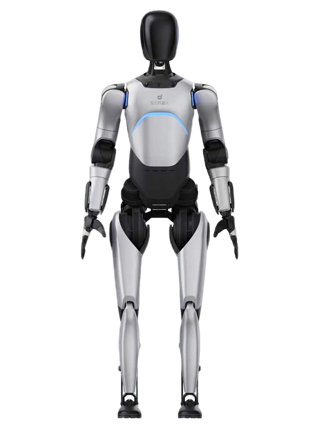
AGIBOT shipped more than 8,600 humanoid robots in the first half of 2026 and captured roughly 35 percent of the global market, according to data from the International Data Corporation (IDC) that the Shanghai-based robot maker disclosed this week. The global market itself grew 432 percent year over year to nearly 25,000 units, putting AGIBOT ahead of every domestic and international rival on raw shipment volume.
For buyers evaluating humanoid suppliers, the number matters less as a trophy and more as a proxy for something harder to verify from a demo stage: whether a vendor can actually build and ship at repeatable scale. AGIBOT's total puts it past the 20,000-unit cumulative production mark it crossed earlier in September, a milestone few competitors worldwide have approached.
A Market That Stopped Being a Science Fair
IDC's framing of the first-half numbers describes an industry moving from technology validation into commercial deployment, with humanoid robots now showing up in industrial manufacturing, retail, logistics, tourism and consumer settings rather than staying confined to lab demonstrations and trade-show stages. That shift matters more to a procurement manager than the shipment count itself: a robot that only performs on a curated stage is a research project, while one placed at a retail counter or on a factory floor and left running is a product with a service history a buyer can actually diligence.
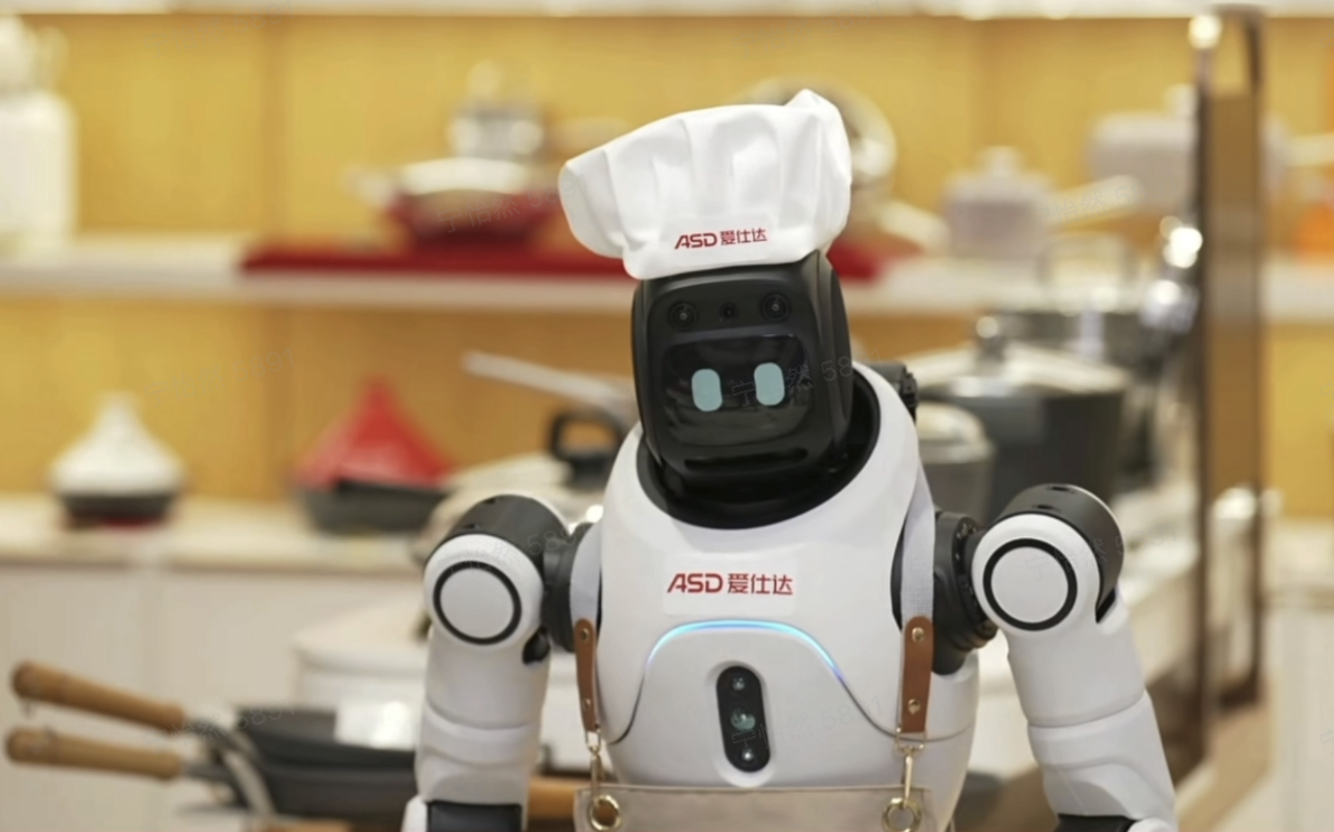
AGIBOT has been building that service history in public. The company has put more than 300 robots to work at Chimelong Spaceship Park, a Zhuhai theme-park operator, and rolled out 100 of its X2 units across cookware retailer ASD's stores in cities including Shanghai and Wuxi, greeting customers and explaining product differences on the shop floor. Neither deployment is new this week, but together they are the operational evidence behind the shipment number: AGIBOT is not just building robots, it is placing them with named commercial customers and leaving them there.
Why the Market Suddenly Quadrupled
A 432 percent growth rate is not organic demand alone. China's Ministry of Industry and Information Technology and the State-owned Assets Supervision and Administration Commission jointly issued a special action plan earlier this year directing state-owned enterprises and local governments to move humanoid robots out of pilot programs and into routine operational use across manufacturing, logistics, retail, healthcare and public-safety scenarios by the end of 2026, with implementation plans due from local authorities and progress reports required through November. That kind of top-down procurement push, aimed explicitly at building deployment scale rather than just funding research, is a large part of why a market that barely existed two years ago is now measured in tens of thousands of units a half-year.
For a buyer outside China, that policy context is worth separating from the underlying product quality. A domestic customer base partly created by government directive will generate real operating data and real manufacturing experience regardless of the policy's origin, but it also means China's shipment numbers are not a clean read on organic commercial demand the way a similar figure from an unsubsidized market would be. AGIBOT's volume is real. How much of it reflects durable commercial pull versus policy-driven placement is a distinction worth asking suppliers to clarify before treating Chinese shipment share as the only signal that matters.
Who AGIBOT Actually Is
AGIBOT, formally AgiBot Innovation (Shanghai) Technology Co., Ltd. and also known in China as Zhiyuan Robotics, was founded in February 2023 by a group that includes Peng Zhihui, a former Huawei engineer who built a public following for DIY robotics projects before going independent. The company runs a full-stack robotics platform spanning three robot series, Yuanzheng, Lingxi and Genie, and has positioned itself as a volume manufacturer rather than a boutique research house, a strategic choice that now shows up directly in the IDC numbers.
That volume-first strategy is a deliberate bet against the alternative path several Western humanoid makers have taken, where a single flagship robot is refined for years before any commercial shipment. AGIBOT's approach trades some of the polish that comes with a longer development cycle for manufacturing experience and real deployment data, both of which compound faster the more units are in the field.
The Production Curve Behind the Headline Number
The 8,600-unit first-half figure looks different set against AGIBOT's own recent history. The company reported producing just over 962 humanoid robots cumulatively by December 2024, then targeted between 3,000 and 5,000 units for all of 2025. Shipping more than 8,600 units in a single half of 2026, on top of the 20,000-unit cumulative production mark it passed this September, means AGIBOT has roughly doubled its output pace twice in under two years. That kind of curve is exactly what a buyer wants to see from a hardware supplier before committing to a multi-year deployment: not a single impressive batch, but a production line that keeps climbing without missing the commitments made a year earlier.
A curve like that also changes the economics a procurement team should expect to negotiate. Component costs for actuators, harmonic drives and battery packs fall as order volumes rise, and a manufacturer shipping in the thousands per half-year has considerably more leverage over its supply chain than one still shipping in the dozens. Buyers evaluating quotes from AGIBOT against a smaller rival should factor in that the larger supplier's per-unit cost trajectory is likely to keep improving faster, even if today's sticker price looks similar.
A Crowded Field Behind the Leader
AGIBOT is not shipping into an empty market. Unitree, UBTECH, Galbot, Fourier and Leju Robotics are all racing for share in the same Chinese humanoid segment, backed by a domestic supply chain for actuators, sensors and batteries that has matured faster than equivalent supply chains elsewhere. Chinese manufacturers as a group account for the overwhelming majority of global humanoid shipments this year, a concentration that mirrors what happened earlier in electric-vehicle batteries and solar panels: manufacturing scale accumulating in one geography faster than buyers elsewhere can build comparable capacity.
For a procurement team outside China, that concentration cuts two ways. On one hand, it means the suppliers furthest along in solving the hard manufacturing problems, consistent actuator supply, battery life, software reliability across thousands of units, are disproportionately Chinese, and AGIBOT's number suggests it has solved more of that problem than most. On the other hand, it raises the same sourcing and policy questions already playing out in other hardware categories: export licensing, data-security review and a growing list of national-security screening proposals aimed specifically at Chinese-made robots.
One such proposal, the bipartisan Guarding the U.S. Against Adversarial Robotics Dominance Act introduced in the U.S. House of Representatives in mid-2026, would require federal agencies to review humanoid and quadruped robots made in China and other designated countries before they could be imported, and would bar any robot judged a national-security risk. The bill has not become law, and its scope and timeline remain unsettled, but it is a live example of the kind of regulatory overhang a buyer sourcing from a Chinese-scale supplier now has to price into a multi-year contract, independent of whatever unit economics the manufacturer itself offers.
What Scale Does and Does Not Prove
A shipment count answers one procurement question well and leaves several others open. It is reasonably strong evidence that AGIBOT's manufacturing line works, that its supply chain can source components in volume, and that its go-to-market motion can close deals with buyers willing to commit to a new category. It says nothing directly about unit reliability over a multi-year service life, about total cost of ownership once maintenance and software updates are factored in, or about how easily a robot trained on one deployment, a theme park, a cookware showroom, transfers its skills to a different task without a lengthy re-integration project.
Those are the questions a buyer should be pressing suppliers on regardless of who currently leads the shipment table, and they are questions that raw volume numbers cannot answer on their own. A vendor that has shipped fewer units but published more detailed uptime and failure data may still be the safer near-term bet for a specific deployment, even against a market leader.
Still, volume is not nothing. Every additional unit in the field generates operating data that feeds back into the next hardware and software revision, and that feedback loop is one of the clearest advantages a manufacturer at AGIBOT's scale has over a competitor shipping in the hundreds rather than the thousands. The company that puts the most robots into real working environments this year has the best shot at being the company whose robots actually work reliably next year.
The Number That Will Matter More in Six Months
IDC's first-half count is a snapshot, and the more consequential figure will be the second-half number, whether AGIBOT holds its share as rivals scale their own production, and whether the 432 percent growth rate the category posted in the first half is sustainable or a one-time base effect from a market that started the year almost empty. A market growing that fast from a small base is easy to lead and hard to keep leading. For now, the number that matters is 35 percent, and it belongs to AGIBOT.
This analysis synthesizes company statements and third-party market-research data as of the publication date and should not be read as investment, financial, or professional advice; it is provided for general information purposes only.