Hitachi and Agile Robots Build Industrial Physical AI Stack
Hitachi and Agile Robots will combine factory-domain data, edge AI, HMAX Industry and a full robot stack, but disclosed no customer deployment or commercial timetable.


TOKYO, Tuesday, September 29, 2026: Hitachi and Agile Robots have formed a strategic co-creation partnership to combine Hitachi’s factory-domain data, Physical AI and edge chips with Agile Robots’ hardware and software stack. The architecture is credible, but the companies announced no customer, pilot site, contract value, deployment count or commercial timetable.
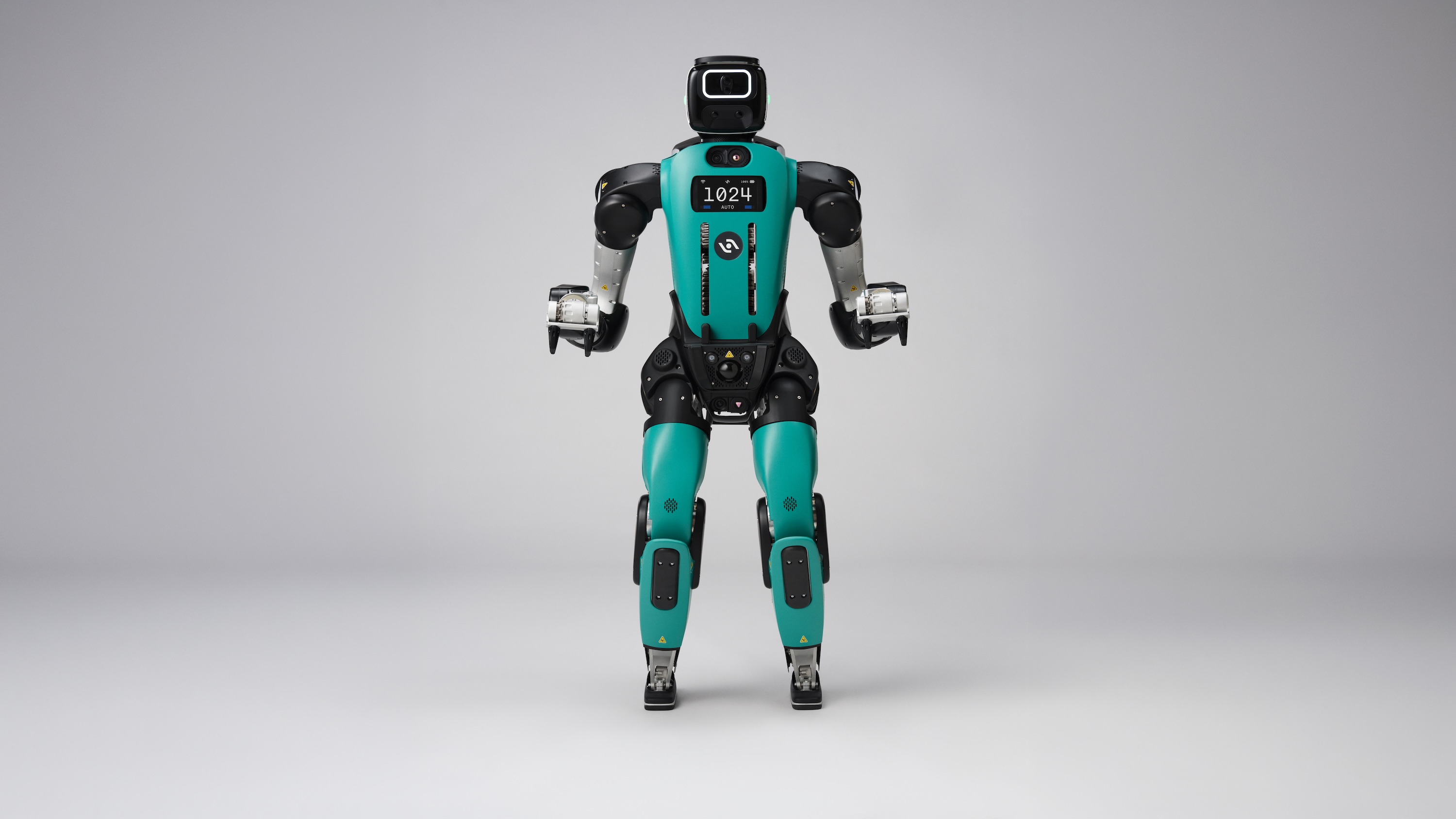
Agile Robots is a Munich-based private robotics company founded in 2018 by researchers from the German Aerospace Center. Its portfolio spans industrial arms, mobile robots, the Agile ONE humanoid, AgileCore software and real-world data infrastructure. Hitachi brings the operating-technology layer, manufacturing knowledge, edge AI semiconductors and HMAX Industry, the channel through which it plans to offer resulting solutions globally.
A Stack Built Across Two Different Failure Modes
The partnership makes sense because the two companies are trying to solve different halves of the same industrial problem. A robot supplier can provide capable hardware, motion control and increasingly general software, yet still struggle to understand the operating rules that make one factory different from another. A large industrial group can hold decades of process knowledge and equipment data, yet lack a flexible robot stack able to turn that knowledge into action across changing workpieces and layouts.
Hitachi describes the intended combination as intelligence for AI robotics. Its contribution is not just an algorithm. It includes information technology, operational technology, products, factory-domain knowledge and data from digitised assets. Agile Robots contributes the machines and software that must perceive, plan and act in the physical environment. The proposed route is to teach the combined system from operating data, convert that learning into reusable Physical AI and distribute it through HMAX Industry.
That is a more complete architecture than a robot demonstration built around one carefully prepared task. It also creates more places for a deployment to fail. The robot must remain mechanically reliable. The software must interpret the task correctly. The factory data must be clean enough to teach something useful. The edge hardware must deliver decisions within the timing and power limits of production equipment. The resulting behaviour must then be supportable across sites that do not share the same machines, tolerances or workforce practices.
Twenty Thousand Installations Are Not Twenty Thousand Humanoids
Hitachi’s release says Agile Robots has installed more than 20,000 robot solutions worldwide. That is meaningful evidence of operating experience, but it needs careful reading. The number covers the company’s broader portfolio and subsidiaries, not 20,000 Agile ONE humanoids. It is also company background accumulated before the Hitachi partnership, not a result produced by the new agreement.
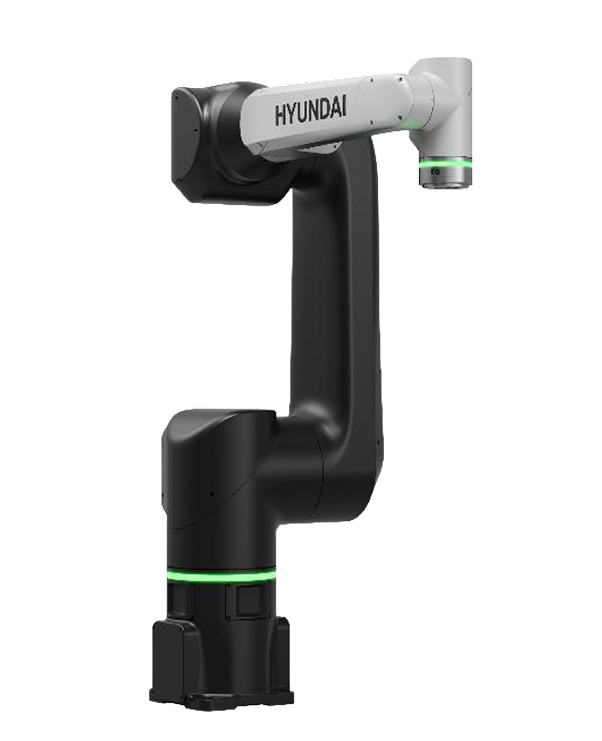
The distinction matters because the partnership spans several robot forms. An industrial arm bolted beside a machine tool, a mobile robot carrying material between cells and a humanoid handling a workstation share some software needs, but they do not share the same safety case, service schedule or return-on-investment model. A credible platform must preserve the useful parts of its intelligence across those forms without pretending that one model eliminates the engineering work required for each machine and task.
Agile Robots’ installed base should therefore be treated as a source of field data and integration experience. It does not prove that the combined Hitachi stack can already automate a new factory process. The stronger claim is narrower: the partnership starts with a supplier that has operated multiple robot categories in industrial settings rather than a laboratory-only humanoid developer searching for its first application.
The Work Starts Where Fixed Automation Stops
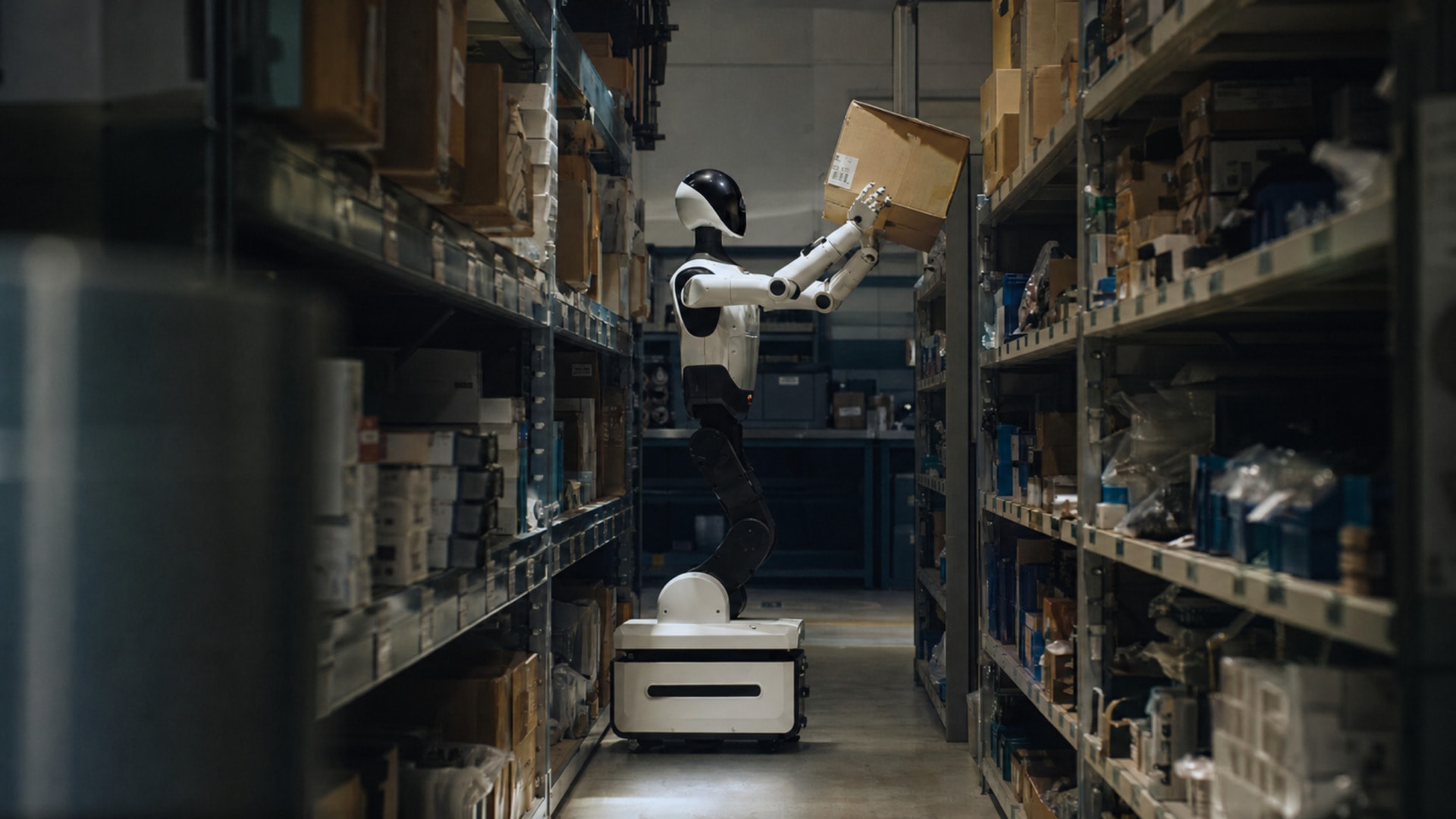
The companies want to address work such as moving parts, tending machines, supporting machining or assembly, reconfiguring lines between products, selecting items and carrying material across production stages. These are familiar factory tasks, but the difficult versions contain variability that conventional automation handles poorly. Parts arrive in different orientations. A machine presents a slightly different interface. A product change forces a new sequence. A worker uses judgement to recover when the process drifts away from the nominal plan.
Traditional automation solves stable conditions by engineering uncertainty out of the cell. Physical AI tries to operate when some uncertainty remains. That raises the standard for the partnership. It is not enough for Agile ONE to complete a choreographed sequence or for an arm to follow a generated trajectory. The system must recognise when a condition is outside its training, stop safely, recover without damaging equipment and leave an audit trail that a production engineer can understand.
This is where Hitachi’s domain position could be valuable. Factory knowledge is often buried in controller settings, maintenance history, quality records and the experience of operators who know which machine sounds wrong before a sensor raises an alarm. Turning that knowledge into robot behaviour is difficult, but it is more defensible than applying a general model without site context. The commercial question is whether Hitachi can package enough of that learning for reuse instead of rebuilding each deployment as a bespoke integration project.
HMAX Is a Route to Market, Not Yet a Product Receipt
Hitachi says it plans to offer the resulting solutions globally through HMAX Industry. That gives the partnership a proposed commercial path from the start, which many research collaborations lack. It also echoes Hitachi’s earlier HMAX orchestration work with NVIDIA, where the strategic value sat in coordinating models, data and industrial systems rather than selling one robot model.
A route to market is not the same as a product that a buyer can order. The September announcement names no packaged solution, price, launch date, customer, pilot location, performance guarantee or service-level agreement. It does not disclose whether Hitachi will sell hardware, software subscriptions, systems integration, operating outcomes or some combination. It also does not explain which party carries liability when an AI-controlled robot makes a wrong decision inside a production cell.
Those missing terms are not defects in an early partnership announcement. They are the work that separates a useful architecture from a commercial offering. The next stage must turn broad complementarity into a narrow first product with an accountable owner, defined task, measurable baseline and support model.
Edge Intelligence Has to Earn Its Place on the Floor
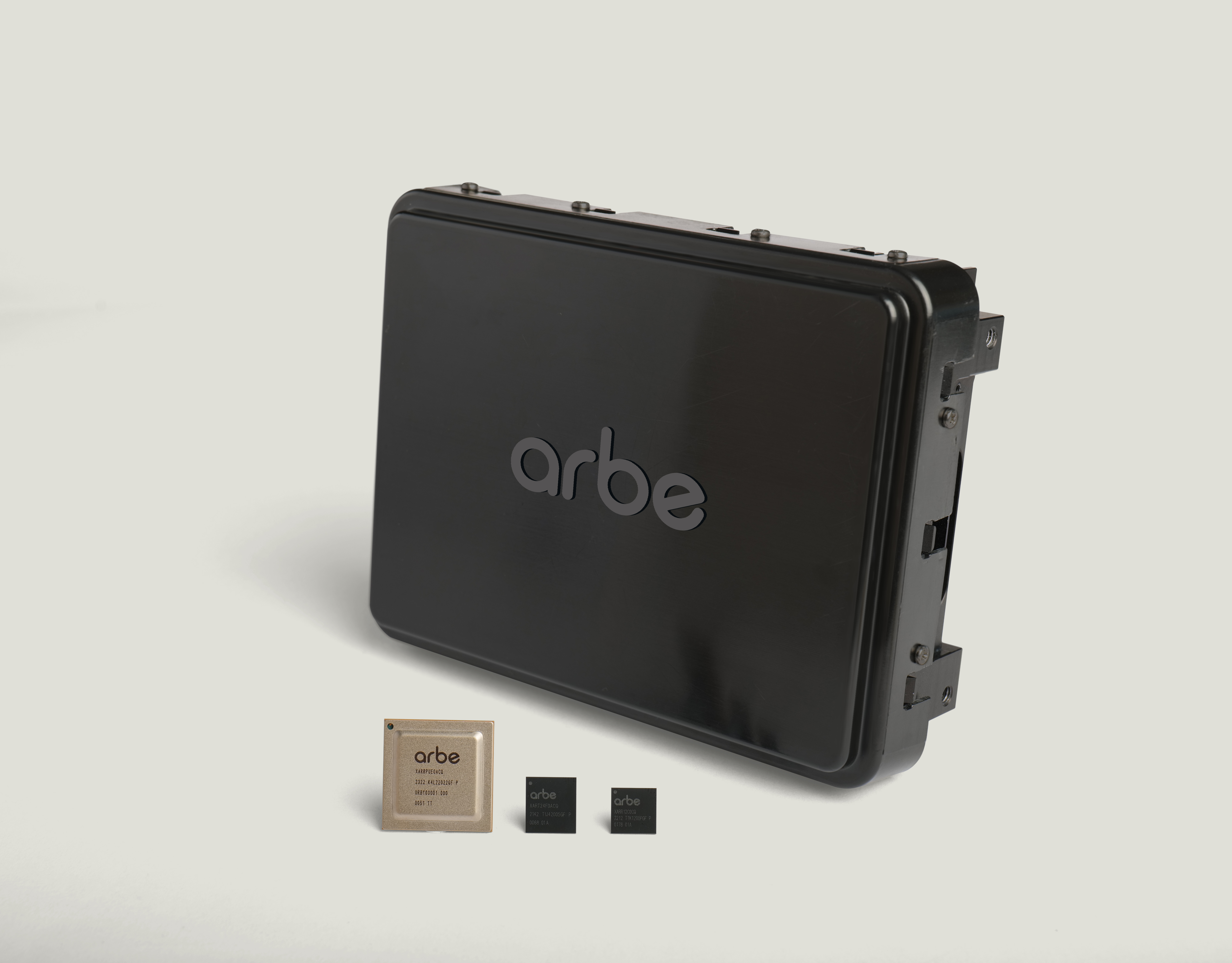
Hitachi also plans to combine its edge AI semiconductor technology with Agile Robots’ robotics stack. Edge processing can reduce dependence on a remote connection and keep perception and control closer to the machine. That can matter when latency, privacy or plant-network reliability makes cloud-only operation impractical.
But edge hardware is valuable only if it improves an operating metric. Buyers will want to know whether it shortens cycle time, lowers power use, improves recovery from perception errors or allows a model to run within an existing controller footprint. A chip claim without those measurements is another component added to an already demanding integration bill.
The same discipline applies to software. NVIDIA’s Isaac ROS 5.0 partner stack showed how reusable perception and manipulation capabilities can spread across robot vendors. Hitachi and Agile Robots are aiming one layer deeper into factory context. Their advantage will depend on whether the system can transfer a learned capability between sites without transferring every exception, dependency and maintenance burden with it.
Procurement Needs a Five-Line Deployment Record
Industrial buyers do not need another promise of autonomous manufacturing. They need a record that can survive a capital-approval meeting. The first serious disclosure should name the customer and site, identify the robot form, define the task, state the operating period and report the result against a human or fixed-automation baseline.
That record should also explain intervention. A robot can post an attractive uptime percentage while requiring frequent remote rescues that make the economics unworkable. Buyers need the number of successful cycles, the frequency and cause of human intervention, recovery time after faults, changeover time, safety stops and the labour required to maintain the model. Without that evidence, the partnership remains a plausible technical map rather than a procurement case.
The operating environment matters as much as the headline task. Boston Dynamics’ Atlas training centre at Hyundai’s metaplant was explicit about building a place where a humanoid could learn manufacturing work before broader deployment. Hitachi and Agile Robots have not announced an equivalent proving ground. Their first named site will reveal whether the collaboration begins in a controlled training cell, one of Hitachi’s own facilities or a customer factory where production cannot pause for experimentation.
The China Desk Read Is About Integration Leverage
For robotics companies across China and Southeast Asia, the competitive signal is not that one Japanese conglomerate and one German robot supplier have solved autonomous manufacturing. It is that industrial buyers increasingly expect a complete path from data and chips to machines, deployment and ongoing support.
Chinese robot makers often compete with fast hardware iteration, dense component supply chains and aggressive unit economics. Hitachi and Agile Robots are proposing a different source of leverage: domain knowledge, an installed industrial base and a distribution layer able to translate factory data into repeatable deployments. Southeast Asian manufacturers evaluating automation will compare those approaches less by model architecture than by integration time, service coverage, local engineering support and the amount of production risk they must absorb themselves.
That creates a practical test for the partnership. If each new site requires a large team to rebuild the solution, HMAX becomes a label for systems integration. If the companies can transfer a task package across different machines and plants with limited retraining, they have the beginnings of a scalable product.
The next announcement to watch is not another partner name. It is a named factory task running at a named site for a stated period, with intervention, cycle-time and quality data beside it. Until that record exists, Hitachi and Agile Robots have assembled the right layers for industrial Physical AI, but they have not yet shown that those layers operate as one commercial system.
This analysis synthesizes company statements and public market activity as of the publication date and should not be read as investment, financial, or professional advice; it is provided for general information purposes only.
Hero image credit: Hitachi, Ltd. / Agile Robots SE.