AGIBOT Brings Robot-as-a-Service Model to Vietnam
AGIBOT signed a partnership with Vietnam's National Innovation Center on October 2, launching a Robot-as-a-Service model and an education initiative at the first Vietnam Embodied AI Conference in Hanoi.

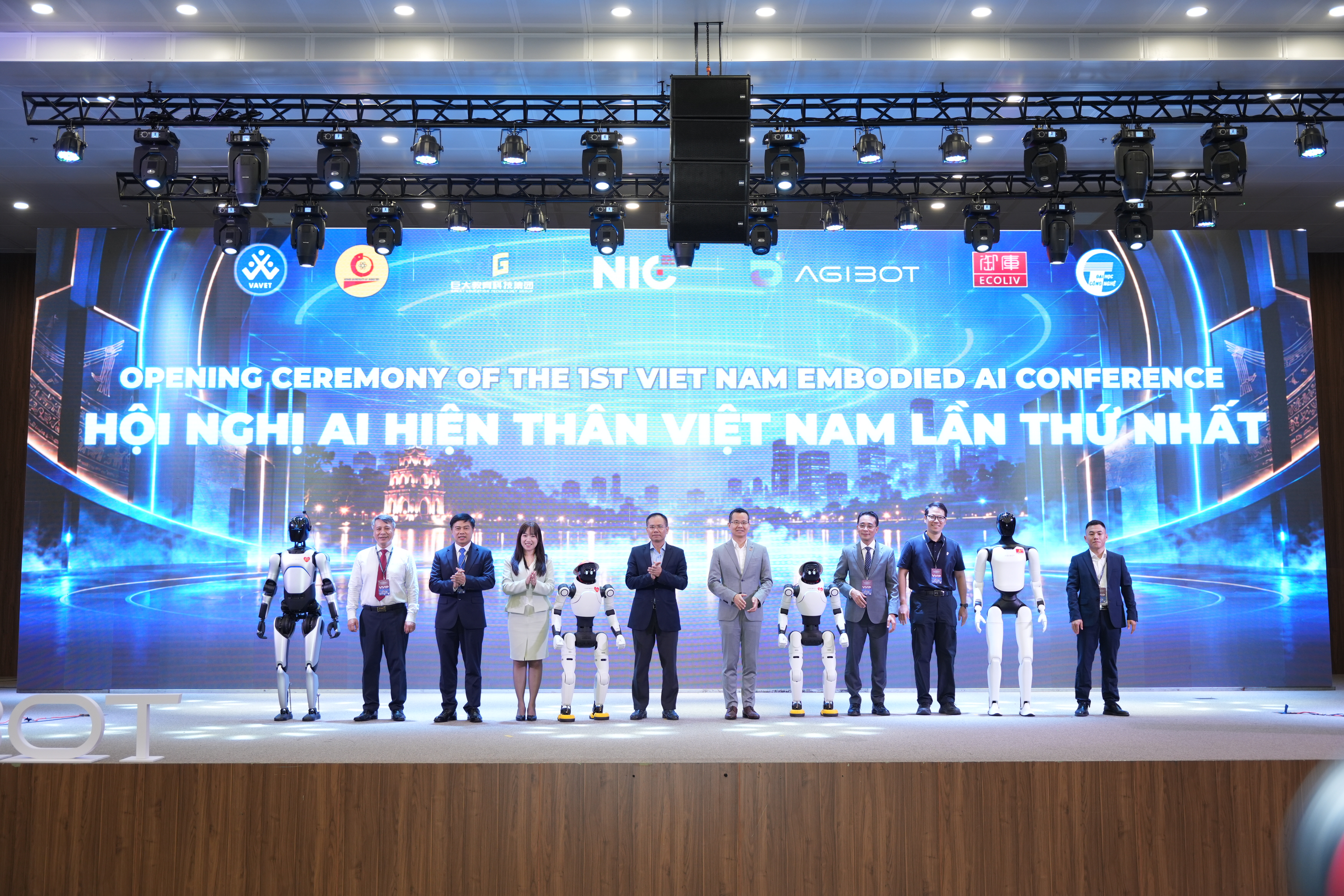
AGIBOT signed a partnership with Vietnam's National Innovation Center on Friday, launching a Robot-as-a-Service model and an education initiative called the Yuan Sheng Program at the first Vietnam Embodied AI Conference in Hanoi. The Shanghai humanoid maker received NIC's Innovation Partner Award in front of more than 550 attendees, including officials from government ministries and representatives of more than 50 schools.
AGIBOT, formally AGIBOT Innovation (Shanghai) Technology Co., is a Shanghai-headquartered humanoid robot maker founded in 2023 that has shipped more than 20,000 units worldwide and claimed roughly 35 percent of global humanoid shipments in the first half of 2026. NIC is a Vietnamese government agency under the Ministry of Planning and Investment, based at Hoa Lac Hi-Tech Park outside Hanoi and created in 2019 to pull foreign technology investment and domestic manufacturing capacity into the same facilities. Its current flagship mandate, training 50,000 semiconductor engineers by 2030, gives a sense of the scale Hanoi expects from the partnerships it signs.
A Government Stage for a Commercial Pivot
The Yuan Sheng Program, AGIBOT's name for the initiative, centers on four commitments: joint curriculum development with Vietnamese universities, shared laboratories for embodied-AI research, faculty training, and integration of AGIBOT hardware into local research programs. Abel Deng, president of AGIBOT's Middle East and Asia-Pacific region, described the pitch directly, telling the Hanoi audience: "Through the Yuan Sheng Program and RaaS model, we aim to bring foundational AI, robotic bodies, and ecosystem capabilities into Vietnam." AGIBOT also used the conference to hand recognition plaques to local ecosystem partners, a routine move for a company trying to signal it is building relationships rather than simply shipping hardware and leaving.
The conference's host list matters as much as its content. NIC organized the event alongside AGIBOT, a local partner identified as ECOLIV, and an education group called Great Education, with government ministries and more than 50 schools represented in the room. That is the structure of a state-endorsed technology rollout, not a trade-show booth: when a national innovation agency puts its name on a single company's product launch, it is making a judgment that the company's technology serves an industrial-policy goal, in this case Vietnam's stated push to build a domestic physical-AI and advanced-manufacturing base to compete with neighbors already further along, including Thailand's electronics cluster and Malaysia's semiconductor assembly industry.
NIC's roster of prior technology partners puts Friday's deal in perspective. The agency has previously signed agreements with Nvidia to build an AI research and development center near Hanoi, with Google on digital-platform development, with Samsung on Industry 4.0 training, and with Intel, Cadence and Synopsys on semiconductor and chip-design education. Those are balance sheets measured in tens or hundreds of billions of dollars. AGIBOT, a company not yet three years old, is a different scale of partner entirely, which makes the Innovation Partner Award less a statement about AGIBOT's financial weight and more a bet that embodied AI, specifically, belongs on the same roadmap NIC has already built around chips and cloud infrastructure.
Renting Robots Instead of Selling Them
The commercial substance of Friday's announcement is the RaaS model itself, developed with ECOLIV, which will offer AGIBOT humanoids to Vietnamese customers in education, retail, hospitality and manufacturing under a service contract rather than a capital purchase. For a buyer, that distinction changes the entire procurement calculation: a service contract converts a large upfront hardware expense into an operating cost, shifts maintenance and software-update obligations onto the vendor, and lowers the commitment required to run a pilot. It is the same logic that moved industrial customers from buying mainframes to renting cloud compute, applied to a piece of hardware that, unlike a server, walks around a shop floor and interacts with customers.
RaaS also changes where the risk sits. A company renting robots rather than buying them avoids being stuck with obsolete hardware if AGIBOT ships a materially better model within a few years, a real possibility given how quickly humanoid specifications have moved over the past eighteen months. But it also means a Vietnamese retailer or factory adopting the service is tying its operations to AGIBOT's uptime, support responsiveness and continued presence in the market, along with whatever data the robots collect on shop floors and in classrooms, a dependency worth weighing against the lower upfront cost before signing a multi-year contract.
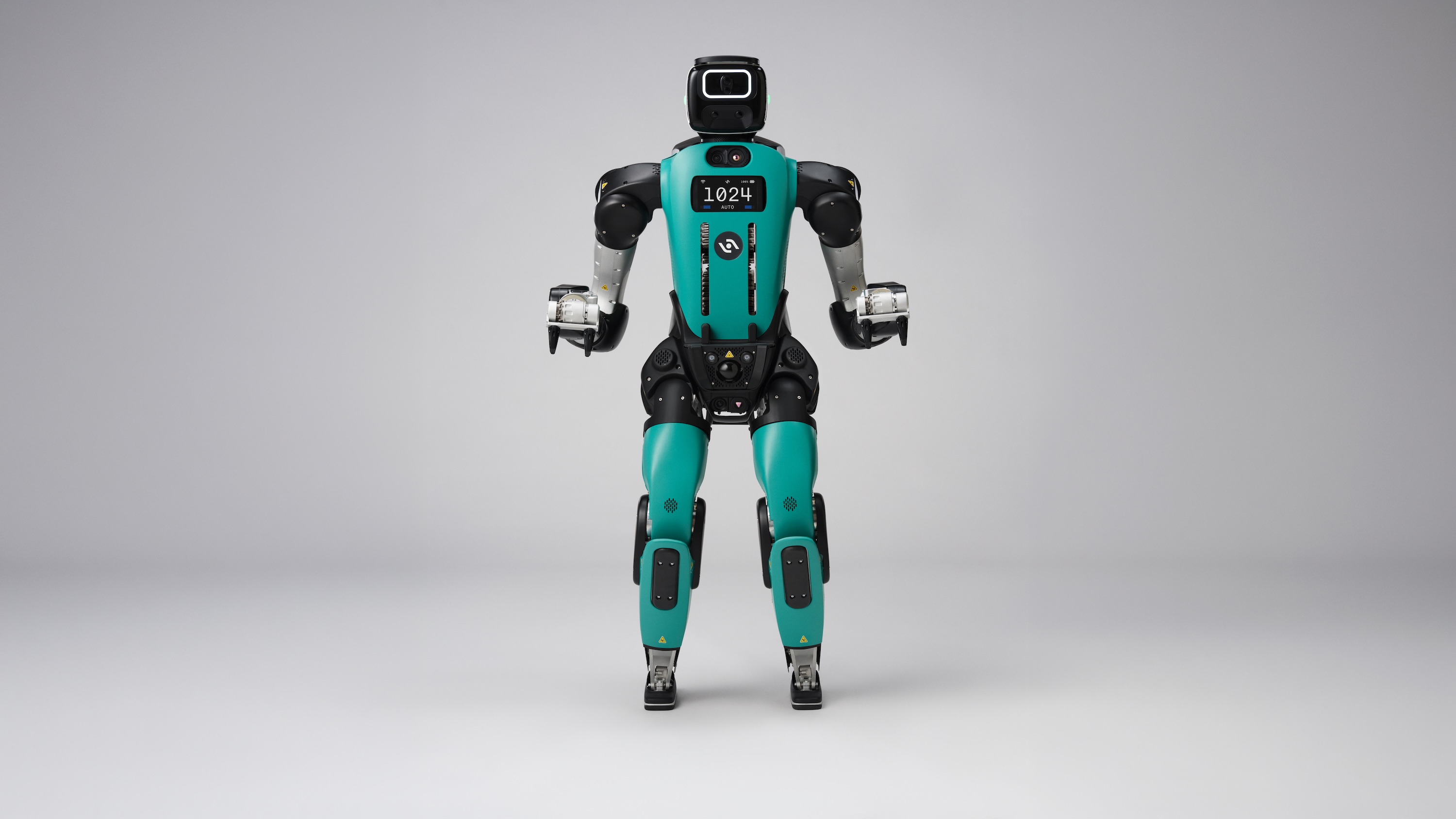
AGIBOT has not published what its Vietnam RaaS contracts will cost, but the structure other humanoid makers have already priced gives buyers a reference point. Agility Robotics, the Oregon-based maker of the Digit humanoid, offers its own service plan at roughly US$8,500 a month plus a one-time US$25,000 deployment fee, with Agility retaining ownership of the hardware and absorbing maintenance and software updates, against an outright purchase price of about US$200,000 plus a US$20,000 deployment fee and US$36,000 a year in upkeep. Whatever AGIBOT eventually charges in Vietnam, a service contract priced anywhere near that ratio would need only seven or eight months of rental to equal roughly a year of amortized ownership costs, which is the kind of arithmetic a Vietnamese school or retailer evaluating the Yuan Sheng Program pitch should run before treating "no upfront hardware cost" as a straightforward win.
Why a Market Leader at Home Needs a Beachhead Abroad
AGIBOT does not need Vietnam to prove it can sell robots. The company already claims the largest share of global humanoid shipments alongside rival Unitree, which completed its own Shanghai listing in August. What Vietnam offers is something China's home market increasingly cannot: uncontested positioning. Domestic competition among Chinese humanoid makers, AGIBOT, Unitree, UBTECH and a long tail of smaller entrants, has turned retail and manufacturing deployments inside China into a crowded, margin-thin race for the same handful of marquee customers. A government-endorsed entry into a neighboring market, with a national innovation agency effectively co-signing the rollout, is a faster route to a defensible position than fighting for the next domestic retail chain.
Friday's announcement also is not AGIBOT's first move into Southeast Asia; the company has already opened an experience center in Malaysia, and the Vietnam partnership extends the same regional footprint through a different channel, a government-backed education and services deal rather than a showroom. The pattern is broader than AGIBOT alone. UBTECH has lined up more than US$1 billion in financing from Infini Capital to build a factory, research hub and regional headquarters in the United Arab Emirates, and separately signed a memorandum of understanding with Singapore Telecommunications to explore enterprise robotics deployments. Unitree, for its part, has drawn roughly 40 percent of its revenue from overseas sales. Chinese humanoid makers are not waiting for home-market competition to sort itself out before looking abroad; they are treating overseas government relationships as a parallel growth channel while the domestic market remains crowded.
Vietnam's appeal is specific rather than generic. The country has an expanding electronics and assembly manufacturing base built on relocated supply chains, a young workforce NIC is actively trying to retrain for advanced manufacturing roles, and a government willing to put its name behind foreign robotics partnerships as part of its own industrial strategy. That combination echoes Beijing's own systematic conversion of automation into national power, a playbook AGIBOT is now effectively exporting, treating NIC not just as a customer channel but as the kind of institutional validation that can shorten the sales cycle with every school, retailer and factory operator that trusts the agency's judgment more than a foreign vendor's marketing.
An Award Ceremony Is Not a Signed Contract
None of Friday's announcements should be read as revenue. An Innovation Partner Award, a signed cooperation framework and a description of a RaaS model are a market-entry structure, not a customer list. AGIBOT has not disclosed how many robots are contracted under the RaaS program, which specific schools or retailers have committed, or what the service pricing looks like relative to the roughly US$30,000 to US$90,000 outright purchase price industry estimates have put on comparable humanoids. The conference format, heavy on government ministries and university deans, is built for signaling policy alignment, not for closing deals, and the gap between a ceremony in Hanoi and robots actually working a retail floor in Ho Chi Minh City or a classroom in Da Nang is exactly the ASEAN deployment gap that separates intention from adoption, one worth watching before any procurement team elsewhere in the region treats this as proof of a working model.
The detail worth tracking over the next two quarters is simple: whether AGIBOT discloses an actual RaaS contract, with a named customer, a unit count and a service price, rather than another ceremony. Vietnam's National Innovation Center has shown it is willing to lend its name and its convening power to foreign robotics partnerships; what it has not yet shown, and what AGIBOT's next announcement will need to demonstrate, is that the model turns into machines running unattended on a factory floor rather than machines dancing on a conference stage.
This analysis synthesizes company statements and public market activity as of the publication date and should not be read as investment, financial, or professional advice; it is provided for general information purposes only.