Kawasaki Heavy Industries Targets Fully Autonomous Kaleido Humanoid by 2030
Kawasaki Heavy Industries says its Kaleido humanoid will reach full AI autonomy by 2030, roughly a decade earlier than the company's own March 2026 roadmap, powered by Japan's Noetra national physical-AI compute platform.
Kawasaki Heavy Industries said this week that it is targeting a fully autonomous, AI-powered version of its Kaleido humanoid robot by 2030, a decade-old engineering program the company now plans to accelerate using a new national computing platform. The claim, reported October 4 in Japan, rests on Kaleido inheriting a "physical AI" model being built by Noetra, a Tokyo foundation-model developer funded by roughly forty of Japan's largest industrial companies. For procurement teams evaluating humanoid robots, the target date matters less than what it reveals about how Japan intends to compete: not with a single robot maker racing to scale, but with a shared national compute layer that several manufacturers plug into at once.
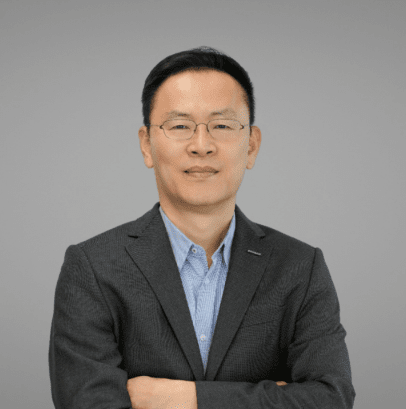
Noetra, headquartered in Shibuya, Tokyo, is not a household name outside Japan's industrial policy circles, and it is worth placing before the rest of the story makes sense. Led by President and Chief Executive Hironobu Tamba, who previously ran development of SoftBank's Japanese-language large language model, Noetra was formed to build a domestically trained, multimodal foundation model aimed specifically at robots rather than chatbots. Its roughly forty backers include SoftBank, Sony Group, NEC and Honda as core members, with Kawasaki among the wider circle of industrial investors. The project sits inside the Ministry of Economy, Trade and Industry's FRONTia initiative, which has committed as much as JPY 1 trillion (approximately US$6.2 billion) over several years, with JPY 387.3 billion (approximately US$2.4 billion) allocated in the first year alone.
A Target That Moves Faster Than the Company's Own Roadmap
The most useful way to read Kawasaki's 2030 claim is against what the company itself said publicly just six months earlier. In a March 2026 post on its own robotics blog, Kawasaki laid out a three-stage timeline for Kaleido's evolution. Around 2030, the company wrote, humanoids would reach "independent work under remote control" inside controlled settings such as factories and plants, with people still responsible for decision-making while the robot supplied the physical labor. Full autonomy in unstructured environments, including disaster sites, confined spaces and elevated work, was pegged to around 2040. A third stage, full environmental resistance to water, dust, heat, cold, radiation and corrosive gas, was not expected until roughly 2050.
That roadmap did not mention Noetra by name, because at the time Kaleido's path to 2040-level autonomy depended on whatever compute and training data Kawasaki itself could assemble. The Noetra partnership changes that math. A foundation model trained on a dedicated national compute cluster, shared across dozens of manufacturing, logistics and consumer-electronics companies, lets any single participant borrow capability it could not justify building alone. Kawasaki pulling its autonomy target forward by roughly a decade indicates how much capability the company expects Noetra's compute and foundation model to add to Kaleido's software stack, not a claim that the robot's mechanical hardware has suddenly leapt ahead of schedule.
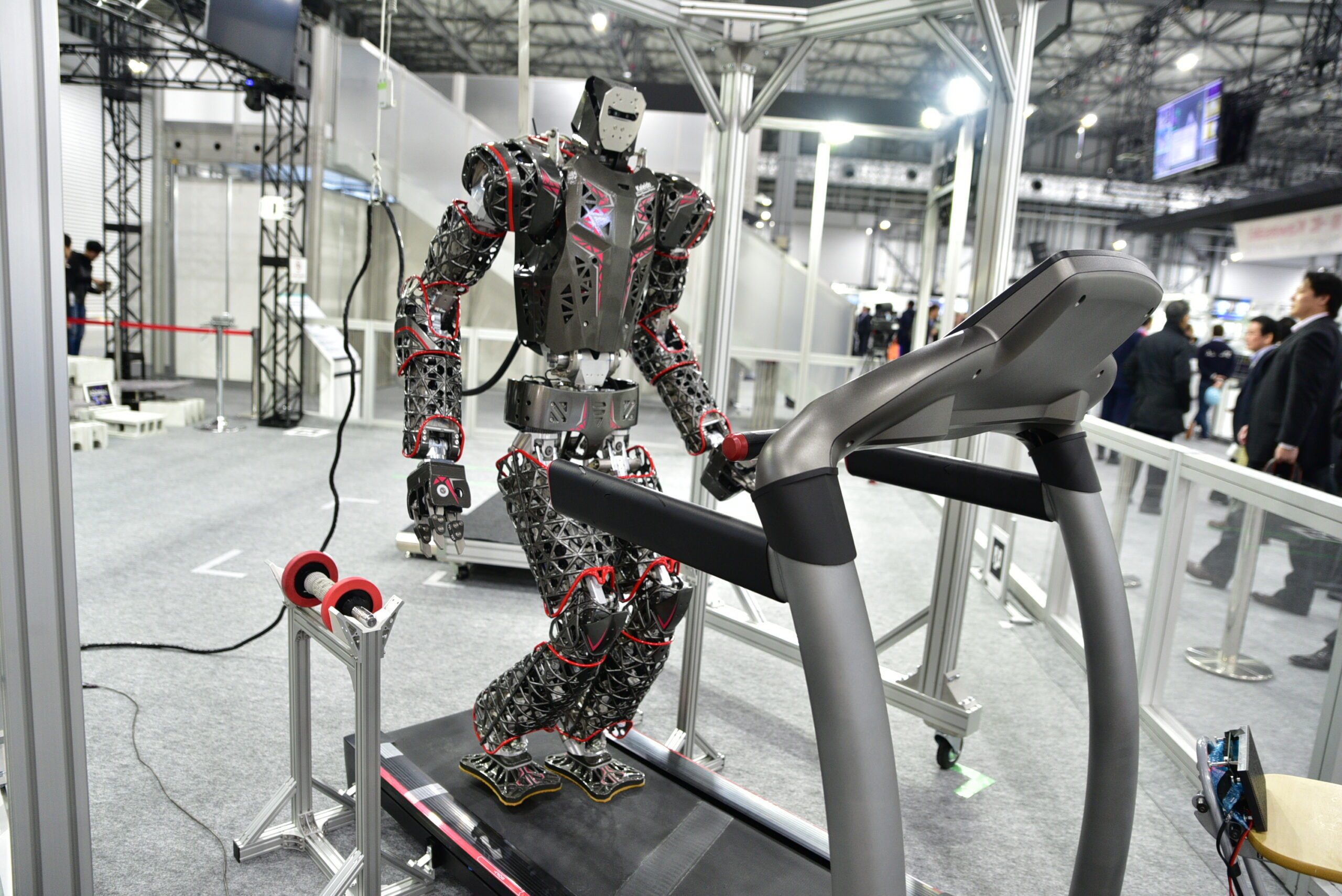
Kaleido itself is not a reaction to the current humanoid boom. Kawasaki began the program in 2015, well before Boston Dynamics, Unitree or Figure turned humanoid robots into a venture-capital category, and first showed the platform publicly at the International Robot Exhibition in Tokyo in 2017. The company has iterated through nine hardware generations since then, developed in collaboration with University of Tokyo robotics researchers and built around a deliberately unglamorous design philosophy: the robot should survive falling over without breaking, work continuously in shifts rather than perform for an audience, and use the same stairs, doors and hand tools built for people rather than requiring a redesigned workplace. That history matters for assessing the 2030 claim, because it is a decade-long hardware program now acquiring an AI layer, rather than an AI company that recently decided to build a robot body.
The Compute Behind the Claim
Noetra's infrastructure plans explain why Japanese industry is willing to make that bet. The company is building a data center using NVIDIA's Vera Rubin NVL72 racks, with 13,750 Vera CPUs and 27,500 Rubin GPUs delivering roughly 140 megawatts of capacity, targeted to begin operating around June 2028. The stated goal is a trillion-parameter-scale, Japan-developed multimodal model trained specifically for physical AI rather than text generation, reducing the country's dependence on foreign foundation models for data that industrial and logistics operators consider sensitive. METI has attached a national target to the broader program: ten million AI-equipped robots deployed across eighteen sectors of the Japanese economy by 2040.
That scale of public commitment is unusual even by the standards of a sector that has grown used to government money. China's humanoid makers have benefited from provincial subsidies, state procurement and manufacturing clusters; the United States has leaned on venture capital and, increasingly, defense-adjacent funding. Japan's approach with Noetra is closer to a shared utility: one trained model, one compute platform, licensed out to a roster of manufacturers who would otherwise be duplicating the same multi-billion-dollar training runs in isolation. Kawasaki's Kaleido is simply the most visible humanoid currently positioned to draw on it.
What Kaleido 9 Can Actually Do Today
None of this should obscure where the hardware stands right now. The current production model, Kaleido 9, is a genuine engineering step forward from its predecessor, but it is not an autonomous robot in the sense most buyers mean when they hear the word. Kawasaki redesigned the leg structure to recover balance faster after a stumble, a change the company frames as foundational to making the robot viable outside a lab. In demonstrations, Kaleido 9 has shown autonomous walking in the narrow sense, using LiDAR and simultaneous localization and mapping to detect people and obstacles, recognize stair edges and adjust its stride in real time. That is a meaningfully different capability from autonomous task execution.
The actual work, including disaster-response scenarios Kawasaki has already demonstrated, is still done through a head-mounted-display remote-control link, with a human operator directing the robot's actions. Kawasaki has also built a companion wheeled platform called Kaleido Station, designed to carry the robot efficiently over long, flat distances so the legs are reserved for the terrain they are actually needed for, with a future role as a charging dock. Read together, the current system is a capable, remotely piloted machine with autonomous perception and balance, not yet the independent decision-maker the 2030 target describes. The gap between those two things is precisely what Noetra's foundation model is supposed to close.
A useful way to frame the shift: Kawasaki is not promising a smarter robot body in 2030; it is promising to rent a smarter robot brain from a shared national supplier, and betting that arrangement arrives years before it could have built one alone.
Why This Matters for Buyers Outside Japan
For procurement and operations teams evaluating humanoid robots for nursing, logistics or light manufacturing, Kawasaki's own stated near-term application list is a more useful planning input than the 2030 headline. The company has named communication support in medical and nursing settings, along with simple transport and patrol duties, as the realistic use cases for the controlled-environment stage of its roadmap, the stage it previously pegged to 2030 and is now trying to pull forward and upgrade with AI assistance. That is a narrower, more achievable scope than disaster response or unstructured fieldwork, and it lines up with where Japan's own labor shortage pressure, particularly in elder care, is most acute.
It also reframes how buyers should weigh a Kaleido purchase or pilot against competitors. Chinese manufacturers including Unitree and AGIBOT have been shipping humanoids in the thousands of units annually and undercutting on price, with AGIBOT alone reporting roughly 9,700 units shipped in the first half of 2026. US-based entrants are taking a different route: Figure has leaned on direct manufacturing partnerships, and Boston Dynamics, now wholly owned by Hyundai Motor Group after its buyout of SoftBank's remaining stake, has committed to deploying its Atlas humanoid at a Hyundai plant in Georgia starting in 2028, with the role expanding toward broader manufacturing tasks by 2030. Kawasaki's pitch is different from either model: a robot whose software roadmap is tied to a sovereign compute platform backed by the same companies that will be buying and integrating it, from Honda's own manufacturing lines to Sony's consumer electronics plants. That consortium structure could prove to be a genuine advantage in data access and domestic trust, or it could turn into the coordination overhead that slows down every shared-infrastructure project when forty companies have forty different priorities for the same model.
Procurement teams weighing a Japan-based humanoid supplier against Chinese volume pricing or US venture-funded speed should treat the Noetra relationship as a due-diligence item in its own right, not a footnote to Kaleido's spec sheet. Questions worth asking a Kawasaki sales team today include which specific Noetra model checkpoints Kaleido will actually run, whether training data from a buyer's own facility would be expected to feed back into the shared foundation model, and what contractual protection exists if Noetra's 2028 compute timeline slips. None of those questions have public answers yet, which is itself useful information for anyone building a 2027 or 2028 deployment budget around the 2030 target.
The 2030 date deserves to be tracked against two independent signals rather than taken at face value: whether Noetra's compute facility actually reaches operational status on its stated 2028 timeline, and whether Kawasaki's own public roadmap updates again before then. A company revising its autonomy target by a decade on the strength of a partner's not-yet-built data center is making a bet on someone else's execution as much as its own, and that bet will be visible in Kawasaki's public statements long before 2030 arrives.
This analysis synthesizes company statements and public market activity as of the publication date and should not be read as investment, financial, or professional advice; it is provided for general information purposes only.