Boston Dynamics and GlobalFoundries Open the Door to a Non-Automotive Atlas Trial
Boston Dynamics and GlobalFoundries are expanding their four-year robotics partnership, with GF set to become the first non-automotive company to test the Atlas humanoid robot starting in early 2027. The move builds on a Spot quadruped deployment that has logged over 90,000 inspections across GF's global fabs, including a Singapore site with a 99% mission success rate.

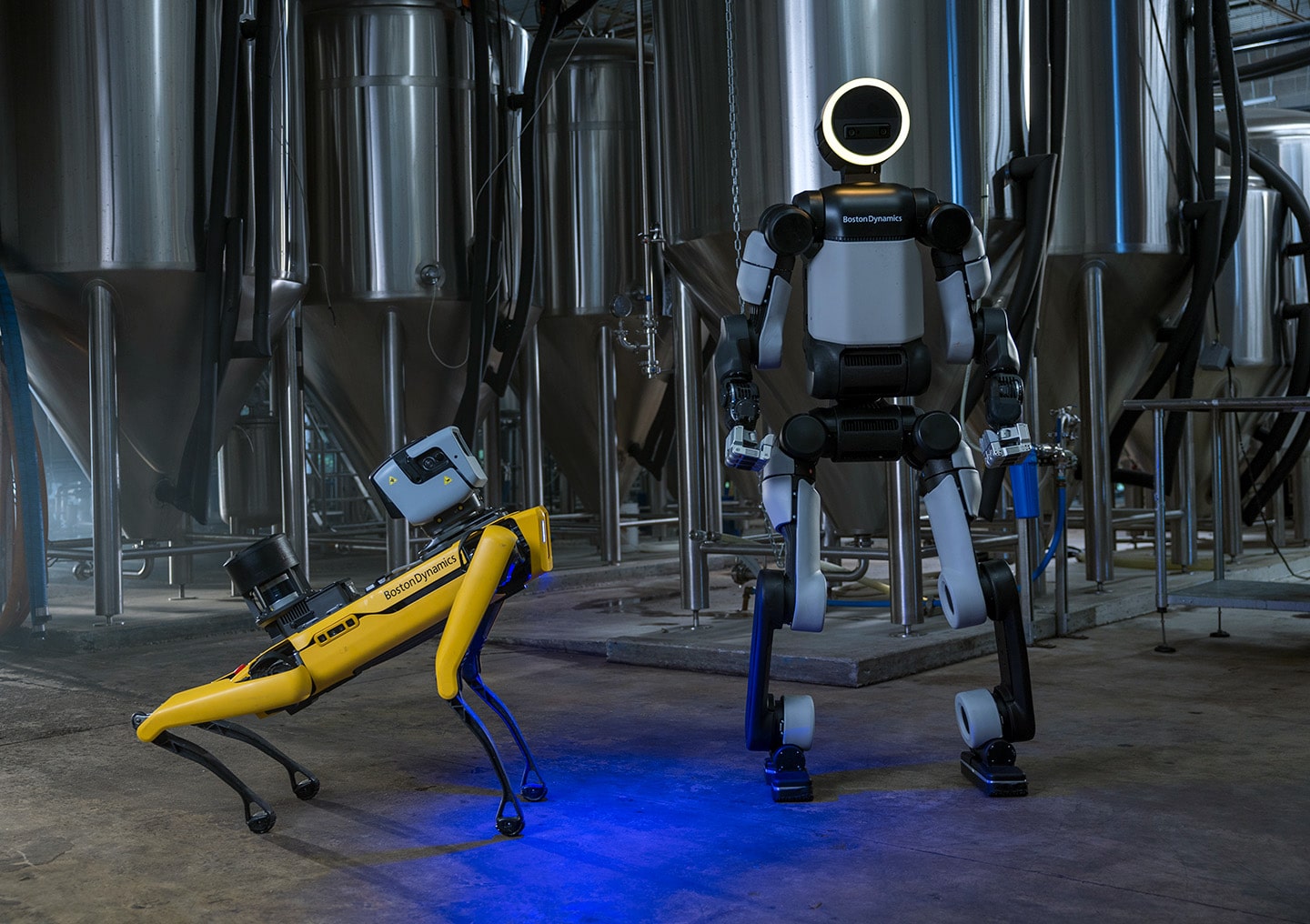
Boston Dynamics and GlobalFoundries (GF) said on November 17, 2026, that GF will become the first company outside the automotive industry admitted into Boston Dynamics' early adopter program for the Atlas humanoid robot, with on-site evaluation work beginning at GF semiconductor facilities in early 2027. The companies describe it as the first program of its kind built around semiconductor manufacturing.
The announcement, issued from Boston Dynamics' Waltham, Massachusetts headquarters, extends a relationship between the two companies that already runs more than four years deep and produced a joint case study in 2022. Until now, that relationship has run almost entirely through Spot, the quadruped inspection robot GF has used at its Burlington, Vermont, fab since roughly 2022. Atlas joining the roster, even in a workshop-and-evaluation capacity, is the part of this announcement that buyers across heavy industry should actually read closely, because it is the first public signal of where humanoid robotics vendors intend to sell next.
Spot's four-year maintenance record is what actually earned GF a seat at the Atlas table
It is worth separating the news into two tracks, because only one of them is proven and the other is a bet. The proven track is Spot. GF's Chief Manufacturing Officer, Pradip Singh, put the payoff in blunt operational terms: "Spot has helped us shift from reactive to predictive maintenance." That is not marketing language so much as a procurement scorecard entry. Reactive-to-predictive is the exact line item that justifies a robotics capital request to a plant controller, and GF has apparently been able to write it down for four years running.
The Singapore numbers released alongside the announcement give that claim some texture. Two Spot units have logged nearly 900 kilometers of travel and completed more than 90,000 inspections inside sub-fab areas since April 2026, with a 99% mission success rate. GF also said it redeployed 875 routine inspection tasks to Spot in a two-week window and plans to more than double that figure. For a procurement audience, the detail that matters most is the speed of that redeployment. Two weeks to shift 875 inspection tasks off human technicians implies a fab environment, standardized inspection routes and a maintenance team, that was already instrumented and ready to absorb automation quickly. Most fabs are not there yet, and that gap is itself useful information for any buyer benchmarking their own readiness against GF's.
Zack Jackowski, Boston Dynamics' Chief Product and Technology Officer, framed GF as one of the earliest Spot customers whose program has scaled from a pilot into something generating operational value today across multiple sites, a list that now includes Malta, New York; Burlington, Vermont; Dresden, Germany; and Singapore. A four-site, multi-year legged-robot deployment with a 99% mission success rate is a reference case most industrial automation vendors would envy, and it is the evidentiary basis on which GF appears to have earned first crack at Atlas outside the car plants where Boston Dynamics has concentrated its early humanoid work to date.
Semiconductor fabs are a harder, more revealing test than another automotive floor
The second track, the Atlas piece, is unproven by definition, which is exactly why it is the more interesting part of this release for anyone tracking the humanoid robotics market rather than just the Spot product line. Boston Dynamics has built its early Atlas commercial narrative almost entirely around automotive assembly, alongside Hyundai, its parent company. Putting the first non-automotive Atlas customer inside a semiconductor fab is a deliberate choice, and it says something about what Boston Dynamics believes Atlas needs to prove next.
Chip fabs are not forgiving environments for a legged, two-armed humanoid. Cleanroom protocols, electrostatic discharge sensitivity, tight clearances around process tools, and strict contamination controls make semiconductor manufacturing a materially different proving ground than a car plant's structured assembly line. A robot that can hand off parts on an automotive line is not automatically a robot that can work safely around wafer-handling equipment or inside a sub-fab utility space. That is almost certainly why the first phase, described as a skills-development workshop running from early 2027, is explicitly scoped to evaluating use cases and assessing integration readiness rather than production deployment. Boston Dynamics and GF are not promising an Atlas line worker in 2027; they are promising a structured diagnostic process to find out whether one is even feasible, and on what timeline.
That distinction matters for how other buyers should read this announcement. Nothing in the release claims Atlas is doing productive fab work yet, and treating this as a deployment announcement rather than an admissions letter into a testing program would be a misreading. The companies were explicit that the early-2027 work covers use-case evaluation, readiness assessment and the beginning of task-execution testing and training, not commissioned production tasks.
What semiconductor and electronics buyers should take from GF going first
For procurement and operations leaders at other fabs, the signal to take from this is less "humanoids are ready for chip manufacturing" and more "the vendor selection criteria for an early humanoid pilot slot are now visible in public." GF got the slot on the strength of a long, quantifiable mobile-robotics track record, not because it asked first. Any fab, electronics assembler or precision-manufacturing operator hoping to land a similar early-adopter position with Atlas, or with a competing humanoid platform, should expect to show the same kind of evidence: a multi-site deployment history, hard inspection or task-volume numbers, and a maintenance organization that has already proven it can absorb new robotic workflows on short timelines.
The structure also says something about cost exposure. Early adopter programs of this kind typically run closer to a joint evaluation than a priced purchase order, which is one reason a buyer with GF's track record, rather than simply the buyer offering the largest check, is positioned to go first. For a plant controller weighing whether to pursue a similar slot with Atlas or a rival humanoid platform, the realistic budget conversation is not "what does a humanoid unit cost," a figure Boston Dynamics still has not published for Atlas, but "what would it cost my own maintenance organization to generate the kind of multi-site inspection and uptime data GF is now able to point to." That second number is usually the harder one to build, and it is the one worth starting on months before any pricing sheet exists.
That bar is worth stating plainly, because it is the quotable takeaway procurement teams should carry into their own planning conversations: in industrial humanoid robotics, the companies getting early access to platforms like Atlas are the ones that already have a mature mobile-robotics track record to show for it, not the ones simply willing to write the biggest check. Capital availability is necessary but no longer sufficient; operational proof is becoming the actual currency.
That also puts this announcement in useful context against the rest of the humanoid field. Figure, Apptronik and Agility Robotics have each pursued industrial pilots of their own humanoid platforms, generally inside logistics, warehousing or automotive-adjacent settings where task structure is relatively forgiving and failure modes are cheap. None of the publicly known industrial humanoid programs has, to date, targeted semiconductor cleanroom environments as a first non-automotive proving ground. If Boston Dynamics is the first to attempt that jump, deliberately, with a customer that already has four years of quantified inspection data behind it, that is a meaningfully different go-to-market posture than "place as many pilot units as possible and see what sticks." It suggests Boston Dynamics is selecting its hardest early test case on purpose, using Spot's track record as the qualifying filter.
The workshop's conclusion, not its start, is the date that will actually tell buyers something
None of this changes the commercial calculus for a buyer weighing a humanoid pilot today. Atlas is still, by the companies' own account, an early-production platform, and the GF program is explicitly a skills-and-readiness evaluation rather than a deployment with committed output targets. No pricing, contract value or unit count was disclosed, and buyers should treat the absence of those figures as a sign the commercial terms of any eventual fab deployment have not been set, not as an oversight in the release.
There is a scheduling lesson here too. Boston Dynamics did not simply hand GF an Atlas unit and a delivery date; it built a defined evaluation phase with its own close-out point. Buyers accustomed to a conventional capital-equipment sales cycle, quote, purchase order, installation date, should expect an early humanoid pilot to run on a different clock, one measured in qualification milestones rather than fixed delivery dates. A budget cycle or board approval built around a shipping date will not map cleanly onto a vendor relationship that stays open-ended until a skills-evaluation phase concludes, so buyers exploring a similar arrangement should plan the approval process around a milestone, not a quarter.
What is worth putting on a procurement calendar is the end of the early-2027 workshop itself. That is the point at which GF and Boston Dynamics will have to say, in some form, whether Atlas handled sub-fab task-execution testing well enough to justify moving from skills evaluation into an actual pilot deployment, and whether the integration requirements that surfaced along the way are the kind other fabs can replicate or the kind specific to GF's facilities. A clean result there would be the first real evidence that humanoid robots can clear semiconductor manufacturing's tighter environmental and safety bar, and it would reset the competitive timeline for Figure, Apptronik, Agility and any other vendor eyeing the same vertical. A messy or quietly extended result would tell buyers the opposite: that chip fabs remain a harder problem for legged humanoids than automotive lines, regardless of how strong the underlying quadruped track record is. Either outcome will matter more to the humanoid robotics market's near-term trajectory than today's announcement does on its own, and it is the milestone worth tracking next.
This article is for general information purposes only and does not constitute investment, financial, legal, or professional advice. It synthesizes company statements and public market activity as of publication.