America’s Drone-Boat Champion Just Hired Korea’s Shipbuilding Muscle, and Robots Are the Fine Print
Defense technology company Saronic and Korea’s Samsung Heavy Industries have signed an agreement to bring Korean shipbuilding automation into Port Alpha, the robot-first autonomous shipyard Saronic is building in Brownsville, Texas. The pairing joins American defense capital with the production engineering of one of the world’s most advanced shipbuilders, aimed squarely at China’s overwhelming lead in launch tonnage. For the robotics industry, it signals a national-security-funded procurement wave in welding automation, mobile manipulation, and autonomous material transport. And its labor story inverts the usual automation script: a greenfield robotic yard promising 10,000 jobs created from zero, with robots as the precondition rather than the threat.
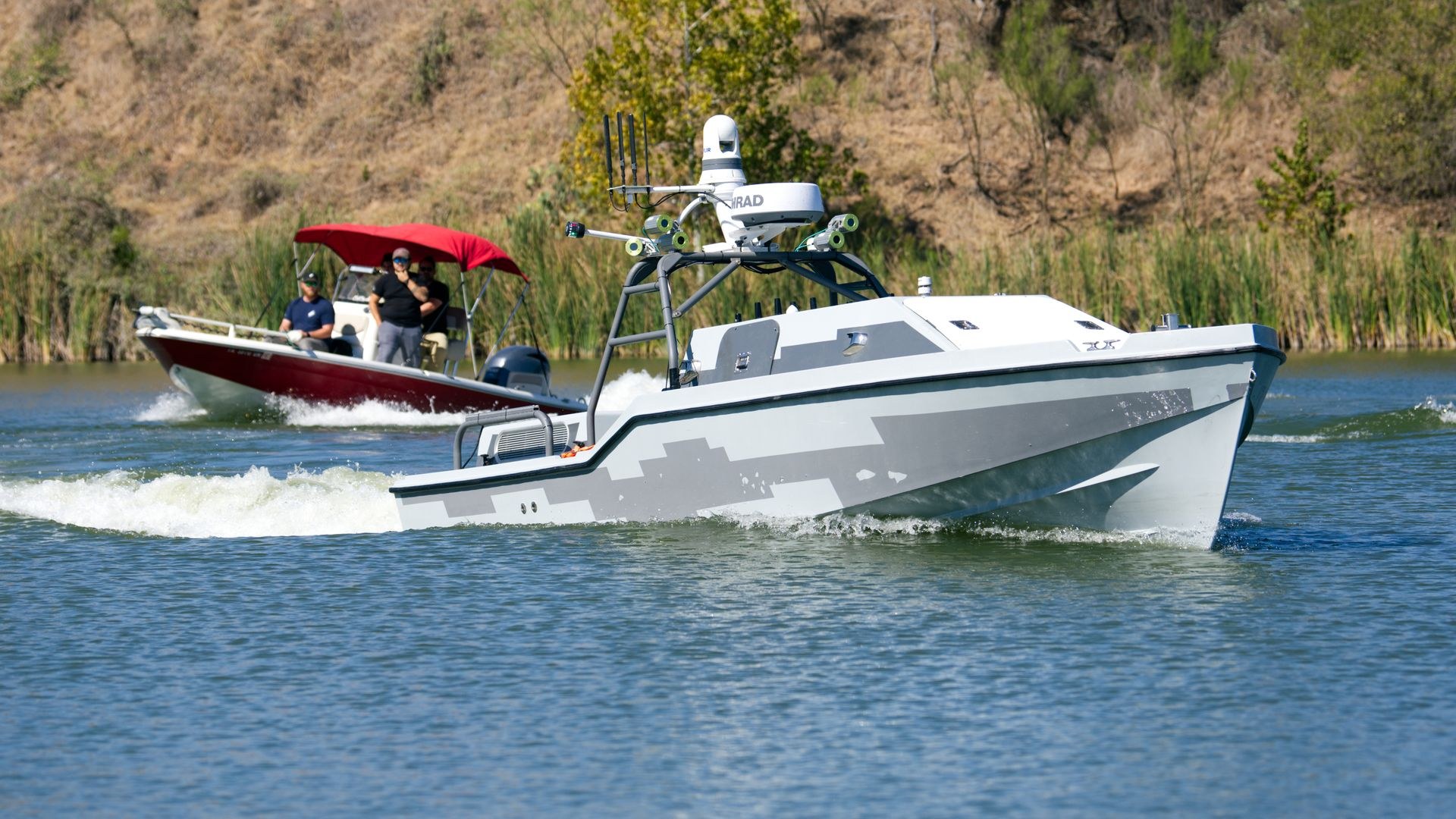
Saronic, the Texas defense technology company behind the US Navy’s first combat-tested sea drones and Samsung Heavy Industries, one of South Korea’s big three shipbuilders, announced a strategic partnership on Thursday to accelerate autonomous maritime systems and rebuild American shipbuilding capacity. The agreement was unveiled at the launch of the Korea-US Shipbuilding Partnership Center in Washington, a new body sponsored by the US Department of Commerce and South Korea’s trade ministry to deepen cooperation between the two countries’ maritime industries.
The pairing is complementary by design: Saronic brings autonomy software and a fast-growing US manufacturing footprint, Samsung Heavy Industries brings decades of experience building some of the world’s largest and most complex commercial vessels. The companies say they will jointly develop autonomy-capable vessels for government and commercial customers while exploring AI-powered digital technologies and next-generation shipyard manufacturing processes.
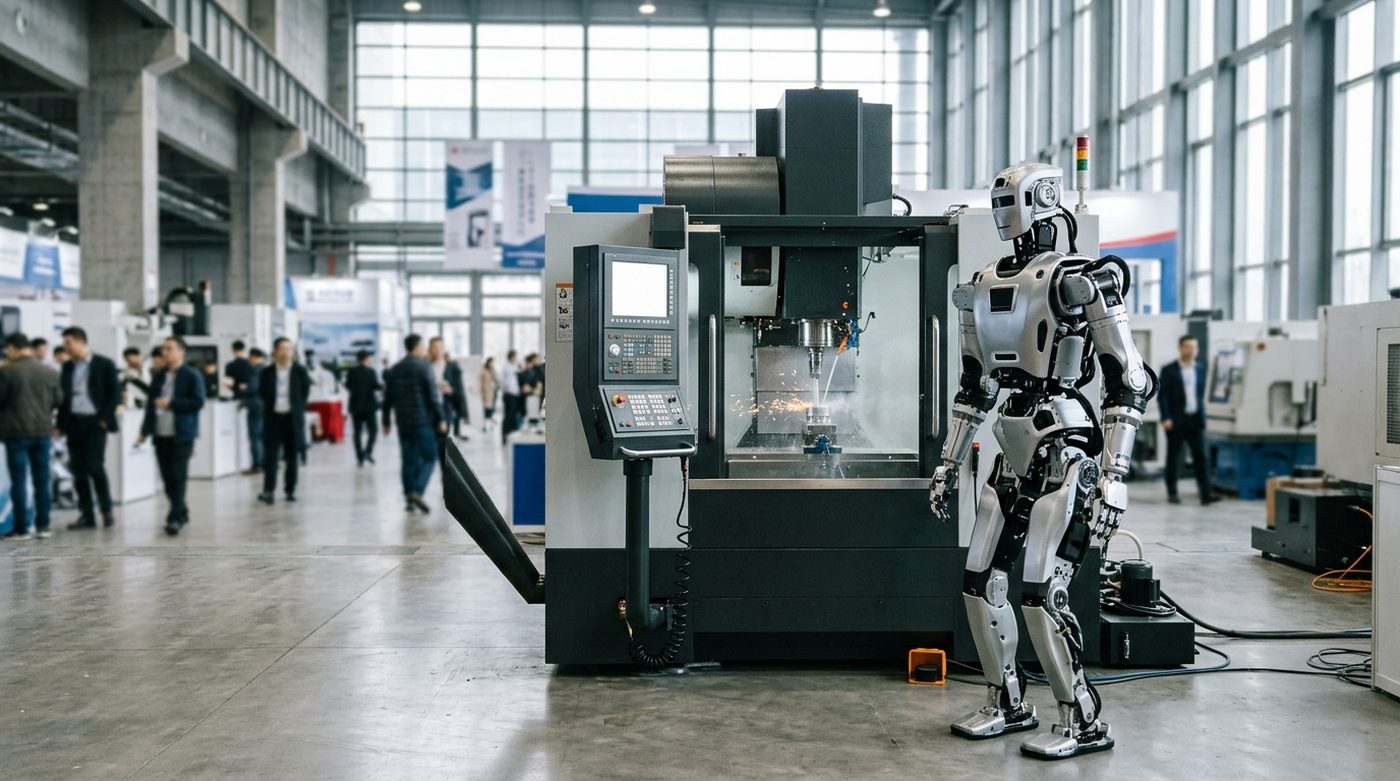
For robotics watchers, the clause that matters sits lower in the announcement: the partnership extends to production infrastructure, with the companies planning to explore robotics-based process automation across Saronic’s shipyards. The autonomous ships, in other words, are only half the story. The other half is automating the yards that build them.
From Vessel Autonomy to Yard Autonomy
Saronic’s expansion has been running at a pace unusual even by defense-technology standards. One week before the Samsung announcement, the company selected Brownsville, Texas, as the site of Port Alpha, a planned US$3 billion autonomous shipyard on an initial 835 acres at the Port of Brownsville. Construction is expected to begin later this year, with opening targeted for 2028, capacity ambitions extending to vessels over 1,200 feet, and as many as 10,000 direct jobs projected over the next decade. The company is separately investing an additional US$300 million to expand its shipyard in Franklin, Louisiana, acquired through last year’s purchase of Gulf Craft.
Greenfield shipyards are precisely where production robotics earns its keep. Retrofitting automation into a century-old yard means fighting existing layouts, workflows, and labor agreements; designing a yard around robotic welding, cutting, panel assembly, and material handling from the first blueprint is a different economic proposition. Samsung Heavy Industries is among the few companies on earth with current expertise in both halves of that equation, having spent years automating its Geoje yard with welding robots and digital production systems while building the tooling knowledge that only high-volume commercial shipbuilding sustains.
Saronic chief executive Dino Mavrookas framed the partnership in industrial-base terms: “Rebuilding America’s maritime strength requires both world-class technology and the industrial muscle to produce it at scale here at home.” His Samsung counterpart, vice chairman Sung An Choi, said the combination of the two companies’ strengths would “create a more competitive future.”
How a Three-Year-Old Company Bought Into Shipbuilding
Saronic’s standing to sign such an agreement is itself a story about how quickly defense technology hierarchies are being rewritten. Founded in 2022 by former Navy SEALs and technology executives, the Austin-based company designs its vessels around autonomy from the keel up rather than retrofitting crewed designs, and it manufactures with the cadence of a consumer electronics firm rather than a traditional yard. Its product ladder climbs from the six-foot Spyglass through the 24-foot Corsair toward much larger vessels planned for Port Alpha, and its valuation, most recently reported in the multiple billions of dollars after successive rounds led by prominent venture investors, has made it the reference asset for maritime autonomy in the same way Anduril became the reference asset for autonomous defense systems generally.
The Gulf Craft acquisition last year marked the strategy’s turn from products to production. Buying a working Louisiana shipyard gave Saronic hulls, workforce, and Jones Act-relevant capacity immediately, while Port Alpha represents the clean-sheet version of the same ambition at thirty times the acreage. The Samsung partnership slots into that sequence as the missing ingredient: process knowledge. Building one autonomous vessel is an engineering problem; building hundreds a year on schedule and on margin is a manufacturing science that exactly three countries currently practice at scale, and the United States is not among them.
Why Washington and Seoul Built the Venue
The setting of the announcement was as deliberate as its content. The Korea-US Shipbuilding Partnership Center exists because both governments have concluded they need each other’s maritime industries. The United States builds a vanishingly small share of the world’s commercial ships and has watched its naval construction schedules slip for years; South Korea builds roughly a quarter of global tonnage but faces Chinese competition that has already claimed the volume end of the market. Korean press coverage places the Saronic agreement within a broader bilateral shipbuilding framework valued at US$150 billion, under which Samsung Heavy Industries is also collaborating with US defense firms on unmanned surface vessel technology.
A common assumption is that alliances like this are mostly diplomatic theater with press releases as the deliverable. The counterexample is the speed of Saronic’s physical commitments: land selected, capital announced, and a combat-proven product line already shipping. The company’s Corsair autonomous vessel entered operational military service this year, and US Central Command described its recent employment against Iranian naval infrastructure as the first combat use of American sea drones. Demand, in this case, is not hypothetical.
The skeptical question worth keeping is different: whether shipyard-scale robotics can transplant across industrial cultures. Samsung’s automation works within Korea’s dense supplier ecosystem and a workforce trained over decades. Brownsville will start with neither, and the history of technology transfer in heavy industry, from automotive to semiconductors, shows the learning curve is measured in years even with a willing teacher. The 2028 opening date for Port Alpha leaves little slack for that curve.
The Signal for the Robotics Industry
Think of this deal as the maritime version of what the automotive industry did over the past three years: an anchor customer with defense-adjacent demand committing to robots not as a pilot program but as the premise of a new factory. Shipbuilding has historically been among the hardest environments to automate, low-volume, high-variation work on enormous steel structures, which is exactly why a purpose-built autonomous yard is the interesting experiment. If robotic production can be made to work economically in Brownsville, the addressable market extends to every navy and commercial operator seeking capacity outside China.
The competitive geography also explains the urgency on both sides. China launches more commercial tonnage in months than American yards deliver in years, and its state shipbuilders are integrating autonomy programs of their own into naval production lines that already run at scale. For Washington, closing that gap by conventional means, training welders and rebuilding supplier networks over decades, is arithmetic that does not converge; skipping a generation by building robot-first yards with allied expertise is the only strategy whose timeline matches the threat assessments. For Samsung Heavy Industries, the calculus is a mirror image: Korean yards are technology-rich but demand-constrained as Chinese competitors squeeze the commercial market, and exporting production systems into the American defense-industrial buildout converts engineering know-how into a revenue stream that Beijing cannot underprice.
For the robotics supply chain, the partnership signals a coming procurement wave in welding automation, mobile manipulation, autonomous material transport, and inspection systems, at industrial scale and with national-security funding behind it. For Korean industry, it validates a strategy of exporting shipbuilding expertise as a service to allied industrial bases rather than merely exporting ships. And for the growing cohort of defense-technology companies watching Saronic’s trajectory, it confirms the pattern of the moment: the fastest route to scale in American reindustrialization runs through allied partnerships and robot-first factories.
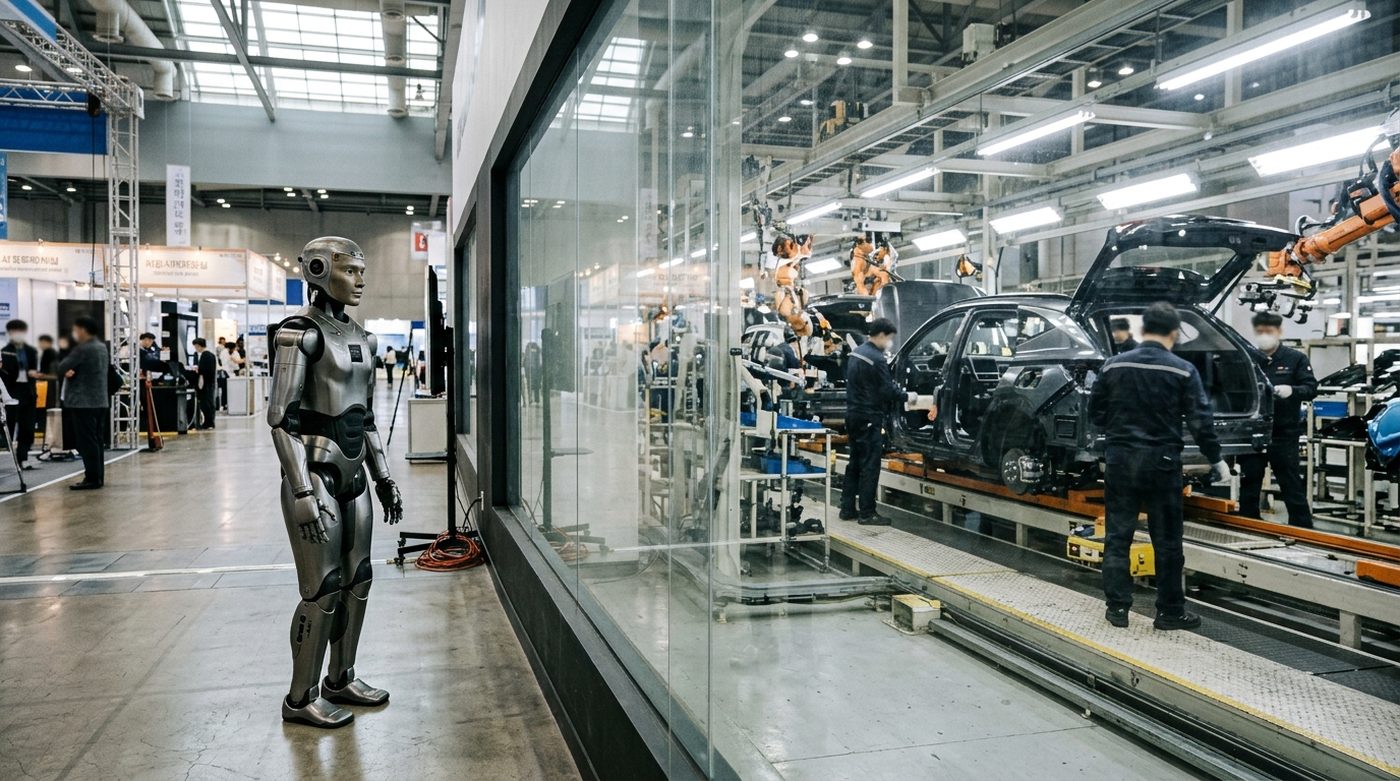
The labor politics of a 10,000-job robotic shipyard deserve a note of their own, because they run opposite to the automation anxieties playing out elsewhere this week, including at Hyundai’s car plants in Korea. Saronic is not automating existing shipyard jobs; there are effectively none in Brownsville to automate. A greenfield robotic yard creates its workforce from zero, which converts automation from a threat into the enabling condition for the jobs that do get created, the technicians, programmers, welders, and logistics staff a robot-dense yard still requires in quantity. That framing, jobs created by robots rather than lost to them, is likely to become the template argument for every reindustrialization project seeking permits, subsidies, and political goodwill in the years ahead.
The open questions are the ones every memorandum of understanding carries. The announcement did not disclose financial terms, the scope of technology transfer, or whether Samsung Heavy Industries takes equity exposure in Port Alpha alongside its process expertise, and memoranda have a documented mortality rate between signing ceremony and steel cutting. Execution risk in first-of-kind shipyards is notorious even without adding autonomy to the specification. What separates this agreement from the genre’s usual vaporware is the density of hard commitments already surrounding it: land, announced capital, a shipping product line, and a customer in active combat operations.
The Port Alpha groundbreaking later this year will show how much of this is contract and how much is concept. The robots, either way, have made it into the founding documents of American shipbuilding’s next chapter.
Disclaimer: This article is for general information purposes only and does not constitute investment, legal, or procurement advice. Readers should verify details with primary sources before making business decisions.