Unitree's 80 Percent Task Test Is the Only Line Buyers Can Use
Wang Xingxing shortened his embodied-AI timeline to one or two years and defined success as about 80 percent of tasks in 80 percent of unfamiliar settings. The test is usable. The calendar is not a purchase signal.

Wang Xingxing has given buyers a number they can put in a specification. On 23 October 2026, China Daily reported that the founder and chairman of Hangzhou-based Unitree Robotics now expects a ChatGPT-style turning point for embodied intelligence in one to two years, faster than the two-to-three-year floor he set in Beijing on 20 August. The useful part of the interview is not the calendar. It is the test he attached to the phrase: a robot should complete about 80 percent of tasks in about 80 percent of unfamiliar settings from voice or text instructions.
That test is a procurement screen, not a product launch. Unitree, the Hangzhou firm known for low-cost legged robots and a humanoid line aimed at research and light industrial work, has not published a model name, a price, a cycle time, or a customer acceptance rate against it. Wang said the company is putting newer language models on robots, that factory pilots are running, and that home tests are underway. He also said large-scale use is not happening, because generalization and efficiency are still short of what a factory would buy.
The timing of the remarks matters less than their setting. Wang spoke during the opening period of the 26th China International Industry Fair in Shanghai, held from 12 to 16 October. China Daily updated the English report at 09:30 on 23 October, citing Shanghai Securities News for the line that GPT-6 has improved how the embodied-intelligence industry understands tasks, and that Unitree and other robotics companies are running factory pilots. A fair speech reported a week later is still a fair speech. It is not a shipment notice.
Buyers should treat the 80/80 line as an acceptance hypothesis. Eighty percent of tasks in eighty percent of unfamiliar rooms is a high bar for a machine that must grasp, walk, and recover from contact. It is also vague until someone defines the task list, the room list, the time limit, and what counts as success. A robot that folds towels and fails at cable routing can clear a loose reading of that sentence. A robot that clears a defined station at a defined takt time is a different purchase.
The shorter forecast is a revision, and it should be read as one. On 20 August, at the World Robot Conference in Beijing, Wang said the same kind of tipping point could arrive in as little as two to three years, or in five to ten years at the slowest. A day earlier, Unitree had debuted on the Shanghai Stock Exchange sci-tech innovation board, the STAR Market, and the shares closed 460 percent higher, China Daily reported. The October interview pulls the near case in by about a year and drops the long case from the quote. That is a change in management tone. It is not a change in installed base.
Wang was explicit about the remaining engineering gap. The hardest job, in his account, is lining up what a language model takes in and puts out with what a physical robot can sense and do. Automobile factories already have some of the robots. Home tests are running inside the company's own AI team. Scale is the part he withheld. Overall efficiency and versatility are not yet good enough for a broad rollout, he said. Chen Jie, vice-president of the Chinese Academy of Engineering, used the same fair opening on 12 October to argue that artificial intelligence still has to be tied to engineering practice, original work, and industrial use. The two speeches point the same way: models are moving faster than plant integration.
A buyer comparing this with earlier public targets should separate three clocks. The first is the model clock, which Wang tied to GPT-6 already in use on robots and to a hoped-for GPT-7 next year that he said might clear current bottlenecks. Those model names and dates are his expectation, not a release schedule this desk can confirm from the model maker. The second is the pilot clock: factory programs exist, and home trials exist, with no count of cells, shifts, or escaped defects. The third is the purchase clock, which starts only when a site can state uptime, intervention rate, and cost per completed task. The interview speaks to the first clock and admits the third has not started at scale.
The 80/80 benchmark fails as a contract clause in its current form, and that is the point of writing it down. Unfamiliar settings can mean a new fixture in a known cell or a new apartment layout. Tasks can mean a scripted pick or an open instruction such as tidy the bench. Voice or text instructions can mean a trained phrase or an unscripted sentence from a visiting engineer. Until Unitree or a customer publishes the task set, the environment set, and the scoring rule, the sentence cannot be used to accept or reject a machine. It can be used to ask for that scoring rule.
Factories already running arms and mobile robots should not read the interview as a reason to swap those cells for humanoids. Wang's own limit is efficiency. A pilot that looks capable on a visitor tour can still lose to a fixed station on parts per hour, recovery after a fault, and the wage of the person who resets it. Home tests are a separate product question. A home is an unfamiliar setting by definition, full of soft objects, pets, and layout changes. Using homes as a lab does not make the robot a home appliance, and Wang did not claim a consumer launch.
Listed-company readers have a second file to keep open. The August STAR Market debut and the 460 percent first-day close are market facts reported alongside the older, slower forecast. They do not validate the new one-to-two-year case. A share price records what buyers paid for a story on a single session. A factory records whether a robot finished the job without a handler. The October remarks give equity holders a clearer management target and give operations holders no new unit count.
The practical request to put in front of Unitree, or any vendor echoing this language, is short. Define the 80 percent task list. Define the 80 percent of sites. State whether success is completion, completion within a time, or completion without a human touch. State how many automobile-factory robots are in paid pilots versus internal demos, and whether home tests are staff homes, lab apartments, or customer sites. Ask what GPT-6 changed in measured intervention rate, not in a qualitative very good. If those answers are refused, the forecast remains a speech.
There is a real shift in the quote, and it should not be inflated. In August the near case was two to three years and the far case was up to a decade. In October the near case is one to two years, tied to model progress Wang says he underweighted for a decade. He called not believing in AI enough his biggest mistake. That is a founder correcting his own prior caution. Founders do that when demos improve. Procurement teams should log the correction and still buy against measured work, not against the corrected mood.
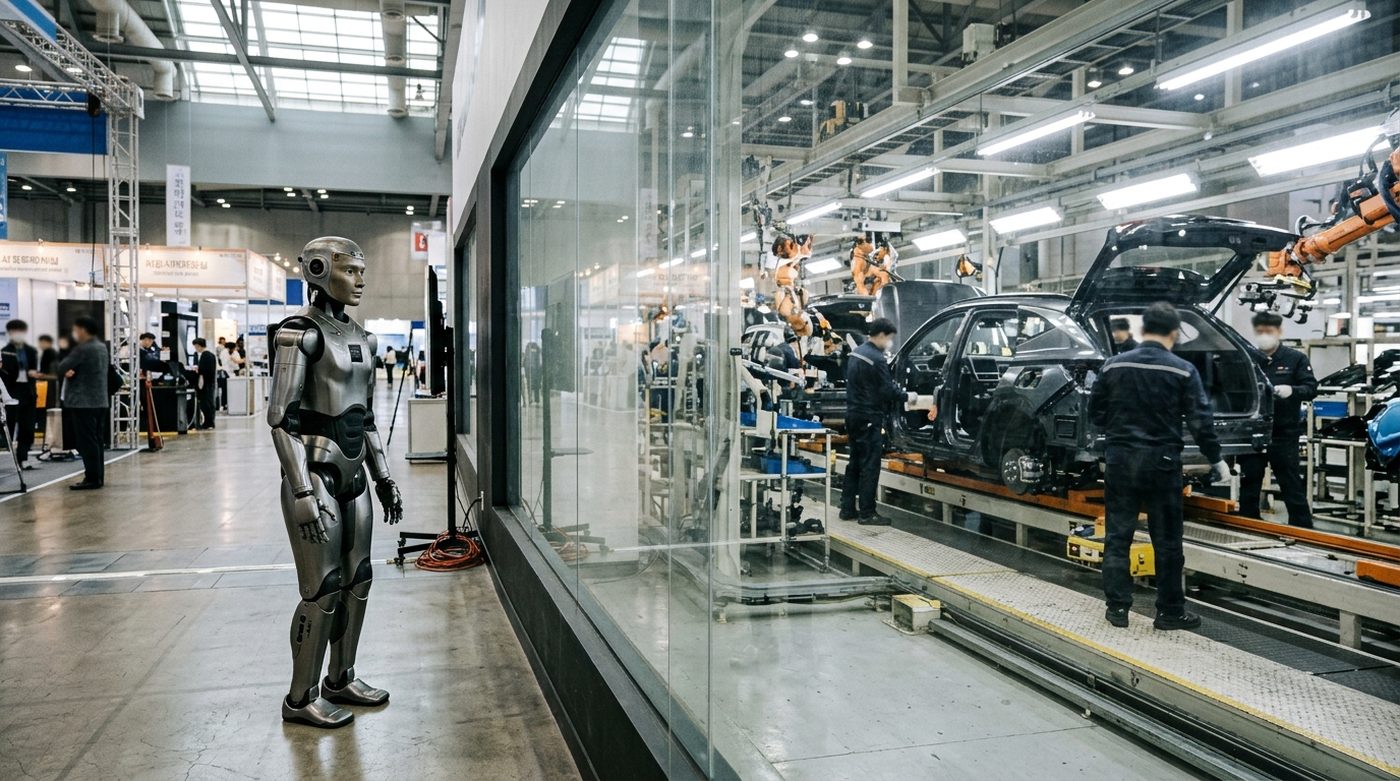
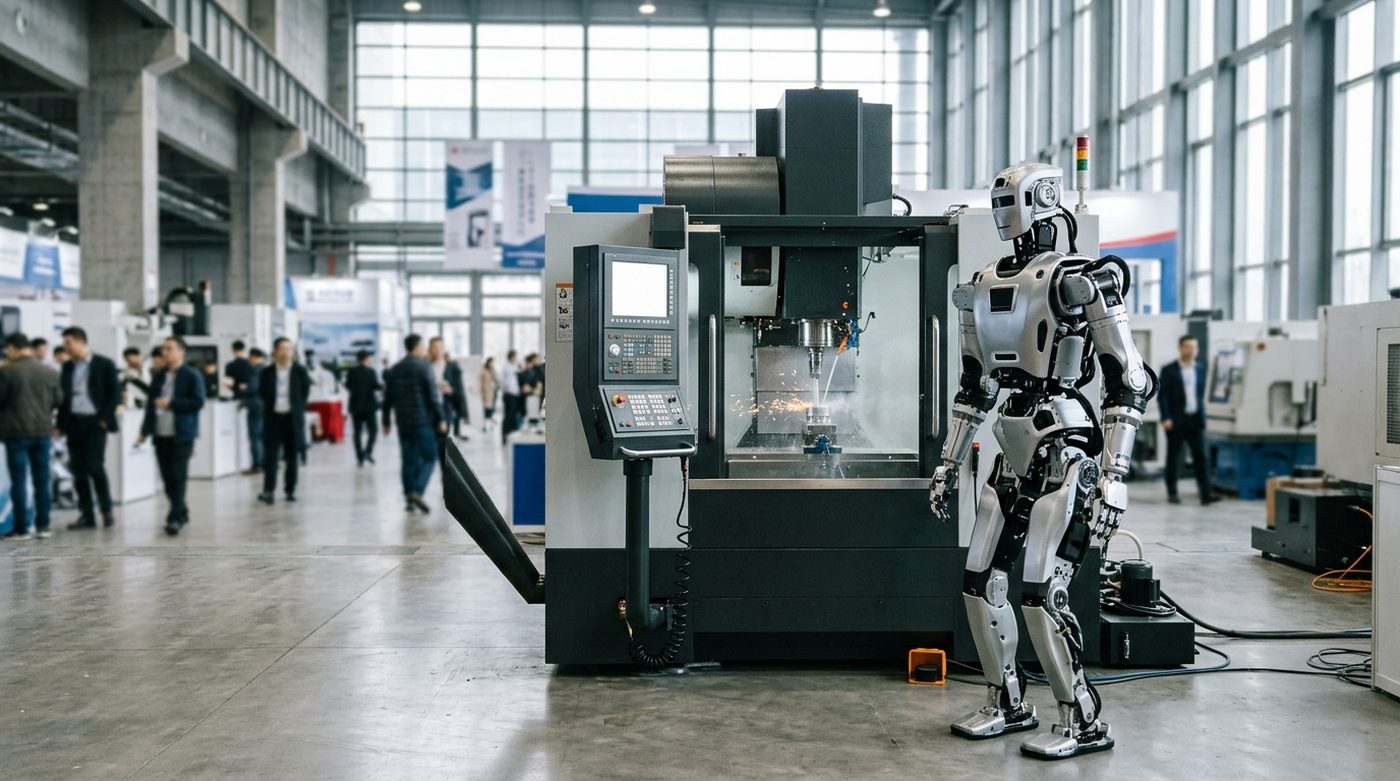
The fair itself does not add a shipment. The 26th China International Industry Fair is a display venue. A robot shown next to a machine tool, or described as collaborating with a person, is not a released cell. China Daily's photograph on the English page is from the August World Robot Conference in Beijing, not from a named Unitree customer plant in October. Using a conference image to illustrate a forecast is normal newspaper practice. It is not evidence of a new installation.
Comparisons with other public turning-point language should stay narrow. The phrase ChatGPT moment, as China Daily notes, followed Nvidia chief Jensen Huang's 2023 comparison of ChatGPT with an iPhone moment. In robotics the phrase has been used by several founders to mean the week a general instruction starts working on a physical machine. Wang's version is more testable than most because he offered percentages. It is still less testable than a purchase order. Percentages without a denominator are slogans with arithmetic.
For a sourcing manager the decision this week is whether to open a pilot conversation or to wait for a scored trial. Opening a conversation is reasonable if the plant has tasks that fixed automation leaves behind and if the vendor will accept a written 80/80 protocol designed by the plant, not by the keynote. Waiting is reasonable if the only new fact is a shorter calendar. Unitree did not announce a price cut, a new humanoid SKU, or a named automobile customer in this report. The absence of those facts is the commercial content.
Risk sits in three places. First, model names. GPT-6 and GPT-7 are Wang's references for why the calendar moved. If those systems do not transfer to contact-rich work, the one-to-two-year case moves back toward the August range. Second, pilot opacity. Factory pilots without cell counts can be one robot on one shift. Third, the listed-company incentive. A STAR Market issuer that has already traded through a 460 percent debut has a reason to sound earlier rather than later. None of that makes the quote false. It makes the quote incomplete as a buying signal.
The clean reading is this. Unitree's chairman has replaced a two-to-three-year near case with a one-to-two-year near case, and he has defined success as roughly 80 percent task completion in roughly 80 percent of unfamiliar settings under voice or text instruction. He has also said the company is not at large-scale deployment because efficiency and versatility are not there. Buyers should adopt the test and ignore the calendar until a customer, or Unitree itself, publishes results against that test.
This analysis is based on company statements, official remarks, and public market records available on 23 October 2026. Figures attributed to executives or customs categories are reported as stated and have not been independently audited. Deployment language describes pilots, trials, or deliveries as disclosed, not proven large-scale production use.