NEURA Robotics and TUM Open Europe's Largest Physical AI Gym
NEURA Robotics and the Technical University of Munich opened the TUM RoboGym at LabCampus near Munich Airport on October 22, 2026, a 2,300-square-meter facility where partners from over ten industries train humanoids on real production tasks. NEURA also unveiled the fourth-generation 4NE1 humanoid, lighter and running on its Neuron AI foundation model, backed by roughly 17 million euros in combined investment and plans for further Gyms in Europe, the United States and China.

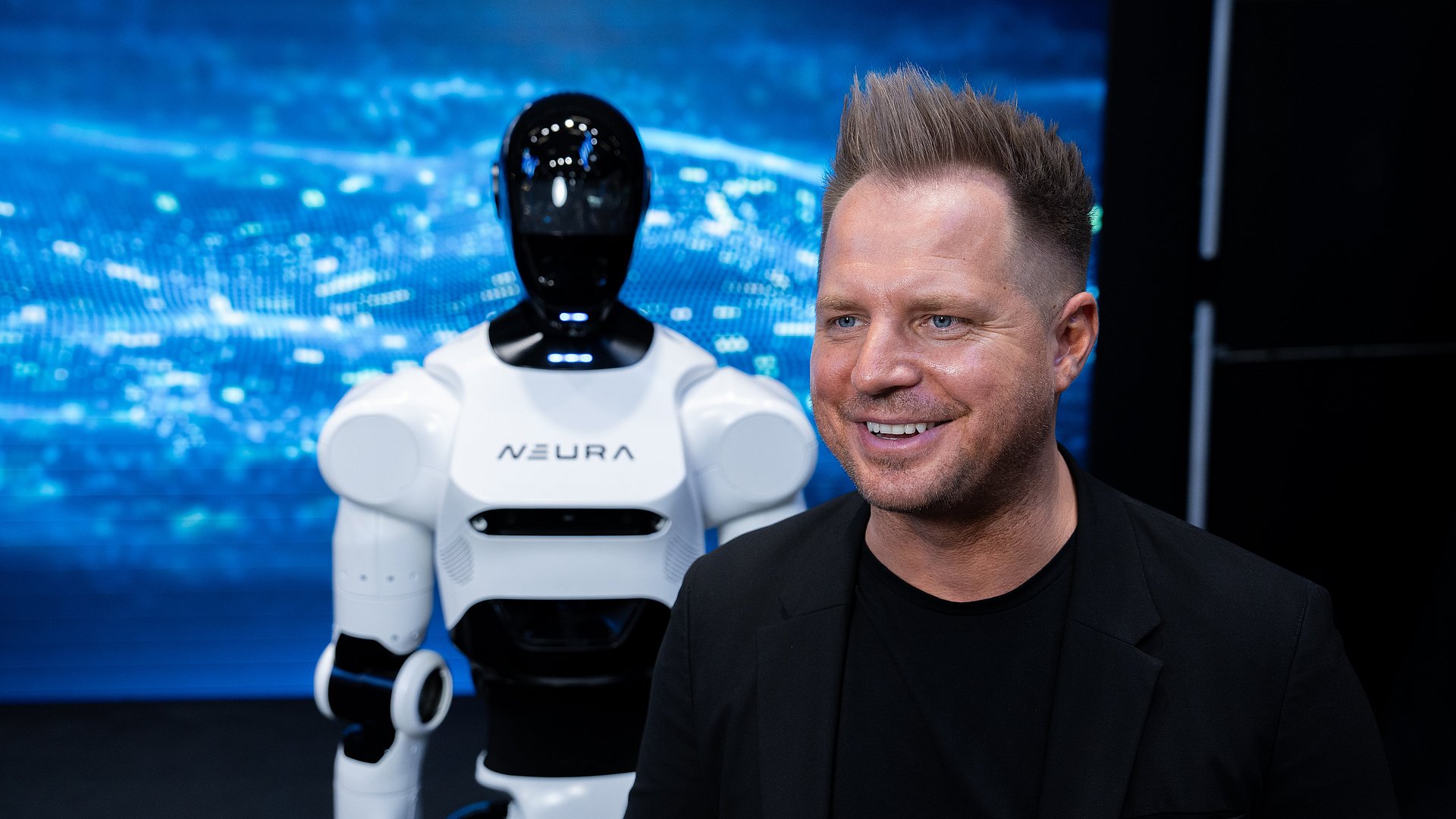
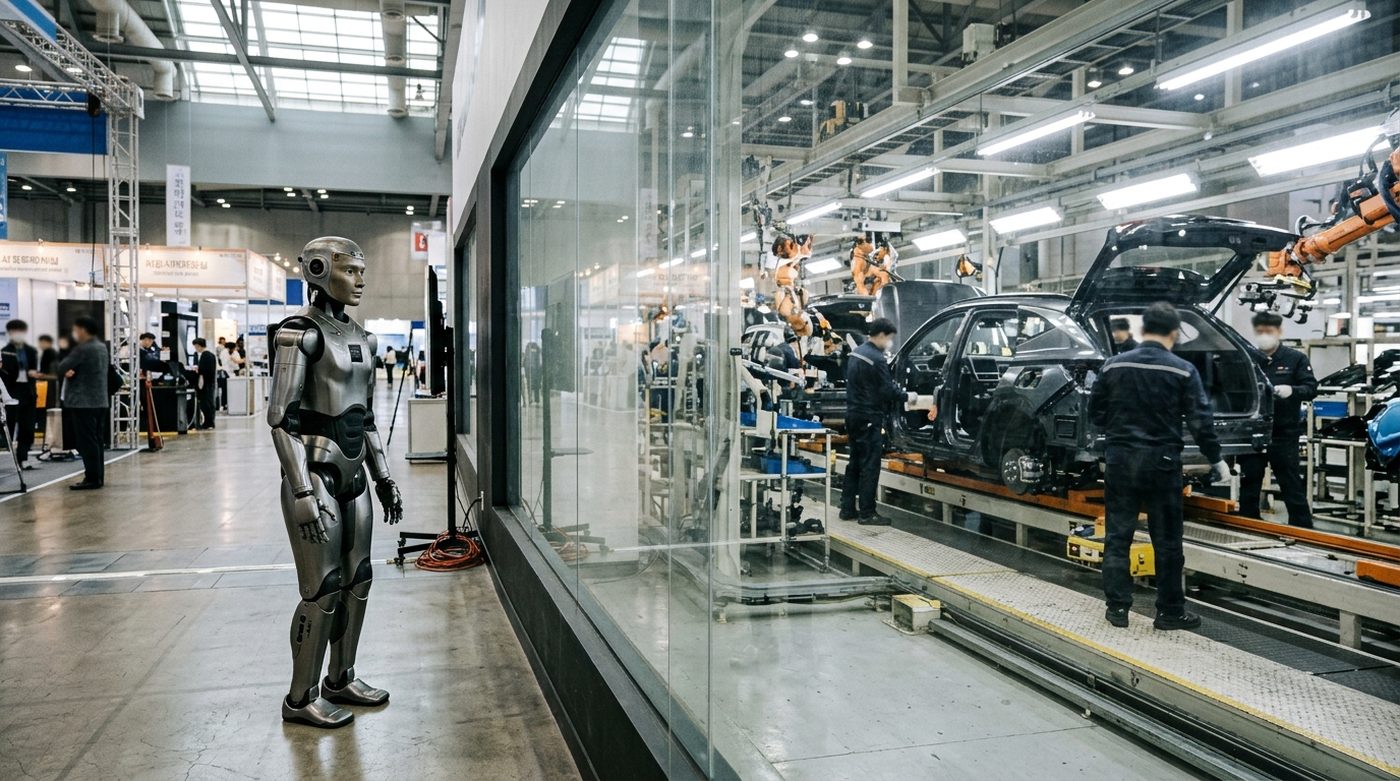
NEURA Robotics and the Technical University of Munich opened the TUM RoboGym, powered by NEURA, at the LabCampus research park near Munich Airport on October 22, 2026, and used the event to introduce the fourth generation of NEURA's 4NE1 humanoid. The 2,300-square-meter facility pairs TUM's Munich Institute of Robotics and Machine Intelligence (MIRMI) with NEURA's hardware and compute, and partners from more than ten industries, including automotive, pharmaceuticals, medical technology, packaging, logistics, agriculture and care, have already been training production workflows there since September.
The timing matters more than the ribbon-cutting. Humanoid developers across Europe, the United States and China have spent 2026 racing to show robots that can walk, wave and lift boxes on a stage. What almost none of them have shown is a repeatable pipeline for teaching a general-purpose body the thousands of narrow, physically awkward tasks a real factory or pharmacy actually needs done. NEURA and TUM are betting that the company willing to build the training floor, not just the robot, wins the harder and more durable argument with buyers.
A Shared Floor Where Customers Bring the Hard Tasks
The RoboGym's working model is unusual for a vendor-funded facility: instead of NEURA dictating what the robots practice, partner companies bring their own process knowledge and let researchers and engineers study how quickly a humanoid can learn it. Early tasks logged at the site include handling cardboard boxes, filling bottles, and loading and unloading wooden components, the kind of low-glamour, high-frequency motions that dominate actual labor costs on a shop floor far more than any single headline-grabbing demo move.
Three data sources feed the training loop. Robots collect real-world interaction data as they work; human operators contribute demonstrations captured through motion capture rigs, data suits and teleoperation rather than scripted recordings; and a simulation layer NEURA calls the Data Amplifier multiplies limited real demonstrations into larger synthetic training sets. Combining measured physical data with simulated variation is a standard recipe in embodied-AI labs, but running it inside a shared facility where automotive, pharmaceutical and agricultural partners all contribute tasks at once is a harder organizational problem than a technical one, and it is the part competitors will find more difficult to copy quickly.
David Reger, NEURA's founder and chief executive, framed the pitch to industrial partners around proprietary process knowledge rather than robot specifications: "Our companies hold knowledge that has been built up over generations." Prof. Lorenzo Masia, MIRMI's executive director and head of the RoboGym, put the structural ambition in blunter terms, describing the arrangement as proof that a university and a hardware company can combine capabilities neither could assemble alone to build something durable rather than a one-off showcase.
The Fourth-Generation Body Carrying the Bet
The 4NE1 Gen 4 humanoid unveiled alongside the facility is built for series production rather than demonstration, according to NEURA, and is roughly 20 percent lighter than the previous generation, with a slimmer frame under a black textile outer skin. The hands have been revised for more precise grips, and the limbs carry what NEURA calls Smart Limbs: built-in reflexes that let each limb react to contact independently rather than waiting on a central processing loop, a design choice aimed at the split-second corrections a robot needs when a part slips or a surface is uneven.
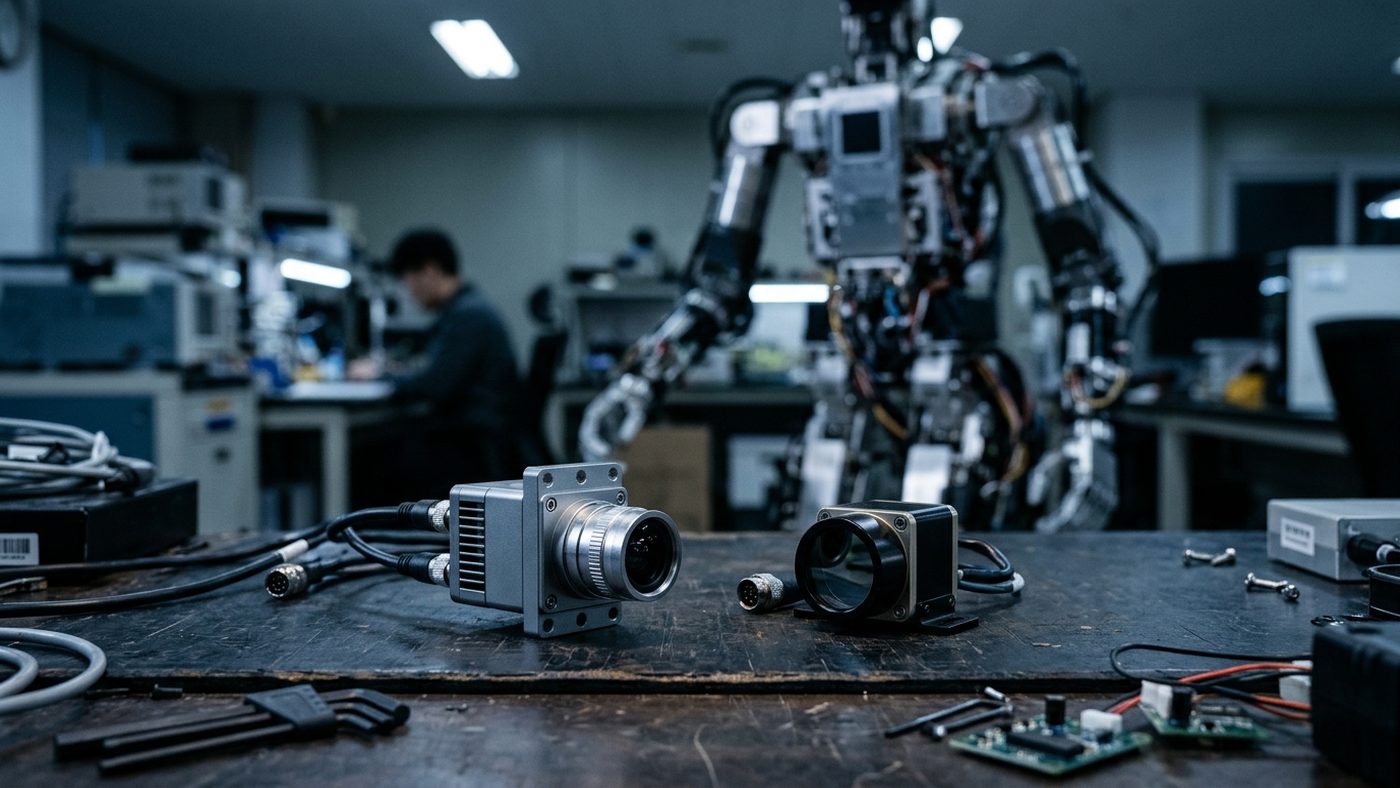
Perception, decision-making and action run on Neuron AI, NEURA's in-house Perception-Language-Action foundation model, which takes vision, touch, force, sound and the robot's own internal state as combined inputs rather than treating each sensor channel separately. The Gen 4 unit is already operating inside the RoboGym and NEURA's other training gyms, and the company has shown it publicly at NVIDIA's GTC Berlin event this week, putting the hardware in front of the same developer and investor audience currently weighing humanoid bets from Figure, Apptronik, Unitree and Tesla.
Neuron AI's architecture also signals where NEURA expects the real competitive moat to form. Treating touch and force as first-class training signals, rather than bolting tactile sensing onto a vision-first stack after the fact, is a deliberate break from the camera-centric approach most humanoid programs started with. Warehouse and light-assembly tasks fail less often because a robot cannot see an object than because it cannot judge how hard to grip it, when a part has slipped, or whether a surface it just touched is load-bearing. A foundation model trained from the outset on synchronized vision, touch, force, sound and proprioception should, in principle, generalize faster across the kind of varied, unscripted manual tasks that defeated an earlier generation of vision-only pick-and-place systems. Whether that theoretical advantage survives contact with a real production line, rather than a curated RoboGym task list, is the open question every partner company signing up for a training seat is effectively funding an answer to.
Who Is Actually Paying for the Floor Space
The RoboGym carries a three-year initial commitment backed by roughly 17 million euros (approximately US$18.4 million) in combined investment from NEURA and its partners, with NEURA itself contributing around 11 million euros (approximately US$11.9 million) of that total. NEURA supplies the robotics hardware, technical infrastructure, computing power and operating staff; TUM contributes the physical space, scientific expertise and research resources. Prof. Thomas Hofmann, TUM's president, called the center unique in Germany and Europe, a claim that is easier to defend on scale, at 2,300 square meters and growing, than on concept, since rivals including Figure and Agility have run their own customer-facing training programs for over a year.
What distinguishes the funding structure from a typical robotics showcase is that the partner companies are not customers paying for finished robots; they are co-investors trading access to their proprietary task data for early rights to whatever models the RoboGym produces. That arrangement only works if NEURA can keep expanding the roster of participating industries without diluting the quality of any single partner's training data, which is the operational risk procurement teams evaluating a RoboGym seat should press hardest on before committing a production line's worth of process knowledge to a shared facility.
Munich as the Template, Not the Endpoint
NEURA has said it plans additional Gyms across Europe, the United States and China, alongside a second German facility with RWTH Aachen already in the pipeline. That expansion plan reframes the Munich opening as a prototype for a network rather than a single flagship site, which changes the buying calculus for an industrial partner deciding whether to commit process data now. A company that signs on early in Munich is effectively pre-positioning itself inside a training network NEURA intends to replicate in the regions where that same company may eventually want humanoids deployed, from a logistics operator with European and North American warehouses to an automotive supplier with plants across Germany and China.
For procurement and automation teams outside NEURA's current partner list, the RoboGym model is worth watching less as a one-off facility and more as a competing distribution strategy to the pure hardware-sales approach used by most humanoid vendors. Instead of selling a robot and leaving the customer to solve task-specific training, NEURA is selling a seat in a shared training pipeline, which shifts both the cost structure and the lock-in risk: a buyer gains faster task coverage but also ties its process data, and potentially its training cadence, to NEURA's own expansion schedule and facility roadmap. Teams weighing a humanoid pilot in the next one to two budget cycles should ask any vendor running a similar gym model the same question NEURA has not yet answered publicly: what happens to a partner's accumulated task data and trained skills if that partner later wants to switch hardware suppliers.
The comparison buyers will reach for first is Figure's Helix data pipeline and 1X's home-deployment data flywheel, both of which also lean on a mix of teleoperation and real-world logging to compress training time. NEURA's point of difference is institutional rather than technical: a public research university supplying facility space, academic oversight and a multi-industry partner roster gives the RoboGym a neutrality that a single vendor's in-house data program cannot easily claim, which may matter to European manufacturers wary of handing proprietary process data to a Silicon Valley or Shenzhen competitor's training loop. Whether that neutrality translates into faster partner recruitment than NEURA's venture-funded rivals can manage on their own is the metric worth tracking over the RoboGym's first full year, not the square footage announced on opening day.
By the time the first wooden components finish their nightly cycle through the RoboGym's packaging bay, the operators who decided whether to loan a robot their hardest task, or hold it back for a more mature system, will already have shaped what the next 4NE1 generation can and cannot do.
This article synthesizes company and university statements published in connection with the October 22, 2026, opening. It is for general information purposes only and does not constitute investment, procurement or professional advice.