Peraso Demonstrates 60 GHz Wireless Link Between a Humanoid Robot and an Edge AI Server
Peraso Inc. (Nasdaq: PRSO) said it completed a functional validation on Oct. 21, 2026, of a 60 GHz millimeter-wave wireless link sustaining about 500 Mbps uplink and 100 Mbps downlink between a humanoid robot and an edge AI server, using a hybrid architecture that splits a local Nvidia GPU for low-latency reflexes from a remote GPU cluster for heavier models. The announcement names no robot manufacturer or customer and is not a shipping product.


SAN JOSE, Calif. Peraso Inc. said on Oct. 21, 2026, that a 60 GHz wireless link carried roughly 500 megabits per second of data from a humanoid robot to an edge AI server, with about 100 Mbps coming back down, in a functional validation the company is using to argue that its millimeter-wave chips can replace Wi-Fi and tethered connections in robots that generate more sensor data than they can process onboard.
Peraso (Nasdaq: PRSO) is a small, San Jose, California, semiconductor company built almost entirely around 60 GHz and millimeter-wave wireless silicon, the same general radio-frequency territory used in parts of 5G mmWave and WiGig networking gear. Its business today runs through chipsets, modules, software and licensable IP sold into fixed wireless internet access, military and tactical radios, drone links and factory automation. The October 21 announcement is the company's most direct attempt yet to carry that same silicon into the market for humanoid and mobile robots, a market it does not yet sell into at production volume.
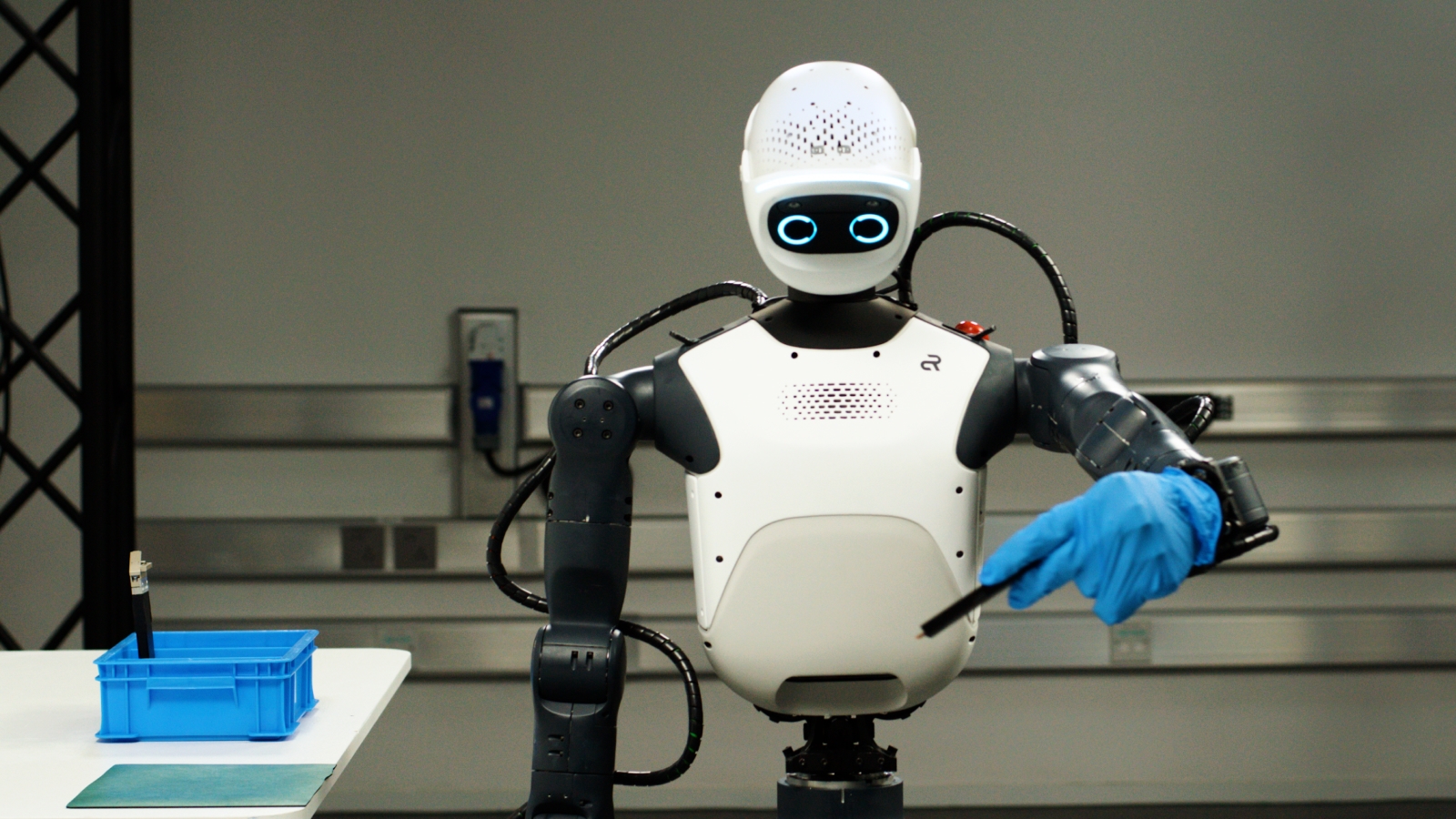
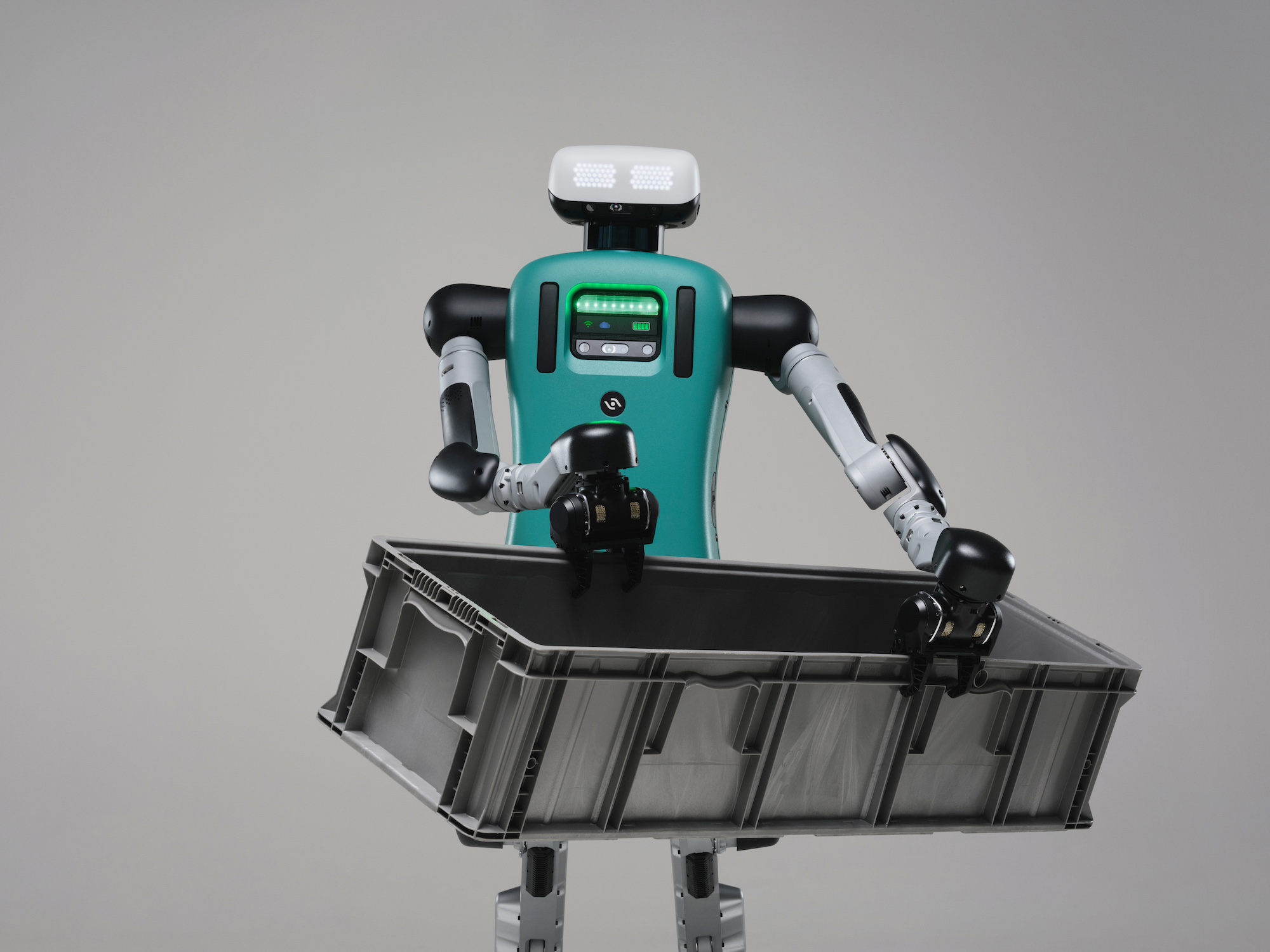
The setup Peraso described paired a humanoid robot with an edge AI server over a hybrid computing architecture. A local Nvidia GPU on or near the robot handled reflexes and other actions that need extremely low latency, while a separate, remote GPU cluster ran heavier models that would cost too much to run on the robot itself. The 500 Mbps uplink carried sensor, video, telemetry and operational data back to that cluster; the 100 Mbps downlink carried instructions and updated model parameters the other way. Peraso's beamforming, which focuses a radio signal into a narrow directional beam rather than broadcasting it in all directions, is built to let several of these links run close together without interfering with each other, a requirement for any factory floor or warehouse running more than one robot at a time. The company noted it has separately shown aggregate throughput above 50 gigabits per second across multiple simultaneous links in a confined test area, a figure that describes total network capacity rather than the data rate of any single robot's connection.
Peraso framed the underlying problem as one of data gravity. "Physical AI systems generate enormous amounts of data through cameras, sensors, and interactions with their environments," said Ronald Glibbery, Peraso's chief executive, in the company's statement. "Our demonstration shows how 60 GHz wireless can connect humanoid robots with edge AI infrastructure, supporting continuous data exchange." Glibbery added that the same link supports faster deployment of updated AI capabilities as models improve. Mike Hamilton, Peraso's vice president of business development, argued the company's technology offers two specific advantages for this use case: "support for multi-gigabit data rates suited for high-capacity data transfer and highly directional beamforming that enables the creation of isolated wireless networks." He added that Peraso expects those capabilities to matter more "as organizations deploy large numbers of autonomous systems that must continuously exchange data with AI computing resources."
For buyers evaluating robot fleets and the infrastructure underneath them, the specific figures matter more than the framing. Five hundred megabits per second is a solid number for a single wireless link carrying live video and sensor telemetry, broadly comparable to what a well-configured enterprise Wi-Fi 6 connection can deliver to one device under real conditions, not an order of magnitude beyond it. What differentiates Peraso's pitch is less raw speed than spectrum behavior: 60 GHz sits in largely unlicensed, heavily attenuated spectrum that does not travel far or penetrate walls well, which is a drawback for general-purpose networking but becomes an asset on a dense robot floor, where a tightly beamed, short-range link to one machine is less likely to collide with the identical link feeding the robot standing next to it. That is a genuinely different engineering tradeoff than stretching Wi-Fi or a private 5G network across the same floor, and it is the reason connectivity vendors see an opening in physical AI deployments at all.
The architecture Peraso described also says something buyers should weigh independently of whose radio chip is inside it. Splitting a robot's intelligence between a local GPU for reflexes and a remote cluster for everything computationally heavier is becoming the default design pattern across the humanoid robotics industry, because no robot-sized power and thermal budget can host frontier-scale models onboard. That pattern turns the wireless link connecting the two halves into a dependency as structural as the GPU itself: a robot that cannot reliably move sensor data upstream and model updates back down is a robot that cannot improve itself in the field. Procurement and operations teams sourcing humanoid or mobile robot fleets should treat that backhaul link as its own line item in a technical evaluation, with its own throughput, latency and interference specifications, rather than assuming it rides along for free inside whatever Wi-Fi the facility already has installed.
Humanoid robots raise the stakes on this problem in a way wheeled or fixed industrial robots generally do not. A humanoid platform is untethered by design, runs on a battery budget that competes directly with onboard compute for power, and is meant to work alongside people and other machines on the same factory or warehouse floor rather than in a caged cell. That combination rules out a physical cable as the default data path and puts real pressure on whatever wireless link replaces it, because the robot cannot simply plug in to offload a day's worth of camera and sensor footage the way a stationary arm or an automated guided vehicle returning to a charging dock sometimes can. Any connectivity technology pitched at this market, Peraso's included, is effectively being asked to do continuously and wirelessly what a cable or a docking station used to do in short bursts, which is why the company is emphasizing sustained throughput rather than a one-time burst transfer rate.
Buyers running a technical evaluation of robot connectivity suppliers, whether they are comparing 60 GHz mmWave gear against Wi-Fi 6E, private 5G or ultra-wideband alternatives, should ask for the same handful of numbers from every vendor: sustained uplink and downlink throughput under realistic payloads, not a best-case burst figure; measured performance with several robots operating within a few meters of each other, since isolation under density is the whole argument for a directional, beamformed link; and tolerance for the kind of obstructions, people and moving equipment that a real production floor puts in the way, which a lab-adjacent validation like Peraso's does not yet address. A vendor that can answer all three with named deployments, not just demonstrations, has moved past the stage every 60 GHz, mmWave and private-wireless supplier in this space is currently competing within.
What this announcement is not is a shipped product or a named customer win. Peraso called the work a "functional validation," company language for a controlled internal or lab-adjacent test, and the release names no robot manufacturer, systems integrator or end customer behind the demonstration. There is no production timeline, no unit pricing and no disclosed data on range, obstruction tolerance or performance outside the test environment described. Peraso does already ship 60 GHz hardware at production volume in adjacent markets, including fixed wireless internet access and defense and tactical communications, which gives the underlying manufacturing and supply relationships more history than a pure startup pitching the same chip would have. But a working link between one humanoid robot and one edge server in a controlled setting is an early proof point, not evidence of a deployable product, and buyers should ask any connectivity supplier making similar claims to show a named integration partner and a production order before treating lab throughput as a procurement-ready specification.
That distinction also explains why Peraso's own comparison point, the 50 Gbps aggregate figure from its earlier testing, is doing different rhetorical work than the 500 Mbps robot link. Aggregate network capacity across many simultaneous connections and the sustained data rate available to any single device are different measurements answering different buyer questions, and a connectivity vendor that leads with the larger number while a specific product delivers the smaller one is not being dishonest, but it is asking a buyer to do the translation themselves. Robots that must retrain as fast as they collect data will hit the limits of their wireless backhaul before they hit the limits of their onboard compute, and that constraint will show up first in the mundane, single-link throughput number, not the lab's aggregate capacity figure.
Peraso remains one of the smaller public companies in RF semiconductors, and a single technology demonstration, however credible, does not by itself change the commercial calculus facing procurement teams who need shipping hardware with named customers behind it. What it does change is the list of connectivity vendors worth tracking as humanoid robot fleets move from pilot lines to repeated deployment: a company that can sustain 500 Mbps up and 100 Mbps down between a robot and an edge server, on radios already shipping in other markets, has put a concrete, verifiable number on the table that competitors pitching the same use case will now be measured against.
This article synthesizes company statements and public product disclosures as of 2026-10-21. It is for general information purposes only and does not constitute investment, financial, or professional advice.