Unitree Flags a 388x Multiple After a Three-Day Rally
Unitree told investors its three-day STAR Market rally crossed 30 percent and its rolling earnings multiple is 388 times, against a sector average near 40.

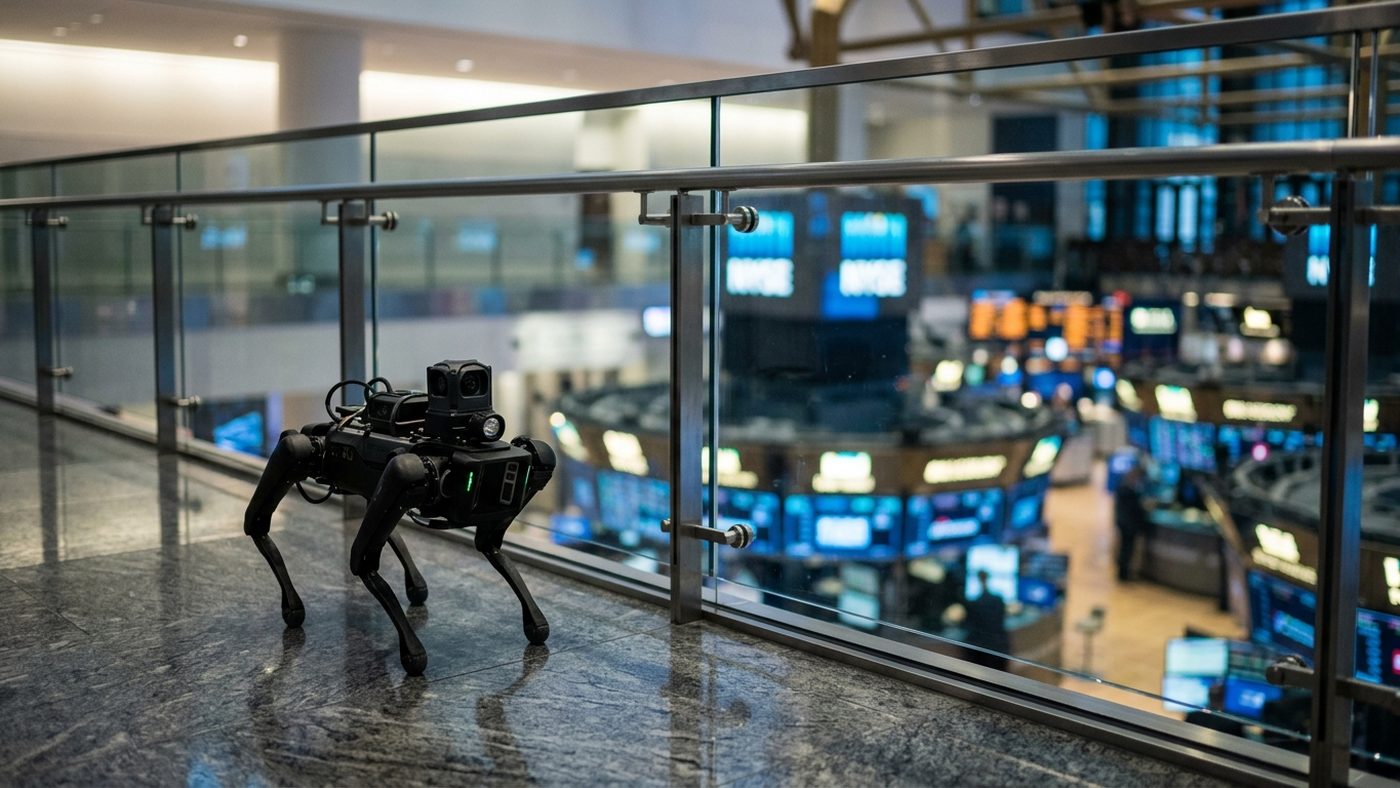
Unitree Robotics Co., Ltd. (688836.SH), the Hangzhou humanoid and quadruped maker listed on Shanghai's STAR Market, told investors on 21 October 2026 that its shares had triggered an abnormal-trading notice after three sessions of gains. The board dated the notice 21 October and numbered it 2026-003. The company said the cumulative deviation of closing prices on 16, 19 and 20 October exceeded 30 percent, the tripwire set by the exchange's listing rulebook and its STAR board surveillance manual. It also said a self-check found no undisclosed material information, that operations were normal, and that its rolling price-to-earnings ratio stood at 388.25 times against a 39.51 times one-month average for general equipment manufacturing, the sector classification published by CSI.
That is a market notice, not a product launch. Buyers who treat a three-day rally as evidence that humanoid orders have suddenly arrived will be reading the filing backwards. Unitree's own board used the notice to say the opposite: the humanoid industry is still in early commercialization, technology maturity, downstream demand and the supply chain are all uncertain, and revenue and earnings could be hurt if large-scale commercialization lands later than expected.
A three-day rally crossed the exchange line
The notice is specific about the window. The three trading days were Friday 16 October, Monday 19 October and Tuesday 20 October. China's market was closed on the weekend, so the rule looks through the gap and still treats the run as one episode. Once the cumulative deviation of closing prices exceeds 30 percent, the STAR Market rules require the company to explain the move and to check whether something material has been left unsaid.
Unitree's answer, after checking with its controlling shareholder and actual controller, is that nothing of that kind exists as of the disclosure date. The board said there is no plan for a merger or restructuring, a share issue, a debt restructuring, a business restructuring, an asset sale or an asset injection. During that window, neither the board nor senior management bought or sold, and the controlling shareholder, the actual controller and their concert parties stayed out of the market as well. The company also said it had not found media reports or market rumors that required a clarification.
A secondary market tape carried a last price of 526.030 yuan at the time the notice was republished, up 30.11 yuan, or 6.07 percent, on the session. That print is a market quote attached to the republication, not a figure the board certified in the body of announcement 2026-003. The certified figures are the three-day deviation, the two multiples, and the board's negative assurance on undisclosed events.
The multiple is the number the board chose to print
A rolling price-to-earnings ratio of 388.25 times means investors are paying roughly 388 yuan for each yuan of trailing earnings. CSI's latest data, which the company cites, put the one-month average for general equipment manufacturing at 39.51 times. Unitree did not argue that the gap is justified by a hidden order book. It printed the gap and told investors the stock sits above its sector.
That comparison has a limit, and the limit matters. General equipment manufacturing is a broad CSI bucket. It includes machinery businesses whose earnings are already in a steady state. A humanoid and quadruped specialist can reasonably trade at a premium to that bucket if buyers believe earnings will compound. The filing does not supply the forecast that would turn the premium into a model. It supplies the premium, then lists the ways the premium can reverse.
The reversal case is written in plain language. If large-scale commercialization is slower than the market expects, future revenue expansion and earnings release may be adversely affected. The board does not attach a date, a shipment target or a revenue guide to that sentence. Readers should not invent one. The sentence is a risk factor, not a timetable.
What the self-check does and does not prove
A Chinese abnormal-trading notice is a compliance document. Every director has signed a legal warranty that the notice is true, accurate and complete, and that it leaves out nothing material. That guarantee covers the check they describe. It does not convert a three-day price move into operating news.
The check has four parts. Daily operations are normal, and neither the business model nor the main markets have undergone a major change. Nor, the company added, has the policy backdrop or the wider market setting been rewritten in a way that would explain the tape. No undisclosed major event is planned by the company, the controlling shareholder or the actual controller. No other price-sensitive event was found, and insiders were not trading the stock during the window.
For a procurement lead, the useful line is the one about operations and policy. Unitree is not telling customers that a subsidy, a standard or a government order changed this week. It is telling the exchange that none of those things explains the tape. Anyone building a sourcing case on a fresh policy tailwind will not find it in announcement 2026-003.
For an investor, the useful line is the one about insiders. The people closest to the order book were not buying into the rally. Absence of insider buying is not evidence against the company. It does remove one common excuse for chasing a STAR Market spike: the idea that management is quietly accumulating because a contract is about to print.
Early commercialization is now a listed-company sentence
Unitree has spent the past year in the public market as a reference name for China's humanoid trade. Readers who follow the gap between demo performance and deployment reality will recognize the pattern. A company can be the most watched name in a category and still describe that category as early. The 21 October notice does exactly that, in a document the board must stand behind.
The practical reading is narrower than the slogan. "Early commercialization" here is doing legal work. It is the reason the board gives for a valuation that could fall back if factories, warehouses and public sites adopt humanoids more slowly than the share price implies. It is not a product review of the Go or H1 lines, and it is not a shipment census. Those facts are simply not in this document.
That distinction is the hard part of reading humanoid filings. A risk factor that says demand is uncertain does not mean demand is zero. It means the company will not let a 30 percent three-day move stand as a proxy for demand. Buyers who want demand evidence need purchase orders, acceptance reports and repeat service revenue. This notice points them away from the tape and back to those documents.
Where the price can still disconnect from the floor
The board closed with a process point that is easy to skip. Unitree named five securities newspapers plus the exchange's own website as the only outlets whose text counts as the company record. Information published anywhere else is not the company's record. The company said it cannot control the causes or direction of market moves, and it told investors to watch price volatility and the investment risk that comes with it.
That is a useful instruction on a day when secondary write-ups will attach live quotes, market-cap estimates and commentary the board did not certify. The republication on Sina Finance carries the notice and a live quote. It is a wire, not the designated medium. The designated record is announcement 2026-003, dated 21 October 2026, as carried by those outlets and by the Sina Finance republication of the filing.
None of this is a reason to ignore Unitree as an operator. A company that has to file this notice is a company the market is trading heavily. The filing's job is to separate that trading from the operating record. On 21 October, the operating record the board was willing to sign is unchanged: normal operations, no hidden deal, a multiple far above the sector, and an industry that has not yet proved it can commercialize at the speed the price assumes.
What a buyer should do with the notice this week
The notice changes the questions, not the shopping list. A factory or logistics buyer who was already testing a Unitree platform does not get a new spec sheet from announcement 2026-003. The buyer does get a public statement that the vendor's daily operations have not undergone a major change and that industry policy has not undergone a major adjustment. That is a stability signal, and it is modest. It says the rally was not caused by a surprise contract the company forgot to disclose. It does not say the rally was caused by a contract at all.
The right follow-up is therefore operational. Ask what portion of recent shipments went to research labs, show floors and data-collection jobs, and what portion went to a line that runs without a handler standing next to the machine. Ask whether acceptance is tied to a task rate the customer can audit. Those questions were already the right ones before 16 October. The filing makes them harder to skip, because the company has now put "early commercialization" in a document aimed at anyone tempted to treat the share price as a progress report.
Competitors should read the same page without turning it into a victory lap. A 388 times multiple at a peer does not make another humanoid maker cheap, and it does not make that peer fragile by itself. Multiples compress when earnings arrive, when earnings disappoint, or when the buyer base changes its mind. Unitree has told the market which of those paths it wants investors to weigh. It has not told the market which path it expects. Teams that copy the warning into their own decks should keep the attribution attached. The sentence belongs to Unitree's board, on this date, about this ticker.
There is also a process lesson for anyone who tracks Chinese robotics through social clips and weekend roundups. The item that cleared a same-day bar on 21 October was not a demo. It was a four-part board check: price move, undisclosed-event search, valuation comparison, and a commercialization caveat. That is a duller story than a robot on a stage. It is the story the company was willing to sign.
This article is for informational purposes only and does not constitute investment, financial, or trading advice.
This article is for informational purposes only and does not constitute investment, financial, or trading advice.