ARM Opens Robotics Call for Naval Welding and Inspection
ARM Institute opened its final Navy shipbuilding project call, with about US$2.9 million for adaptive welding and US$4.9 million for in-process inspection. The requirements separate funded industrial integration from external AI and academic work.


The ARM (Advanced Robotics for Manufacturing) Institute, a Pittsburgh-based public-private manufacturing organization, opened its final Navy shipbuilding technology call on October 20, 2026. It offers about US$7.8 million across adaptive robotic welding and in-process inspection, with proposals due November 23 and no project winners yet announced.
The split matters. About US$2.9 million is available for integrating a welding system that adjusts to variations in thick steel joints. About US$4.9 million is available for industrial inspection equipment that checks the inside of a growing metal component between deposited layers. These are development budgets for two defined manufacturing problems, not purchase orders for robots already qualified to make naval structures.
The final call follows an October 15 draft provided to members. It sets a November 23, 2026, 5 p.m. Eastern Time deadline for proposals and a December 2 deadline for supporting documents. Work is expected to begin by January 31, 2027, with completion no later than January 31, 2029. A public webinar on October 21 is intended to clarify the requirements before applicants assemble their submissions.
The welding team buys intelligence but owns the integration
The welding workstream targets thick joints assembled through multiple weld beads and layers. Its problem is not simply moving a torch along a programmed line. Parts arrive with differences in how their joint surfaces fit together, and the system must respond while still producing welds that satisfy the specified Navy requirements. A repeatable robot trajectory is useful, but it is not the same as a repeatable finished joint.
Artificial intelligence (AI) is part of the proposed answer, although the funded team is not being asked to invent the entire model stack. A separate performer will supply the AI model and lead its data architecture and model-drift management plan. The selected industrial team must integrate that intelligence with the robot, welding power supply, sensors, controls and local computing hardware. Model development and the main data-management architecture are excluded from this funding.
That allocation changes the supplier conversation. A robot manufacturer cannot answer every requirement with motion specifications. An AI developer cannot satisfy the call by presenting recognition accuracy alone. The integration team must show how a sensor observation becomes a safe process adjustment, how that adjustment is recorded, and how the resulting weld is assessed. It must also verify the supplied plan for managing changes in model behavior.
Core adaptive functions have to run locally, without relying on a cloud service or an external data center. That is an operating requirement, not a claim that cloud-connected industrial systems are generally unsuitable. Here, the delivered welding system must remain functional when connectivity is limited or absent. Compute hardware, response timing and interfaces therefore belong in the proposed equipment design rather than in a later software add-on.
The familiar comparison is a conventional robotic welding cell configured for a stable part and a known process. Adaptive welding adds a feedback problem: the equipment must recognize a relevant variation and make an acceptable change without leaving its qualified operating limits. A faster arm or a larger AI model does not establish that result. The bidder needs evidence connecting sensing, control actions and completed weld quality.
ARM wants a technology readiness level (TRL) 7 demonstration in a representative private U.S. shipyard. That is a target for the funded prototype, not an achievement announced with the call. Design and planning come first, followed by build and integration, then verification and the shipyard demonstration. Buyers should read that sequence as a development program with interfaces to prove, not as a near-term catalog launch.
For an industrial supplier, the commercial opportunity lies in owning those interfaces well enough to support deployment. The agreement between the integration team and the external model provider will matter when a sensor changes, a model is updated or a process falls outside its tested range. In this call, intelligence is a supplied component; the funded deliverable is the system that makes its decisions safe to use.
Inspection must catch a defect before the next layer hides it
The second workstream addresses wire directed energy deposition (DED), a metal-building process that adds material in successive layers. ARM is seeking volumetric inspection during the pauses between layers. The aim is to find internal defects while a repair can still be targeted, rather than discovering a problem after more material, time and processing have accumulated around it.
The plain-language distinction is between checking the outside of a growing part and checking what is happening inside it. A surface photograph may show the shape of a deposited layer but cannot, by itself, establish that the material beneath it is sound. The call leaves room for ultrasonic, eddy-current, electromagnetic-acoustic, acoustic-resonance or another suitable inspection approach. It does not name a winning method or prescribe a particular vendor.
Each method has to earn its place under manufacturing conditions. The proposed inspection equipment must contend with elevated temperatures, rough unfinished surfaces, access constraints and the time available during a pause in deposition. A convincing laboratory scan is not enough if positioning, calibration or cooling takes so long that the build cannot proceed at a useful rate. Defect information must arrive in time to support a decision.
There is another important workshare boundary. The funded industrial team will produce a TRL 6 demonstrator and deliver it to a separate academic performer for follow-on monitoring and inspection-guidance research. The academic effort is outside this funding, as is delivery of production-qualified hardware. The phrase commercial-grade describes the intended robustness and maintainability of the demonstrator; it does not mean a shipyard can treat it as approved production equipment today.
That distinction is the strongest counterpoint to a headline centered only on the available money. The program is buying development evidence and an integrated demonstrator. It is not announcing a certified inspection product, an installed fleet or a proven reduction in scrap. The eventual system still has to establish its coverage, sensitivity, repeatability and operating limits in the conditions for which it is proposed.
ARM requires applicants to define measurable outcomes against a stated baseline. Its framework covers performance, productivity, efficiency, acquisition cost and sustaining cost, among other measures. For inspection, that should connect defect detection with the time and work needed to obtain a usable result. Moving a rejection earlier may be valuable even if an individual inspection step becomes slower, but the proposal must explain and measure that tradeoff.
The difference between a task success rate and a working deployment is relevant here. An inspection result has commercial value only if the surrounding process can act on it reliably. Suppliers evaluating the call should therefore separate sensor capability from the complete operating chain: positioning, measurement, interpretation, repair decision and return to production. None of those links is established merely by announcing the project budget.
Membership and validation shape the route to an award
The two technical tracks also have different bidding rules. The welding project requires a team; a single-organization proposal is not eligible. The inspection project allows a single organization. The lead applicant must hold an eligible ARM membership tier in good standing, and other participating organizations must satisfy the membership requirements set out in the call. A public document is not an open invitation for every supplier to submit independently.
Cost share will be considered in evaluation, and the principal investigator at the lead organization must commit at least 25 percent of their time. The call also restricts work by foreign nationals and foreign entities under its stated definitions. Those provisions should be checked before building a consortium or promising personnel. They should not be simplified into an unsupported claim that only U.S. citizens can participate.
For suppliers outside the United States, including Asian robotics and sensing companies, the technical requirements are useful market intelligence without implying access to this funding. They identify demand for local AI execution, inspectable manufacturing records and equipment that can be maintained in difficult industrial settings. Any participation decision still depends on the actual eligibility and work restrictions, not on the geographic reach of a supplier's product catalog.
There is a useful comparison with South Korea's funding for cloud-free industrial robot AI. The shared buying issue is where intelligence runs and how it connects to a physical process. ARM's current call narrows that issue further: the welding team integrates an externally supplied model, while the inspection team hands its industrial demonstrator into a separate research effort. Those boundaries belong in any assessment of the funded scope.
Selection is not guaranteed. ARM expects decisions around December 9, followed by negotiations, with subaward agreements due by January 15, 2027. Applicants should distinguish a selected proposal from an executed agreement and an executed agreement from a successful demonstration. The available federal amounts are neither booked supplier revenue nor evidence that either technology has already met its operating targets.
The next substantive milestone is the proposal deadline, followed by the selection and negotiation process. The later test will be whether the welding prototype performs in its representative shipyard and whether the inspection demonstrator delivers useful internal-defect information within a live manufacturing pause. Until those results exist, the call's strongest signal is its precise allocation of responsibility: industrial capability is funded here through integration and validation, not assumed from the presence of AI.
This analysis synthesizes the institute's final project call and public requirements. Funding amounts describe available development support; performance targets are not independently demonstrated results.
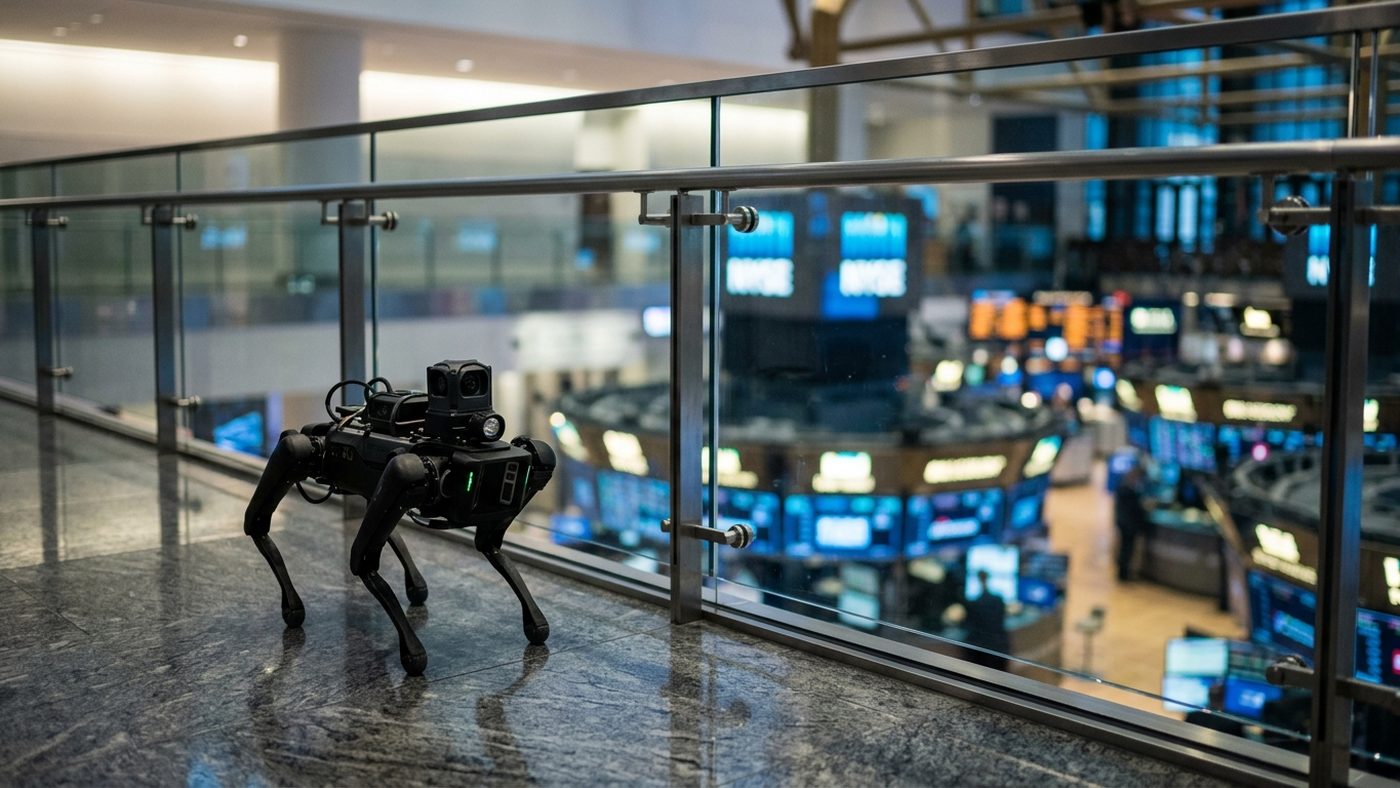
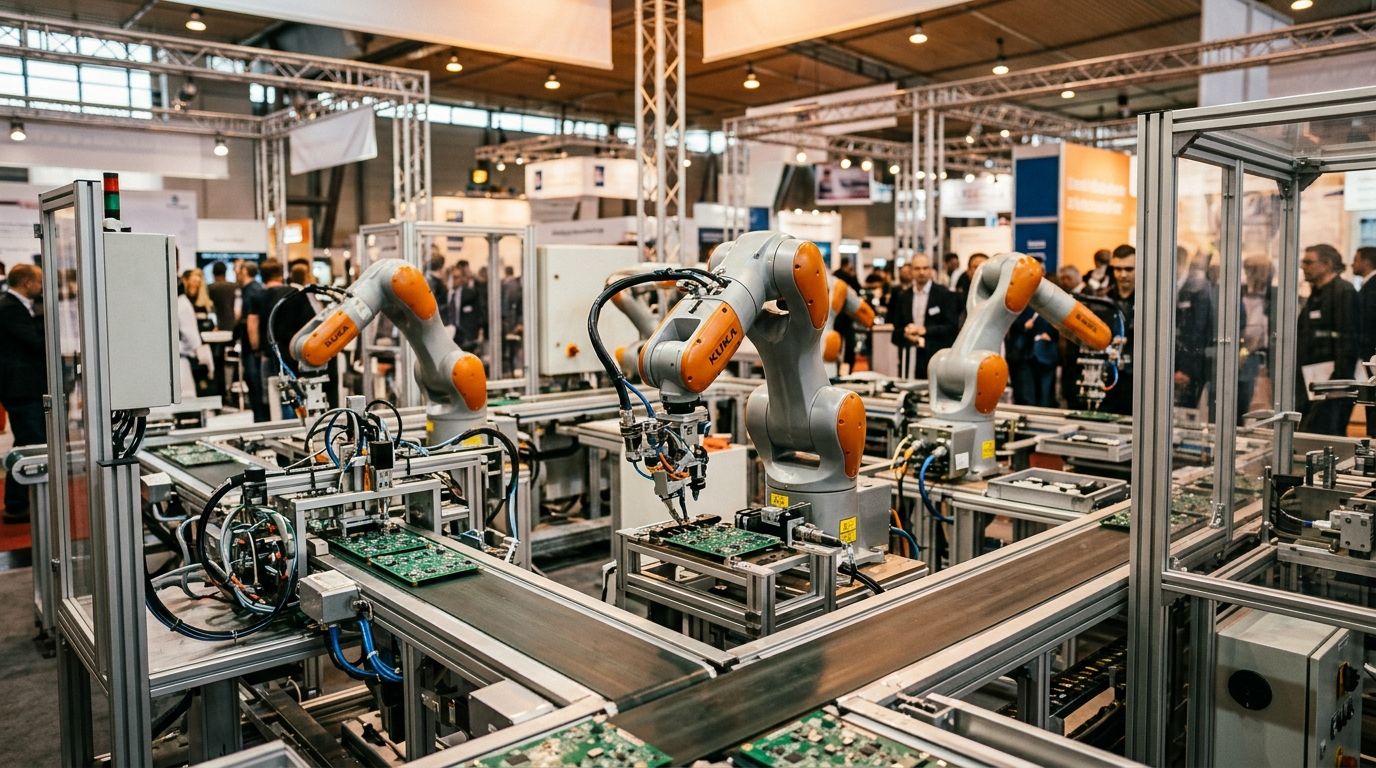
Photo: ARM Institute. Existing robotics demonstration lab in Pittsburgh, shown as an illustration, not an award or deployment under the new shipbuilding call.
This article is provided for general information purposes only and does not constitute investment, procurement, legal, or engineering advice. Product specifications reflect public company information available at the time of writing and may change without notice.