Tennant Builds a US$250 Million Robotics Bet Around a Vacuum
Tennant Company's P1 VAC launch bets that incumbent service and financing, not startup novelty, will win commercial cleaning robotics by 2028.

Minneapolis, October 20, 2026. Tennant Company, the 156-year-old maker of industrial and commercial floor-care equipment traded on the New York Stock Exchange as NYSE: TNC, introduced the P1 VAC, its first autonomous robotic vacuum and the first model in a new P-Series line of autonomous cleaning robots. The launch extends Tennant's robotics catalog beyond the hard floors its existing autonomous machines were built for, into carpets, mats, and other soft surfaces that make up a large share of schools, offices, and retail interiors.
The P1 VAC vacuums, sweeps, and dust-mops in a single pass, uses a side brush to pull debris out from walls and corners into its cleaning path, and carries a dual-compartment ten-liter debris bin sized for a full shift of commercial use. It is available to order now, and its arrival matters to any procurement team deciding whether to add autonomous cleaning equipment from an established industrial vendor or from one of the venture-backed robotics startups that have crowded into the same market over the past three years.
A Vacuum Is the Missing Half of Tennant's Fleet
Every autonomous machine Tennant has shipped before the P1 VAC was built for hard flooring. The T16AMR robotic scrubber, introduced in 2021 for logistics and manufacturing floors, the X6 ROVR mid-sized scrubber that followed in 2025, and the X16 SWEEP industrial sweeper and X2 ROVR SCRUB compact scrubber that launched earlier this year all clean concrete, tile, or sealed flooring. None of them touch carpet. That gap mattered commercially: a school district, a corporate campus, or a retail chain running Tennant's hard-floor robots still needed a separate vendor, or a human crew, for every carpeted hallway, classroom, and lobby in the same building.
The P1 VAC closes that gap, and Tennant has been explicit that it is the first of several machines meant to close it further. Pat Schottler, Tennant's senior vice president of robotics, said the product "was developed with a straightforward goal: make autonomous cleaning easier to adopt and easier to operate," and tied it to a broader pattern the company sees among buyers: a preference for practical, dependable equipment over novelty. That framing matters more than it might read at first. Tennant is not positioning the P1 VAC as a technology showcase. It is positioning it as the next line item in a fleet a facilities director already manages.
The Compact Machine Doing the Job Nobody Wants
The product itself is deliberately unglamorous. Its features read like a maintenance supervisor's wish list rather than a robotics keynote: a compact footprint sized to reach under furniture and into areas larger scrubbers cannot access, edge cleaning along walls, corners, and baseboards, opportunity charging that lets it top up between shifts rather than sitting idle overnight, and mobile-app controls for route scheduling, remote progress monitoring, and fleet-level operations management. Intelligent navigation and sensing let it adapt to a dynamic environment, the kind of environment where chairs move, doors open unpredictably, and a hallway that was clear at 6 a.m. has backpacks against the wall by 7.
Cumberland School District in Wisconsin served as a testing partner before the launch, and its building and grounds director described the before-and-after in plain operational terms rather than technology enthusiasm. Before the P1 VAC, he said, routine vacuuming and dust mopping consumed a meaningful share of the custodial team's day; automating those tasks let staff shift toward maintenance work that had been getting deferred. That is the buyer-economics case in miniature: the robot's value is not the hours it works, but the higher-value hours it frees up for the humans who remain.
Why an Incumbent Is Building This Instead of Buying It
The autonomous commercial-cleaning category has filled up quickly with venture-backed robotics companies selling software-first platforms, often licensing an autonomy stack to equipment makers rather than manufacturing the hardware themselves. Tennant has taken the opposite path, building its robotics line as a vertically integrated extension of equipment it already manufactures, sells, services, and finances through an existing distribution and support network. That is a meaningful distinction for a buyer, because it changes who answers the phone when a robot breaks down at 11 p.m. on a Tuesday. A facilities manager buying from a pure robotics startup is often buying a relationship with two vendors at once, the software company and the integrator that adapted a machine to carry its sensors. A facilities manager buying the P1 VAC is buying from the same company that already services their floor scrubbers, with one contract, one parts catalog, and one support line.
Tennant's own finances give that pitch weight. The company has reported commercial and industrial equipment revenue in the range of US$290 million to US$330 million per quarter over the past two fiscal years, built on a base of scrubbers, sweepers, and coatings sold through direct sales teams and distributors across North America, Europe, and Asia-Pacific. A robotics division riding on top of that existing commercial relationship starts with something a venture-funded startup cannot buy quickly: a sales and service organization that already has a technician within a short drive of most of its customers' sites, and a finance arm that can fold a robot lease into the same capital agreement covering the rest of a customer's floor-care fleet.
That is also the quieter strategic bet behind the number Tennant has attached to this launch. The company says the P1 VAC is the first of ten new products it plans to introduce within twenty-four months, part of a push to build a US$250 million robotics equipment business by 2028. Reaching that figure requires more than one hit product; it requires converting an entire existing customer base, the schools, logistics operators, and retailers who already buy Tennant scrubbers and sweepers, into multi-category robotics customers without asking them to learn a new vendor relationship. The P-Series name signals exactly that ambition: a platform family, not a single product.
The Buyer's Real Comparison Isn't Robot Versus Human
Robotics vendors in this category tend to pitch against human labor, framing every sale as hours saved. The more useful comparison for a procurement team is robot versus robot: an integrated fleet from one industrial vendor against a patchwork of best-of-breed machines from several specialist startups. The patchwork can offer sharper individual capabilities. The integrated fleet offers fewer points of failure, a single financing and leasing structure, and a service network that already has technicians within driving distance of most commercial sites in North America. For a district like Cumberland, with a limited facilities budget and no dedicated robotics-procurement staff, that difference can outweigh a few percentage points of cleaning performance on a spec sheet.
It also reframes the task-displacement pattern already visible in logistics and manufacturing floors, where autonomous mobile robots have not eliminated headcount so much as redirected it toward tasks machines still cannot do. The Cumberland quote is the clearest evidence of that pattern reaching school facilities: the robot does not replace the custodial team, it reassigns the bottom of their task list so the top of it gets done. Buyers evaluating any autonomous cleaning platform, Tennant's or a competitor's, should ask the same question Cumberland effectively answered in its pilot: not how many labor hours the machine eliminates, but which specific deferred-maintenance tasks its freed-up hours actually get spent on. A robot that saves time nobody redirects is a depreciating asset with good marketing.
The Spec Sheet Gap Between a Demo and a School Hallway
Commercial cleaning robots have a well-documented gap between demo performance and deployment reality, and soft-floor cleaning is one of the harder environments to close it in. A trade-show carpet is flat, empty, and lit for cameras. A school hallway at 4 p.m. has backpacks against the wall, a dropped tray near the cafeteria door, and a cart someone left at an angle nobody anticipated. The specific features Tennant is emphasizing, edge cleaning along baseboards, a side brush for corners, and sensing tuned for a dynamic environment, read as a direct response to that gap rather than a generic spec list. Whether the P1 VAC holds up against real clutter over months of use, not a single testing-partner quote, is the detail procurement teams should verify with their own trial before committing fleet budget, and it is the detail no press release can settle on its own.
Financing terms will matter as much as the machine itself. Tennant has historically sold its autonomous equipment through purchase, lease, and Robot-as-a-Service style subscription options bundled with its existing equipment-financing arm, and a buyer's real cost comparison against a startup competitor should run through total cost of ownership across a multi-year term, not sticker price on a single unit. A ten-liter debris bin and an opportunity-charging cycle are meaningful only in the context of a facility's actual traffic pattern and cleaning window, which is exactly the kind of site-specific math a Tennant account representative, already managing that customer's scrubber fleet, is positioned to run without a new sales process.
What to Watch Before the Next Nine Products
The P1 VAC alone will not determine whether Tennant hits its 2028 target. What will is whether the next several P-Series launches arrive on a similarly tight cadence and whether Tennant can keep selling multi-category fleets into accounts it already serves, rather than competing from scratch against entrenched robotics-only vendors for new logos. The company's existing distribution reach into schools, logistics facilities, and retail chains is the real asset here, more than any single machine's spec sheet. A vacuum is a modest product. A ten-product robotics catalog sold through a service network that already touches tens of thousands of commercial buildings is a US$250 million bet that incumbency, not novelty, wins the next phase of this market.
This analysis synthesizes Tennant Company's October 20, 2026 product announcement, public statements from its robotics leadership and testing partner, and the company's prior autonomous-equipment product releases.
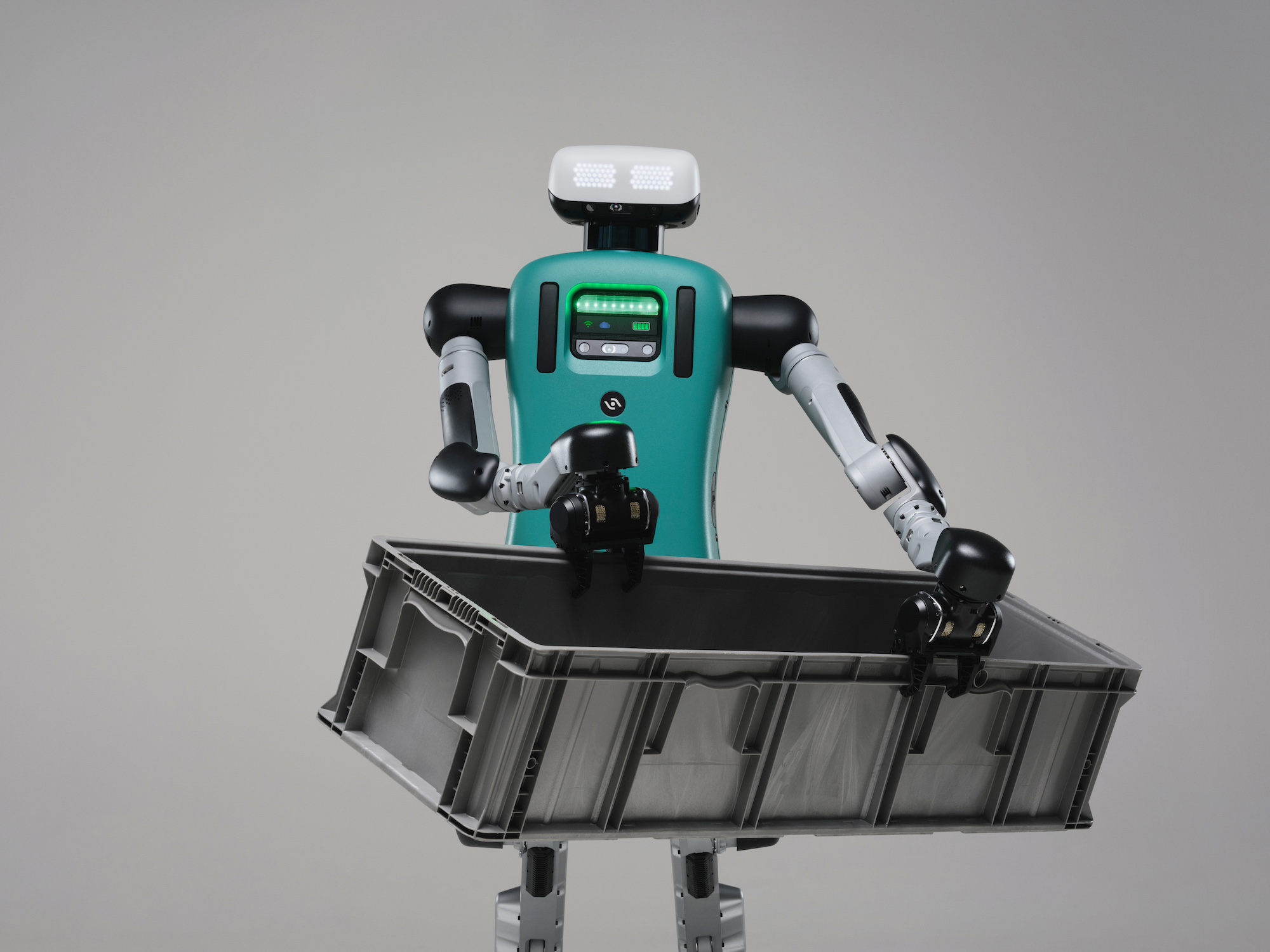
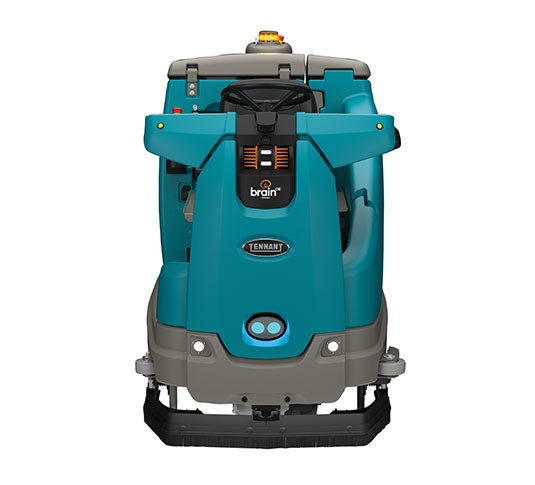
Image: Tennant Company's T16AMR autonomous robotic floor scrubber, part of its existing robotics line, via the company's own product pages. A dedicated P1 VAC product photo was not yet available through Tennant's public channels at filing time.
This article is provided for general information purposes only and does not constitute investment, procurement, legal, or engineering advice.