Doosan Robotics Hands Its Technology Roadmap to a Self-Driving-Car Veteran
Doosan Robotics named autonomous-driving veteran Woongjun Jang as CTO and promoted Hyunsoo Kim to CSO, formally putting its Agentic Robot OS software and a new industrial humanoid program on a 2027 commercial timeline.

Doosan Robotics Hands Its Technology Roadmap to a Self-Driving-Car Veteran
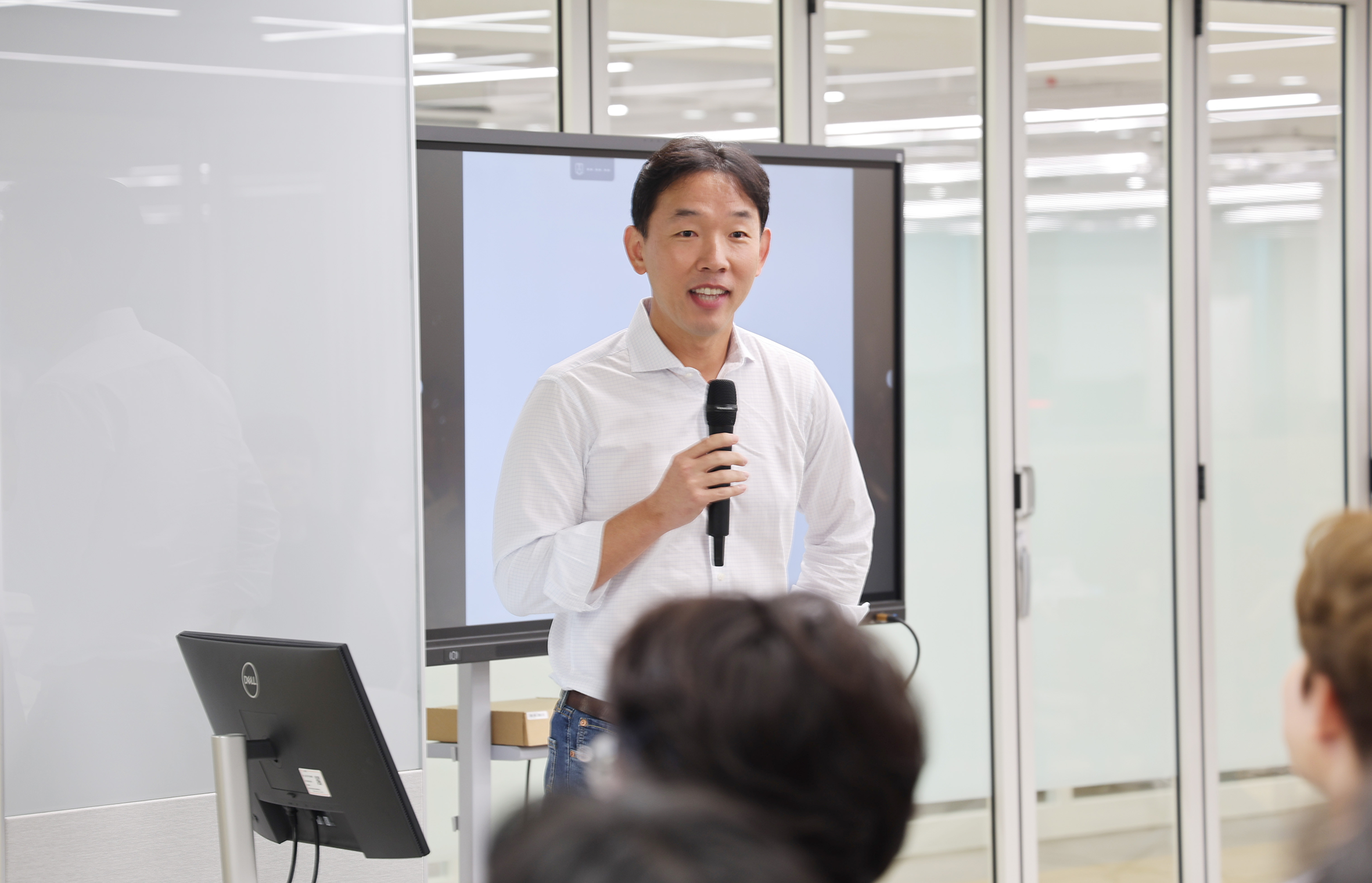
Doosan Robotics confirmed on October 19 that Woongjun Jang, an engineer who spent the past decade building autonomous-driving systems at Hyundai Motor Company and the Motional joint venture, has taken over as the company's Chief Technology Officer (CTO). The appointment, along with the elevation of Hyunsoo Kim to Chief Strategy Officer (CSO), was unveiled at a company town hall in Bundang, South Korea, on October 15, and formalizes a shift the South Korean cobot maker has been building toward all year: treating its robots less as programmable arms and more as autonomous agents that sense, decide, and act.
The appointments matter to anyone buying or evaluating industrial robots because they put a concrete name and a concrete deadline behind Doosan's physical AI ambitions. Jang is now responsible for an in-house software layer the company calls its Agentic Robot OS, with a first commercial release targeted for 2027, and for an industrial humanoid program that borrows directly from the perception and control stack he helped build for self-driving cars.
A Driving-Industry Playbook Comes to the Factory Floor
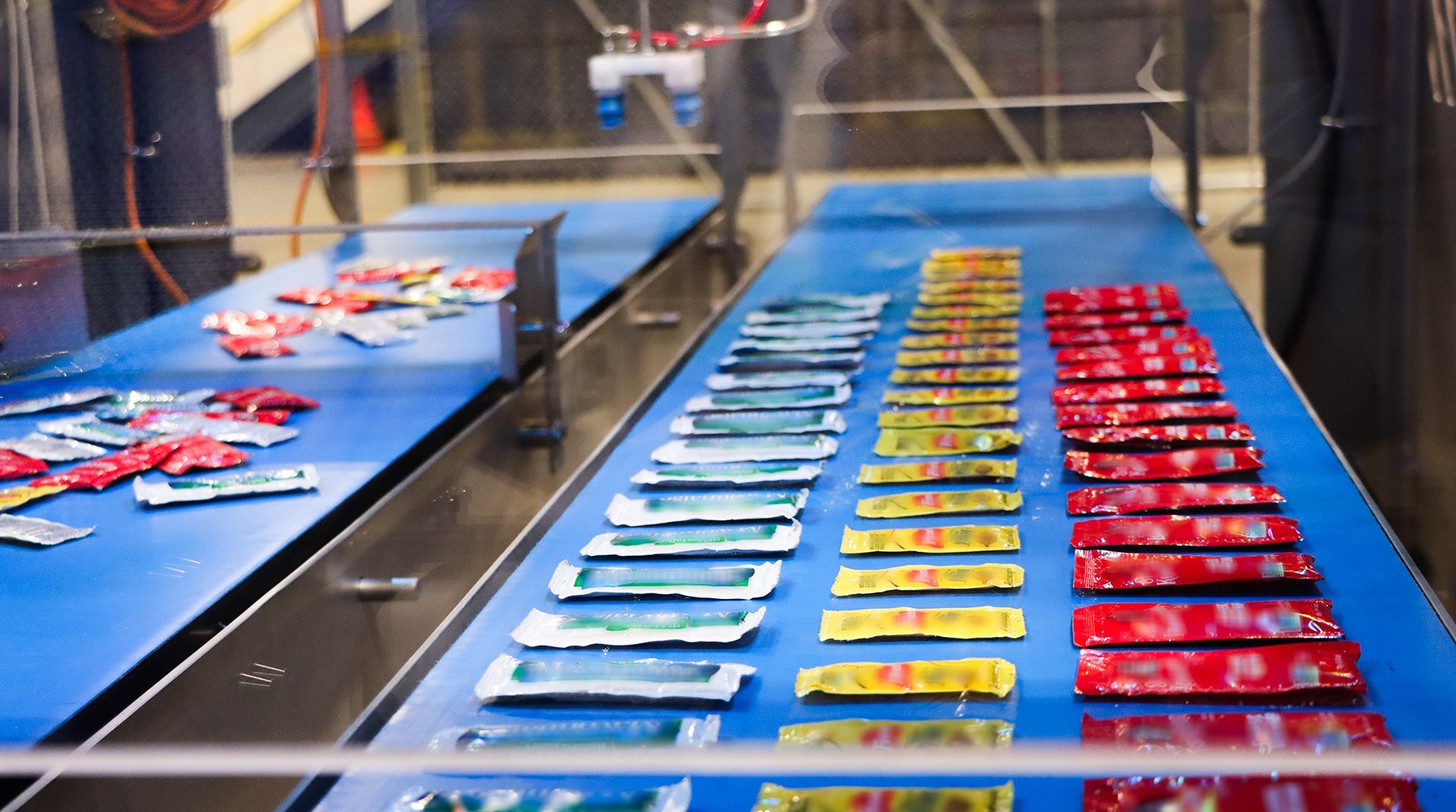
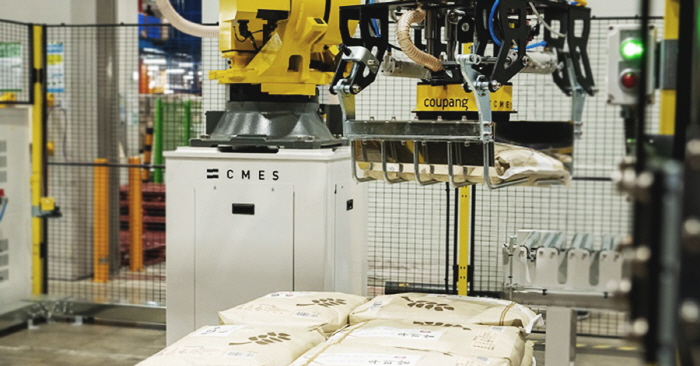
Doosan Robotics is a Seoul-based manufacturer of collaborative robot arms, known commercially for its H-Series and M-Series cobots sold into welding, packaging, and logistics lines across Asia, Europe, and North America. What changes under Jang is the layer above the hardware. He joined Doosan's leadership track in March 2026 to oversee artificial intelligence (AI) and digital strategy, after stops as a management consultant at McKinsey & Company, head of Hyundai Motor Company's Autonomous Driving Center, CSO of Motional (the Hyundai Motor Group and Aptiv robotaxi venture), and CSO of SK Shieldus's physical-security division. That résumé is unusual for a robot-arm maker's technology chief, and it is also the point: autonomous vehicles and industrial robots increasingly share the same hard problem, which is getting a machine to interpret an unstructured environment in real time and choose a safe action without a human writing every rule in advance.
Agentic Robot OS is Doosan's attempt to generalize that capability across its product line rather than solve it arm-by-arm. According to the company, the operating system is designed to let a robot sense its surroundings, optimize its own motion paths, and execute tasks with what Doosan describes as safe and precise control, instead of relying purely on pre-programmed trajectories. Doosan says it will build new commercial products on top of this software layer starting in 2027, and that it intends to deepen an existing collaboration with NVIDIA as part of that effort. Neither the company nor the announcement specifies compute requirements, pricing, or which product lines get the software first.
Industrial Humanoids Enter the Roadmap Without a Launch Date
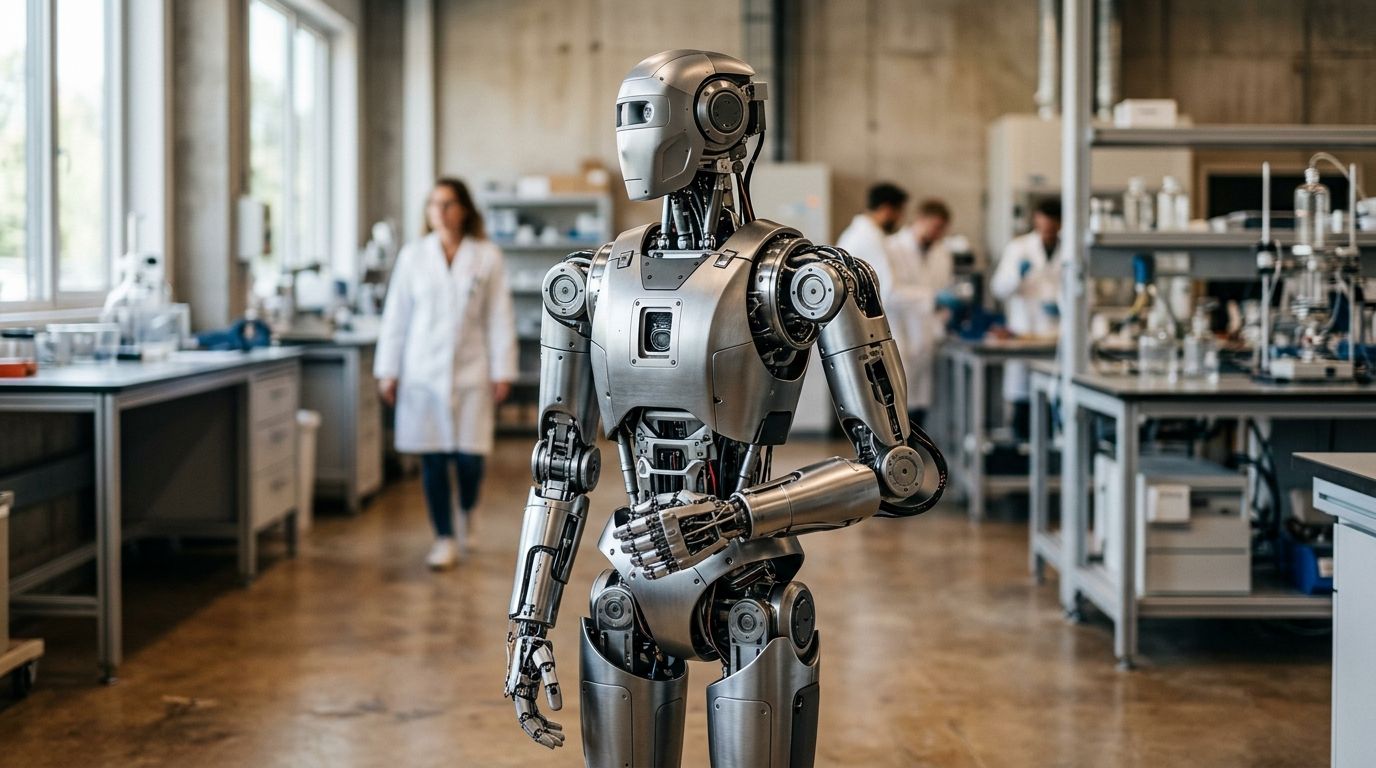
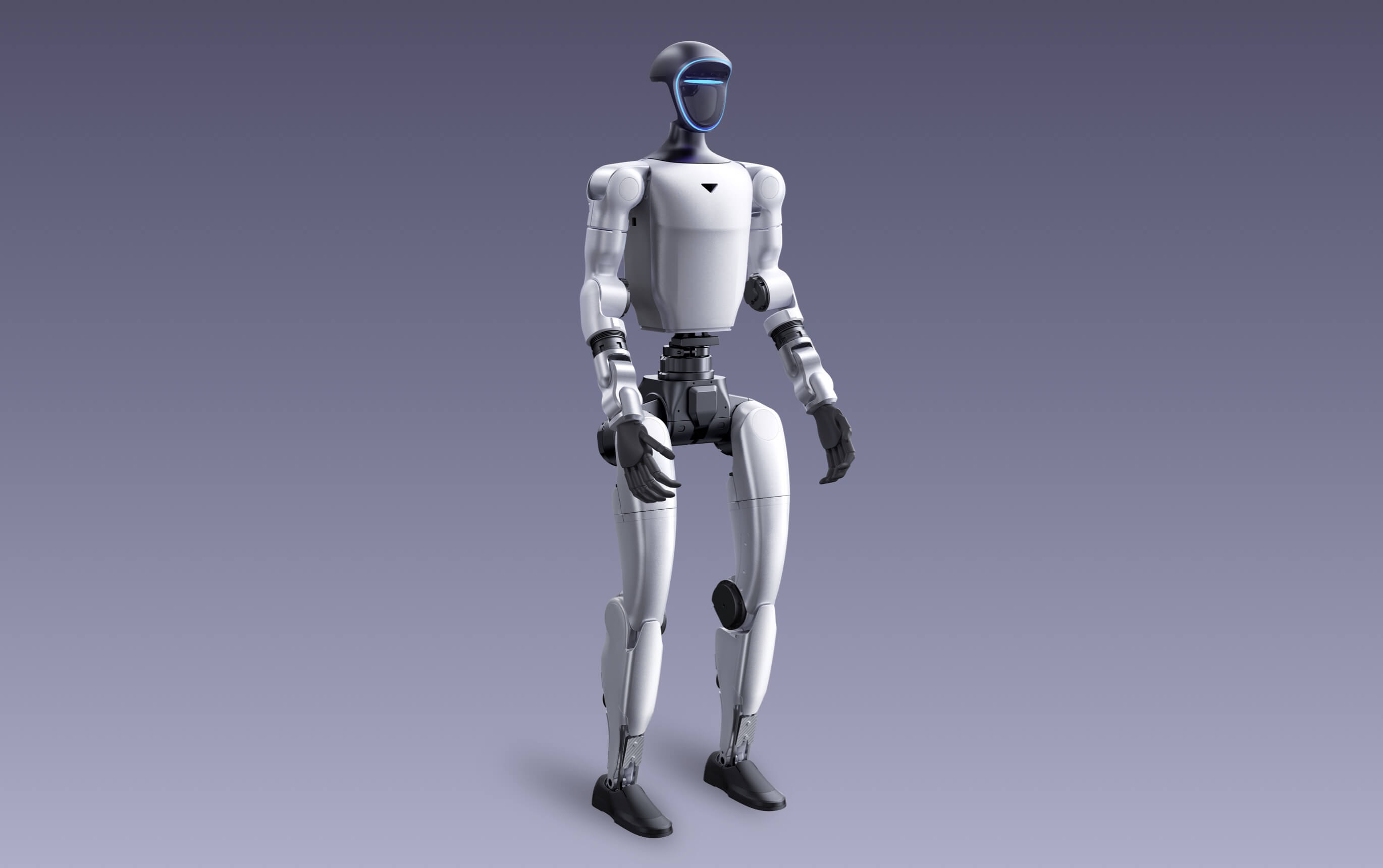
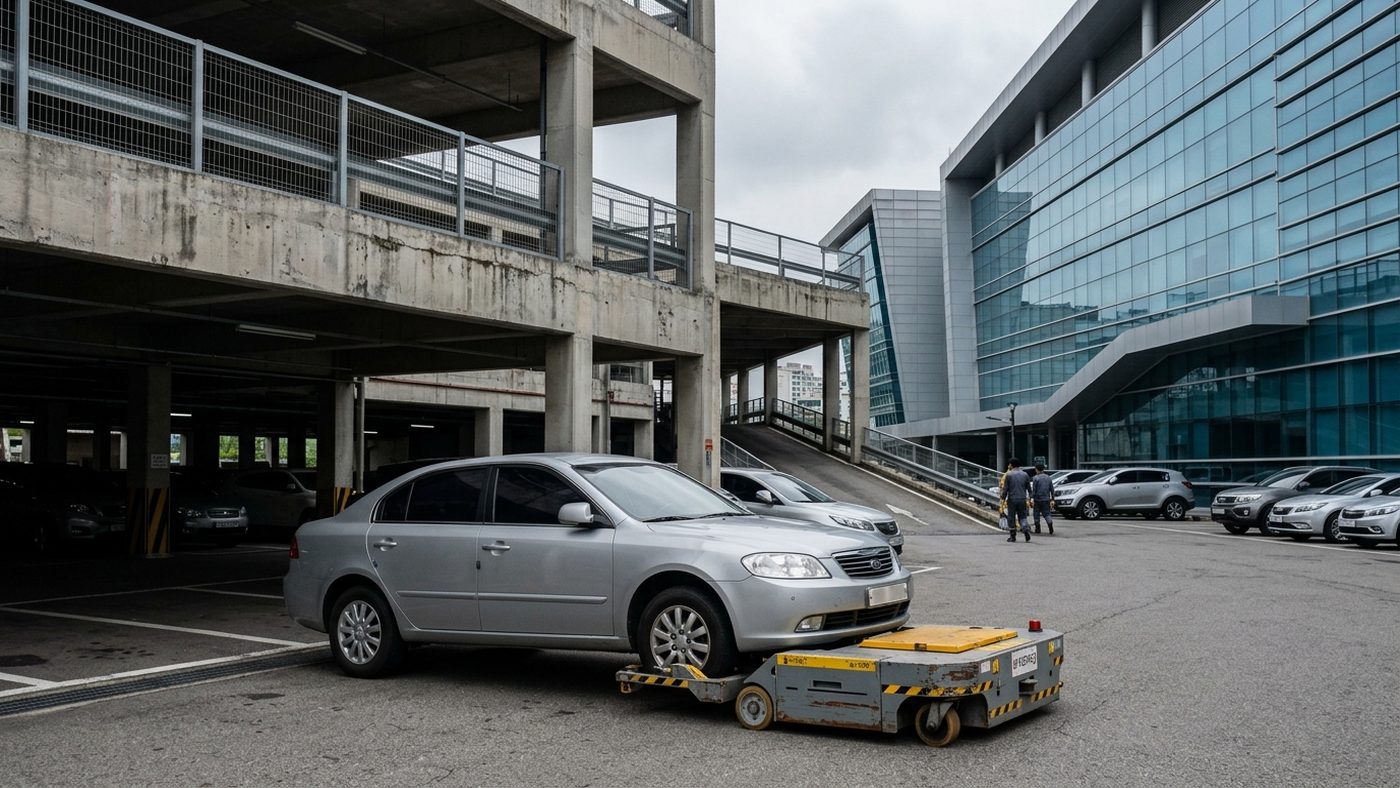
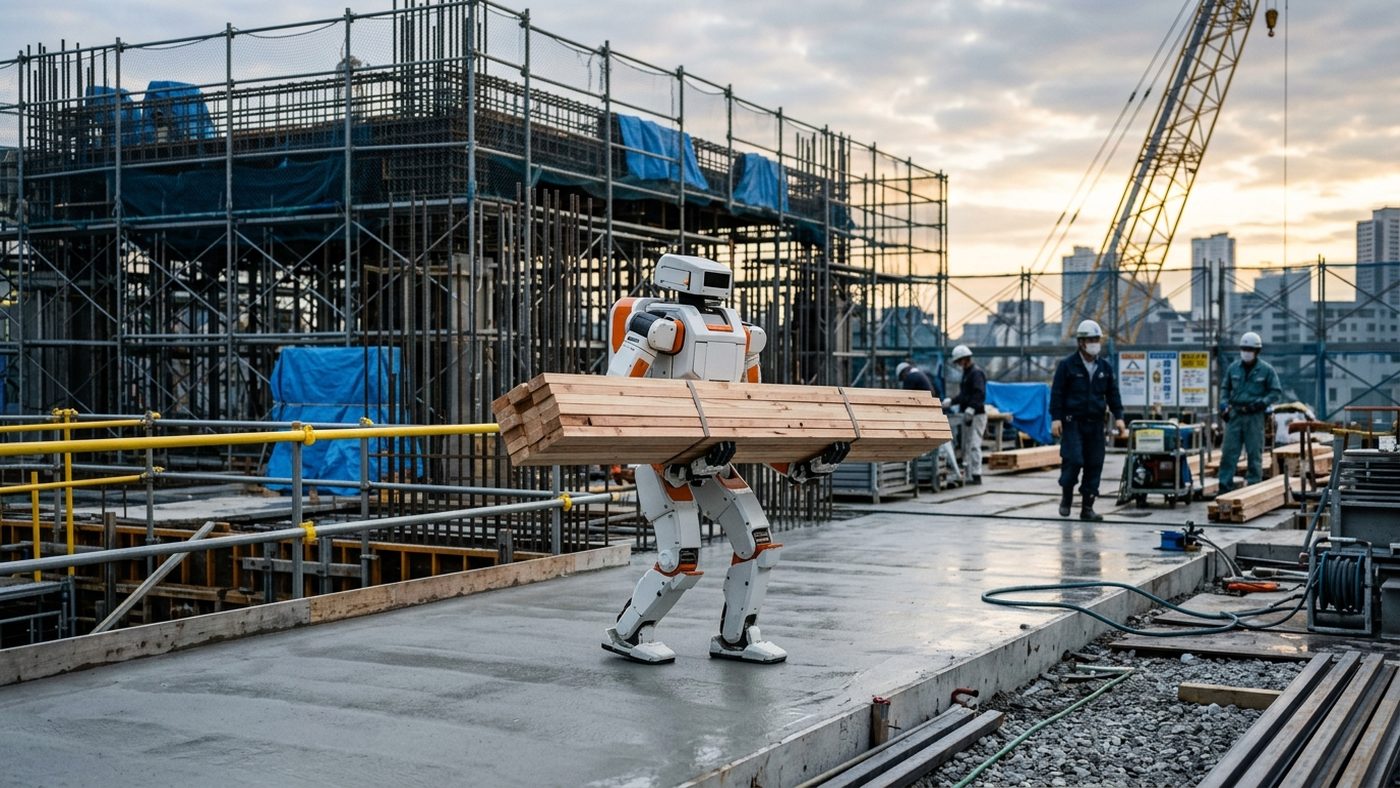
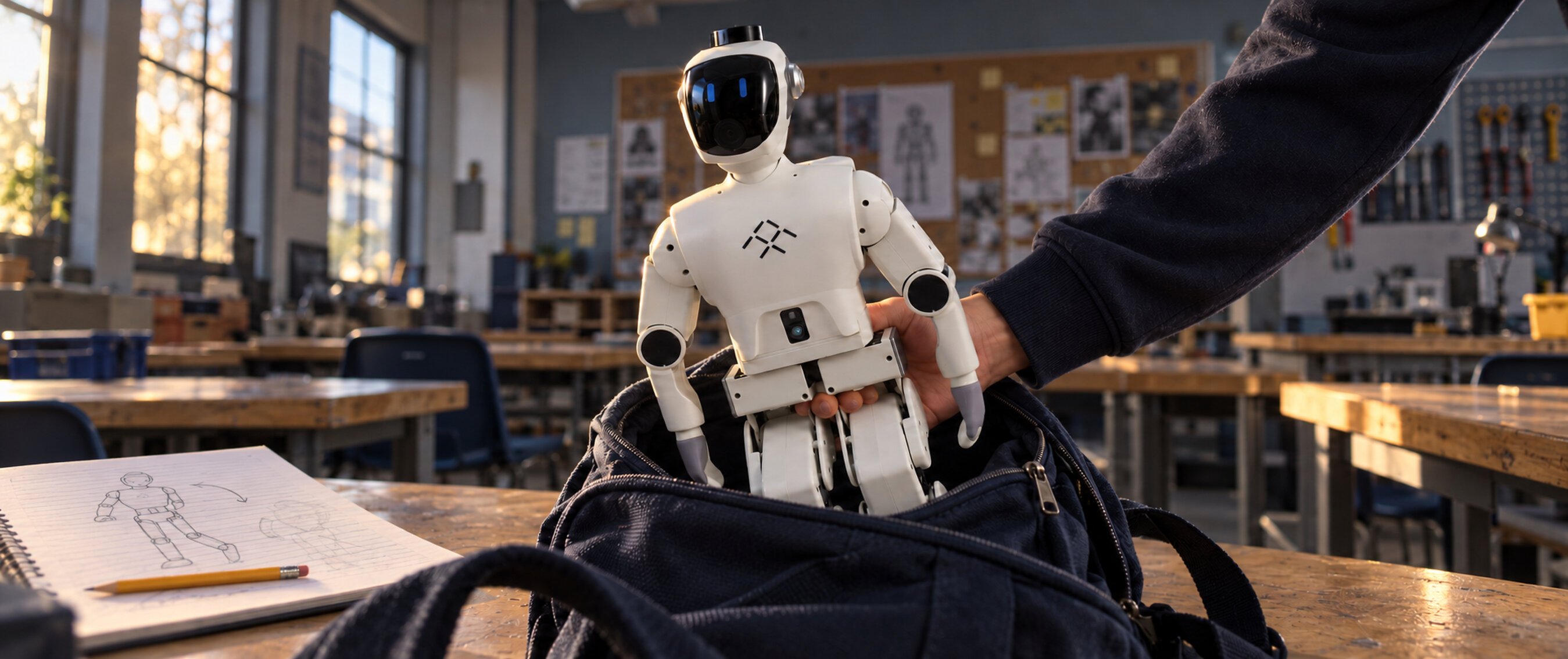
The more consequential line in Doosan's announcement, for competitive purposes, is the confirmation that industrial humanoid development now sits formally inside Jang's mandate. Doosan frames this as a natural extension of autonomous-vehicle expertise: perception, decision-making, and control systems built for a car navigating a highway are being repositioned for a two-legged or wheeled machine navigating a warehouse or assembly line. The company has not published a humanoid prototype timeline, a target payload, or a planned deployment sector, which leaves Doosan behind rivals such as Hyundai's own Boston Dynamics unit and several Chinese manufacturers that have already shown working humanoid hardware. What Doosan has done instead is signal that its humanoid effort will be software-first, built on the same Agentic Robot OS foundation rather than developed as a separate skunkworks project.
Hyunsoo Kim's elevation to CSO fills the commercial half of that bet. Kim has spent close to two decades in corporate strategy and international expansion inside the wider Doosan Group, including stints managing business operations in Asia for Doosan Infracore and leading Doosan Bobcat's India operations, before joining Doosan Robotics as Head of Sales in 2025, where he is credited with securing major domestic and international orders. As CSO, Kim now owns both corporate strategy and sales, with an explicit mandate to prioritize higher-margin business lines and accelerate overseas expansion. Pairing a strategy-and-sales executive with a newly minted technology chief is a standard move for a company trying to convert a research roadmap into revenue on a fixed timetable, and the 2027 product target gives buyers a concrete point to track Doosan's progress against.
A Cobot Maker Trying to Outrun Its Own Category
Doosan Robotics went public on the Korea Exchange in 2023 on the strength of its collaborative robot business, selling arms rated for payloads from roughly 4 kilograms up through heavier material-handling variants, largely into welding cells, packaging lines, and food-service kiosks where a robot works in close proximity to people without a safety cage. That business has matured into a crowded field. Universal Robots, Techman Robot, and a growing roster of Chinese cobot manufacturers compete on price and integration speed in the same payload classes, which compresses margins on the hardware itself. Software is the obvious place left to differentiate, and Doosan's own CSO has now said explicitly that the company wants to shift its revenue mix toward higher-margin lines rather than compete purely on arm pricing. Agentic Robot OS is the mechanism Doosan is proposing for that shift: instead of selling a faster or cheaper arm, it wants to sell a subscription-style intelligence layer that can, in principle, run across future hardware generations.
That strategy only works if the software is genuinely differentiated, and this is where Jang's hiring reads as more than a resume upgrade. Perception and path-planning systems built for autonomous vehicles have to handle a much higher density of unpredictable obstacles, at higher speed, with harder failure consequences, than most current cobot deployments require. If even a fraction of that engineering discipline transfers cleanly to a factory-floor arm or a humanoid chassis, Doosan could plausibly leapfrog rivals still iterating on narrower, task-specific vision models. If it does not transfer cleanly, and automotive-grade autonomy software turns out to need a substantial rebuild for industrial contexts, the 2027 target becomes a lot less certain, and Doosan's two newest executives inherit that execution risk directly.
Why Procurement Teams Should Treat This as a Timeline, Not a Product
For manufacturers and systems integrators currently evaluating Doosan cobots, the leadership change does not change anything about what ships today. It does change what to ask about tomorrow. Buyers negotiating multi-year service or software contracts with Doosan should now expect an Agentic Robot OS upsell path within the 2027 horizon, and should ask specifically whether that software will be retrofittable to existing H-Series and M-Series hardware or will require a new robot generation. The NVIDIA relationship is worth watching closely too: Doosan has not detailed whether "deepening" the partnership means adopting NVIDIA's Isaac robotics stack more broadly, licensing specific foundation models, or simply continuing existing chip supply, and each of those paths implies a different cost and lock-in profile for customers.
Procurement teams evaluating Doosan against Hyundai's Boston Dynamics unit, Fourier Intelligence, or any of the Chinese humanoid makers already shipping hardware should separate two different questions the company is currently answering with one announcement. The first is whether Doosan's existing cobot line gets materially smarter in the next 18 to 24 months through software updates alone, which is a near-term, lower-risk question tied directly to Jang's AI and digital-strategy work since March. The second is whether Doosan fields a competitive industrial humanoid on a timeline comparable to rivals that already have working prototypes in the field, which is a much higher-risk, multi-year question that this announcement does not resolve. Conflating the two, because they were announced in the same town hall, risks either overestimating how close Doosan is to humanoid hardware or underestimating how quickly its existing cobot fleet could pick up new autonomous capabilities.
The honest read on Jang's appointment is that Doosan is betting its credibility on a thesis rather than a shipped product: that the gap between an autonomous car and an autonomous factory robot is now mostly a software and systems-integration problem, solvable by importing talent rather than years of in-house humanoid research. That is a reasonable bet, and Jang's specific background in safety-critical autonomy is a legitimate asset for a company selling robots that work alongside people on a factory floor. It is also, for now, a bet without a working humanoid demo, a published specification, or a disclosed R&D budget behind it, which is exactly the gap a 2027 launch target is meant to close.
What Comes Next
The next real test of this reorganization will not be another leadership announcement. It will be whether Doosan shows a working Agentic Robot OS demonstration, on real hardware and in front of customers, before or at its stated 2027 product window, and whether the NVIDIA collaboration produces a named technical integration rather than a general statement of intent. Buyers with Doosan contracts up for renewal in the next 18 months have a reasonable basis to ask the company to commit those specifics in writing now.
This analysis synthesizes company statements and public market activity.
This article is provided for general information purposes only and does not constitute investment, financial, or professional advice. Readers should conduct their own due diligence before making business or purchasing decisions based on this content.