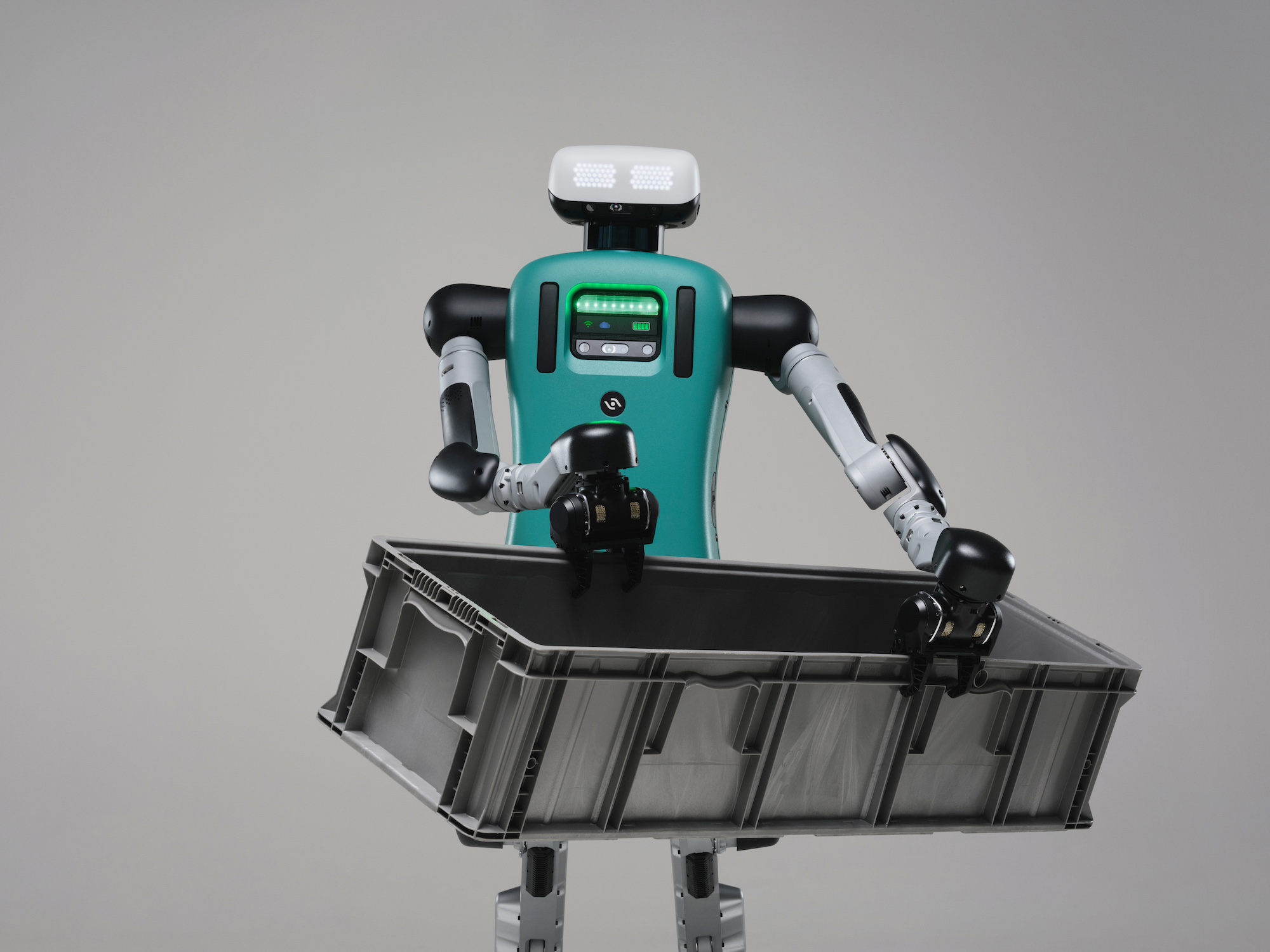
Robotiq's 2FC Gripper Puts Grasp Intelligence Where the Contact Happens
Robotiq has opened pre-orders for the 2FC, an adaptive gripper line (2FC-85 and 2FC-140) that embeds tactile sensors and onboard compute directly into the finger assembly, letting a robot judge grasp quality and detect slip locally instead of relying on a remote model. The gripper ships in two stroke sizes with 2-million-cycle durability, a single-cable Ethernet interface, and an upgrade path for existing 2F-85/2F-140 owners. Shipping begins Q1 2027; pricing is quote-based.

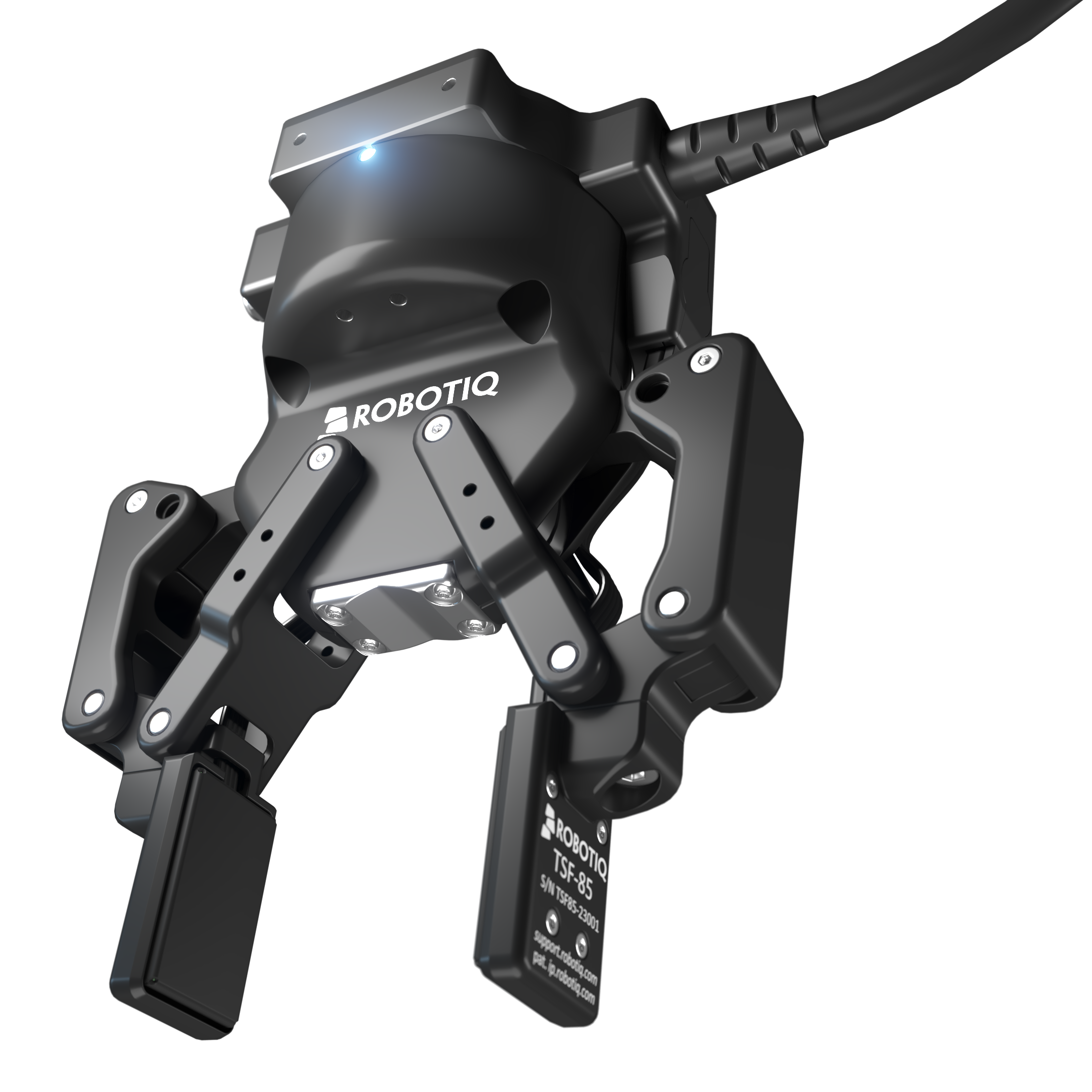
Lévis, Québec, October 21, 2026. Robotiq opened pre-orders for the 2FC, an adaptive gripper that builds tactile sensing and onboard compute directly into the finger assembly, so a robot can judge its own grip quality and catch a slipping part in real time rather than waiting on a remote vision model to notice the drop. Shipping starts in the first quarter of 2027, sold as the 2FC-85 and 2FC-140 models.
The gap the 2FC is built to close has become the industry's quiet embarrassment. Physical AI has spent the last several years pouring compute into cameras, language models and simulation, teaching robots to plan pick sequences, recognize objects and generalize across clutter with real sophistication. None of that intelligence matters at the one moment it is tested, the half-second when a finger closes on a part. A robot arm can watch a bin of mixed components with a state-of-the-art vision system and still drop the piece it just identified correctly, because sight tells it what an object is, not whether it is actually holding it, how hard, or whether it has begun to slide. That gap between perception and contact is where automated cells stall, where integrators burn hours retuning grip force by trial and error, and where "AI-ready" robots keep failing at distinctly unintelligent tasks like picking up a bag of screws.
Robotiq, the Lévis, Québec-based maker of grippers, sensors and end-of-arm tooling founded in 2008, has built its business on the other side of that gap: the physical interface between a robot controller and the object it is supposed to move. Its 2F-85 and 2F-140 adaptive grippers are a familiar sight on collaborative-robot arms in machine tending, bin picking and assembly cells, valued for their ease of integration more than their intelligence. The 2FC is the company's attempt to give that same hardware a sense of touch and the judgment to act on it, without handing the thinking off to a separate box.
The specifications describe a gripper designed to answer a narrower, more useful question than "what is this object": not what it is, but how it is being held. Both the 2FC-85 and 2FC-140 use Robotiq's patented underactuated mechanism, supporting both parallel and encompassing grasps, with a stroke of 85 mm or 140 mm, grip force up to 235 newtons, and closing speeds from 20 to 150 mm per second. Robotiq rates the mechanism for 2 million cycles, a durability figure aimed squarely at production floors rather than labs. Fingertip sensors capture pressure at 28 taxels, vibration at 1,000 Hz for slip detection, and orientation through a three-axis fingertip IMU, alongside proprioception, speed and position data. All of it is timestamped to millisecond precision on a shared time reference and exposed through a single unified API over one Ethernet cable, which also carries power. That last detail is a small integration win procurement teams will notice: no separate conversion board or extra cable run to bolt onto an existing cell, a drawback of the sensor-only tactile fingertip Robotiq shipped earlier this year. Payload capacity runs between 2.5 kg and 5 kg depending on model and grasp configuration, which keeps the 2FC in the same practical weight class as the cobot-scale parts, fasteners and tooling its predecessor grippers already handle, rather than pushing it toward heavier industrial payloads that would need a different gripper family entirely.
What makes the 2FC a different category of product, rather than a sensor upgrade, is where the intelligence sits. Robotiq has moved grasp interpretation onto the gripper itself: the device runs grasp quality assessment, incipient slip detection, object pose estimation, object centering and an advanced grip check locally, in real time, and reports the results as labeled events rather than a raw stream a host computer has to interpret. In practice, a cell controller gets a plain answer, whether the grasp is sound, whether the part is slipping, where it sits in the fingers, instead of a river of pressure and vibration data it has to turn into those answers itself. That is the commercial logic behind embedding compute at the point of contact: a line controller or a foundation model making pick decisions does not need to run inference on raw tactile signals to know whether to proceed, slow down or retry, because the gripper has already done that work and handed over a verdict. A sensor that only reports pressure is diagnostic information. A gripper that reports "this grasp is failing" is a control signal, and the difference is what a production line can act on without a human or a retrain in the loop.
The 2FC also sits inside a wider software layer Robotiq calls Contact Core, which supplies simulation assets for NVIDIA Isaac Sim, drivers, control packages and the same contact-rich skills the gripper runs on-device, following a stated workflow of sense, train, deploy and improve. That software stack is robot-agnostic by design, meant to work across robot brands rather than lock a buyer into one arm manufacturer, and it is hosted openly on GitHub. Robotiq lists the 2FC-85 and 2FC-140 as "Contact Ready" components inside that same framework alongside its existing 2F-85, 2F-140 and TSF-85 tactile fingertips, which signals the company is building one consistent software interface across its whole gripper line rather than a bespoke stack for the new model alone, a detail that matters to any integrator trying to standardize tooling across multiple cells and robot brands at once. Readers who tracked Robotiq's open-source push into simulation assets and ROS packages last month should treat the 2FC as the hardware half of that same strategy rather than a repeat of it: the earlier move gave developers software to simulate and train against Robotiq components; the 2FC is the physical gripper that software was always meant to run on once it left simulation. One without the other is incomplete, and launching the hardware five weeks after the software suggests Robotiq planned the sequence rather than discovering a hardware opportunity afterward.
Robotiq has also built a deliberate on-ramp for its existing installed base. Owners of a 2F-85 or 2F-140 do not have to replace their gripper to get tactile sensing: they can add Robotiq's TSF tactile sensor fingertips and an AI Hub compute module to the gripper they already own, and because the tool center point stays identical, existing robot programs and trained models carry over without rework. That upgrade path matters more to a plant manager than the new model numbers do, because it turns a capital replacement decision into an incremental add-on, and it is the kind of detail that separates a vendor planning a multi-year product roadmap from one launching a one-off SKU.
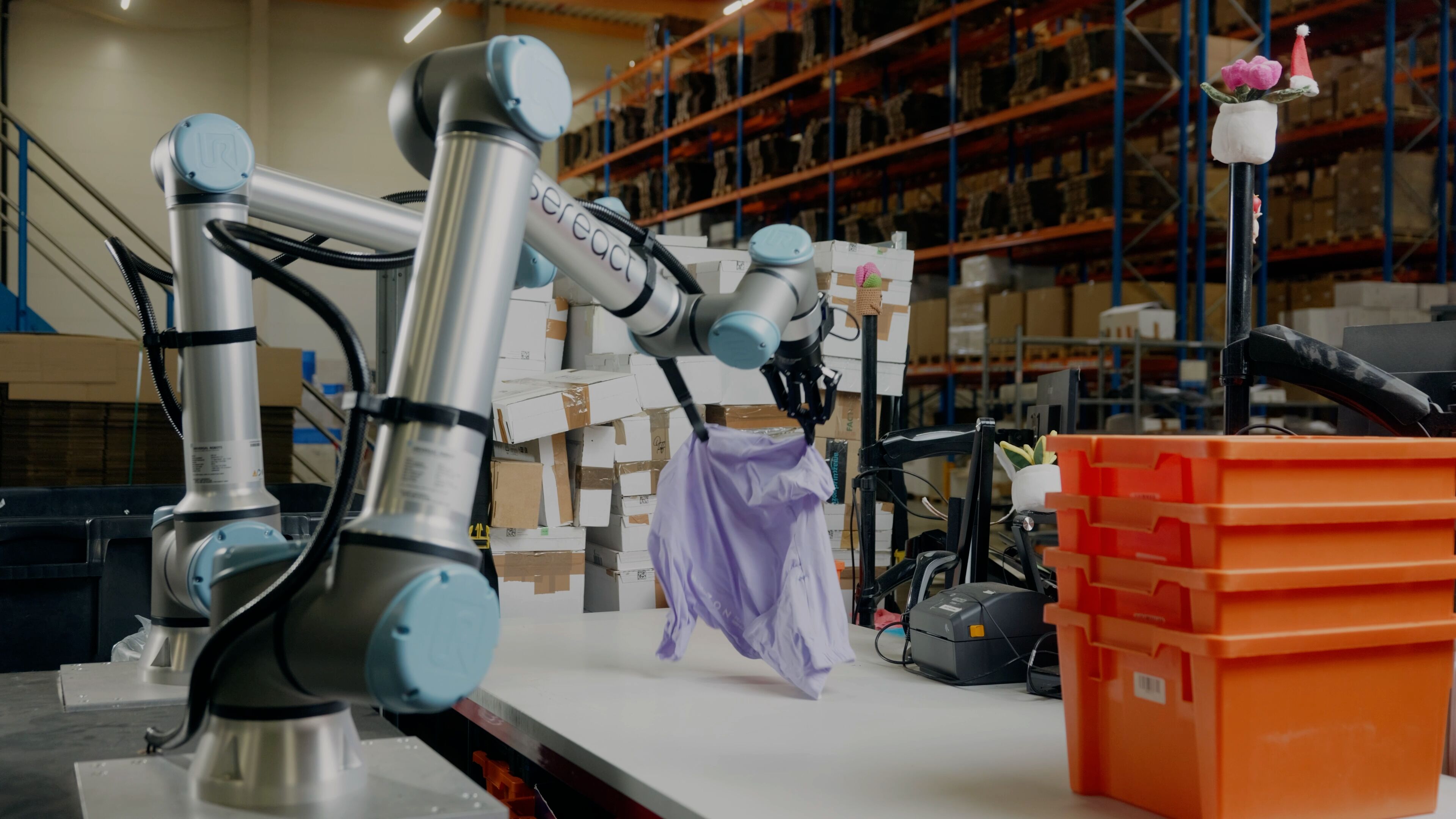
Early adopters named on Robotiq's own product materials give a reasonably specific picture of who is buying ahead of general shipment: Franka Robotics is pairing the 2F-85 with its FR3 Duo platform, Sereact is running the 2F-140 inside its Cortex 2.0 software, Skild AI has integrated the 2F-85 with its Skild Brain model, fruitcore robotics uses the 2F-85 and Robotiq's Hand-E gripper on its PLEXA platform, Medra AI runs the 2F-140 in its Medra Lab 001, and Yango Tech Robotics has paired the 2F-140 with its Yango Brain system. Every name on that list is a robotics or AI company building a platform, not yet a traditional manufacturer bolting a gripper onto an assembly line, which is the honest state of the market the 2FC is launching into: physical AI developers are the first customers for contact intelligence, and the industrial buyers who actually run production cells are the audience Robotiq is counting on to follow once the hardware has a track record.
That sequencing should temper how procurement and operations teams read this launch. The 2FC is not shipping yet, it is taking pre-orders against a first-quarter 2027 delivery window, and Robotiq has not published pricing, directing interested buyers to a quote request instead. For a plant evaluating end-of-arm tooling budgets now, that means the 2FC belongs in a 2027 capital plan, not a line fix for next quarter, and the realistic move for teams already running 2F-85 or 2F-140 grippers is to price the TSF-plus-AI-Hub upgrade path against a 2FC purchase before committing either way. Buyers should also expect the embedded-intelligence feature set, grasp quality scoring, slip detection, pose estimation, to be validated first by the AI and robotics integrators named above, with industrial case studies arriving a step behind, which is the normal order for a component this new rather than a sign the product is unready.
Picture a cobot cell running the night shift in the second quarter of 2027, a tray of mixed, unlabeled fasteners sliding into position under a 2FC-85. The fingers close, the gripper's own compute scores the grasp, flags a part beginning to shift a few hundred milliseconds into the hold, and recenters before the arm ever lifts clear of the tray. No supervisor walks over. No vision model gets retrained overnight to handle a part shape it had not seen before. The line simply keeps moving, because the judgment about whether the grasp is good now lives in the hand doing the holding, not in a server room down the hall.
This article synthesizes company statements and public product disclosures as of 2026-10-21. It is for general information purposes only and does not constitute investment, financial, or professional advice.