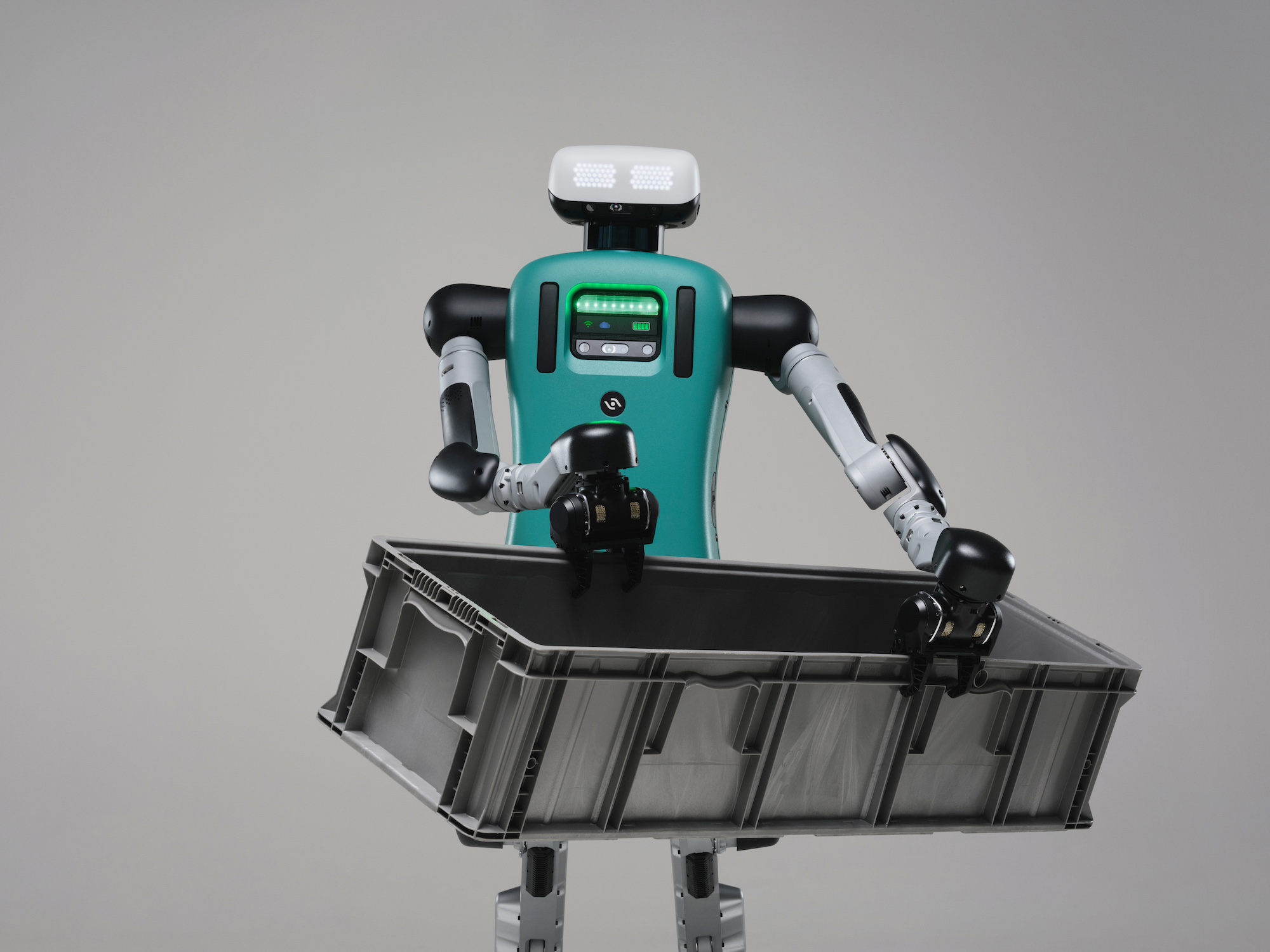
NVIDIA's New Reference Humanoid Puts a Number on What 'Ready to Deploy' Means
At GTC Berlin on October 21, 2026, NVIDIA and Munich-based Agile Robots introduced Agile ONE SN, a reference humanoid with disclosed mechanical specifications built on NVIDIA Jetson Thor and Isaac GR00T. NVIDIA paired the hardware with a generally available Isaac Lab 3.0 training framework, a new Isaac OS real-time runtime, the Halos safety platform, a 2,000-plus-asset simulation library, a human motion dataset, and open-source DGX Station workflows, backed by a roster of more than two dozen named ecosystem partners.

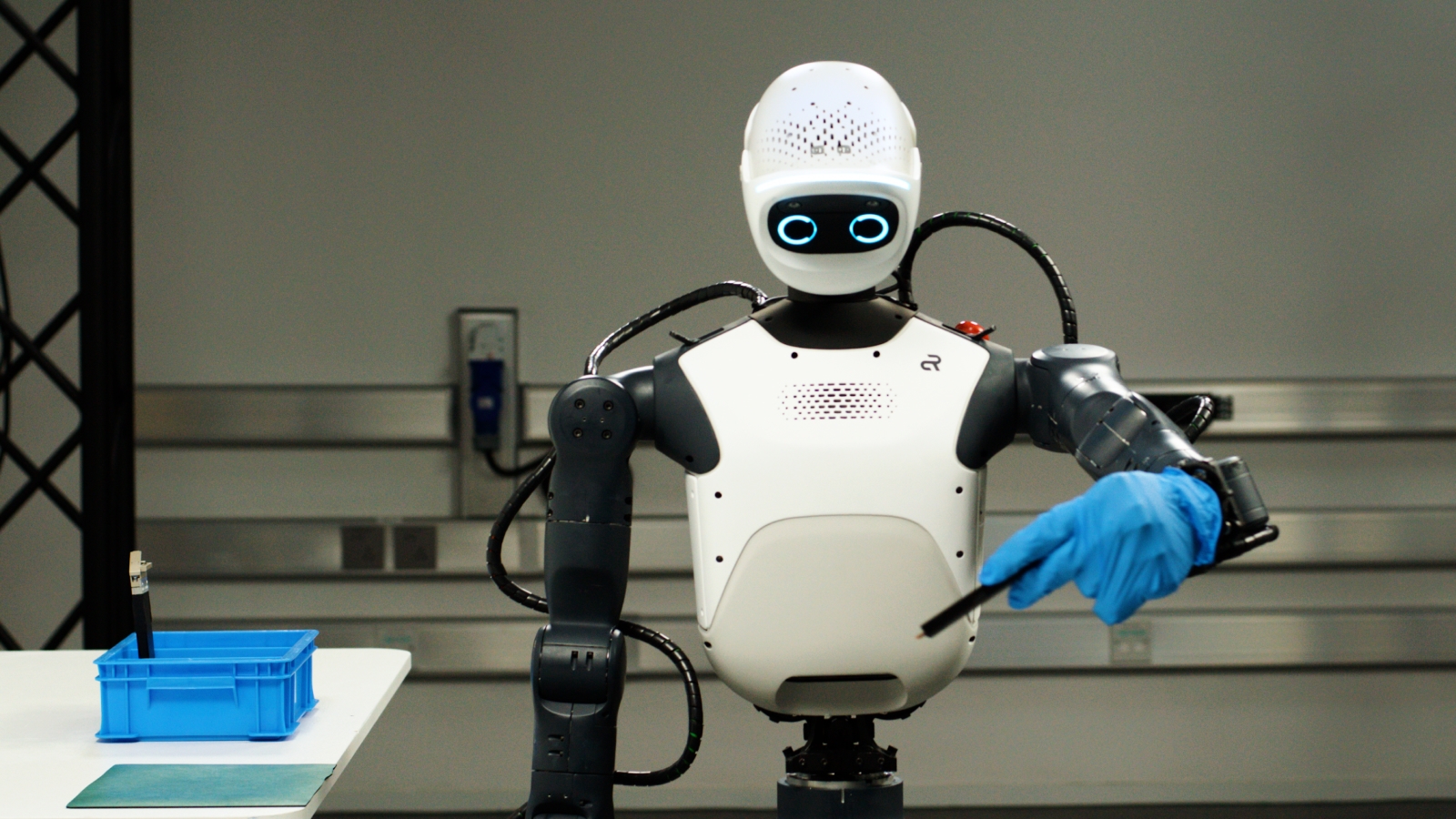
BERLIN, Oct. 21, 2026. NVIDIA closed out its GTC Berlin keynote with a set of numbers rather than a slogan: a 40-kilogram (88 lb) humanoid body with 31 degrees of freedom, dual five-finger hands adding 20 degrees of freedom apiece, and 2,070 FP4 teraflops of onboard compute. Those figures describe Agile ONE SN, a reference humanoid NVIDIA and Agile Robots unveiled as the first full-stack machine preconfigured with the NVIDIA Isaac GR00T software stack and built around the NVIDIA Jetson Thor edge AI platform.
Agile Robots, the company supplying the body, is based in Munich and was founded in 2018 by researchers out of the German Aerospace Center, building its business on force-sensing robotic arms before moving into humanoids and broader physical AI. Its chief executive, Zhaopeng Chen, framed Agile ONE SN as a shortcut rather than a showpiece: a single preconfigured platform meant to replace the usual scramble of stitching together separate simulation, training and deployment tools, cutting setup time from weeks to days. NVIDIA is targeting early 2027 for availability, with Stanford University and ETH Zurich named as research institutions that have already expressed interest.
The humanoid is the most tangible artifact of a broader update NVIDIA pushed out alongside it: a new general release of its Isaac Lab training framework, a real-time operating layer called Isaac OS, a large-scale human motion dataset, a library of simulation-ready factory assets, three open-source training workflows built for its DGX Station hardware, and a safety platform called Halos. Jensen Huang, NVIDIA's founder and chief executive, described the moment in sweeping terms, saying general-purpose robotics is advancing at extraordinary speed and calling it the approaching "ChatGPT moment" for the field. That is a marketing line more than a measurable claim, and it is worth treating it that way, but the underlying inventory of released tools is concrete enough to evaluate on its own terms.
A Reference Body Is Really a Bid to Standardize the Supply Chain
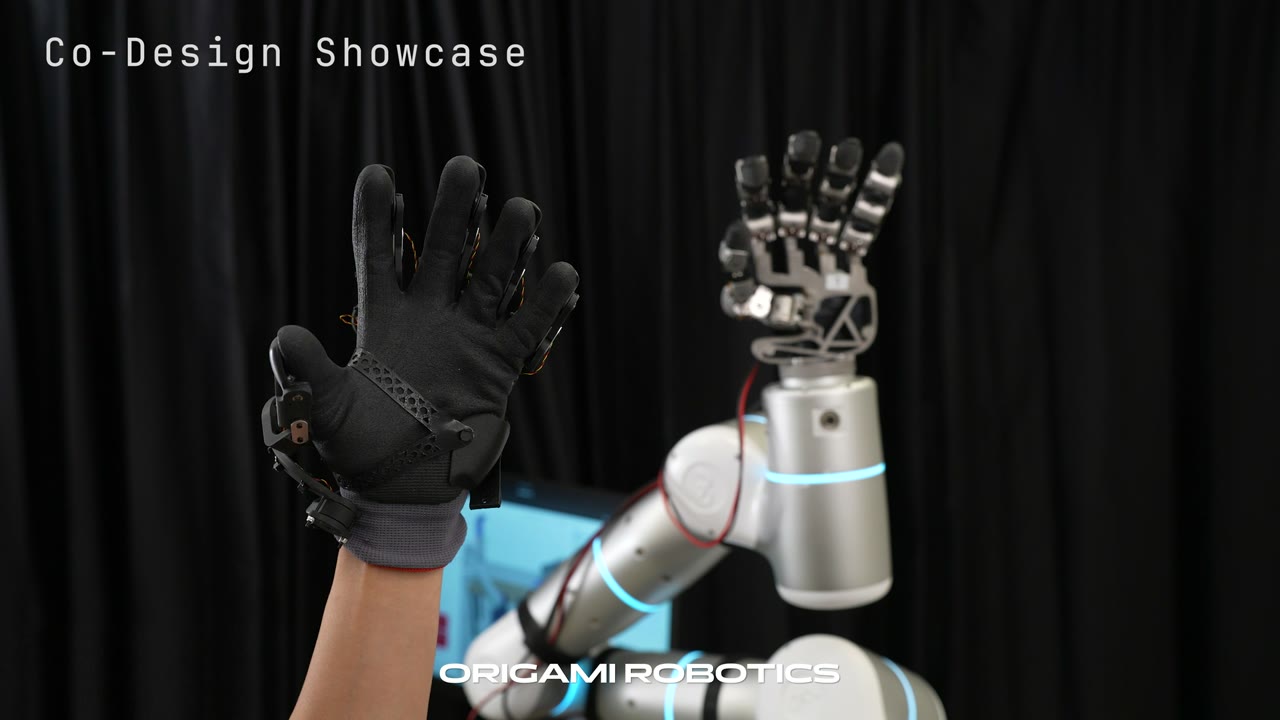
For an operations buyer, the useful way to read Agile ONE SN is not as a product to purchase but as a specification NVIDIA wants the market to adopt. By pairing a named mechanical platform, the WUJI Hand 2 dexterous end effectors, a defined compute budget of 128GB of unified memory, and a software stack, NVIDIA is doing for humanoids roughly what it has long done for data centers: fixing a reference design so that component suppliers, integrators and research labs converge on compatible parts rather than each building a bespoke stack from scratch. The 3-kilogram per-arm payload and 1kHz tactile force control on the hands are modest numbers next to a factory-floor industrial arm, but they are specified precisely enough that a procurement team evaluating competing humanoid suppliers now has a public benchmark to measure against, rather than vendor marketing copy alone.
That standardization push extends to the planned, not yet shipped, integration with NVIDIA Halos, a full-stack safety platform built on the IGX Thor compute module. Halos is aimed at the unglamorous but commercially decisive problem of certifying a robot or autonomous vehicle for deployment around people. NVIDIA named five companies already integrating Halos into their own safety architectures, including Agile Robots, Agility, Dexory, FORT Robotics and KION, the German warehouse-equipment and forklift group, with the German sensor maker SICK evaluating it for dynamic safety zones that move beyond fixed-perimeter fencing. Reynolds & Moore, Accenture and TÜV SÜD were named as partners working to compress the certification process itself, which in heavy industry is routinely the slower and more expensive half of getting a robot onto a warehouse floor at all.
The Software and Data Layer Is Where the Real Leverage Sits
Hardware specifications make for an easy headline, but the software and data releases are the part a fleet operator will actually touch first. Isaac Lab 3.0 is now generally available as an open source framework for training and refining robot control policies across multi-GPU clusters, running on physics engines including Newton and NVIDIA PhysX. Isaac OS, built on NVIDIA's Holoscan runtime, is pitched as the deterministic, real-time layer that connects sensors, AI inference and actuators once a robot leaves simulation for a factory floor, a persistent weak point in robotics deployments where a policy that works perfectly in simulation misses timing constraints on real hardware.
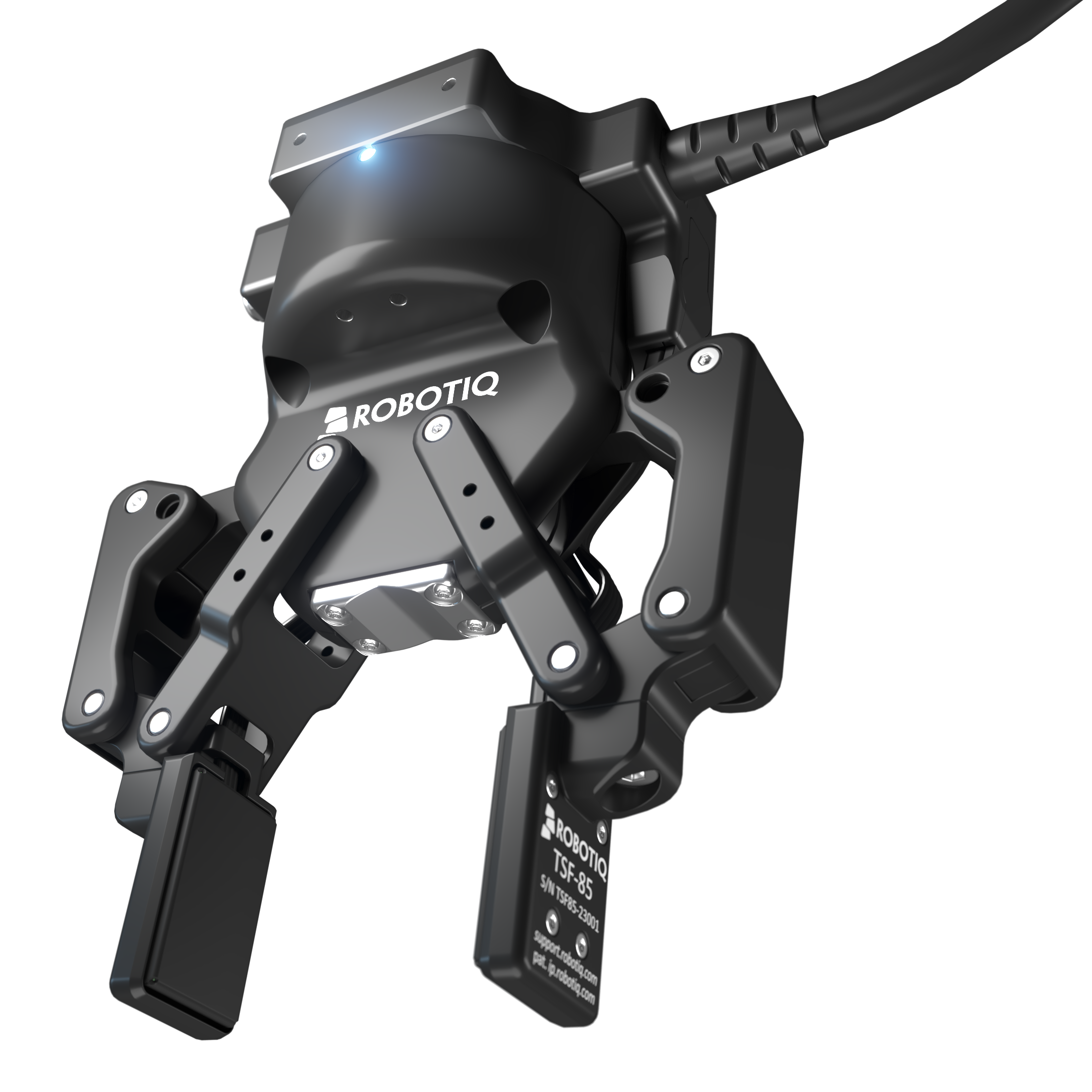
Underneath both sits a data problem NVIDIA is trying to shrink directly. The SimReady Central Library, hosted on Hugging Face, now carries more than 2,000 simulation-ready robotics and factory assets contributed by component makers including Comau, FANUC, Franka Robotics, LG Electronics, Robotiq, Standard Bots, Universal Robots and Vertiv, giving developers pre-built digital twins instead of modeling every gripper and conveyor from scratch. Alongside it, the Human 1M Dataset supplies synchronized three-view video and 3D hand tracking of human activity, with the full set reserved for members of NVIDIA's Cosmos Coalition partner program. NVIDIA also released three open-source reference workflows for its DGX Station hardware, covering reinforcement-learning refinement of GR00T 1.7 models, dexterous manipulation training inside Isaac Lab, and post-training of NVIDIA Cosmos world models for synthetic data generation using ChatGPT Astra, an unusual explicit pairing with an OpenAI-branded tool inside an NVIDIA release.
Europe's Established Robot Makers Are Not Waiting on the Humanoid
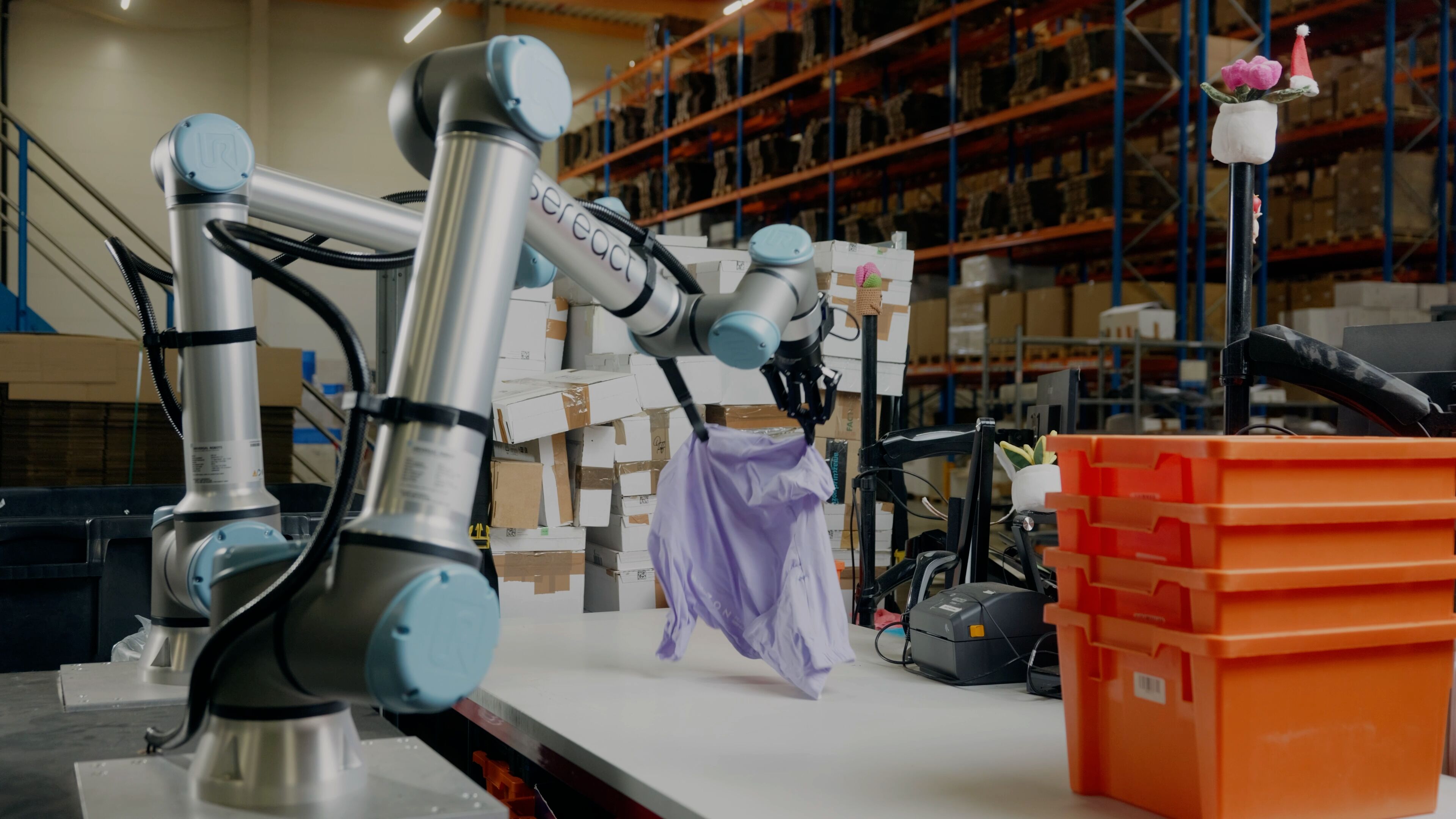
The longer partner list NVIDIA published is where the announcement starts to look less like a single product launch and more like a platform land grab across an entire regional industry. ABB Robotics is integrating NVIDIA Omniverse libraries into its RobotStudio HyperReality tool to virtually commission robotic systems before installing them. KUKA is doing similar work inside its Visual Components FactoryLens product. Those are established industrial names a procurement manager already knows; the more informative signal is in the smaller companies building directly on Isaac. Sereact, a German warehouse-automation startup, is using Isaac GR00T together with NVIDIA's Cosmos Transfer tool to train its Cortex picking-and-grasping platform, running on Universal Robots arms. Skild AI, a robotics-AI developer building what it calls an "omni-bodied brain" intended to control multiple robot form factors through one model, is among eight companies, alongside 1X, Humanoid, Maven Robotics, Mentee, MicroAGI and Rhoda, supporting the new DGX Station workflows.
A few of the smaller deployment stories carry more immediate commercial weight than the headline humanoid. Bellboy, a hospitality-robotics startup, is using Jetson and GR00T to run Billie, a service robot already deployed inside hotels operated by Marriott, Hilton, IHG and OYO, which means at least one Isaac-based robot is already working a real shift rather than waiting for 2027. Toyota Material Handling Europe and SoftServe reported cutting material-handling deployment time by as much as half using Omniverse and Isaac Sim, a figure specific enough to be useful to a logistics buyer sizing a similar project, even allowing for the fact that it is a vendor-reported efficiency claim rather than an independently audited one.
What a Buyer Should Weigh Against the Announcement
None of this is shipping product yet in the sense a purchasing department can put on an order form. Agile ONE SN is scheduled, not sold; "early 2027" is a plan, and reference-humanoid timelines in this industry have a documented habit of slipping. Interest from Stanford and ETH Zurich signals research-world credibility, not a production contract, and the Halos safety platform is described as integrating with partner architectures in progress rather than a completed, certified product a plant manager can specify today. NVIDIA's own framing of a "ChatGPT moment" is aspirational language from a company that sells the compute underneath nearly every entrant in this market, which is reason enough to treat the comparison as marketing rather than an independent technology assessment.
What is verifiable is the breadth of the release: a named reference body with disclosed mechanical specifications, a generally available training framework, a real-time runtime, a safety platform with five named integration partners, a dataset and asset library numbering in the thousands, and a published roster of more than two dozen companies building on the stack across humanoid, warehouse, hospitality and industrial robotics. For a buyer, the practical takeaway is to treat Isaac less as a single robot to evaluate and more as the common toolchain an increasingly large share of competing suppliers will be built on by the time any of this reaches a loading dock. A fleet that standardizes around Isaac-compatible hardware and software today is making a bet on an ecosystem, not a single vendor's humanoid, and that bet gets easier to walk back if the stack keeps shipping in open-source form rather than locked behind a single supplier's hardware.
Strip away the keynote framing and one number does the most work: Agile ONE SN packs 2,070 FP4 teraflops and 128GB of unified memory into a 40-kilogram chassis, which is the actual benchmark competing humanoid suppliers now have to match or explain away.
This article synthesizes company statements and public product disclosures as of 2026-10-21. It is for general information purposes only and does not constitute professional or technical advice.