China Adds Job-Risk Assessments to Some AI Project Reviews
China's October 23 AI-employment opinion adds job-risk assessments to some project reviews and calls for cautious rollout and worker transition support.

China's General Office of the State Council released an artificial intelligence employment opinion on October 23 that calls for job-risk assessments when certain AI application projects undergo review. It also urges cautious rollout in labour-intensive industries, support for workers changing roles, and human-machine collaboration. For automation buyers, the relevant change is how a project affects employment, not a new ban on robots.
The opinion was signed on October 16 and publicly released a week later. Its remit reaches beyond factory robotics to AI services, recruitment tools and new occupations. That breadth matters: a robot installation can sit within the policy's industrial upgrading agenda, but the document does not define a separate approval regime for every robot, autonomous vehicle or software update. Reading it as one would overstate what Beijing has actually announced.
The commercial tension is explicit. The government wants AI to generate jobs, strengthen smaller businesses and improve productivity, while reducing the disruption caused by replacement of existing work. A proposal justified entirely by eliminating headcount may therefore face a different conversation from one designed to relieve a dangerous task, fill anunstaffed position or expand production with people still involved.
A Job-Impact Test With a Defined Scope
The assessment provision distinguishes two categories. For AI application projects in market-access fields that could cause a substantial employment shock, employment-risk assessment is to take place alongside project review. For projects in other fields, assessments are to be conducted according to actual circumstances. The opinion does not supply a numerical threshold for a substantial shock or an exhaustive list of covered projects.
That distinction should not disappear in translation. The document does not say that every automated workstation requires an additional permit before it can operate. Nor does it announce a universal employment-impact certificate for robot manufacturers. It establishes a policy direction and a review expectation for a specified class of AI applications, with a more contextual approach elsewhere. Detailed sectoral and local procedures remain a separate question.
For a factory operator considering an AI-enabled production cell, a useful first step is to separate the project's technical scope from its staffing consequences. The same equipment could support increased output with existing workers, substitute for an activity that cannot attract enough staff, or eliminate occupied positions. Those are different employment outcomes even if the robot model and purchase price are identical.
This is not a requirement to invent a positive jobs number for every investment. It is a reason to explain what changes across the operation. A supplier's cycle-time demonstration establishes machine performance; it does not establish how many workers will be redeployed, whether they possess the needed skills, or whether another department can absorb them. Those answers belong to the proposed operating model.
The document also calls for an assessment of AI's overall employment effects and directs innovation resources toward areas with greater job-creation potential. That is broader than an approval checklist. It connects investment, application selection and employment policy, while leaving open the practical methods used to evaluate a particular site's impact. No new project fee, penalty schedule or standard assessment form is specified in the opinion.
The immediate implication is therefore measured rather than dramatic. Employment consequences have become a stated part of the policy case for AI adoption. Whether a specific robotics project enters a particular review process still depends on its application and the rules governing that field. Treating that uncertainty as a blanket prohibition would be as misleading as ignoring the assessment language altogether.
Rollout Pace Becomes Part of the Production Plan
The government prioritises AI use where workers are scarce or conditions are hazardous, while calling for restraint in the scope, intensity and timing of adoption in labour-intensive industries. It also encourages companies to explore a buffer period for workers facing unemployment, give advance notice during large-scale AI adoption and provide help with changing jobs or roles. The buffer mechanism is encouraged, not presented as a uniform national waiting period.
For robotics buyers, the difference between safety-led automation and abrupt workforce substitution is not merely wording in a presentation. It affects deployment sequencing. A cell that removes exposure to a hazardous process can have a clear occupational-safety rationale. A wider conversion of a labour-intensive line raises additional questions about affected positions, preparation time and alternative work. The opinion gives those questions a policy basis without resolving each plant's answer.
A staged installation can make the staffing transition easier to observe. Operators can compare the intended workflow with actual work, identify the tasks that remain manual and establish who handles exceptions before extending the system. This is an operational recommendation, not a timetable prescribed by the government. The document sets no common pilot duration and does not guarantee that gradual adoption will satisfy every applicable review.
Human-machine collaboration receives express support in industrial upgrading and agricultural digitalisation. In plain terms, the policy favours considering how people and systems work together, rather than measuring an installation only by how much human activity disappears. A robot can perform repeatable handling while people supervise quality, recover failed cycles or manage product changes. Those roles still require planning and cannot simply be assumed into existence.
The hard limit is that collaboration does not automatically mean employment protection. A workstation described as collaborative may still reduce staffing, and a conventional industrial robot may remove a dangerous task without eliminating a job. Equipment labels do not answer the policy's employment question. The relevant evidence is the work before and after adoption, including changes outside the automated cell.
The opinion links transition support to existing employment assistance and insurance arrangements. Eligible affected workers are to receive services such as career guidance, training, job recommendations and entrepreneurship support, while qualifying insured unemployed people receive benefits under existing rules. It does not create an unconditional new payment for everyone displaced by automation or state that equipment suppliers will fund such payments.
For vendors and integrators, that leaves a practical opportunity to improve proposals without promising outcomes they cannot control. A deployment plan can identify training responsibilities, expected operator roles and the customer's handover requirements. Claims about retaining every employee, obtaining automatic approval or achieving a specified government benefit would need their own evidence. None follows merely from selling a robot that is marketed as intelligent.
Training Support Is Not a Ready-Made Workforce
The employment opinion is also an adoption policy. It backs lower-cost, lighter digital tools for smaller businesses, public services for digital transformation and a more accessible supply of data and algorithms. It calls for government investment funds to support AI companies through market-oriented mechanisms. These measures are intended to widen participation, but the opinion names no robotics-specific funding amount or purchase subsidy for an individual buyer.
Training measures address both new entrants and people already working. Schools are encouraged to adjust programmes and cooperate with industry on courses, teachers and facilities. Local training is to follow market demand, with opportunities for groups including young graduates, migrant workers and unemployed people. New AI-related occupations and occupational standards are also to be developed. The emphasis is preparation for changing work, not an assumption that existing staff already have the required skills.
The distinction is relevant to the portability of robot skills. Completing a course does not by itself establish that someone can safely operate a different cell, diagnose its faults or manage its process. Buyers should connect a proposed training activity to an actual role and a way of checking competence. The new opinion supplies a policy reason to do that; it does not replace equipment-specific instruction or operating safeguards.
The government also seeks better monitoring of AI's employment effects through shared data, regional and sectoral models, research and surveys. That introduces another boundary between a sales estimate and an observed result. Planned productivity gains and projected staff redeployment are forecasts before a system operates. Reporting how work actually changes requires records from the site, including duties that remain human and positions that shift rather than vanish.
Employment policy and technical safety should remain separate tests. A system that preserves headcount can still expose workers to unsafe motion, while a technically safe installation can still cause a difficult labour transition. The opinion addresses employment effects and workers' rights, including pay, rest and occupational protection. It does not certify the safety of a robot or replace the existing requirements that apply to its use.
For current projects, the next meaningful developments are the sectoral and local arrangements that turn the opinion into practical assessments, training provision and transition support. Buyers can prepare by describing the real work affected, keeping technical benefits distinct from staffing forecasts and identifying who owns the transition plan. Those steps do not prejudge approval; they make the proposal easier to evaluate on its actual effects.
China has not withdrawn its support for AI-led industrial upgrading. It has placed employment outcomes beside that ambition. The strongest automation case now explains both what the system can do and how people will work around it. A machine specification is necessary evidence for a purchase, but it is not a workforce plan.
This analysis synthesizes the publicly released government opinion and its stated scope. Project implications are interpretation; unannounced implementing rules and deployment outcomes are not assumed.
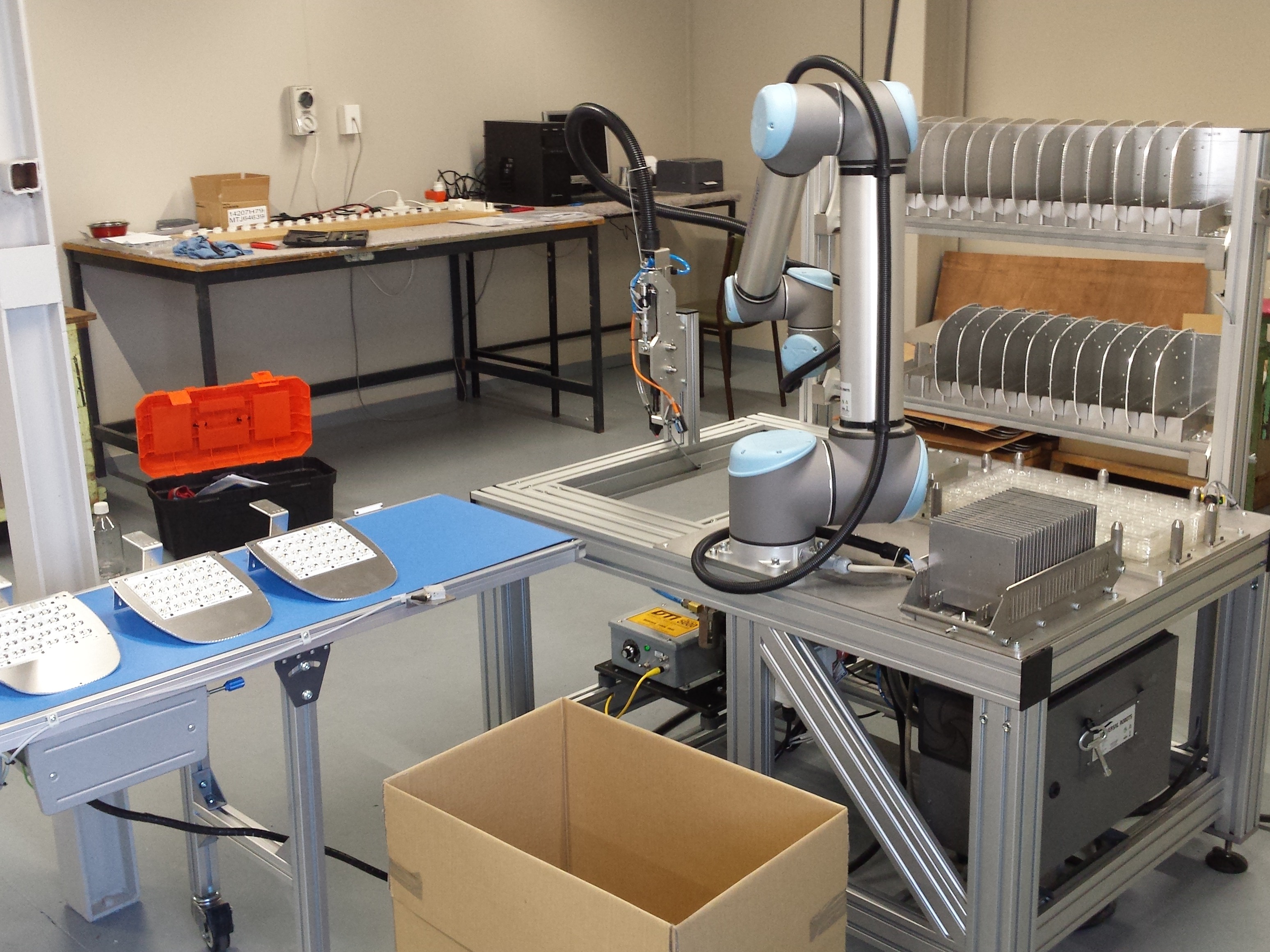
Photo: Universal Robots. Betacom in New Zealand, shown as an archive illustration of human-machine work, not a China location or deployment under this policy.
This article is provided for general information purposes only and does not constitute investment, procurement, legal, or engineering advice. Product specifications reflect public company information available at the time of writing and may change without notice.