Evolver DFR Bundles Drone, Dock and Software for Police
Evolver DFR, operated by XTI Aerospace subsidiary Drone Nerds, launched a bundled Drone as First Responder program on October 22, 2026, combining a Blue UAS-approved Parrot ANAFI UKR GOV aircraft, a DBOX weatherproof docking station and SkyfireAI's FlyAura mission software into a single multi-year purchase order with no recurring subscription fee. The program debuts publicly at the IACP police conference in Orlando from October 24 to 26.

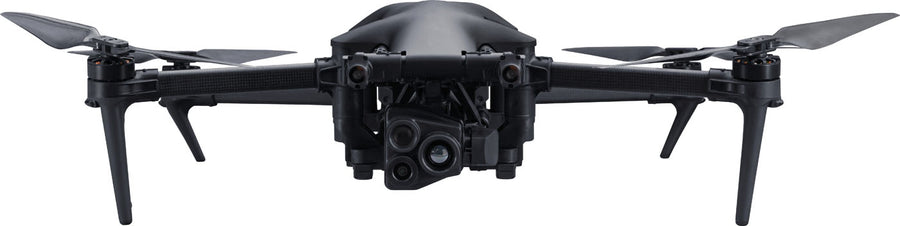
Evolver DFR, a brand of XTI Aerospace operated through its Drone Nerds subsidiary, launched a complete Drone as First Responder program for police, fire and emergency agencies on October 22, 2026, ahead of its public debut at the International Association of Chiefs of Police conference in Orlando, Florida, running October 24 to 26. The program bundles a Parrot ANAFI UKR GOV aircraft, a climate-controlled DBOX PRT docking station, and SkyfireAI's FlyAura mission-planning software into a single purchase order an agency can use to cover multiple locations without a recurring subscription fee for the contracted system.
Drone as First Responder programs send an autonomous drone to a 911 call location ahead of, or instead of, a patrol car, giving dispatchers and arriving officers live aerial video before anyone sets foot on scene. The category has grown quickly across US police departments over the past two years, but most agencies have had to assemble their own stack from separate aircraft, dock and software vendors, then handle Federal Aviation Administration approvals and integration work themselves. Evolver DFR's pitch is that bundling those pieces into one contracted program removes that integration burden, a claim Jeremy Schneiderman, interim chief executive of XTI Aerospace and chief executive of Drone Nerds, made directly, saying Evolver DFR brings those pieces together through a single solution.
Four Companies Worth Placing Before the Specs
Drone Nerds, founded in 2014 and now a subsidiary of XTI Aerospace (Nasdaq: XTIA), is the commercial drone retailer and integrator actually running the Evolver DFR program; XTI Aerospace is a Nasdaq-listed company better known for its work on vertical takeoff and landing aircraft, and Drone Nerds represents its commercial drone-services arm. SkyfireAI, headquartered in Huntsville, Alabama, supplies the FlyAura software layer, a browser-based system handling mission planning, live video streaming, a shared operating picture, integration with the Team Awareness Kit used across public-safety and defense agencies, and searchable flight records. DBOX, based in Vilnius, Lithuania, builds the PRT docking station that launches, recharges and recovers the aircraft automatically in heat, cold and rain. Parrot, the French drone maker founded in 1994 by Henri Seydoux, supplies the aircraft itself and needs the least introduction of the four, having built one of Europe's longest-running consumer and enterprise drone businesses before shifting toward the defense and public-safety-grade hardware this program uses.
That four-company structure is the real story behind the announcement. None of the individual pieces, a Blue UAS-approved aircraft, a weatherproof dock, or TAK-integrated mission software, is new to the public-safety drone market on its own. What Evolver DFR is actually selling is the integration and contracting work of combining a European airframe maker, a Baltic hardware manufacturer and an Alabama software company into a single procurement relationship for a police or fire department that has neither the staff nor the inclination to manage three separate vendor contracts for one operational capability.
The Hardware Doing the Actual Flying
The Parrot ANAFI UKR GOV aircraft at the center of the program carries a Blue UAS approval, the US Department of Defense's list of drones cleared for government use that excludes most Chinese-made airframes, alongside wide and 35x telephoto cameras, a 640-resolution thermal sensor, AES-256 encrypted radio links and FIPS 140-2 cryptographic compliance. Blue UAS approval has become close to a baseline requirement for US public-safety drone programs over the past two years, as federal and state restrictions on Chinese-made drones, most notably DJI, have pushed agencies toward a narrower set of approved alternatives, and Parrot has positioned itself as one of the more established European options in that narrower field.
The DBOX PRT docking station is the less familiar component and the one that determines whether a program can genuinely operate as first-response infrastructure rather than a drone an officer has to manually launch. Dr. Linas Gelazanskas, DBOX's chief executive, said: "We engineered the DBOX PRT around the ANAFI UKR so the two work as one system in any weather." That claim matters operationally because a dock that cannot reliably launch and recover in rain or sub-freezing temperatures defeats the purpose of an always-ready response asset. Don Mathis, SkyfireAI's chief executive, framed the combined system's ambition in similarly operational terms, describing Drone as First Responder as a scalable, everyday public safety capability rather than a specialized tactical tool reserved for major incidents.
The Blue UAS restriction is worth sitting with for a moment longer, because it is reshaping the entire competitive field this program sits inside. Chinese manufacturer DJI has long dominated the global drone market by unit volume and price, and that dominance extended well into US public-safety agencies before state and federal procurement restrictions began excluding DJI hardware from government contracts over the past two years on national-security grounds. Those restrictions created a gap that European and domestic manufacturers, Parrot among them, have spent the past two years racing to fill, but the Blue UAS-approved alternatives have consistently carried a price premium over the DJI hardware they replace, with the Adorama-listed ANAFI UKR GOV bundle running well into five figures per unit before docking and software costs are added. An agency choosing a Blue UAS-compliant program is not simply choosing a different brand; it is absorbing a materially higher per-unit cost as the price of regulatory compliance, which is part of why bundled, no-subscription-fee contracting structures like Evolver DFR's are becoming more attractive to procurement officers trying to make that higher price politically and financially defensible to a city council or county commission.
What the No-Subscription-Fee Structure Actually Means for a Budget
The absence of a recurring subscription fee on the contracted program is a notable departure from how most public-safety technology, body cameras, license-plate readers and records-management software among them, has been sold over the past decade, typically as a per-unit or per-agency annual subscription that locks in recurring vendor revenue. A multi-year, multi-location purchase order structure instead concentrates the cost into the initial contract and the ongoing hardware maintenance covered by Drone Nerds' separate Always Flying program, which provides expedited replacement aircraft, technical support and maintenance resources. For a police or fire department's budget office, that structure is easier to justify through a one-time capital purchase process than an open-ended operating expense, though it also means the agency carries more of the hardware refresh and failure risk itself rather than having it absorbed into a vendor's subscription pricing.
Agencies evaluating the program should press on what exactly the Always Flying program covers versus what counts as a separate paid service call, since "expedited replacement aircraft" and "maintenance resources" are the kind of terms that can mean anything from a guaranteed same-day swap to a standard warranty repeated in marketing language, a distinction that matters considerably when a damaged aircraft needs to be back in service before the next shift. The companies have not published a standard service-level agreement alongside this week's announcement, so that detail will need to come out of the individual contract negotiation each agency runs with Drone Nerds rather than from the public launch materials.
Why This Launch's Timing Is Deliberate
Debuting the program at IACP, the largest annual gathering of US police leadership, rather than a drone-industry trade show, signals who Evolver DFR actually needs to convince: police chiefs and procurement officers evaluating a capital purchase, not drone operators evaluating flight performance. That audience choice also explains the program's structure, Federal Aviation Administration support including Beyond Visual Line of Sight authorizations, needs assessment and site selection bundled in as services rather than left to the agency, since the FAA approval process has been one of the more common points where individually assembled Drone as First Responder programs have stalled for agencies without dedicated aviation staff.
The detail that will determine whether Evolver DFR's bundled approach outcompetes agencies continuing to assemble their own Drone as First Responder stacks is not the specifications of any single component, all of which are available to agencies buying directly from Parrot, DBOX or SkyfireAI independently, but whether the combined program's total cost and FAA approval timeline genuinely beats what an agency's own procurement office could negotiate buying the same three components separately. That is a comparison most agencies evaluating this program will need to run themselves, line item by line item, rather than take on the vendor's word that bundling automatically produces the better price. The agencies best positioned to make that comparison quickly are the ones that have already assembled a Drone as First Responder stack independently and know firsthand what the integration work actually costs in staff time; agencies evaluating a first program have less of a baseline to negotiate against and should budget extra time for outside advice before signing a multi-year contract.
This article synthesizes the companies' October 22, 2026, press release and publicly disclosed product specifications. It is for general information purposes only and does not constitute procurement, legal or professional advice.