XPeng's IRON Humanoid Cuts Reaction Time to Five Updates a Second
XPeng demonstrated a gesture-interaction test in which its IRON humanoid re-evaluates visual input every 0.2 seconds, switching between a handshake, fist bump, and high-five, though the company has not disclosed end-to-end response latency or success rates.

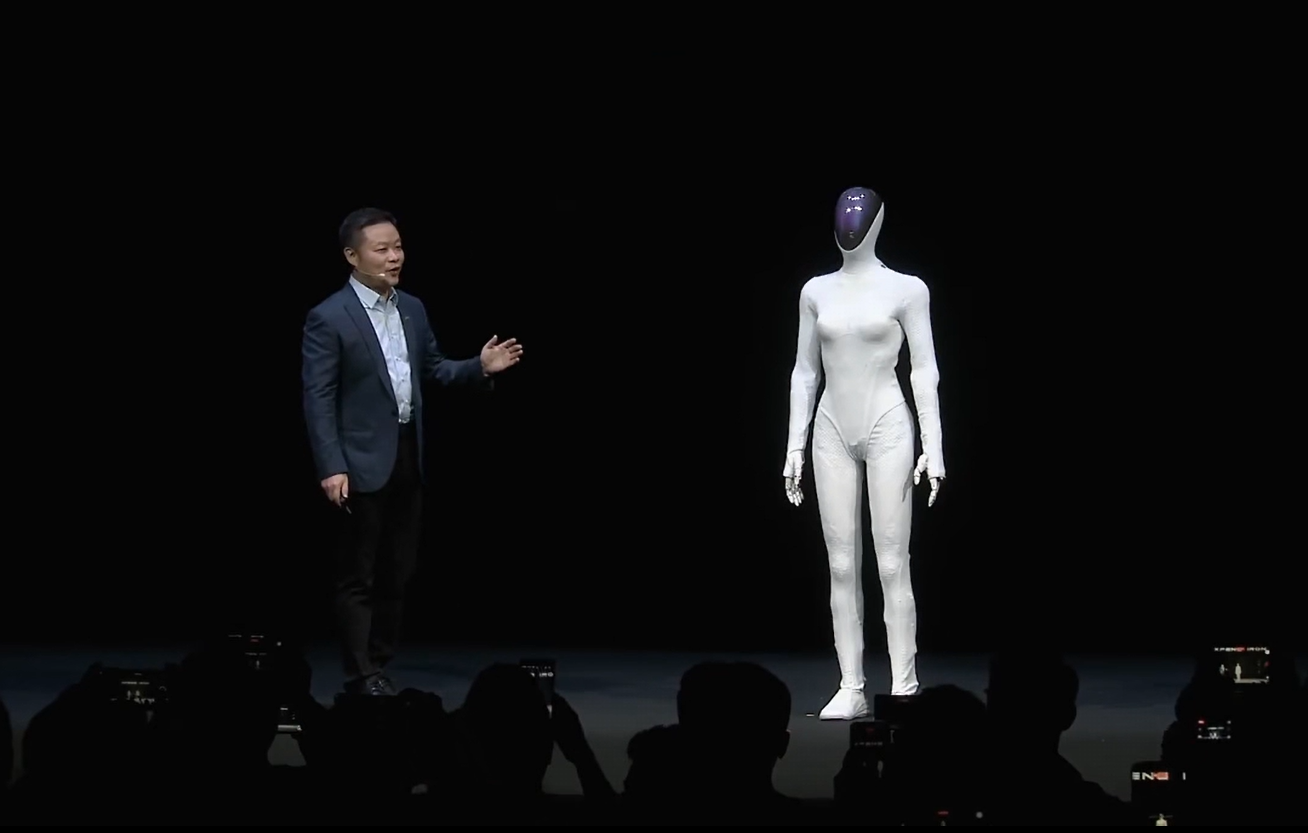
XPeng's humanoid robotics unit has posted a test video in which its IRON humanoid re-evaluates what it sees once every 0.2 seconds, the equivalent of five reasoning updates a second, while switching between a handshake, a fist bump and a high-five as a tester changes gestures mid-motion.
The clip, posted through chief executive He Xiaopeng's account on October 22, 2026 and picked up by Chinese industrial-automation trade press the following day, shows IRON tracking a moving hand, adjusting its own gesture to match, and switching arms when a target moves out of reach of the limb it started with. XPeng describes the update rate as proof its second-generation Vision-Language-Action model, or VLA 2.0, can read and react to a changing physical scene without voice commands. The company labels the footage an R&D test-build demonstration, not a production-unit showcase.
Reaction Speed Becomes the New Benchmark
IRON is not a new robot. XPeng unveiled the current generation in November 2025 and commissioned a dedicated production line for it in Guangzhou in September 2026, positioning the humanoid as a flagship proof point for the company's broader bet that the same physical-AI stack underpinning its electric vehicles can carry over into general-purpose robotics. The gesture-interaction clip is the first update since that line opened to focus specifically on how the robot perceives and responds to a human in real time, rather than on manufacturing throughput or battery chemistry, which is why XPeng chose to route it through its chief executive's own account rather than a formal press release.
Humanoid marketing has spent most of 2026 on walking speed, payload, and hours of uptime. XPeng's IRON clip reframes the contest around something buyers actually encounter in service and retail deployments: how fast a robot notices that a human changed its mind. Five visual-reasoning passes a second is a meaningful number for that use case, because it sets a ceiling on how quickly the robot's planning layer can even begin to respond to a new gesture, before motor control, balance correction, and gripper actuation add their own delay.
That distinction matters because XPeng has not disclosed the number that buyers actually need: end-to-end latency from a human's gesture change to the robot's physical response. A 0.2-second perception cycle does not by itself tell a procurement team how long a customer or coworker would wait for IRON to switch from offering a handshake to returning a fist bump. XPeng also has not published a success rate, the number of takes used to produce the demonstration clip, or whether the model performs consistently with different lighting, hand sizes, or skin tones. The company's framing, that IRON can anticipate a person's next move, is a forward-looking claim the video itself does not test; what it shows is adaptation to a gesture that has already changed, not prediction of one that has not happened yet.
What Is Driving the Faster Reasoning Loop
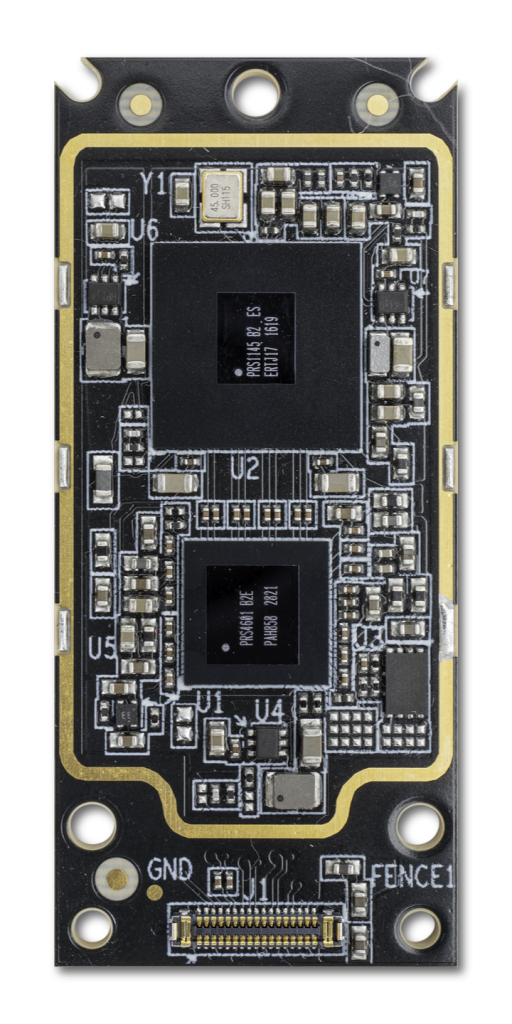
XPeng has tied the speedup to in-house silicon rather than a third-party accelerator. Chinese trade coverage of the demonstration cites an onboard chip rated near 2,250 trillion operations per second, or TOPS, a figure the company has not independently confirmed in an English-language spec sheet but which is broadly consistent with the compute XPeng has built for its automotive Vision-Language-Action stack. A company representative described both the hardware and the perception software behind the reaction loop as developed internally, calling it the product of a multi-year effort rather than a single model swap.
That vertical-integration argument is the core of XPeng's pitch to the humanoid market: the company already runs a Guangzhou production line for IRON, opened in September 2026, and it can draw on automotive-grade compute, battery, and actuator supply chains that pure-play humanoid startups have to build from nothing. IRON itself carries a solid-state battery pack and a hand design that outside reporting has put at roughly 22 degrees of freedom per hand, though exact figures have varied across outlets and XPeng has not issued a single reconciled specification sheet in English. Whether vertical integration translates into a faster or cheaper interaction stack than rivals is not something a single demonstration video settles, but it does narrow the plausible explanations for how XPeng reached five updates a second without waiting for a new chip generation.
The car-to-robot compute transfer is itself the more interesting story for procurement teams watching XPeng rather than a pure-play humanoid vendor. The same VLA architecture family that XPeng has pushed through nearly 100,000 in-store demonstrations of its driver-assistance system, by the company's own account, is now the software lineage behind IRON's gesture reasoning. That gives XPeng a volume advantage in training data and iteration speed that a humanoid-only competitor cannot easily replicate, even if it says little about whether the robot's mechanical reliability has caught up to its perception stack.
The Timeline Buyers Should Actually Track
XPeng has set a public target of beginning IRON mass production by the end of 2026, with commercial deliveries and in-store deployment starting in 2027. That puts the gesture-interaction demonstration roughly one to two quarters ahead of the point where a buyer could plausibly order a unit, which is itself useful context: a capability shown in an R&D build in October has time to either harden into a repeatable production feature or quietly disappear from the spec sheet before deliveries begin, as has happened with other humanoid claims across the industry this year.
Procurement teams evaluating IRON for reception, retail, or light-assembly roles should treat the 0.2-second figure as a perception-layer claim, not a deployment-readiness claim, and ask XPeng directly for end-to-end response latency and repeatability data tied to the actual production hardware rather than the test build shown in the clip. The gap between what a demo proves and what a specification sheet guarantees has been the recurring failure point for humanoid buyers across 2026, and XPeng's video does not yet close it.
That gap is not hypothetical. Humanoid vendors across both China and the United States have spent 2026 publishing capability demonstrations, teleoperated or otherwise, well ahead of signed commercial contracts, and more than one widely shared clip from earlier in the year turned out to rely on human operators or heavily edited footage once outside engineers examined it frame by frame. XPeng has pre-empted part of that skepticism by opening IRON's internals in earlier demonstrations to show there is no person inside the shell, but showing the robot is autonomous is a different claim from showing its reaction time is production-representative. Buyers who have been burned by the distance between a viral clip and a delivered unit this year have reason to ask the same question of every vendor, XPeng included: what is the sample size behind the number in the press release.
Where This Sits in the Broader Humanoid Field
China's humanoid makers have converged on the same general claim this year: that their robots are catching up on dexterity and interaction, not just locomotion. XPeng's advantage in making that case credibly is its existing production line and automotive compute base, which gives the company a faster path from demonstration to repeatable hardware than a startup negotiating its first contract manufacturer. Its disadvantage is the same one every humanoid maker faces when it posts a test clip instead of a product specification: a five-updates-per-second reasoning loop is a real engineering claim, but it is also the easiest kind of claim to showcase and the hardest kind to verify independently.
Reception and hospitality deployments, where IRON's handshake-and-greeting repertoire is most directly relevant, also tend to be the humanoid roles with the lowest tolerance for visible hesitation. A robot that pauses for even a second while deciding how to respond to a changed gesture reads to a human bystander as a malfunction rather than a processing delay, which is exactly why XPeng chose a gesture-switching demonstration rather than a walking or lifting one to showcase its reasoning speed. The choice of demo says as much about where XPeng expects IRON's first paying use cases to land as the underlying number does.
A robot that reacts to a changing hand gesture five times a second has not yet proven it can react to a changing instruction on a factory floor with the same reliability.
The Verdict
XPeng has demonstrated, in a controlled test environment, that IRON's perception loop can keep pace with a human switching gestures in real time, and it has tied that result to hardware and software the company says it built in-house rather than licensed. That is a legitimate technical milestone for a company racing to prove its humanoid is more than a production-line photo opportunity, and it lands at a moment when XPeng needs visible proof points between the September 2026 line opening and the end-of-year mass-production target it has set for itself. It is not, on the evidence released so far, proof of a deployment-ready interaction system, and buyers evaluating IRON against that production timeline should price in the gap between a five-updates-per-second demo and a guaranteed response time on a signed specification sheet. The next proof point that will actually matter is not another gesture clip but a published latency and repeatability figure tied to a unit coming off the Guangzhou line rather than a lab bench.
This analysis synthesizes company statements, published demonstration footage, and industry trade reporting on XPeng's humanoid program.
This article is for informational purposes based on publicly available information at the time of writing and does not constitute investment, procurement, or legal advice. Readers should independently verify all figures and claims before making business decisions.