Unitree Puts Factories, Models, and Compute on One List
China Daily's Saturday report of a Thursday Hangzhou summit is more useful as an operating sequence than as a share-price story. Unitree named factories, hardware-fit models, and compute clusters, while a second outlet confirmed only part of that list.

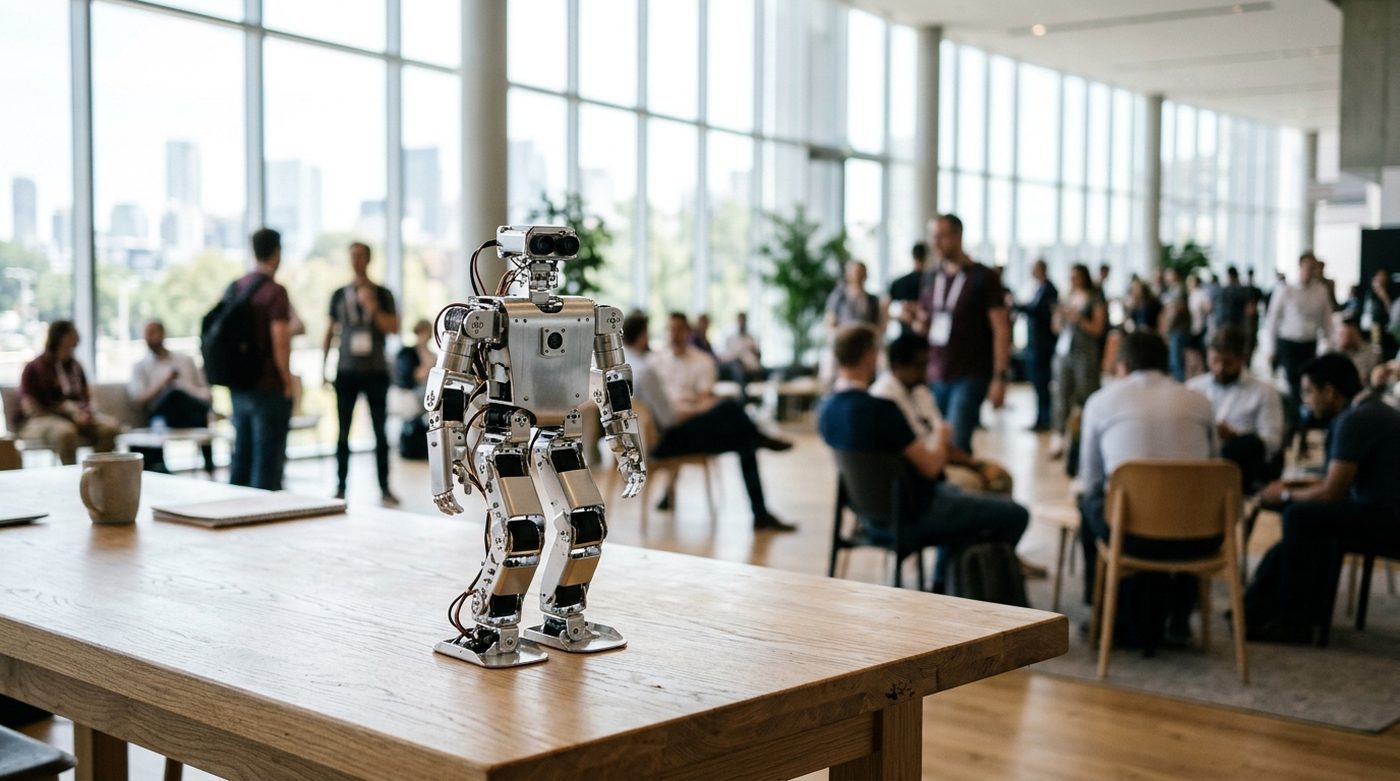
Unitree has spent the past week being discussed as a stock chart. The more useful signal from Hangzhou is a management list: factories, models, and compute, treated as one operating problem rather than three slogans.
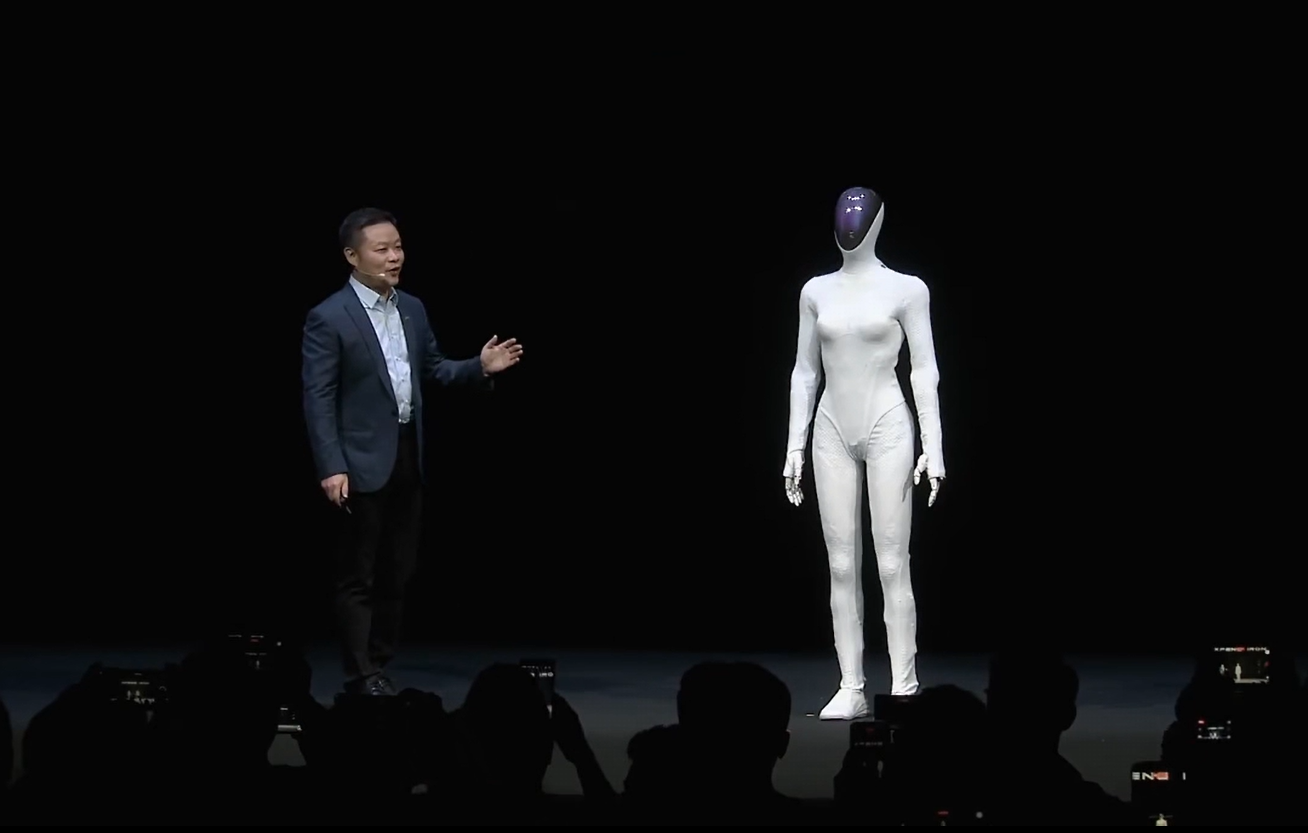
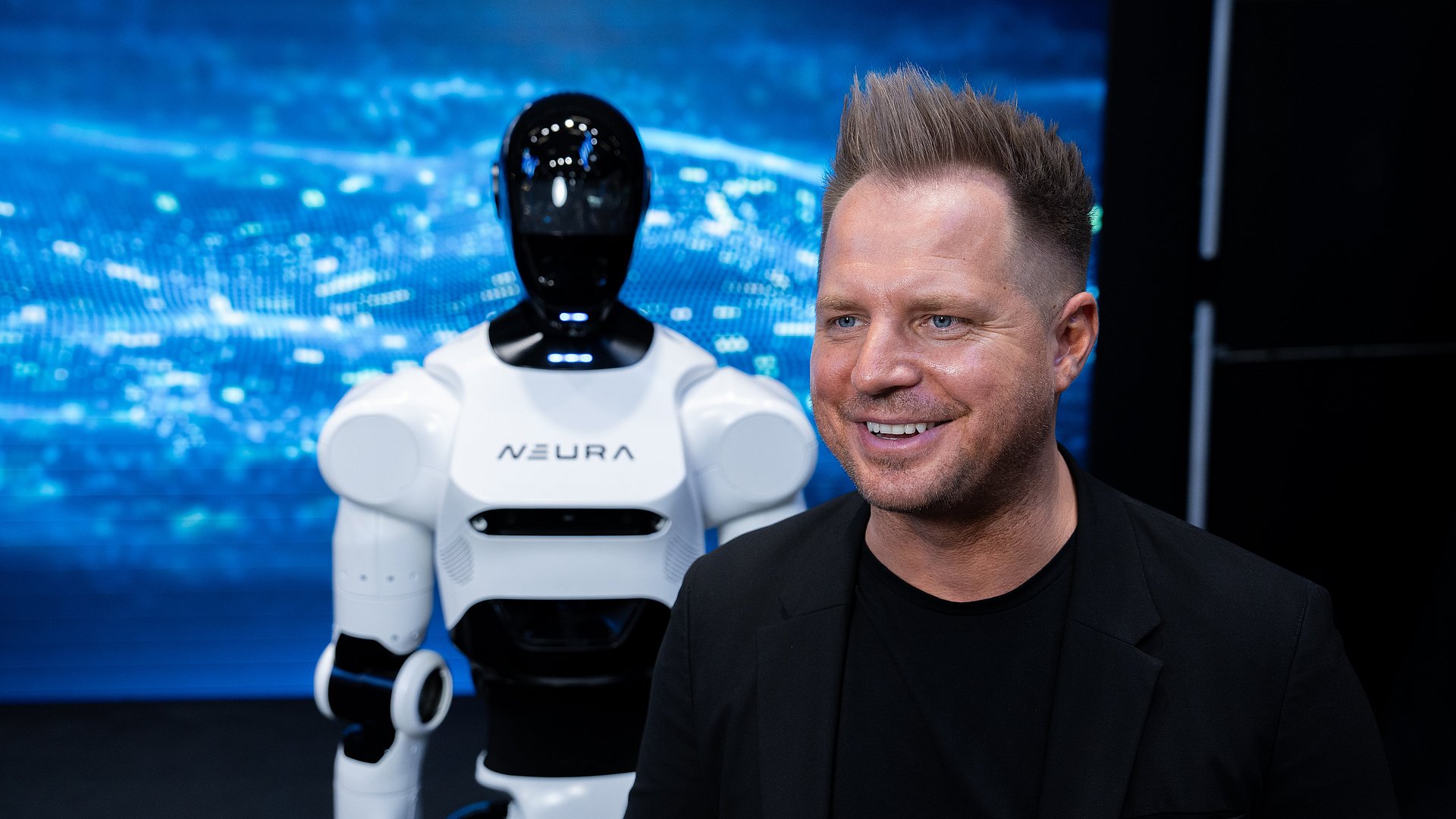
Founder Wang Xingxing set out those three priorities at a partner ecosystem summit in Hangzhou on Thursday, China Daily reported on Saturday. He said the company would strengthen large-scale manufacturing, develop AI models fitted to Unitree hardware both in-house and with partners, and build large-scale computing clusters. Xinhua Zhejiang, filing on Friday about the same Thursday gathering, added a more specific research item. Wang called it Physical AI Robot Self-Evolution V1.0, and said it was still in pre-research.
The summit itself is already two days old in China time. What still needs an editorial frame is the order of the work. A humanoid maker can ship hardware, license a general model, or rent someone else's cluster. Unitree is saying it intends to hold all three. That is a capital and talent claim, not a product launch.
Wang also put a number on the benchmark he wants the industry to clear. His version of a ChatGPT moment is a robot that can follow spoken or written instructions and finish about 80 percent of tasks in about 80 percent of unfamiliar environments. He put the industry breakthrough he expects in one to three years. Readers should treat that as a founder forecast, not a delivery date.
China Daily and Xinhua agree on the setting and on several operating claims. The summit was Thursday in Hangzhou. In the China Daily account, Wang described a general-purpose model that controlled a robot painting a picture, changing colors and cleaning a brush without a program written for those actions. Xinhua quotes him on a loop in which a model searches papers, writes code, trains in simulation, tests in the real world, scores itself, and feeds the result back.
Both outlets report that Unitree launched an annual physical AI competition open worldwide, with prize money in the tens of millions of yuan, covering areas such as dexterous manipulation, production, and care. China Daily also reports a program aimed at incubating more than 200 partner companies over five years. Those lists are announcements of intent. They are not a published rulebook.
On the G1, the two accounts do not match exactly. China Daily says Wang put production since the May 2024 launch at about 10,000 to 20,000 units. Xinhua says cumulative production has exceeded 10,000. The verified floor is more than 10,000 units produced. The upper bound remains single-source.
Wang told China Daily he expects commercial services to adopt robots faster than households or factories. Service work can tolerate a narrower task list and a human nearby. A household buyer cannot. An industrial buyer will ask about uptime, not a painting demo.
Wang Tianmiao, a robotics professor at Beihang University, said household use will take longer because safety, cost, maintenance, and varied tasks are still unmet. That constraint sits under the one-to-three-year forecast.
Compute clusters decide whether the self-scoring loop can run often enough to matter. Wang told China Daily that data, computing power, chip capacity, energy, and minerals would shape competition. A vision of tens or hundreds of millions of robots is not an order book.
China Daily attributed a national tally to the Ministry of Industry and Information Technology: humanoid output cleared 40,000 units in the first six months of 2026, and the ministry expects the full year to clear 100,000. The G1 count is one slice of that national tally.
Three checks would turn this summit language into an operating record. First, whether the self-evolution model leaves pre-research with a published evaluation. Second, whether the partner program names companies, capital, and tasks. Third, whether computing clusters show up as contracted capacity.
Until those appear, the Hangzhou list is a management sequence: build enough robots to gather data, fit models to that hardware, and pay for the compute that lets the models grade themselves. The Friday share move, a session high of 624 yuan, is a market reaction. It is not evidence that the three priorities are funded.
RobotAIGeek publishes independently reported analysis. Figures are limited to claims carried by China Daily on 24 October 2026 and Xinhua Zhejiang on 23 October 2026. Founder forecasts are labeled as forecasts.