AGIBOT Open-Sources a Dataset That Teaches Robots Why, Not Just How
AGIBOT has open-sourced Physical Reasoning, the fourth release in its AGIBOT WORLD 2026 data program, built to teach embodied-AI models to judge changing conditions and recognize failure states rather than just repeat one scripted manipulation trajectory.

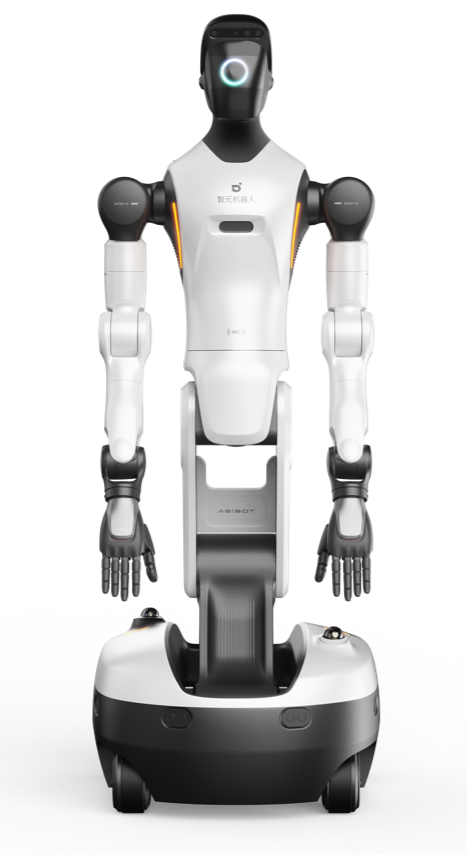
AGIBOT, the Shanghai-based humanoid robot and embodied-AI maker formally registered as AGIBOT Innovation (Shanghai) Technology Co., Ltd., open-sourced a new training dataset on October 23, 2026, built to teach robots which action to choose under changing conditions rather than simply how to execute one scripted motion. The release, called Physical Reasoning, is the fourth installment in the company's AGIBOT WORLD 2026 data program and is now downloadable through Hugging Face and the AGIBOT WORLD project site.
For procurement teams evaluating embodied-AI vendors, the release matters because it targets a specific, commercially relevant weakness: a robot arm or humanoid that can execute a grasp reliably in a demo often cannot tell a full drawer from an empty one, or recognize that a task has already partially succeeded. Physical Reasoning annotates exactly those judgment calls, not just the motion that follows them.
The Gap Between Seeing an Action and Choosing One
Most robot manipulation datasets record a single correct trajectory for a single task: pick up the cup, place it on the shelf. That approach teaches imitation, and imitation breaks the moment the environment changes in a way the training data never showed. A drawer that is supposed to be empty is full. A shelf that should hold three items holds one. A task that looks complete from one angle is missing a step from another.
AGIBOT designed Physical Reasoning around that failure mode directly. Rather than scaling up manipulation difficulty, the dataset holds the task goal constant and varies the state and constraints around it, capturing how the correct decision changes even when the underlying skill does not. Each sample pairs a high-level instruction and a "Dense Prompt," a detailed natural-language description of the action, with low-level action trajectories, spatial annotations including bounding boxes, points and trajectory lines, and explicit subtask segmentation. That structure is designed to let a developer train a high-level decision model and a low-level action policy from the same annotated episode, and to run what AGIBOT describes internally as decision-execution co-training, rather than treating perception, planning and control as three separately sourced problems.
The distinction sounds academic until it is translated into a facility floor. A warehouse pick task and a hotel turndown task can share nearly identical manipulation skills, grasp, carry, place, while requiring entirely different judgment about what to do first, what to skip and what counts as done. Most commercially available robot policies today are strong on the shared skill and weak on the judgment layer, because the data that would teach judgment is harder and more expensive to collect than the data that teaches a single clean trajectory.
Nine Reasoning Tests Hidden Inside Ordinary Chores
The dataset is organized around nine distinct reasoning skills. Some test whether a robot can pick the right object given its attributes or its surrounding context; others test whether it can judge if a manipulation is even physically feasible, or recognize the precondition an action depends on. The remaining skills push further into planning: searching toward a goal, tracking quantity and state over time, holding a long sequence of steps in order, remembering what has already happened, and sequencing subtasks correctly. Those nine skills span more than ten scenario types, stress-tested against four recurring real-world complications: how many of an object are present, whether it is partially occluded, how much space is already occupied, and how far a task has already progressed when the robot encounters it.
The example tasks are deliberately unglamorous, which is the point for a buyer evaluating deployment readiness rather than demo footage. They include restocking a hotel minibar, searching multiple drawers for a specific toiletry item, retrieving a key from behind an obstruction, cleaning a guest room, resetting a table, and restocking retail shelving. Each is graded Easy, Medium or Hard, with Hard tasks combining multiple subgoals, long-horizon state tracking and several constraints at once, the kind of compound judgment call that a single-skill demo video never has to make.
Hospitality and light retail are a deliberate choice of proving ground. Both environments are structured enough to automate but variable enough, in stock levels, room layouts, guest behavior, that a model trained purely on clean manipulation data tends to fail quietly: it completes a motion without noticing the motion solved the wrong problem. Grading tasks by compound difficulty rather than by raw dexterity gives outside developers a way to benchmark exactly that failure mode instead of only benchmarking grip success rates.
AGIBOT has not disclosed the dataset's scale, the number of episodes, hours of footage, robot platforms used or scene count, which is a gap worth flagging rather than glossing over. Prior AGIBOT WORLD releases have leaned on scale as a selling point; this one is being positioned on task design and annotation depth instead. A buyer or research partner comparing Physical Reasoning against a rival embodied-AI dataset should ask for the missing scale figures directly rather than assume reasoning diversity substitutes for data volume, since both factors matter for how far a trained policy generalizes beyond the scenarios it was shown.
Teaching a Model What Not to Do
The more structurally significant choice in Physical Reasoning is how AGIBOT handled failure. Each annotated episode includes both "success segments" and "adversarial segments," meaning the dataset records not only the correct sequence of decisions but also the ones that lead to an incorrect outcome, whether the wrong item is selected or the wrong quantity is placed. AGIBOT weighted successful and erroneous samples equally in the annotation process rather than treating failures as discardable noise.
That is a meaningfully different design philosophy from a dataset built purely to demonstrate what a robot can do. A model trained only on successful trajectories has no signal for why an alternative action was wrong, which is precisely the information a procurement or integration team needs when a robot has to operate in a warehouse aisle, a hotel corridor or a retail backroom that will never look exactly like the training footage. Negative examples, properly annotated, are what let a model generalize a rule instead of memorizing a path, and they are also the examples most commercial data vendors are least willing to collect, because a failed trajectory produces no demo-worthy footage and no obvious revenue.
Open-sourcing that kind of data, rather than keeping it as an internal differentiator, is itself a commercial signal. It tells the market AGIBOT believes its advantage sits elsewhere, in the robot hardware, the deployment relationships, or the next-generation model trained on top of this and prior releases, rather than in the raw annotated footage itself.
Where the Data Already Shows Up
AGIBOT said the dataset has already been used internally to support its next-generation foundation model and an upcoming agent framework, without disclosing a release date or benchmark results for either. That sequencing, publish the training data before the model that was trained on it, is consistent with the pattern AGIBOT has followed across its AGIBOT WORLD releases this year, and it gives outside developers and academic labs a way to validate or challenge the company's reasoning claims independently once they have hands on the same data.
The commercial subtext is one that procurement teams evaluating embodied-AI suppliers should not miss. A demo clip shows what a robot can do once, under ideal conditions. A reasoning benchmark built on graded difficulty, explicit failure annotation and multi-constraint long-horizon tasks is closer to the kind of evidence that separates a system ready for a single controlled pilot from one that can be trusted with the variability of an actual facility, which is the distinction between a demo and a deployable system that keeps tripping up vendor claims across the humanoid sector this year.
Buyers running a vendor bake-off gain a concrete new question to ask as a result: not only how a candidate robot performs on a skill demo, but whether the vendor can show reasoning performance against graded, state-varied tasks of the kind Physical Reasoning now makes publicly reproducible. A vendor that cannot produce comparable numbers on its own equivalent benchmark has effectively conceded the judgment layer, even if its manipulation footage looks competitive.
The practical procurement takeaway is narrower than "AGIBOT solved robot reasoning." No dataset release proves that a model trained on it actually closes the generalization gap in a live facility; that still has to be demonstrated pilot by pilot, with the specific SKU mix, floor layout and staffing pattern of the buyer's own site. What Physical Reasoning does change is the burden of proof available to ask for. Once a graded, publicly reproducible reasoning benchmark exists for hospitality- and retail-style tasks, a procurement team evaluating any embodied-AI vendor, AGIBOT included, has a concrete, repeatable test to request rather than relying on vendor-selected demo footage alone.
AGIBOT has built one of the industry's more aggressive open-data cadences this year, a strategy that converts a company's own training investment into a de facto benchmark the rest of the sector gets measured against, while still keeping its most advanced in-house models proprietary. Whether Physical Reasoning becomes a reference point the way earlier AGIBOT WORLD releases did will depend on how quickly outside labs publish results against it. A fifth release, or the first external benchmark scores built on Release 4, is the next concrete signal worth watching.
This account draws on the dataset publisher's own release materials and its published technical documentation. This article is provided for general information purposes only and does not constitute investment, procurement, legal, or engineering advice.