Korber Takes a Minority Stake in Vendor-Neutral Fleet Manager NAiSE
Korber announced on October 22, 2026, that it is taking a minority stake in NAiSE, a self-funded German fleet management software company whose platform coordinates AGVs, AMRs and manually driven industrial trucks from different manufacturers under one control layer. NAiSE's founders stay in operational management, and both companies say they plan to extend the vendor-neutral approach into new intralogistics use cases, including humanoid robotics.

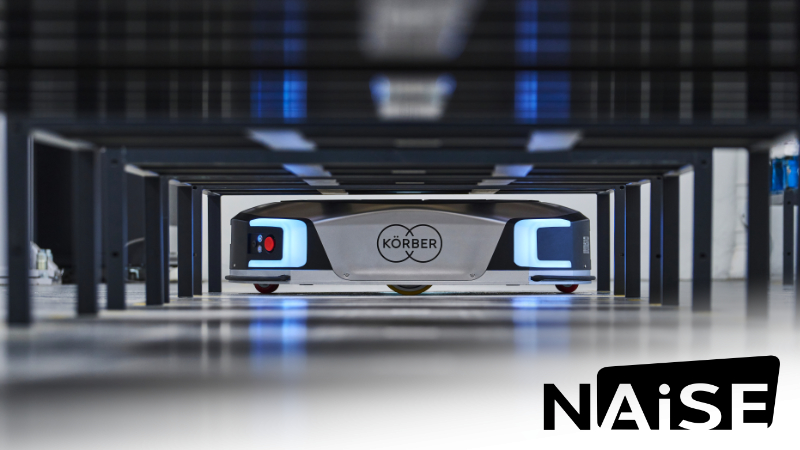
Körber, the German industrial technology group, announced on October 22, 2026, that it is taking a minority stake in NAiSE, a self-funded German fleet management software company, to jointly develop tools for running mixed fleets of automated guided vehicles (AGVs), autonomous mobile robots (AMRs) and manually operated industrial trucks from different manufacturers on one shared control layer. Neither company disclosed the stake size or investment amount. NAiSE's founders, led by chief executive Kai Przybysz-Herz, will stay in operational management, and the company says it will keep its existing roster of AGV and AMR partners available to both current and new customers.
The deal lands at an awkward moment for warehouse operators who have spent the past several years buying automation piecemeal: a conveyor system from one vendor, forklift AMRs from a second, a pallet robot from a third, each arriving with its own fleet controller that cannot talk natively to the others. That piecemeal buying pattern is not a procurement mistake so much as a predictable outcome of how warehouse automation budgets actually get approved, project by project and often department by department, rather than as a single coordinated multi-year hardware standardization plan. NAiSE's pitch is that none of those controllers needs replacing. Its software sits above the hardware layer and dispatches tasks across whatever mix of vehicles a site already owns, using what the company calls a standardised integration layer that works regardless of which warehouse management, execution or control system is running underneath.
A Smaller Name Worth Placing Before the Deal
NAiSE is the less familiar party in this announcement and worth introducing properly. Founded in Germany in 2017 and self-funded until this investment, the company built its Fleet Management Software around a single technical bet: that warehouse operators would rather coordinate their existing mixed vehicle fleet through one neutral layer than standardize on a single hardware vendor's proprietary controller. That bet runs directly against the strategy most AMR and AGV manufacturers have pursued, which is to sell a fleet management system bundled with their own hardware and make switching costly once an operator has committed. NAiSE has instead spent seven years building what amounts to a translation layer sitting between a warehouse's management software and whatever combination of AGVs, AMRs and manned trucks happen to be running on the floor.
Körber needs less introduction to industrial automation buyers. The company's supply chain software and material handling divisions already serve warehouse and logistics operators across more than 30 countries, spanning warehouse management systems, voice-picking technology and physical automation equipment. Dr. Helena Garriga, the Körber executive board member responsible for supply chain, described NAiSE's vendor-neutral approach as exactly what the market needs today, a framing that signals Körber sees mixed-fleet coordination software as a gap in its own portfolio rather than a threat to a proprietary system it would prefer customers buy instead.
Why a Hardware Vendor Would Fund Vendor Neutrality
The arrangement is a more interesting bet than a typical strategic investment because it runs against Körber's own commercial incentive to lock customers into Körber-branded automation. A fleet management layer that works equally well with a competitor's AGV as with Körber's own hardware does not, on its face, help Körber sell more robots. What it does is let Körber compete for the software and systems-integration layer of a warehouse automation project even when the customer has already committed to multiple hardware vendors, a far more common scenario in real deployments than the single-vendor fleets most AMR sales pitches assume. Przybysz-Herz framed the logic from NAiSE's side in similar terms, saying the company deliberately chose a partner that respects its independence and also helps it scale internationally, language that suggests NAiSE negotiated hard to keep its vendor-agnostic positioning intact rather than being absorbed into a Körber-exclusive product line.
That independence is the detail procurement teams should scrutinize most closely before treating this as a simple endorsement. A minority stake, with founders retained in operational control and an existing partner ecosystem explicitly preserved, is a materially different commitment than an acquisition that folds NAiSE's technology into Körber's proprietary stack. It leaves open the possibility that Körber increases its position over time, which would eventually test whether NAiSE's vendor-neutral promise survives deeper integration with a hardware company that has its own AGVs and AMRs to sell. For now, the deal structure itself, a minority stake rather than a buyout, is the strongest signal that both companies intend NAiSE to keep operating as a neutral layer rather than becoming a Körber sales channel in disguise. Neither company has committed publicly to keeping it that way indefinitely, which is the clause a prospective NAiSE customer with a multi-vendor fleet already in place would be wise to ask about directly before signing a multi-year software contract.
Fleet-level software disputes of this kind are not new to industrial automation; they mirror a fight that played out a decade earlier in building management and factory floor sensor networks, where proprietary protocols eventually gave ground to open integration standards once enough large buyers refused to accept single-vendor lock-in. Warehouse robotics is earlier in that cycle, which is part of why NAiSE's seven years of self-funded, vendor-neutral development stands out: most fleet software vendors chasing this market have been backed by, or built inside, a single hardware company from the start, which makes their neutrality claims harder for a mixed-fleet buyer to trust. Körber's willingness to invest in a company explicitly built to work as well with competitors' hardware as with its own is a rarer commercial posture, and one that other AMR and AGV manufacturers watching this deal will have to decide whether to match or ignore.
What This Solves for a Warehouse Running Three Robot Brands
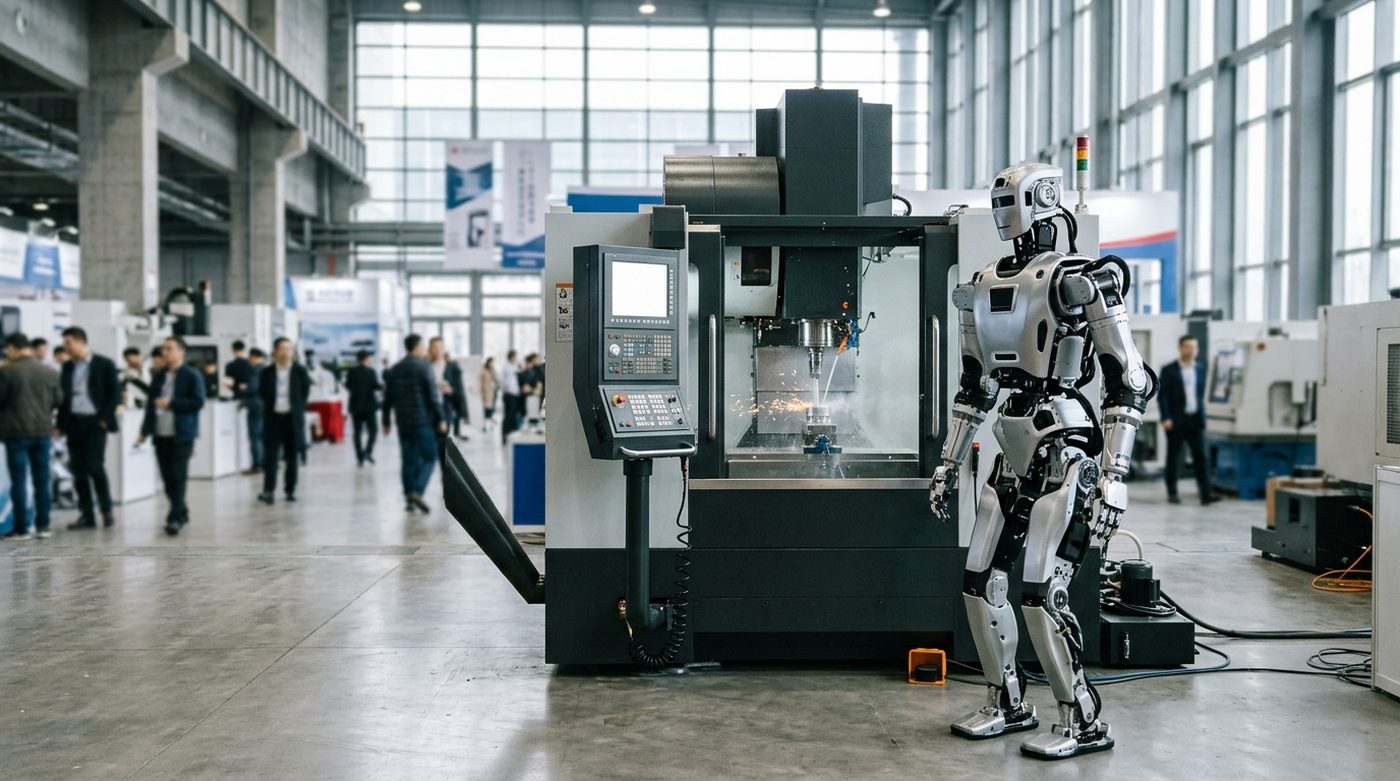
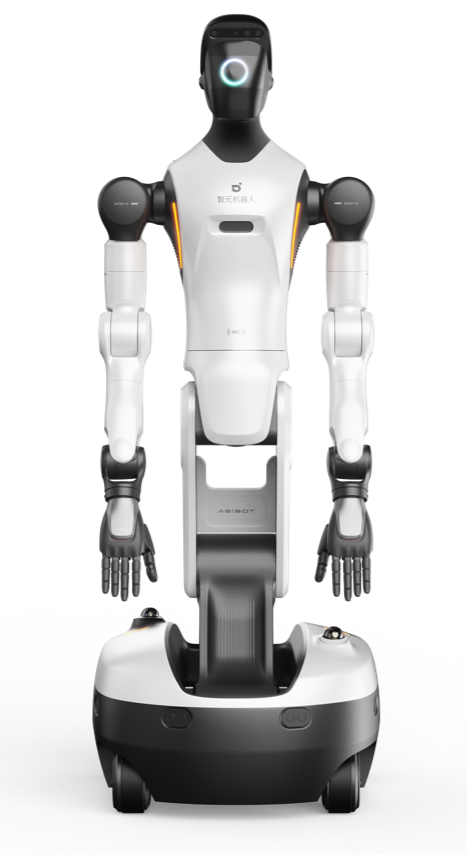
The companies say their joint roadmap extends beyond warehouse and production floor coordination into what they describe as new intralogistics use cases, including humanoid robotics, which positions NAiSE's control layer as a forward-looking bet on a warehouse floor that will only get more heterogeneous as humanoids, wheeled AMRs and fixed automation increasingly share the same physical space. A facility running a mixed fleet today already faces the coordination problem NAiSE is built to solve: AGVs and AMRs from different manufacturers negotiating right of way, charging schedules and task priority without a shared protocol, a problem that compounds as more vehicle types and brands enter the same floor space rather than resolving itself as fleets mature. Adding humanoid robots to that mix only raises the stakes, since a walking robot sharing aisle space with wheeled AMRs and manually driven forklifts introduces safety and right-of-way questions none of today's single-vendor fleet controllers were designed to handle.
For a buyer currently running, or planning to run, automation from more than one hardware vendor, the practical question this deal raises is whether to evaluate NAiSE's software now, ahead of any further integration with Körber's own systems, or wait to see how the stake evolves. The argument for moving now is that NAiSE's seven-year track record predates this investment and its core technical claim, vendor-agnostic fleet coordination, does not depend on Körber's involvement to function. The argument for waiting is that any software vendor taking on a strategic hardware investor eventually faces pressure to favor that investor's equipment in subtle ways, whether through prioritized support, deeper integration work, or simply where its own product roadmap points next.
The clearest signal of how this plays out will not be in either company's announcement language but in NAiSE's next publicly named customer win: whether it is a Körber-only automation site or, as the companies' own framing promises, a facility running hardware from three or four different vendors that Körber had no previous relationship with at all.
There is also a near-term technical test worth tracking, separate from the commercial question. NAiSE's claim to work regardless of which warehouse management, execution or control system a site runs underneath has mostly been proven on NAiSE's existing partner roster, built up over its seven years operating independently of any single hardware backer. Extending that same claim smoothly to Körber's own warehouse management and voice-picking software, the systems the German group will most want to see validated first, is the kind of integration work that typically takes longer than either side's announcement implies, and a buyer evaluating NAiSE today should ask directly how far that validation has actually progressed rather than assuming the partnership guarantees compatibility on day one. Until that validation work is complete and publicly demonstrated, the safest reading of this announcement is that Körber has bought itself an option on vendor-neutral fleet coordination, not that the option has already been fully exercised, a distinction worth remembering the next time either company's marketing describes the relationship in more definitive terms.
For now, Przybysz-Herz and his co-founders remain the people a NAiSE customer actually negotiates with, and that continuity of leadership is itself a small piece of reassurance for any buyer worried the deal quietly changes who is accountable for the software running their warehouse floor.
This article synthesizes company statements published in connection with the October 22, 2026, announcement. It is for general information purposes only and does not constitute investment, procurement or professional advice.