GXO Adds Two More Warehouses to Agility's Digit Rollout
GXO and Agility Robotics are adding humanoid deployments at two U.S. warehouses, with a planned migration from Digit 4 to Digit 5 starting in 2027.

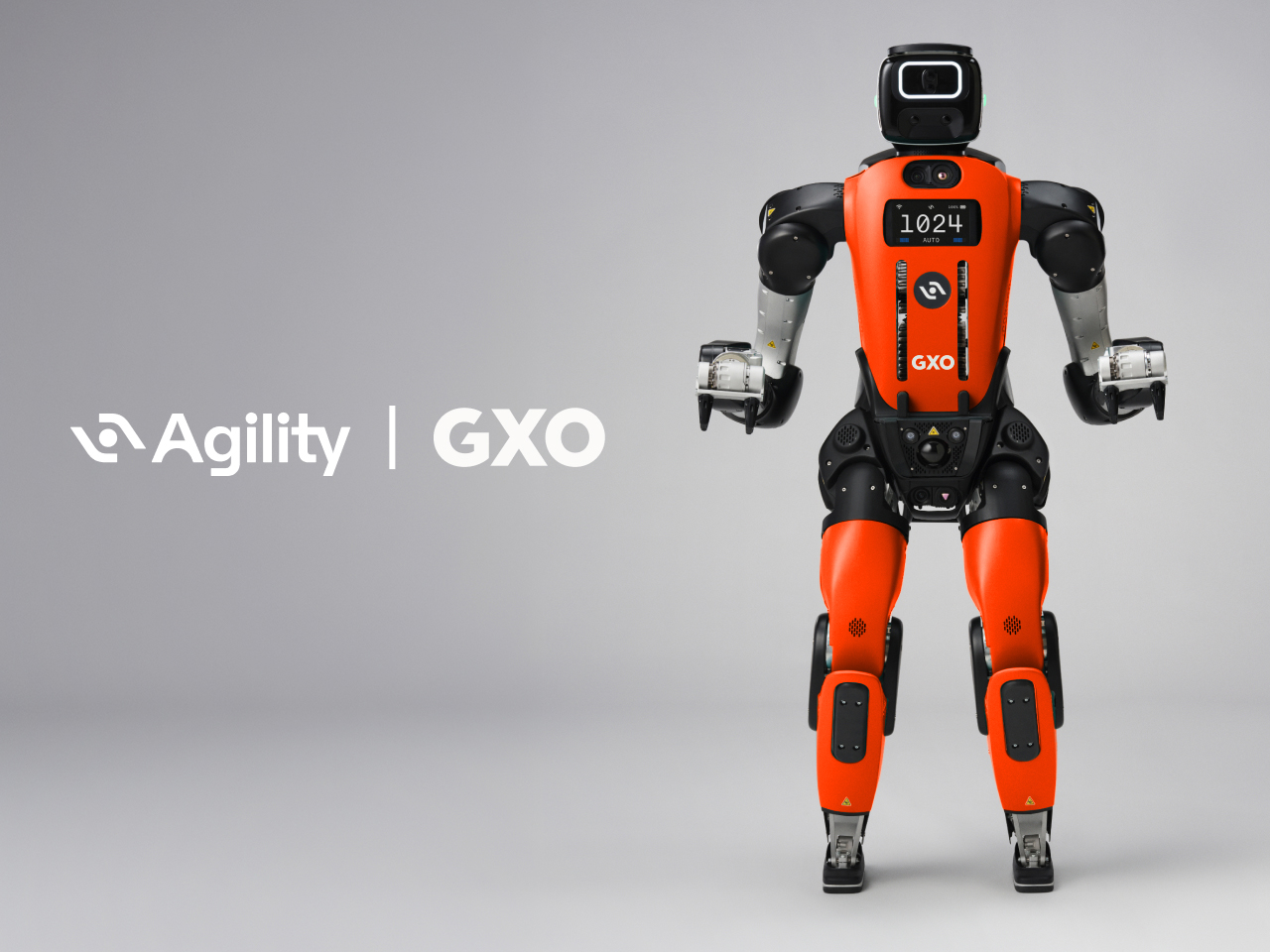
GXO Logistics and Agility Robotics said Monday they are expanding their multi-year humanoid deployment to two more U.S. warehouses, in Statesville, North Carolina, and Lebanon, Tennessee, with new installations expected to begin in early 2027. The expansion, announced jointly from GXO's Greenwich, Connecticut headquarters and Agility's Salem, Oregon base, extends a partnership that started as a 2023 proof-of-concept at a single Georgia site and has since logged more than 65,000 hours of real-world operation moving e-commerce totes onto conveyor lines.
GXO is the largest pure-play contract logistics operator in the world, running more than 1,000 facilities and over 200 million square feet of warehouse space for retailers and manufacturers that outsource their fulfillment operations. Agility Robotics builds Digit, a bipedal humanoid designed for repetitive material handling, and has positioned the robot as a drop-in labor supplement for tasks that are difficult to automate with fixed conveyor systems or wheeled robots. The new sites will run Digit 4 initially, with GXO and Agility both saying the fleet will migrate to the newer Digit 5 platform once it becomes commercially available.
A Track Record Built on 100,000 Totes and Two Production Shifts
The expansion decision rests on a specific operating record rather than a pilot demo. At GXO's Flowery Branch, Georgia, facility, Digit has moved more than 100,000 totes since the original Robots-as-a-Service agreement was signed in June 2024, working alongside the conveyor automation already installed on the floor rather than replacing it. That is the number GXO's leadership pointed to when explaining the decision to add sites rather than hold at one. "Together, we've helped pioneer the use of humanoid robotics in the warehouse," GXO chief executive Patrick Kelleher said, framing the expansion as confidence in the technology's measurable value rather than a speculative bet on a still-unproven category.
Agility chief executive Peggy Johnson described the shift in customer posture more directly, saying the expansion is "the clearest signal that the value is real" and that buyers are now deciding where to scale humanoids rather than whether the category works at all. That distinction matters for how other logistics operators should read this announcement. A single-site pilot proves a robot can function in a controlled environment; a customer electing to add two more sites, in different states, before a newer hardware generation has even shipped, is a statement about operating economics that a demo alone cannot make. Neither company disclosed the contract value of the expansion, the number of units involved, or the specific throughput targets for the new sites, which leaves the headcount-offset math buyers actually care about still unverified from outside.
The Supply Line Behind the Promise: RoboFab's 10,000-Unit Ambition
The timing of the GXO expansion is inseparable from Agility's own manufacturing buildout. Digit 5, unveiled publicly in mid-September, is built at RoboFab, Agility's 70,000-square-foot Salem, Oregon, facility designed for annual capacity of up to 10,000 robots. That figure is a design target, not a current production rate, and the gap between the two is the single most consequential unknown in Agility's near-term trajectory. A buyer evaluating Digit today is effectively underwriting Agility's ability to scale manufacturing output fast enough to fill an order book that already spans GXO, Schaeffler, Toyota Motor Manufacturing Canada and Mercado Libre, without the quality or safety regressions that typically accompany a fast ramp in hardware production.
The decision to run new sites on Digit 4 while planning a mid-deployment migration to Digit 5 is itself a signal worth unpacking. It suggests GXO's near-term labor-augmentation need outweighs the benefit of waiting for the newer platform, and that Agility is confident enough in backward-compatible integration, the safety architecture, the software stack and the physical footprint, to promise customers a hardware upgrade path rather than a hard cutover. For a logistics operator planning its own fleet, that migration commitment is worth pressure-testing before signing: does switching generations mid-contract require re-certifying the site's safety systems, retraining floor staff, or renegotiating service terms, and who absorbs that cost if the timeline slips.
What a Rival 3PL Should Actually Be Watching
The timing also lands ahead of Agility's own transition to the public markets: Agility's business combination with Churchill Capital Corp XI is expected to close in the fourth quarter, with the combined company trading on Nasdaq as "AGLT." A robot maker heading into a public listing has every incentive to showcase a marquee customer's growing commitment, and a visible, expanding deployment at one of the largest 3PLs in the world is a clean data point for Agility to carry into that debut even before the unit economics are fully disclosed. That does not make the expansion itself less real, but it does mean outside observers should weigh it as both an operational decision by GXO and a listing-timed proof point for Agility, two motivations that do not always point to identical disclosure pacing.
For rival third-party logistics providers, DHL Supply Chain, Ryder, XPO and others competing for the same warehousing contracts, the practical question is less about Digit's specific capabilities and more about whether humanoid labor augmentation becomes a contract-winning differentiator in bids over the next 12 to 18 months. A shipper choosing a 3PL partner increasingly asks about automation roadmap alongside price per unit handled, and a provider that can point to a second and third live humanoid site, not just a single demo facility, has a materially stronger answer than one still running a pilot. That competitive pressure, more than any single technical milestone, is likely what pushes other large 3PLs to either accelerate their own humanoid trials or commit more publicly to wheeled AMR fleets they have already proven at scale.
Why GXO Did Not Simply Buy More Conveyor Automation
Fixed conveyor systems and wheeled autonomous mobile robots have handled the bulk of warehouse automation investment for the past decade, and both remain cheaper per unit of throughput than a humanoid in most tasks that do not require picking irregular items from variable heights or working a mixed-task station alongside people. GXO's own facilities already run that kind of automation at scale, and Monday's announcement does not claim Digit is replacing it. What the expansion suggests instead is that GXO has identified a specific gap, tasks too variable or too intermittent to justify a dedicated fixed-automation line, but repetitive enough that a human doing them full time is also an inefficient use of labor, where a general-purpose humanoid's flexibility outweighs its higher per-unit cost. Totes-to-conveyor placement, the task Digit performs at Flowery Branch, sits close to the floor of that gap: simple enough that a wheeled robot with a basic gripper could arguably do it, but varied enough in tote position and orientation that GXO apparently found Digit's bipedal reach and manipulation more reliable in practice.
That framing matters for how other logistics operators should read the expansion. It is not evidence that humanoids are becoming competitive with AMRs or conveyors on cost per task across the board. It is evidence that GXO found, after roughly a year and a half of operating data from one site, a narrow enough task profile where Digit's economics worked well enough to justify two more installations before a cheaper, more capable Digit 5 has even shipped. A buyer evaluating the same category of robot should look for that same narrowness, the specific task, the specific variability, the specific labor cost it is displacing, rather than treating "humanoid robots work in warehouses now" as a conclusion this one expansion is broad enough to support.
The Certification Question Still Sitting Underneath the Expansion
None of this removes the open question that follows every humanoid deployment into a facility with human workers: what functional-safety certification governs Digit's operation once it moves beyond a single proven site into a broader rollout, and how that certification carries over as the fleet migrates from Digit 4 to Digit 5 hardware. Agility has built a safety architecture around on-robot communications, a physical safety pendant and an interface to a facility's existing emergency-stop infrastructure, but neither company's Monday announcement details how that architecture is being re-verified for the Statesville and Lebanon sites specifically, as opposed to carried over from Flowery Branch by assumption. A logistics buyer evaluating a similar deployment should ask a prospective humanoid vendor for site-specific safety documentation, not a blanket architecture diagram, before treating an existing customer's expansion as proof that the same approach will transfer cleanly to a different facility layout and workforce.
There is also a timing risk worth naming plainly. Early 2027 is roughly three months out, a tight window for standing up new automation at two sites simultaneously while also managing a hardware generation transition in the background. Warehouse automation rollouts slip for mundane reasons, facility retrofits, staff training schedules, parts availability, far more often than for dramatic ones, and a slip at either Statesville or Lebanon would not necessarily indicate anything wrong with Digit itself. But it would test whether GXO's confidence in "the technology's measurable value" extends to tolerating an implementation delay without walking back the public commitment it made this week.
The Scoreboard That Will Actually Settle the Bet
Agility and GXO have given the market a concrete number to track from here: whether the combined fleet's operating-hours count, now past 65,000 across a single site, climbs in step with the unit count once Statesville and Lebanon go live, and whether the rate of interventions, stoppages or near-miss incidents per thousand hours holds steady as the fleet triples in footprint. A press release documents an intention. An hours-and-incidents record from three operating sites, published or not, is what will actually tell a competing 3PL, a wary insurer, or a shipper weighing its own automation bid whether GXO's bet on humanoid labor augmentation was a genuine inflection point or simply the easiest automation story for Agility to tell ahead of its own stock market debut.
This analysis synthesizes company statements and public market activity as of the publication date and should not be read as investment, financial, or professional advice; it is provided for general information purposes only.