Shenggong Intelligent Debuts in Hong Kong as "Robot Brain" Leader
Shenggong Intelligent (06106.HK) listed on the Hong Kong Stock Exchange at HK$101.60 per share, valuing the mobile robot controller maker at approximately HK$11.2 billion, with the retail tranche oversubscribed nearly 5,934 times. The company claims the top global and China market position for robot controllers by sales volume, though average unit prices have fallen 58.7 percent since 2023 as the business scales hardware to build its AI data advantage.
# Shenggong Intelligent Debuts in Hong Kong as "Robot Brain" Leader
On June 24, 2026, Shenggong Intelligent (仙工智能, stock code: 06106.HK) officially listed on the Main Board of the Hong Kong Stock Exchange, claiming the title of the "first robot brain stock." The company debuted with an IPO price of HK$101.60 per share, giving it a market capitalization of approximately HK$11.2 billion [1].
## The Financial Architecture of the Deal
The public offering demonstrated strong market demand, with the retail tranche oversubscribed by approximately 5,934 times. Eight cornerstone investors, led by Hillhouse Capital, subscribed for a total of HK$462 million, accounting for 43.34% of the offering. On its first day of trading, the stock closed at HK$106, up 4.33% from the issue price, after reaching an intraday high of HK$136.2 [1].
## The Technology Driving the Valuation
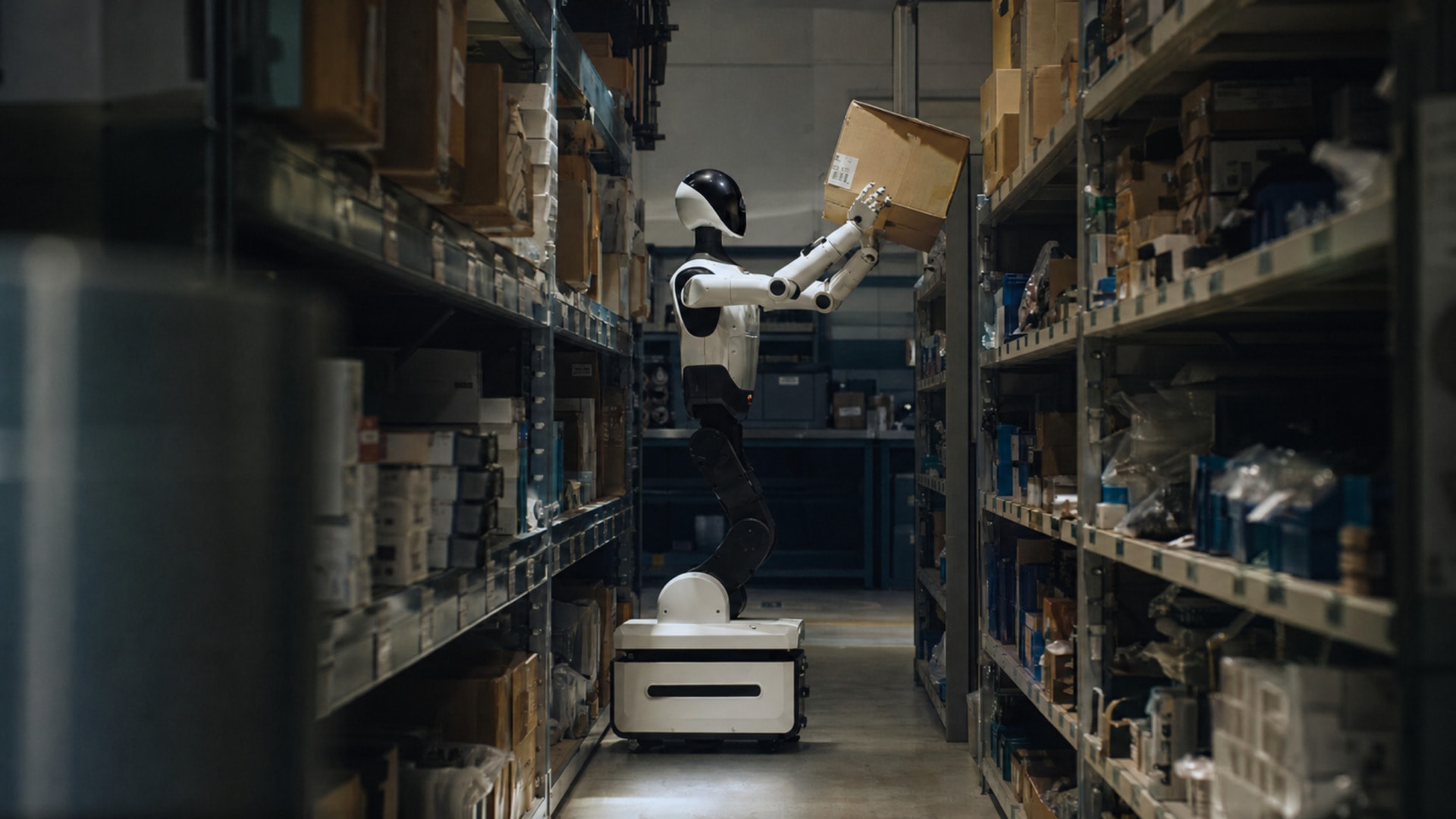
Shenggong Intelligent's core product is the SRC series controller—the "decision center" for mobile robots. This hardware-software integrated system combines perception, intelligent decision-making, and motion control. It supports visual-language-action (VLA) models, reinforcement learning, and end-to-end navigation, allowing manufacturers to quickly build autonomous robots without deep engineering expertise [1].
According to the company, it holds the top market position globally and in China for controller sales volume, with market shares of 24.8% and 45.2% respectively in 2025. The SRC controllers have been deployed in over 1,000 factories across more than 20 industries, accumulating over 60 million hours of real-world operational data [1].
## The Hardware Revenue Reality
Despite its positioning as a "robot brain" company, Shenggong's revenue structure reveals the complexities of commercializing robotics software and control systems. Between 2022 and 2025, the revenue share from complete robot units increased from 55.6% to 67.9%, while the share from controllers dropped from 25.5% to 19.3%. In 2025, complete robot sales generated 299 million RMB, compared to just 85 million RMB from controllers [1].
This creates a structural tension: the high-margin controller business (79.8% gross margin) is overshadowed by the lower-margin complete robot business (38.4% gross margin). The company is effectively using its hardware sales to deploy its control systems and gather the data necessary to refine its AI models [1].
## The Scale vs. Margin Trade-off
The core challenge for companies providing the "brains" for industrial automation is maintaining pricing power as hardware becomes commoditized. The average unit price of Shenggong's controllers fell by 58.7% over three years, dropping from 25,900 RMB in 2023 to 10,700 RMB in 2025 [1]. While this price reduction accelerates market penetration and data collection, it requires massive volume growth to sustain revenue momentum. The ultimate success of this model depends on whether the accumulated operational data can generate enough software and service revenue to offset the declining margins of the physical hardware.
---
References:
[1] OFWeek Robot. "SRC piled up a tens of billions market value for Shenggong Intelligent, but cannot support a profitable story." June 24, 2026. https://robot.ofweek.com/2026-06/ART-8321206-12003-30691923.html