HuaKe Precision Files for STAR Market IPO with Backing from Medtronic
Beijing HuaKe Precision, the company behind the Sinovation SR1 neurosurgical robot, has filed for an IPO on the Shanghai STAR Market to raise about RMB 1 billion. The filing was accepted on June 30, setting the company up to become China's first pure-play neurosurgical robot stock. HuaKe holds a 53.3 percent share of China's neurosurgical robot market, has systems in more than 400 hospitals, and counts global device giant Medtronic as a 3.12 percent shareholder. For hospital buyers and medical device watchers, the prospectus opens a rare window into the real economics of surgical robotics in China.
What Did HuaKe Precision File?
Beijing HuaKe Precision filed its prospectus for a Shanghai Stock Exchange STAR Market IPO, formally accepted on June 30, 2026. The neurosurgical robot maker plans to raise about RMB 1 billion (roughly 140 million US dollars) to fund research, manufacturing expansion, and commercialization. It would become China's first listed company focused on neurosurgical robots.
The Event: A Market Leader Goes Public
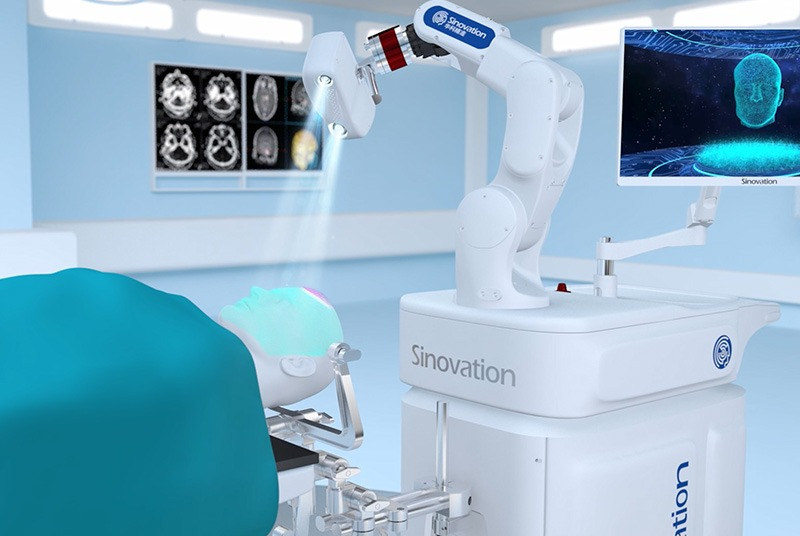
HuaKe Precision is not a startup testing investor appetite. It is the established leader of China's neurosurgical robot segment with a 53.3 percent domestic market share, well ahead of any local rival. Its flagship system, the SR1 series sold under the Sinovation brand, is the only neurosurgical robot certified by both China's National Medical Products Administration and the United States Food and Drug Administration. The system offers 30 second markerless registration and 0.5 millimeter surgical precision, capabilities that shorten operating time and reduce risk in procedures where a millimeter separates success from serious harm.
The company's portfolio runs deeper than one robot. It holds 12 Class III medical device registrations, the most demanding regulatory category in China, and its systems operate in more than 400 hospitals nationwide. Reported revenue stands at RMB 189 million, a figure that looks modest against the installed base and points to the segment's real commercial constraint: neurosurgical robots sell in small unit volumes at high prices, and recurring revenue from consumables and service contracts is still building.
Why the Medtronic Stake Matters
The most telling line in the shareholder register is Medtronic's 3.12 percent stake, held through the global device maker's corporate venture arm. Medtronic sells competing surgical technology worldwide, so its decision to hold equity in a Chinese challenger reads as a hedge on where neurosurgical robotics is heading. For HuaKe, the stake brings validation that few domestic peers can claim. For Medtronic, it buys visibility into a market where domestic procurement policy increasingly favors Chinese devices in public hospitals. Buyers evaluating either company's systems should note what this arrangement signals: the technical gap between Chinese and Western surgical robots is narrowing fast enough that the incumbents are paying to watch.
The Bigger Signal: Medical Robots Reach the Capital Markets
HuaKe's filing landed in the same week that Unitree cleared final approval for its STAR Market listing, and together they mark a shift in how China finances robotics. The STAR Market is becoming the exit venue for the country's robot makers, from humanoids to operating rooms, giving Chinese robotics companies a domestic capital channel that does not depend on US listings or foreign venture funds. A standalone way to state the shift: China's robot industry no longer goes public in New York, it goes public in Shanghai, and the pricing of these listings will set the valuation benchmarks for the entire Asian robotics sector.
In plain terms, a surgical robot is a GPS guided drill press for the brain: the scanner builds the map, the robot arm holds the line, and the surgeon still makes every decision. What hospitals are really buying is consistency, since the robot performs the thousandth procedure with the same steadiness as the first.
What the Prospectus Does Not Settle
The honest caveat is scale. A 53.3 percent share of China's neurosurgical robot market is dominance of a segment that remains small, and RMB 189 million in revenue would not rank HuaKe among the top hundred medical device companies globally. Skeptics will argue the IPO prices a category still waiting for its volume moment, and reimbursement policy for robot-assisted neurosurgery in Chinese provinces will decide that timing more than any technical roadmap. The counterpoint is that surgical robotics rewards early installed bases: hospitals rarely switch platforms once surgeons are trained, so the 400 hospital footprint HuaKe already holds may matter more in ten years than any single year's revenue. One date flag for transparency: the exchange accepted the filing on June 30, and broad Tier 1 coverage followed on July 3, which is why the story appears in this cycle.
Sources:
1. Shanghai Stock Exchange STAR Market filing records (acceptance June 30, 2026)
2. 36Kr coverage of the HuaKe Precision prospectus, July 3, 2026
3. HuaKe Precision / Sinovation official product pages
Disclaimer: This article is for informational purposes only and does not constitute financial, investment, or legal advice. Market conditions and product specifications are subject to change.