Daedong Robotics Raises 5 Billion Won to Push Farm Robots Into Factories
South Korean AI field robot maker Daedong Robotics raised 5 billion won in a Series A round backed by GS Engineering and Posco venture arms on July 6, aiming to move autonomous driving technology proven on farms into construction and manufacturing sites.
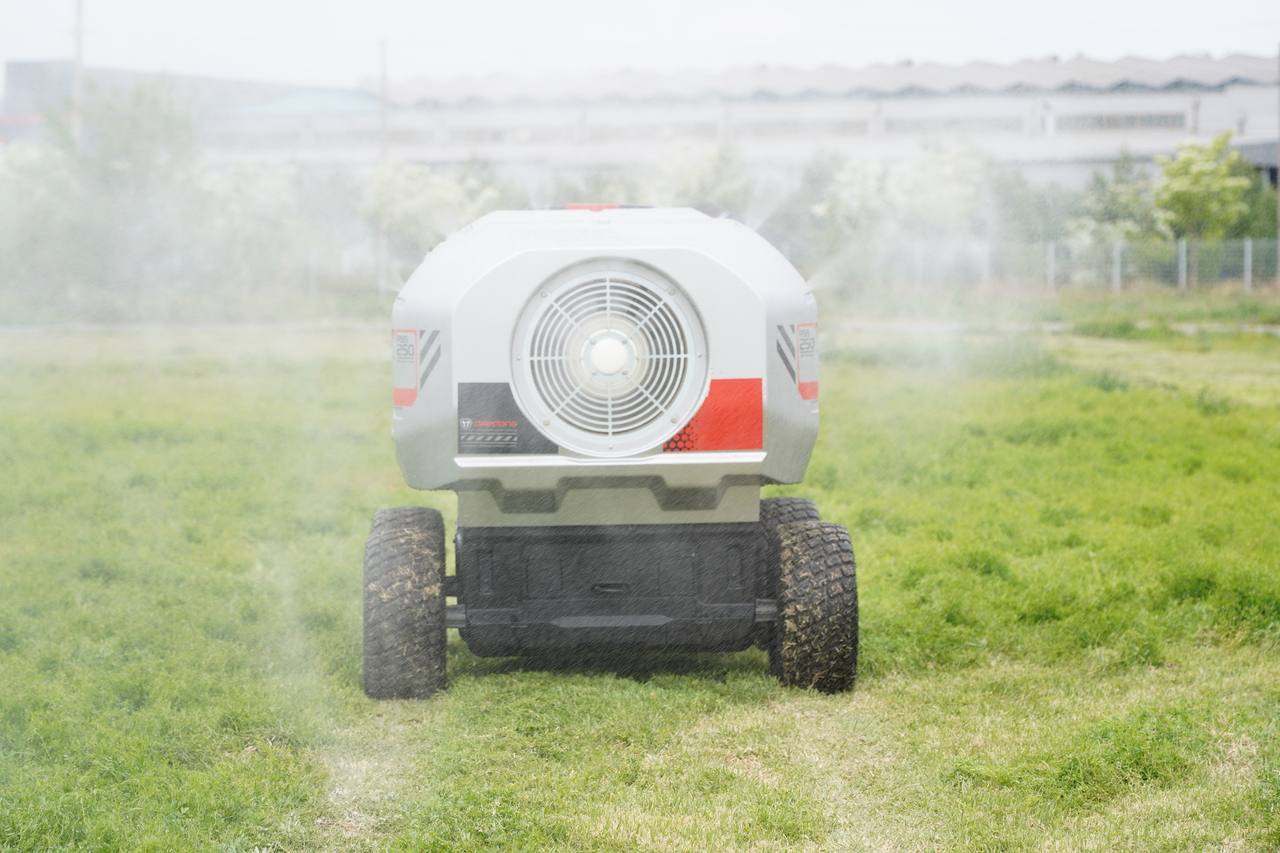
Daedong Robotics, the artificial intelligence robotics affiliate of South Korea's Daedong Group, raised 5 billion won, or about 3.25 million dollars, in a Series A round announced July 6, 2026. The round was backed by corporate venture capital arms tied to two of Korea's largest industrial conglomerates, GS Engineering and Construction and Posco Holdings, with the company planning to move its autonomous driving and spatial-recognition technology out of agriculture and into construction, manufacturing, and logistics.
What Happened and Who Invested?
Three investors participated in Daedong Robotics's Series A round: Xplore Investment, the corporate venture capital arm of GS Engineering and Construction; Posco Technology Investment, tied to Posco Holdings; and NAU IB Capital. The round is relatively small by global robotics funding standards, but the investor identities matter more than the size, since both GS Engineering and Construction and Posco Holdings are large industrial and construction conglomerates that represent Daedong Robotics's most direct potential customers for construction-site automation, rather than purely financial backers.
Company Background: What Is Daedong Robotics?
Daedong Robotics is the robotics and AI subsidiary of Daedong Group, a South Korean agricultural machinery manufacturer that has built decades of experience in autonomous tractors and farm equipment. The subsidiary's core technology, autonomous driving and spatial recognition, was developed and proven first in agricultural settings, including tasks such as automated mowing and pest control, where fields offer relatively predictable, open terrain compared with a construction site or factory floor. Daedong Robotics is now positioning that same underlying technology as the foundation for expansion into what the company calls non-standard industrial environments, meaning construction sites, factories, and logistics hubs where terrain and obstacles are far less predictable than farmland.
Why Construction and Manufacturing Instead of More Farming?
South Korea's construction and manufacturing sectors face labor pressures broadly similar to those driving robotics adoption in logistics and agriculture: an aging workforce, difficulty recruiting for physically demanding site work, and rising labor costs. Daedong Robotics's strategic bet is that autonomous driving and spatial-recognition systems already validated across real farmland can transfer to construction and manufacturing environments faster and more cheaply than building entirely new perception and navigation systems from scratch, since the core problem, safely navigating and operating in an unstructured outdoor or semi-outdoor environment, is conceptually similar even though the surroundings differ. GS Engineering and Construction's participation signals the company sees a credible near-term use case on its own job sites, most plausibly around automated material transport, site mapping, or hazard monitoring rather than fully autonomous heavy equipment operation.
How This Fits South Korea's Broader Robotics Strategy
Daedong Robotics's raise arrives alongside a wider Korean debate about how the country should compete in physical artificial intelligence. A KDB Future Strategy Research Institute report published in early July 2026 argued that South Korea lags the United States in software and China in hardware within the global physical AI market, and recommended that Korean firms pursue a manufacturing-specialized niche rather than compete broadly, leveraging the country's existing manufacturing base to win in autonomous factory systems and automated mobile robots. Daedong Robotics's pivot from agriculture toward construction and manufacturing automation lines up closely with that recommended strategy, betting on a defensible niche adjacent to Korea's existing industrial strengths rather than attempting to out-compete Chinese humanoid makers on hardware cost or American labs on general-purpose AI software.
How Daedong's Bet Compares to Other Field Robotics Plays
Daedong Robotics's move mirrors a pattern visible elsewhere in field and outdoor robotics, where companies with deep experience in one structured outdoor environment attempt to transfer that expertise into an adjacent, less structured one rather than competing directly against humanoid makers or warehouse automation specialists. In Japan, Kawasaki Heavy Industries has pursued a similar logic, applying its industrial robotics and hydrogen engineering expertise into physical AI and mobility robots such as its four-legged Corleo platform, backed by a roughly 1.2 billion dollar capital raise disclosed in early July 2026. Both companies are effectively wagering that deep domain-specific autonomy experience, agricultural for Daedong and industrial for Kawasaki, transfers more reliably into new physical environments than a software-first AI company without hardware roots could manage on its own.
For Daedong Group as a parent company, the robotics subsidiary also represents a hedge against slower growth in its traditional agricultural machinery export business, giving the conglomerate a foothold in construction and industrial automation markets that are considerably larger than the global farm equipment market it currently serves.
The Industry Reality of Small Rounds With Strategic Investors
A 5 billion won round is small next to the billion-dollar humanoid robotics raises making headlines elsewhere this year, and it would be easy to read this as a minor local financing story. That read undersells the significance of who wrote the checks. When a construction conglomerate's own venture arm invests directly in a robotics supplier rather than simply issuing a pilot contract, it typically signals a closer, longer-term commercial relationship is already being negotiated behind the scenes, since corporate venture investment carries reputational and governance commitments that a simple vendor contract does not.
The Simple Explanation
Daedong Robotics learned to build machines that can safely drive themselves around open farm fields, avoiding rocks, ditches, and crops without a human at the wheel. The company's bet now is that many of those same driving and sensing skills, adjusted for a different setting, can help robots move safely through construction sites and factory floors, environments that are messier and more unpredictable than a field but share the same basic challenge of moving safely without constant human supervision.
What to Watch Next
The next concrete milestone for Daedong Robotics will be its first disclosed pilot deployment on an actual GS Engineering and Construction job site, since a named pilot with a defined scope, timeline, and measured outcome would move the relationship from a financial investment into a validated commercial reference that Daedong Robotics could use to approach other construction conglomerates. Absent that kind of disclosed pilot, this round should be read as an option on future integration rather than confirmation that the technology already performs reliably outside agricultural settings.
Strategic Implications for Korean Industrial Buyers
For construction and manufacturing firms in South Korea evaluating automation partners, Daedong Robotics's GS Engineering and Construction and Posco Technology Investment backing offers an early signal of which established conglomerates are placing bets on which robotics suppliers, information that can shape competitive positioning for firms deciding whether to pursue their own pilots with the same vendor or seek an alternative supplier before Daedong Robotics's construction-specific product matures and its customer base solidifies around its earliest industrial backers.
Disclaimer
This article is based on publicly available sources cited above and is provided for informational purposes only. RobotAIGeek makes reasonable efforts to verify facts at the time of publication, but robotics pricing, specifications, funding terms, and deployment timelines can change. Readers should confirm details directly with the companies or sources named before making purchasing, investment, or deployment decisions.
Source Evidence
· Seoul Economic Daily, "Daedong Robotics Raises 5 Billion Won to Accelerate AI Field Robot Business," July 6, 2026, https://en.sedaily.com/international/2026/07/06/daedong-robotics-raises-5-billion-won-to-accelerate-ai
· The Herald Business, "Daedong Robotics raises W5b from GS E&C, Posco CVC arms," July 6, 2026, https://biz.heraldcorp.com/article/10798975
· The Herald Business, "S. Korea lags in physical AI race, should target manufacturing-focused niche, report says," July 3, 2026, https://biz.heraldcorp.com/article/10797467