The Technology Roadmap: Where Are Industrial 6-Axis Arms Heading Next?
A forward-looking analysis of the industrial 6-axis arm technology roadmap. The article explores the current performance ceiling, key R&D directions including Physical AI integration, cost reduction trajectories, and anticipated milestones through 2028.
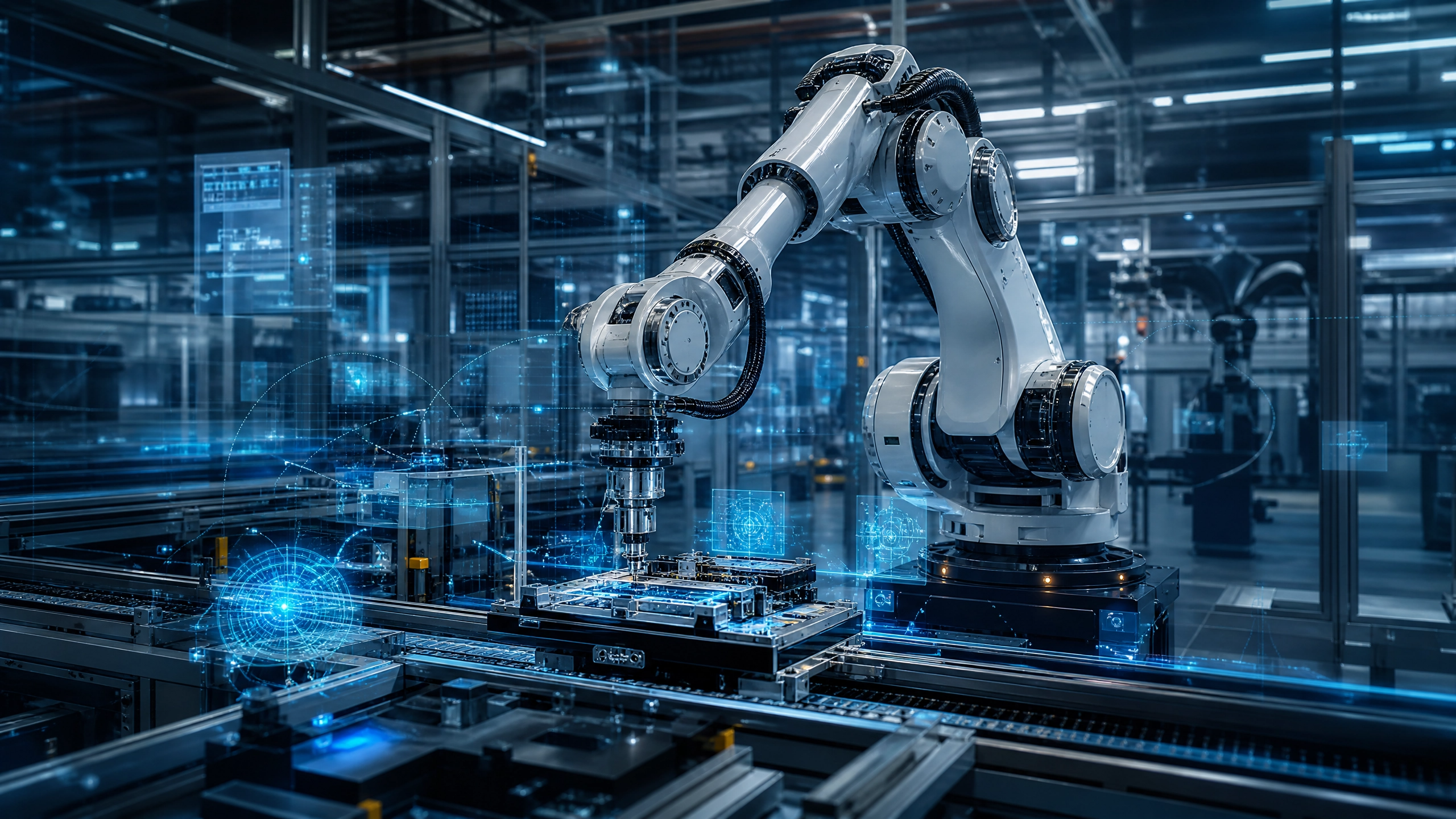
The industrial 6-axis arm has long been the foundational element of automated manufacturing. While the fundamental mechanical design of these robotic arms has remained relatively stable, the underlying technology is currently undergoing a period of accelerated evolution. Driven by intense global competition and the rapid maturation of artificial intelligence, manufacturers are pushing beyond traditional boundaries to create systems that are not merely programmed to repeat tasks, but are capable of perceiving, reasoning, and adapting to dynamic environments.
For engineering leaders and procurement teams planning capital expenditures over the next three to five years, understanding this technology roadmap is critical. The next generation of industrial robotics promises to unlock entirely new applications, significantly reduce deployment friction, and fundamentally alter the total cost of ownership calculation. This analysis provides a forward looking view grounded in current research and development signals, outlining where industrial 6-axis arm technology stands today and where it is heading by 2028.
Current Technology Ceiling
To appreciate the trajectory of future innovation, one must first understand the current performance limits of industrial 6-axis arms. Today, the technology ceiling is largely defined by the constraints of rigid, deterministic programming and the physical limitations of mechanical components. Premium manufacturers have achieved extraordinary levels of precision, with high end models routinely delivering repeatability of plus or minus 0.02 millimetres [1]. Furthermore, heavy duty variants can now handle payloads exceeding 2,000 kilograms with reaches approaching five metres [2].
However, these impressive specifications come with inherent limitations. Traditional industrial robots operate in open loop control paradigms regarding their external environment. They execute highly precise, pre calculated paths but possess limited ability to adapt to unexpected variations in part presentation or environmental conditions. The position error in these open loop systems can become unbounded if the real world deviates from the programmed assumptions [3]. Consequently, deploying these systems requires extensive fixturing, precise part presentation, and rigid safety enclosures, all of which drive up integration costs and reduce manufacturing flexibility. The current ceiling is not a lack of mechanical capability, but rather a deficit in environmental awareness and adaptive autonomy.
Key R&D Directions
The primary focus of current research and development is dismantling the barriers between the robot and its unpredictable environment. The most active area of innovation is the transition from deterministic programming to adaptive motion planning. This shift is being driven by the integration of advanced sensor fusion, particularly the combination of high resolution 3D vision systems and highly sensitive force torque sensors [4].
By combining visual data with tactile feedback, researchers are developing robots capable of performing complex, unstructured tasks such as bin picking, delicate assembly, and surface finishing on variable geometries. Another critical R&D direction is the advancement of digital twin technology and simulation environments. Platforms like NVIDIA Isaac Sim are enabling manufacturers to create high fidelity virtual replicas of production cells, allowing for the generation of synthetic training data and the complete virtual commissioning of robotic systems before any physical hardware is deployed [4] [5]. This simulation first approach is drastically reducing deployment times and minimizing the risks associated with complex integration projects.
AI and Software Integration
The integration of artificial intelligence is the most transformative force shaping the future of industrial robotics. The industry is rapidly moving toward the concept of Physical AI, where foundation models enable robots to perceive their surroundings, understand natural language instructions, and generate complex motion paths autonomously [5]. This represents a paradigm shift from traditional teach pendant programming to intuitive, intent based interaction.
Recent demonstrations by leading manufacturers highlight the practical application of these technologies. For instance, systems are now capable of executing generative AI driven operations, where spoken commands are translated directly into executable Python code for robot motion [6]. Furthermore, AI powered vision systems are enabling dynamic proximity monitoring, allowing industrial robots to safely adjust their speed and trajectory in real time when human operators enter their workspace, blurring the lines between traditional industrial arms and collaborative robots [6]. These software advancements are transforming the robot from a blind execution machine into an intelligent, context aware manufacturing partner.
Cost Reduction Trajectory
As the capabilities of industrial 6-axis arms expand, the cost of acquisition is simultaneously following a downward trajectory. The global average selling price of industrial robot arms has been declining by approximately 3 to 5 percent annually, a trend largely driven by the aggressive scaling of Chinese manufacturers and intense price competition [7]. In 2026, the price for a standard robot arm ranges broadly from $25,000 to $180,000 depending on payload and brand tier [7].
Looking ahead to 2028, this cost reduction curve is expected to continue, fueled by economies of scale in component manufacturing, particularly in servo motors and precision reducers. However, the more significant financial impact will be seen in the total cost of ownership. The true cost of a robotic cell often exceeds the price of the arm by a factor of two or three due to integration, programming, and fixturing expenses [7]. The aforementioned advancements in AI, simulation, and adaptive vision are poised to drastically reduce these integration costs. By minimizing the need for bespoke fixturing and accelerating the programming phase through intuitive interfaces, the barrier to entry for advanced automation will be significantly lowered.
Timeline Milestones
The technology roadmap through 2028 is marked by several anticipated milestones that will redefine the capabilities of industrial 6-axis arms.
In 2026, the industry is witnessing the widespread commercialization of Physical AI capabilities. The integration of advanced foundation models allows for natural language programming and real time adaptive motion, moving these features from the laboratory to the factory floor [5] [6]. We are also seeing the broad adoption of high fidelity digital twins for virtual commissioning, becoming a standard requirement for complex integration projects [4].
By 2027, we anticipate a significant maturation in sensor fusion and adaptive control. Industrial arms will routinely utilize tightly integrated vision and force feedback loops to perform tasks previously considered too delicate or unstructured for automation, such as complex wire harnessing or the assembly of flexible components.
Looking toward 2028, the convergence of these technologies will culminate in highly autonomous manufacturing cells. Robots will possess the ability to self optimize their motion paths based on continuous learning, automatically adjust to variations in upstream processes, and seamlessly collaborate with human operators in shared workspaces without the need for restrictive physical barriers. This era will mark the transition of the industrial 6-axis arm from a programmed tool to an intelligent, adaptive agent of production.
References
[1] EVS Industrial Robot. "Top 10 Industrial Robot Manufacturers by Market Share 2026." https://www.evsint.com/top-industrial-robot-manufacturers/
[2] Reeman Robotics. "What Is the Strongest Robotic Arm for Industrial Use?" https://reemanbot.com/what-is-the-strongest-robotic-arm-for-industrial-use/
[3] Reddit Robotics Community. "DOF robot arm manufacturers guarantee repeatability, not accuracy." https://www.reddit.com/r/robotics/comments/1ll0iw6/psa_dof_robot_arm_manufacturers_guarantee/
[4] Automate-X. "Next Generation Robotics Guide: Innovations and Insights 2026." https://automate-x.com.au/knowledge-hub/next-generation-robotics
[5] ABI Research. "Robotics Research 2026: Forward-Looking Insight from ABI Research Analysts." https://www.abiresearch.com/blog/robotics-research
[6] FANUC America. "FANUC America Showcases Physical AI and AI Enabled Robotics Demos at Automate 2026." https://www.fanucamerica.com/press-releases/fanuc-america-showcases-physical-ai-and-ai-enabled-robotics-demos-at-automate-2026
[7] EVS Industrial Robot. "How Much Does an Industrial Robot Cost? Guide (2026)." https://www.evsint.com/how-much-does-an-industrial-robot-cost-pricing-guide-2026/