The First Robot Teaching Assistant in America Just Got Held Back Before Its First Class
America's first humanoid robot teaching assistant will not start school in September. Salamanca City Central School District in western New York announced on July 24 that its US$57,590 pilot with Realbotix, which would have placed a silicone-skinned conversational robot named Sally in high school technology classes, is on hold amid parental backlash, union opposition, and a pointed letter from the state education commissioner. The pause is a small contract with large implications: it is the clearest demonstration yet that the social license for humanoid robots will be negotiated one community at a time, and that the education market, projected as a major deployment frontier, has a gatekeeping problem the industry has barely begun to price.

The robot was hired, the contract was signed and the classroom was waiting. Then the parents found out.
Salamanca City Central School District, a small district about 60 miles south of Buffalo, New York, announced in a Facebook post on the afternoon of July 24 that it is pausing its plan to place a humanoid robot teaching assistant in its high school, hours after the state education commissioner sent the district a letter expressing concern about the machine's presence in a classroom. The pilot, first revealed by education outlet New York Focus ten days earlier, had ignited a fierce local debate that escalated into one of the sharpest public referendums yet on humanoid robots in American civic life.
The district said the program with Realbotix, the Las Vegas-listed maker of humanlike conversational robots, is on hold while officials work through what they called enhanced student data privacy agreements with the New York State Education Department and continue engaging with community members. Education Commissioner Betty Rosa's letter to Superintendent Mark Beehler was blunter, the department remains concerned, she wrote, about the effect that a humanoid robot may have within a high school classroom.
What US$57,590 Was Supposed to Buy
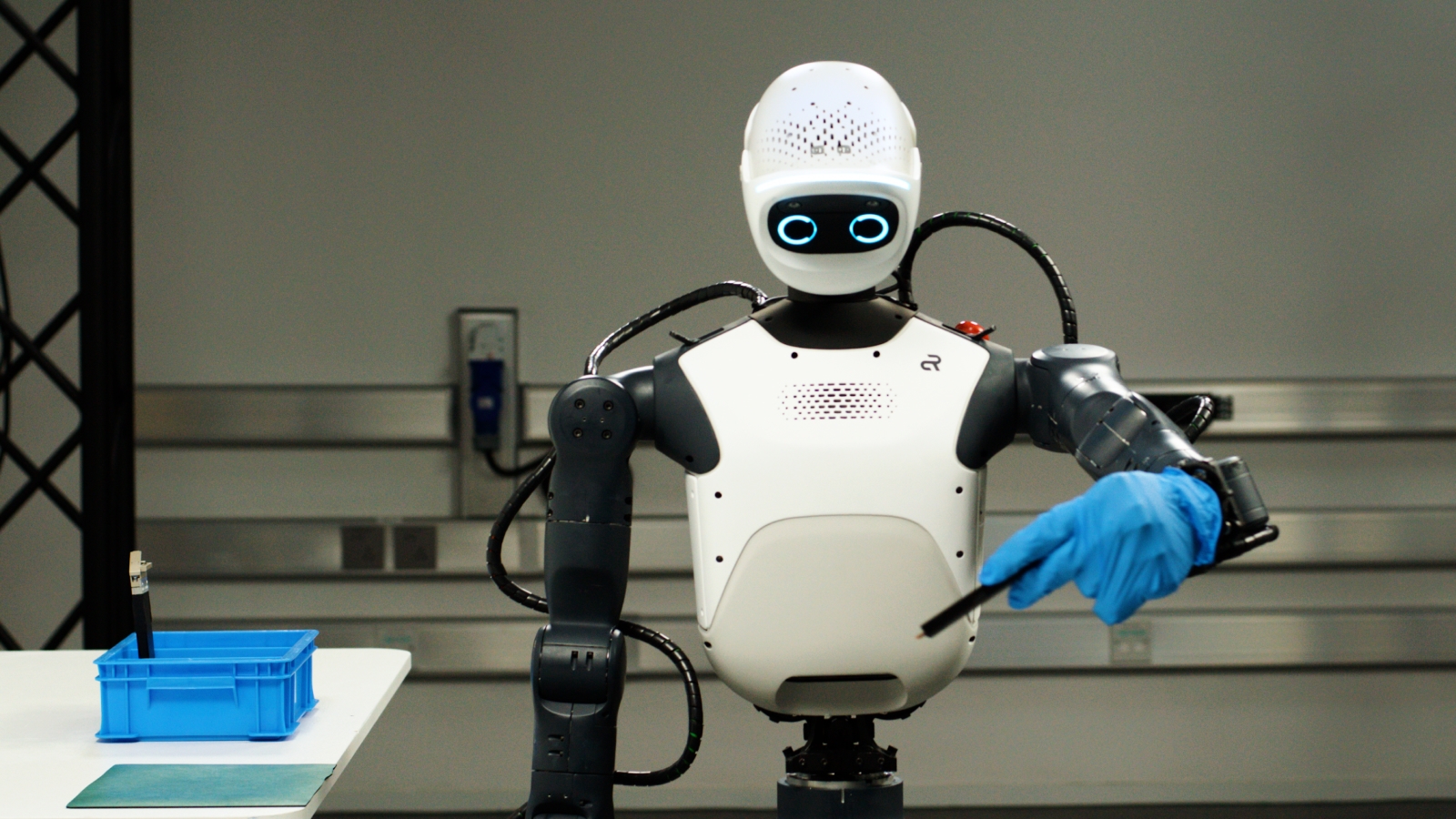
The contract at the center of the fight is modest by robotics standards. For US$57,590, the district purchased a package of AI tools and a Realbotix M-series humanoid nicknamed Sally: silicone skin, a wide range of facial expressions, and a stationary, seated build designed for what the company calls natural conversation and real-time interaction. Sally was to assist in select technology classes at Salamanca High School, while a companion AI tutoring model called Optio would offer students 24/7 homework support at home, expanding to about 500 students in the fall. Students would receive personalized ID numbers so the systems could remember their learning history, a feature that is either adaptive education or a data-privacy landmine, depending on which Salamanca parent you ask.
Beehler has been unapologetic about the ambition. Many schools are taking the easy solution of simply banning AI, he told Syracuse.com, arguing it is critical for schools to teach the proper use of technology rather than exclude it. The district, which sits on the Allegany Indian Reservation and serves about 1,300 students, roughly a third of them Indigenous and four in five economically disadvantaged, framed the program as a way to put a poor rural community at the front of a technological wave rather than the back.
The opposition assembled just as quickly. The state teachers union NYSUT declared that the future of education is not more artificial intelligence but more authentic human intelligence, more relationships and mentorship; a union spokesperson went further, saying students are not lab rats and should not be treated as such. Teachers reportedly learned of the contract only when it was announced. Critics noted the contract cost could have funded two human teaching assistants, and a parents' coalition is petitioning for a two-year moratorium on AI in the state's K-12 classrooms.
The Company Baggage That Made It Worse
Realbotix arrived at this fight carrying history that a school procurement office should have seen coming. The company is tied through its corporate lineage to RealDoll, the adult products maker; RealDoll's parent was acquired by Realbotix in 2024. Realbotix insists there is no relationship between the RealDoll operation and the Sally team, no shared employees, payroll, locations, or technology, and says it plans to divest RealDoll before any classroom implementation. All of that may be true, and none of it matters politically. In a small-town school board dispute, robot teacher made by the sex doll company is not a headline any privacy agreement can survive easily.
There were also claims that will not withstand technical scrutiny. Beehler assured the community that the system's language models would say I don't know rather than hallucinate, a guarantee no LLM vendor can honestly make today, and one that hands opponents an easy line of attack the first time Sally confidently misstates a fact in front of thirty teenagers.
For Realbotix, a Referendum on Its Own Pivot
For the vendor, more is riding on Salamanca than a US$57,590 purchase order. Realbotix trades on Nasdaq at a small-cap valuation sustained largely by the story that humanlike conversational robots have institutional markets, education, healthcare, hospitality, elder companionship, beyond the novelty and adult-adjacent niches where the technology began. A public school contract in New York was the cleanest possible proof of that story, which is precisely why the company's chief executive appeared on local television defending the program and why the corporate-lineage questions stung. Small-cap robotics companies live and die on narrative validation, and a state education department's letter of concern is the opposite of validation.
The episode also illustrates a structural weakness in how social robotics companies go to market. Realbotix sold Salamanca a robot the way an ed-tech firm sells software, through an enthusiastic administrator and a procurement process, without the community consent-building that a machine with a face, a memory of children's interactions, and a camera requires. Industrial robot makers learned a version of this lesson decades ago with factory workforces and unions; social robot makers are learning it now with parents, and the tuition is paid in headlines. The companies that eventually win the classroom, if any do, will be the ones that treat the school board meeting as part of the product.
The Market That Keeps Being Announced and Keeps Not Arriving
The education robotics market deserves its own skeptical audit, because Salamanca is not an isolated stumble; it is the pattern. Analyst forecasts routinely project educational robotics growing to tens of billions of dollars within the decade, and social humanoids, from SoftBank's Pepper in Japanese classrooms to NAO units in special-education programs, have been piloted in schools for over a decade. The consistent result: small pilots, warm press releases, quiet discontinuations. Pepper's classroom career ended with production halted; NAO survives in narrow special-education niches where its predictability, not its humanity, is the value. The strongest published results in AI-assisted learning continue to come from screen-based tutoring systems that cost a fraction of a silicone-skinned robot and trigger none of the same parental alarm.
That history suggests the honest framing of Salamanca is not a promising market hitting a speed bump but a market hypothesis that has never cleared its proof burden, now attempting to clear it in the most scrutinized institutional setting American society offers. Children are the population for which data-privacy law is strictest, unions are strongest, and emotional stakes are highest. If embodied conversational AI has an institutional beachhead, the evidence to date points toward elder care and commercial hospitality, where the consent calculus is adult and the efficacy bar is comfort rather than learning outcomes, not the tenth-grade technology lab.
A Small Pause With Sector-Sized Implications
It is tempting to file this as a local curiosity. That would misread it. Education has been projected as one of the natural early markets for social humanoids, machines that talk rather than lift, and the Salamanca pilot was among the first American attempts to put one in a public school with district money. Its suspension establishes the template for how these deployments will actually be decided: not by federal policy or vendor roadmaps, but by school boards, union locals, state agencies, and Facebook comment threads, one community at a time.
Think of it like zoning. A robotics company can win the technology, the price point, and even the contract, and still lose the neighborhood. The social license for humanoid robots is hyperlocal, and it is revocable after signing, which is a risk category most robotics business plans, and most investor models of the "education robotics market," do not yet carry on their books.
The skeptical counterpoint runs in both directions, and it is worth being precise about it. The backlash is not evidence that classroom robots failed; Sally never taught a class. Nor is the district's enthusiasm evidence they work; there is no published efficacy data for humanoid teaching assistants at this scale, and the strongest known effects in education technology come from software tutoring, which needs no silicone face. What Salamanca actually demonstrates is that both sides are arguing ahead of the evidence, and the machine at the center has become a proxy for a larger anxiety about how much of childhood gets delegated to software.
The national politics guarantee this fight will replicate. The current administration is aggressively pro-AI in education, the White House has showcased humanoid robots at its youth technology events, and a December executive order took aim at state-level AI restrictions, while parent coalitions push moratoriums in the opposite direction. Salamanca is simply the first collision small enough to watch in full detail.
The district says the pause is temporary, and the pilot may yet proceed under stricter data agreements. Either way, the robotics industry should study the file. The hardest part of putting a humanoid robot in a classroom, it turns out, is not the robot. It is the school board meeting.
Disclaimer: This article is for general information purposes only and does not constitute investment, legal, or procurement advice. Readers should verify details with primary sources before making business decisions.