Pony AI Robotaxi Revenue Jumps as Losses Stay Wide
Pony AI reported second-quarter 2026 revenue of US$36.2 million, with robotaxi services up 691.2 percent to US$12.1 million, while net loss attributable to the company widened to US$59.8 million.

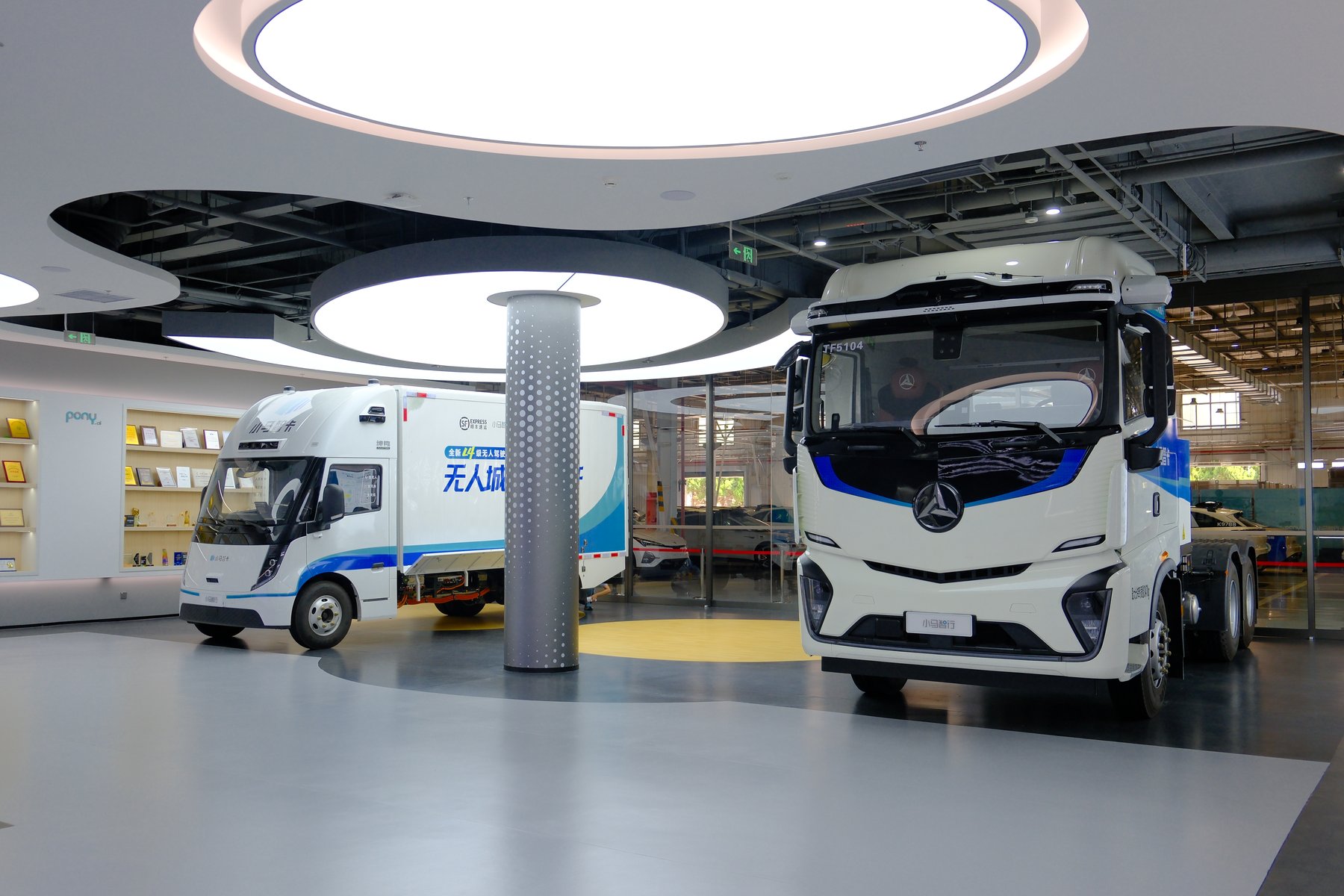
Pony AI Inc. reported unaudited second-quarter 2026 results on 18 August and put a hard number on the robotaxi story that has been traveling ahead of the financials. Total revenue reached US$36.2 million, up 68.8 percent from US$21.5 million a year earlier. Robotaxi services contributed US$12.1 million, up 691.2 percent from US$1.5 million. Fare-charging revenue inside that line rose 849.3 percent. The fleet stood at 1,975 vehicles, with a year-end target above 3,500.
Those growth rates are real and still sit inside a loss-making machine. Gross profit was US$6.4 million on a 17.5 percent gross margin. Operating expenses were US$72.1 million. Loss from operations was US$65.7 million. Net loss was US$45.4 million, narrower than a year earlier, but net loss attributable to Pony AI Inc. widened to US$59.8 million after US$14.5 million of net income was allocated to non-controlling interests. Cash, short-term investments, restricted cash, and long-term wealth-management instruments totaled US$1.39 billion on 30 June, down from US$1.44 billion on 31 March.
Pony AI, founded in 2016 and listed in New York and Hong Kong, sells robotaxi rides, robotruck freight services, and intelligent hardware and software. Headquarters and core operations remain in Guangzhou, with public robotaxi networks in Chinese tier-one cities and joint-deployment talks overseas. Chairman and Chief Executive Officer James Peng said the quarter combined revenue growth, fleet expansion, and wider coverage. Chief Technology Officer Tiancheng Lou pointed to the PonyWorld 2.0 world model as the reason the company can open new cities without a matching rise in engineering headcount. Chief Financial Officer Leo Wang highlighted fare-charging growth and a larger contribution from the joint-deployment model.
The Meter Is Running. The Factory Bill Is Larger.
Robotaxi services are no longer a rounding error. At US$12.1 million they still trail robotruck services, which brought in US$13.3 million, up 40.0 percent, helped by freight work with Sinotrans. Intelligent solutions, mainly autonomous domain controllers, were US$10.8 million, roughly flat because of delivery swings. Service revenue overall was US$19.5 million. Product revenue was US$16.8 million. The mix is shifting toward rides and freight and away from one-off controller shipments.
That mix is why gross margin ticked up from 16.1 percent to 17.5 percent. Joint-deployment contracts, in which a local operator owns or runs vehicles and Pony AI supplies the driver stack, produced higher-margin revenue in the quarter. They also change what a buyer is purchasing. A city transport agency or a fleet partner is not buying a science project. It is buying a licensed virtual driver, a vehicle program, and a claim that unit economics already work in Guangzhou and Shenzhen.
The China operating map is the evidence Pony AI wants those partners to see. In Guangzhou the company said it moved into the city center across Haizhu, Tianhe, Huangpu, and Panyu, adding more than 300 square kilometers of operating area this year and covering a population above 7 million. PonyPilot registered users in China passed 1.5 million. The company is using concert exits and other peak events as proof that a robotaxi fleet can absorb surge demand. Those are commercial operating claims, not independent ridership audits.
Overseas, the 18 August release restates a 13 August Uber expansion: more than 2,000 contracted robotaxis in Europe, with more than 4,000 vehicles under agreements in negotiation across international markets. Those figures are contracted or in negotiation, not vehicles already earning fares in European streets. A buyer who confuses a contracted pipeline with a working fleet will mis-price both capital expenditure and regulatory time.
Robotruck is the quieter second engine. Fourth-generation driverless trucks entered mass production on schedule, Pony AI said, and commercial mixed-fleet work began with China Merchants Port at Mawan Port in Shenzhen. Port loops are constrained, mapped, and economically dense. They are a better near-term automation buy than an open-city humanoid, and they explain why robotruck revenue still exceeds robotaxi revenue even after the passenger surge.
Growth That Still Consumes a Treasury
The earnings table is less cinematic than a driverless van at a concert gate. Research and development expense was US$56.2 million, up 14.7 percent. Selling, general, and administrative expense was US$15.9 million, almost unchanged. Non-GAAP operating loss was US$56.7 million. Operating loss margin narrowed from 285.6 percent to 181.5 percent. That is leverage, not profit.
Other expenses included a one-off US$25.0 million impairment on prepayments for long-term investments that the company said were unrecoverable after strategy changes. Net loss still improved because of non-operating items, including a rise in the fair value of trading securities. Basic and diluted net loss per ordinary share were US$0.14, unchanged from a year earlier, on a larger share count. One American depositary share equals one Class A ordinary share.
Cash burn is the constraint that matters to a city partner as much as to a shareholder. Capital expenditure was US$32.2 million in the quarter. Combined cash-like balances fell about US$45 million in three months. At US$1.39 billion the company is not distressed. It is also not generating free cash. The more vehicles it puts on the road toward the 3,500 year-end target, the more it will spend on vehicles, domain controllers, insurance, remote assistance, and depot labor unless joint-deployment partners absorb those lines.
This is where the hard truth sits. A 691 percent robotaxi revenue jump can coexist with a business that still loses more than a dollar for every dollar of sales. Fare growth proves people will pay. It does not prove the network covers depreciation, safety operations, and the next city launch. Unit economics that work in a dense Chinese district can fail in a European city that demands different redundancy, different labor rules, and a slower permit clock.
Pony AI wants investors to read the world model as the fix. If PonyWorld 2.0 really lets the same stack open multiple countries without a matching rise in engineers, research and development can grow slower than the fleet. If it does not, every new city is another US$56 million cost center with a local flag on it. The 18 August release asserts the first case. It does not publish city-level contribution margins that would let a buyer test it.
What a Fleet Buyer Should Underwrite
For a transport operator, the buy decision is not “autonomous or not.” It is which risk the partner keeps. Under a joint-deployment model Pony AI keeps the driver software and the brand of the stack. The local partner keeps vehicles, permits, customer support, and a large share of operating variance. That can be attractive if the software actually drives. It is dangerous if the contract leaves the partner holding idle cars while software, mapping, or insurance lags.
Ask for the 1,975-vehicle split by city, by generation, and by whether a safety driver is still in the seat. Ask what share of the US$12.1 million is true passenger fares versus fleet-partner services. Ask how much of the European 2,000-vehicle Uber figure represents 2026 delivery versus a multi-year option. Ask whether Mawan Port trucks are driverless in mixed traffic for a full shift or only on closed segments. Ask how the US$25 million impaired prepayment changes the partnership map.
The 18 August print is still a commercialization quarter, not a cash-flow quarter. Robotaxi has become large enough to move the revenue line. Losses remain large enough to move the treasury. The companies that should care first are not equity traders. They are the city operators and freight groups being asked to put metal on the road against a software promise.
Currency conversion in the release uses RMB 6.7851 per US$1.00, the Federal Reserve noon buying rate on 30 June 2026. On that basis quarterly revenue is RMB 245.8 million, robotaxi services are RMB 81.9 million, robotruck services are RMB 90.4 million, and intelligent solutions are RMB 73.4 million. Cost of revenues is RMB 202.7 million. Research and development is RMB 381.6 million. The RMB view does not change the shape. The company is still spending several times its quarterly sales on the stack that is supposed to make the next city cheap.
A procurement team should also separate three cash uses that the earnings call will try to blend. The first is vehicle and domain-controller capital expenditure, US$32.2 million this quarter and rising if the fleet really goes to 3,500. The second is the standing cost of remote assistance, insurance, cleaning, and charging, which does not appear as a clean line. The third is city-launch engineering, which Lou says PonyWorld 2.0 is shrinking. If the third item does not shrink, the first two will not be fundable by fares. If it does shrink, joint-deployment partners become the scarce resource, not machine-learning engineers.
That is why the 18 August print should be read next to the 13 August Uber notice rather than instead of it. The earnings release restates more than 2,000 European robotaxis under contract and more than 4,000 international vehicles in negotiation. Those are commercial-development figures. They become fleet figures only when a city issues a permit, a depot opens, and a fare is collected. A transport authority that treats the pipeline as capacity will plan bus replacement that never arrives.
Pony AI has the cash to keep that promise through 2026. It does not yet have a reported quarter in which the robotaxi meter covers the cost of keeping the meter running.
------
This article is for informational purposes only and does not constitute investment, legal, engineering, or procurement advice. Buyers should verify current specifications, commercial terms, safety certification, and regulatory status with the relevant companies and authorities before making purchasing or partnership decisions. Analysis synthesizes company statements and public market activity.