Korea Robot Exports Stall Under US Mobile Robot Rules
Korean humanoid and mobile-robot shipments to the United States have stalled under a July FCC covered-list rule, freezing Rainbow Robotics contracts and putting a KRW 15 billion T-Robotics AGV deal under legal review.

Korean robot makers that spent 2026 selling mobile machines into North America now face a hard stop at the US border. Electronic Times reported on 14 September 2026 that Rainbow Robotics has halted United States shipments of its RB-Y1 mobile dual-arm platform, that an unnamed Korean autonomous mobile robot (AMR) supplier has lost a first US order to the same rule, and that T-Robotics is reviewing a KRW 15 billion (approximately US$9.9 million) automated guided vehicle (AGV) supply contract with Ford Energy Battery. The freeze is not a new statute written in Seoul. It is the delayed commercial impact of a 28 July 2026 Federal Communications Commission (FCC) Covered List update that bars new foreign-produced "advanced robotic devices" from US equipment authorization.
The practical question for a procurement manager is narrower than the political noise around China. If the robot moves on the ground, weighs more than 4.4 pounds with its dock, senses its surroundings, and talks to a network at 200 kilobits per second or faster, a new foreign-built model generally cannot be imported, marketed, or sold in the United States until the Department of War grants Conditional Approval. Fixed industrial arms are out of scope. Previously authorized models can still be sold. Federal agencies can still buy. Everything else in the mobile class, including Korean, Japanese, German, and Chinese machines, sits in the same queue.
The freeze hit exporters that already had US paper
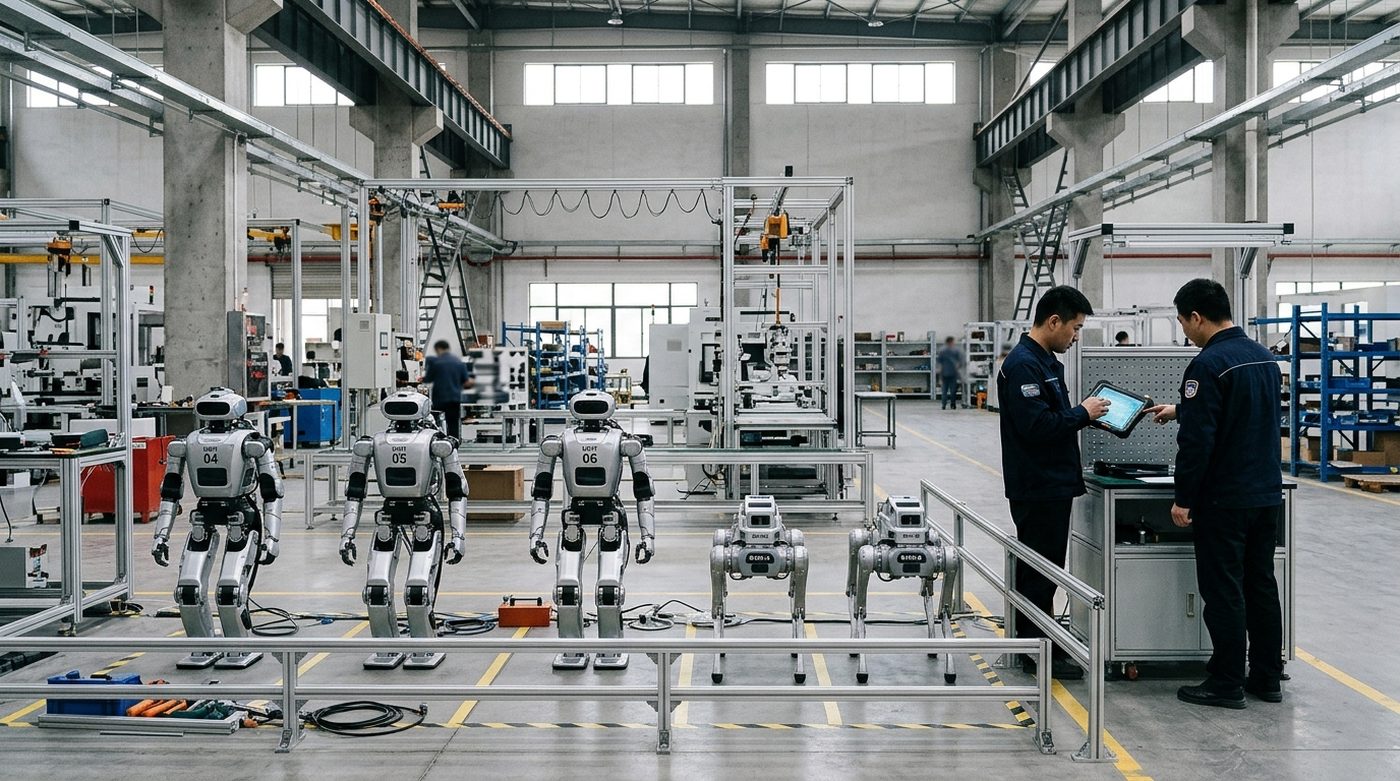
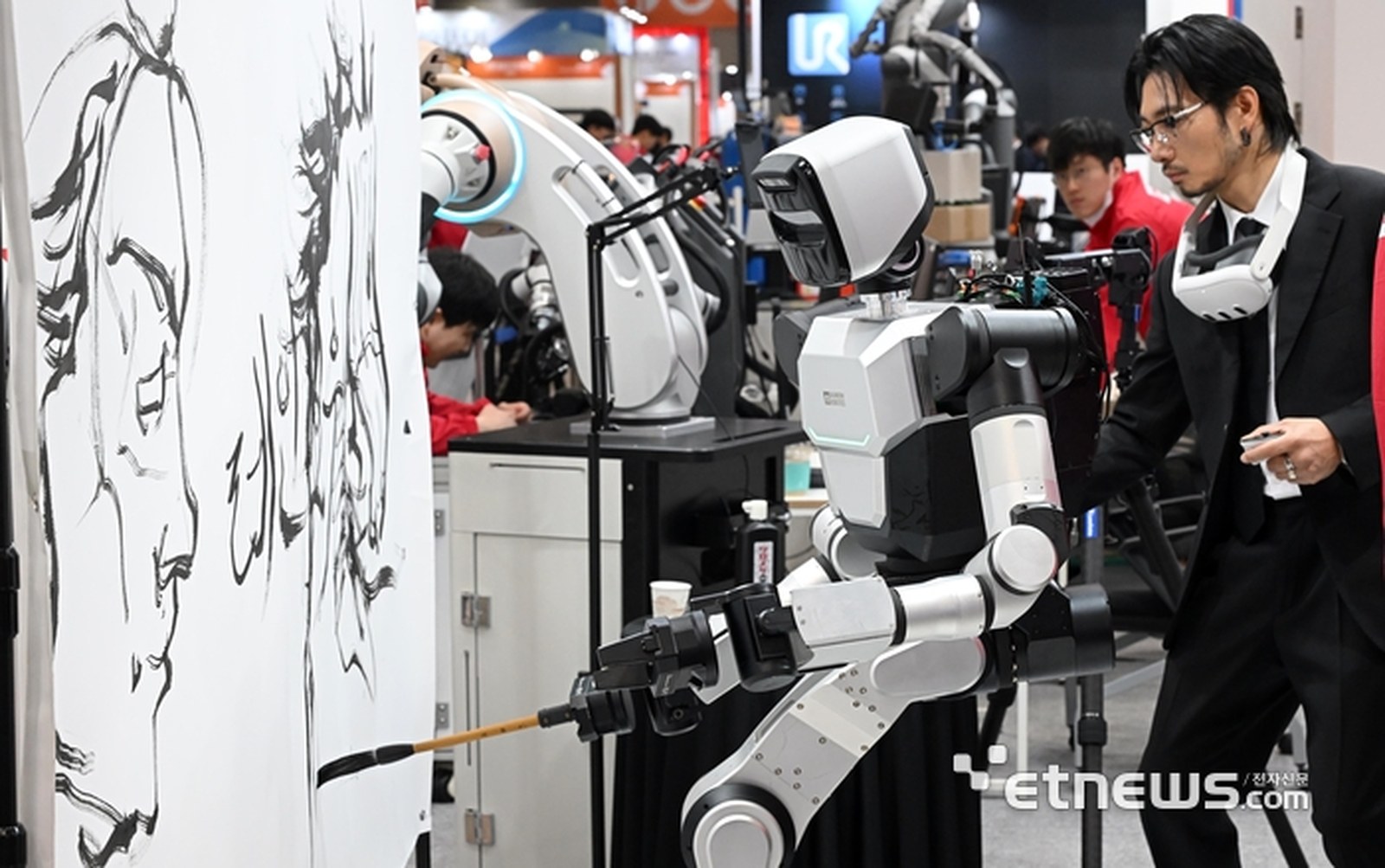
Rainbow Robotics is a Sejong, South Korea, robotics company that began as a Korea Advanced Institute of Science and Technology (KAIST) spin-off and now sits inside the Samsung Electronics group as a consolidated subsidiary. Samsung holds a 35 percent stake and is the largest shareholder. The firm's commercial line includes collaborative arms and the RB-Y1, a wheeled dual-arm research and industrial platform with 24 degrees of freedom, open software development kit access, and a US commercial office in Illinois. The machine is built for manipulation, teleoperation, and whole-body control research rather than as a bipedal consumer humanoid. That distinction does not help under the FCC definition. A wheeled mobile manipulator with sensors, wireless links, and remote or onboard software is an advanced robotic device.
Electronic Times said Rainbow Robotics had already booked export contracts for dozens of RB-Y1 units with major North American clients, and that those contracts have come to a standstill. The paper did not name the buyers or disclose unit prices. Rainbow Robotics has previously quoted research and commercial platforms in the US$80,000 to US$120,000 range in earlier public materials, then moved to quote-based pricing. Those older list figures are not current confirmed contract prices and should not be used as a 2026 purchase budget without a fresh quote. What is confirmed today is the commercial consequence: US-bound RB-Y1 volume that was already sold on paper is not moving.
T-Robotics, listed on KOSDAQ under code 117730, is a different kind of Korean supplier and a more awkward case for buyers who thought AGVs would escape a "humanoid" rule. The company is headquartered in Osan, Gyeonggi Province, and has spent two decades selling vacuum transfer robots into semiconductor and flat-panel display lines, then expanding into AMRs, AGVs, and rehabilitation machines. In June 2026 it disclosed a supply contract with Ford Energy Battery LLC for AGV retool work at a US energy-storage plant. The disclosed value was about KRW 14.97 billion, commonly rounded to KRW 15 billion, or approximately US$9.9 million at the June spot rate used in the Korean filing coverage. The contract runs from 3 June 2026 to 3 June 2028, with staged payments tied to signing, factory arrival, and start of production. Electronic Times said T-Robotics is now running a legal review because the supply region is the United States.
An unnamed Korean AMR company, identified only as Company A, told the same reporters it had landed a first US order, asked the Ministry of Trade, Industry and Energy (MOTIE), the Korea AI and Robot Industry Association, and the Korea Trade-Investment Promotion Agency (KOTRA) how to respond, and received no clear path. That is the SME version of the same problem. The large names can staff a legal team. The first-time exporter cannot.
None of those three cases is a finding that the robots are unsafe, poorly made, or Chinese-controlled. The FCC action is country-neutral. Producer nationality does not decide coverage. Place of manufacture and domestic component cost do.
The rule is a radio authorization ban, not a customs slogan
On 28 July 2026 the FCC added "foreign-produced advanced robotic devices" to its Covered List under the Secure and Trusted Communications Networks Act. The Commission did not invent the category on its own. A White House-convened executive-branch interagency body determined that foreign-made advanced robots pose unacceptable risks to US national security and to the safety of US persons. The stated concerns are supply-chain disruption and cybersecurity: networked robots can be a vector for data collection, remote commandeering, and infrastructure interference.
Covered equipment cannot receive new FCC equipment authorization. Most electronic devices need that authorization before they can be imported, marketed, or sold in the United States. The 28 July update therefore functions as a market lock on new models. It is not a recall. Consumers may keep machines they already bought. Retailers may keep selling models the FCC already authorized. Sales exclusively to the US government are outside the restriction. Small batches may still enter for product development or testing if they are not marketed or sold.
The definition is the part procurement teams should tape to the RFQ. An advanced robotic device is a mechanical mobile device, including AMRs, humanoid robots, and quadrupeds, that can move on the ground, operate away from a human operator or supervisor based on commands or sensor data, and weigh more than 4.4 pounds including any ground station or docking station. It must also contain an environmental sensor, a network connection of at least 200 kilobits per second in either direction, and software, including firmware or AI model weights, that controls navigation, perception, data collection, or remote command. The definition then carves out connected road vehicles, rail vehicles, uncrewed aircraft, unmanned underwater vehicles, certain medical devices, and fixed, stationary, non-mobile industrial or medical robots such as articulated, delta, Cartesian, and Selective Compliance Assembly Robot Arm (SCARA) machines.
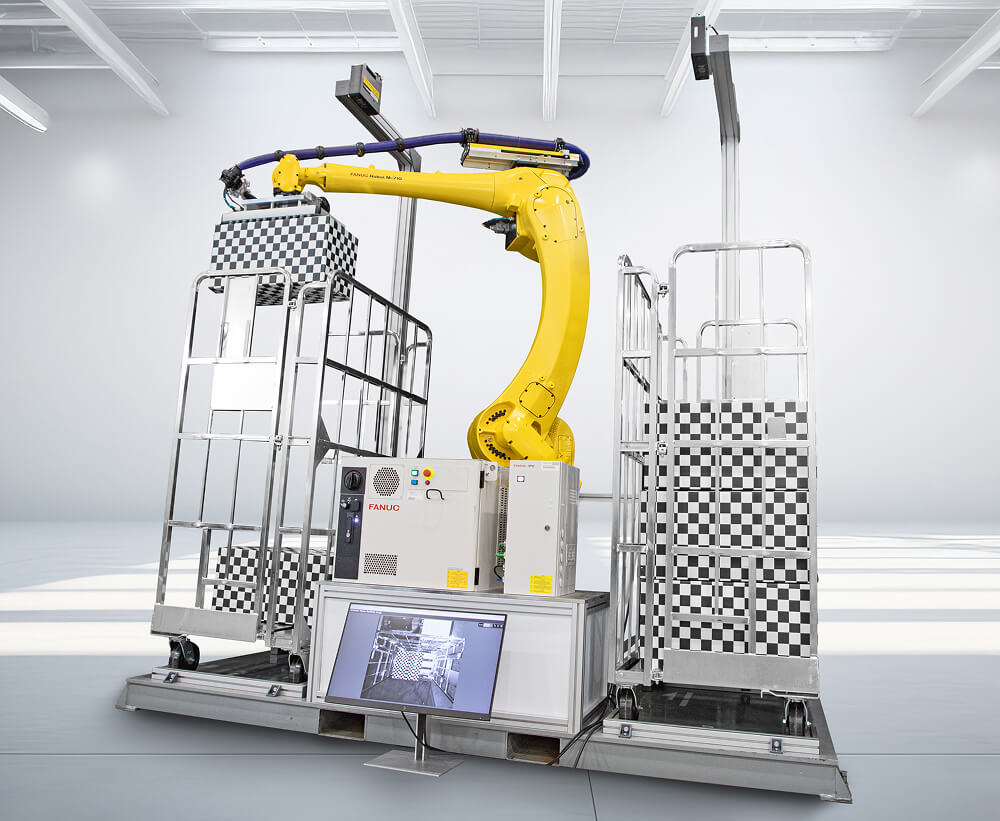
That last carve-out is the only clean escape hatch for a classic cell. A FANUC or Yaskawa arm bolted to a pedestal is not this rule. A FANUC CRX riding an AMR, a Rainbow RB-Y1 rolling through a lab, a warehouse AMR with lidar and Wi-Fi, or a humanoid with teleoperation almost certainly is, if the model is new and foreign-produced.
"Foreign-produced" tracks the Buy American Act domestic-end-product test in 48 CFR 25.101(a). The finished article has to be made in the United States, and US-origin parts must account for more than 65 percent of component cost through calendar year 2028 and more than 75 percent from 2029. The commercially available off-the-shelf exception that often softens Buy American deals does not apply here. Building a US plant is therefore not a press-release solution. The bill of materials has to move with it. Motors, reducers, force-torque sensors, and compute modules that Korean, Japanese, German, and Chinese vendors currently buy from one another will not automatically count as US content because the final assembly plant is in Texas.
The only other path named in the determination is Conditional Approval from the Department of War. Applications go to the FCC address that forwards them to the Department. Legal analyses of the guidance describe a January 1, 2028 cutoff for new applicants, officer-level certification, and a file that covers ownership, supply-chain risk, and a US manufacturing commitment. Electronic Times said Korean executives describe that file as too heavy for an individual company to assemble against the US executive branch. MOTIE has not, as of the 14 September report, published a working government channel that substitutes for that file.
What a buyer can still do this quarter
Treat the US installed base and the US new-build pipeline as two different markets.
If the plant already runs an authorized foreign AMR or mobile manipulator, the 28 July update does not force a rip-and-replace. Spare units of the same authorized model can still be purchased if the seller can show the existing FCC grant. Ask for the equipment authorization identifier in the bid, not a marketing claim that the robot is "export ready."
If the project needs a new model, a new firmware family that the FCC would treat as a new device, or a first import of a previously unauthorized platform, assume the US delivery date is now a regulatory date. Put Conditional Approval or US domestic-end-product evidence on the critical path next to FAT and CE or UL marks. Do not sign liquidated damages against a 2026 US go-live that depends on an unapproved foreign mobile robot.
If the work can be done with a fixed arm, redesign the cell. The Covered List is a mobility rule. A pedestal weld cell, a SCARA benchtop unit, or a gantry pick cell is in a different legal bucket from a rolling dual-arm platform. That is an engineering tax. It is cheaper than a two-year import freeze.
If the robot must roll, require the vendor to state, in the contract, whether the specific model is (1) already FCC-authorized, (2) manufactured in the United States with documented 65 percent domestic component cost, or (3) covered by a Department of War Conditional Approval. Anything else is a hope. Korean SMEs told Electronic Times they cannot produce that hope on their own. Samsung-backed Rainbow Robotics has more capital and a US office, and it is still stopped.
Buyers outside the United States should not copy the US restriction into ASEAN or EU tenders by reflex. The FCC list is a US equipment-authorization tool. It does not, by itself, ban Korean robots in Johor, Osaka, or Stuttgart. It does change vendor viability. A Korean AMR maker that planned to fund its global product on US volume now has a hole in the 2026 to 2028 plan. Price, support, and spare-parts commitments in other regions may get tighter as that hole is filled, or they may get more aggressive if Asia and Europe become the only paying markets. Ask for the revenue mix. A supplier that was 40 percent US-bound is a different credit from a supplier that was 5 percent US-bound.
The hard constraint is content, not branding
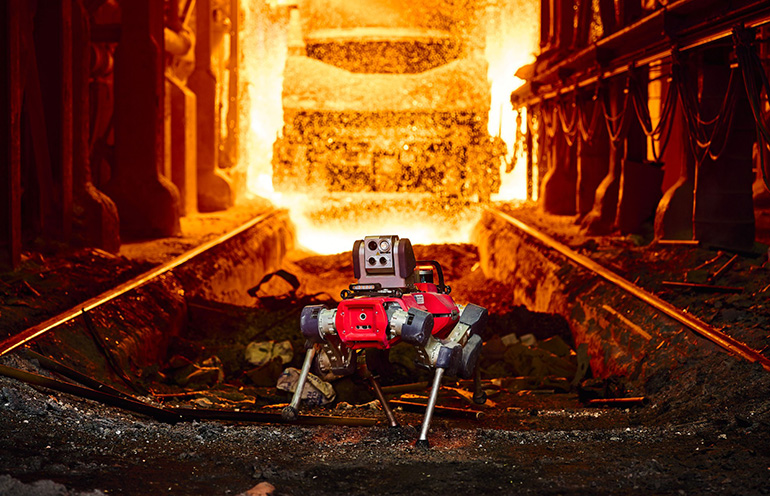
The tempting executive summary is that Washington targeted China and Korea got hit by shrapnel. That is emotionally tidy and operationally wrong. The determination is explicit that nationality of the producing entity does not matter. A Korean subsidiary of Samsung, a Japanese AMR line, and a Swiss inspection quadruped sit in the same legal class if the hardware is foreign-produced and mobile. China is the political backdrop. The text is a domestic-content test.
That is why the 65 percent and 75 percent thresholds matter more than any humanoid demo. Core robot components are not a US cottage industry. Electronic Times noted the industry consensus that motors, sensors, and reducers are still sourced from Korea, Japan, China, and Germany. Relocating final assembly without relocating those parts fails the arithmetic. Relocating the parts requires a multi-year supplier program, not a 2026 purchase order.
The other tempting summary is that humanoids are the story. They are the photograph. The money in the Korean report is an AGV retool contract at a battery plant and an unnamed AMR first order. Warehouse and factory mobility, not bipedal research platforms, is where a US buyer feels this first. A plant that specified a Korean AMR fleet for 2027 because the quote beat a US integrator by 20 percent now needs a second quote from a vendor that can actually deliver.
Think of the rule as a radio license with teeth, not as a robot safety standard. The FCC is not saying the RB-Y1 fails ISO 10218 or ISO 3691-4. It is saying a new foreign mobile robot may not get the authorization that US radio law requires before the machine can be sold. Safety certificates still matter, and they remain a separate border. This is a communications-security border placed on top.
Korean officials are being asked to open a government channel to the US executive branch. Until that channel exists and produces Conditional Approvals, a US buyer should not treat MOTIE sympathy as a delivery date. A Korean seller should not treat a US letter of intent as revenue.
The US market for new foreign mobile robots is closed to unauthorized models. Korean exporters have now said so in public, with named products and a named battery-plant contract on the line. Procurement teams that keep treating "export to the US" as a default checkbox are buying delay.
This analysis synthesizes company statements, Korean market disclosures, and public US regulatory texts.
This article is for informational purposes only and does not constitute investment, legal, or purchasing advice. Verify all specifications, contract terms, and regulatory status with primary sources before making procurement or investment decisions.