A NASA Student Grant Helped Build a Drone Maker Now Shipping Thousands of Units a Month
NASA profiled AG3 Labs, a Michigan drone maker whose founders built their commercialization skills through two NASA-funded student projects before founding a company now producing thousands of training drones a month for defense customers.

A NASA Student Grant Helped Build a Drone Maker Now Shipping Thousands of Units a Month
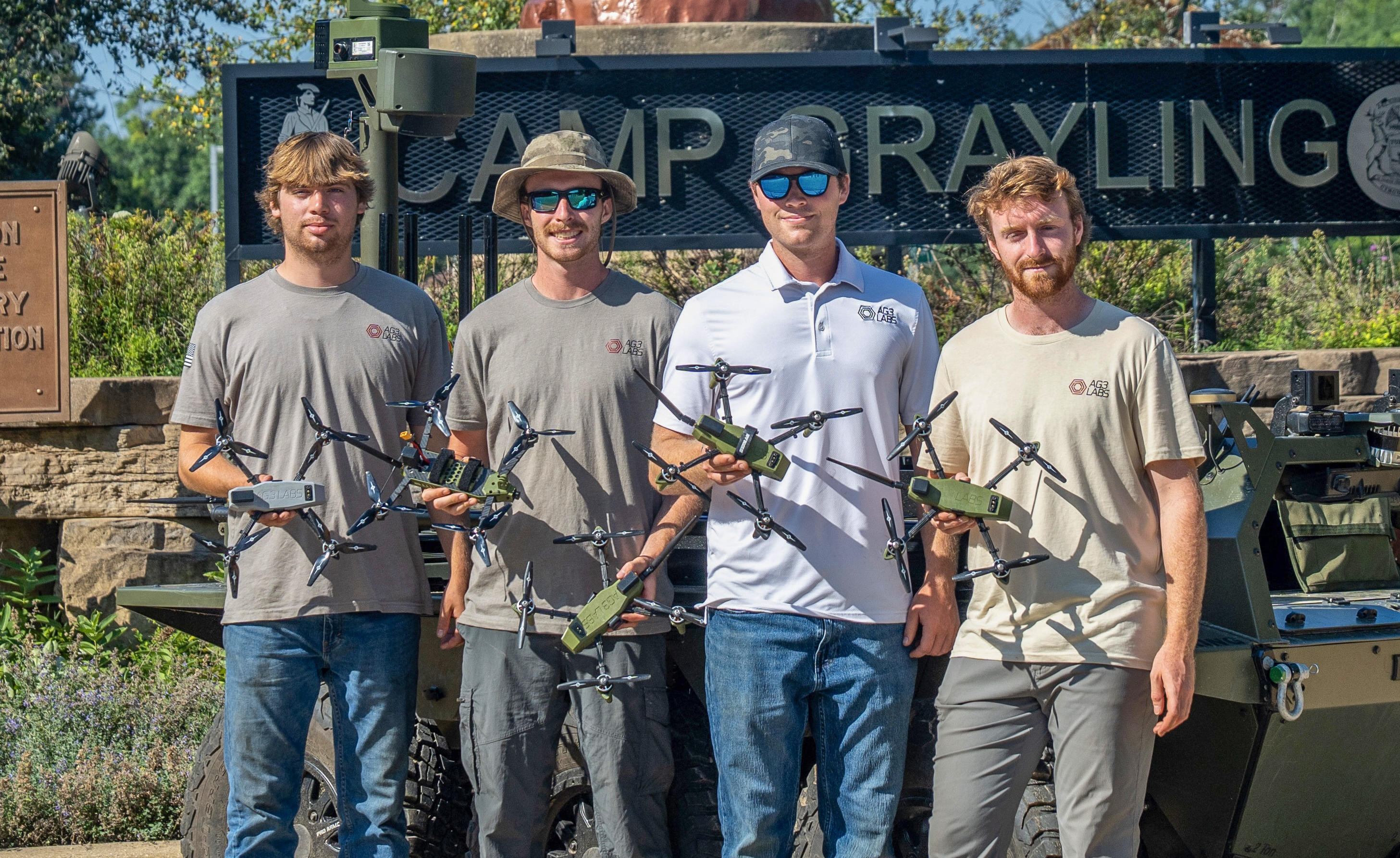
AG3 Labs, a Michigan-built military-drone manufacturer that now produces thousands of training drones a month for the U.S. Army and allied training programs, traces its commercial start back to a NASA University Student Research Challenge grant that funded two earlier, unrelated aerospace projects before any of its founders had formed the company. NASA profiled the company on October 28 as part of a broader look at how its student research program, which funds undergraduate and graduate teams pursuing NASA aeronautics research goals while also pushing them toward entrepreneurship, has seeded founders who went on to build defense and commercial hardware companies years after their grant-funded projects ended.
Co-founders Gavin Gardner, Gryson Gardner, Matt Atkinson and Ryan Atkinson built AG3 Labs after passing through the NASA program as undergraduates, and the company's current product line, attritable target drones, FPV trainers, mesh networking nodes and ground control systems, has little direct technical overlap with the specific projects NASA funded. What the grants provided instead was an early, structured push toward building and selling hardware rather than only publishing research, a distinction NASA's program managers describe as central to the challenge's design and one that shows up clearly in how Gardner now talks about the two halves of running a hardware company.
Two Grants, Two Dead Ends That Weren't Really Dead Ends
The first NASA-funded project, AIDED, Aerial Intra-City Delivery Electric Drones, proposed cargo drones that would dock on top of public transit buses to recharge mid-route before completing a delivery's final leg, a 2021-era concept the team built and flew as a full-scale prototype before deciding not to pursue it commercially, citing regulatory hurdles around urban drone delivery that remain largely unresolved industry-wide even today. The second, LEADS, the Laser Energized Aerial Drone System, funded in 2023, transferred power to a drone in flight using a laser beam rather than a battery or tether, and the team also flew a working prototype of that system before it, too, did not become a standalone product.
Neither project shipped as a commercial product, and on paper both could read as failures for a grant program meant to produce usable research outcomes. What they produced instead was a founding team that had already gone through two full cycles of building a working aerospace prototype, confronting the gap between a flying demo and a sellable product, and deciding when to walk away from a technically interesting idea that lacked a viable path to market, experience that maps directly onto the judgment AG3 Labs' founders now apply running a defense hardware company where production reliability and customer fit matter more than any single technical breakthrough.
From Student Grant to Defense Supply Chain
AG3 Labs' current business sits squarely inside the fast-growing market for low-cost, attritable drones built for military training and threat emulation, hardware designed to be flown, shot down in a realistic training exercise, and replaced rather than preserved as a high-value asset. The company's flagship product, Ember, is explicitly built around that use case, and its broader catalog, the Spade FPV trainer, the Anvil heavy-lift ISR and logistics platform, FORGE mission-command software, FLUX mesh networking and HELM ground control, reads as a full-stack attempt to supply the entire tooling layer around small-drone training rather than a single hardware product.
The company lists the U.S. Army, SOCOM, DEVCOM Ground Vehicle Systems Center, the U.S. Marines and the Michigan National Guard among the organizations it has worked with, and holds a ten-year Master Business Agreement on the G-TEAD marketplace, the Pentagon's streamlined procurement channel that gives qualified vendors direct access to Department of Defense buyers without running a fresh competitive solicitation for every contract. That procurement access, more than any single technical specification, is the detail that explains how a company founded by recent engineering graduates reached production volumes of thousands of units a month: a defense-market startup's growth ceiling is usually set by how quickly it can clear procurement and contracting hurdles, not by manufacturing capacity alone, and a standing multiyear agreement removes one of the slowest parts of that process for every subsequent order.
What "Thousands a Month" Means for a Buyer in This Market
A production rate of thousands of units per month is a meaningful scale signal in the attritable-drone category specifically because the business model depends on it: training drones are, by design, expected to be destroyed or damaged during realistic exercises, so a supplier's ability to sustain high, repeatable production volume at a stable unit cost matters more to a defense buyer than it would for a durable asset bought once and maintained for years. A training program that burns through dozens or hundreds of drones across a multi-week exercise needs a supplier who can restock reliably on a known lead time and at a known price, not a boutique manufacturer producing small batches to order.
For a defense or dual-use buyer evaluating AG3 Labs against other attritable-drone suppliers, the NASA Challenge connection is a useful origin story but not itself a procurement-relevant credential; what matters is the company's demonstrated production throughput, its existing customer base across multiple branches and a state National Guard, and the G-TEAD agreement that signals the Pentagon has already vetted it as a qualified vendor. Those three facts, taken together, describe a company that has moved well past the early-stage startup risk profile a buyer might reasonably worry about given its founders' relatively recent academic origins.
The Broader Pattern NASA Is Pointing To
NASA's own framing of the story, through USRC program manager Steven Holz, treats AG3 Labs as an example of a pattern the agency wants to see more of: student teams that use a research grant as a forcing function to learn how to build and sell something, even when the specific research project itself does not become a product. "Half the battle is building your product," Gardner said of his own experience, "and the other half is selling it in plain language," a split that tracks closely with why so many technically capable research teams never become companies, the commercialization and sales half of that equation is a different skill set than the engineering half, and it is the half a research grant does not teach directly.
For buyers and investors tracking where the next generation of defense and dual-use hardware founders is coming from, the AG3 Labs path, two unrelated grant-funded prototypes that never shipped, followed by a defense hardware company that now produces at meaningful scale, is a data point worth weighing against the more common narrative that a startup's eventual product must trace cleanly back to its founders' original technical idea. In this case, it didn't, and the company built anyway.
Why the Attritable-Drone Category Keeps Growing
The broader market AG3 Labs sits inside has expanded rapidly as militaries across multiple countries have drawn lessons from recent conflicts about the value of cheap, mass-producible drones over small numbers of expensive, hard-to-replace systems. A training organization that wants its personnel genuinely proficient against realistic drone threats needs a steady supply of low-cost systems its trainees can practice shooting down repeatedly, not a handful of exquisite systems too valuable to risk losing in an exercise, and that operational logic is what has turned attritable-drone manufacturing from a niche defense category into one of the faster-growing corners of the broader unmanned systems market over the past several years.
That growth has drawn a wave of new entrants competing on price, production speed and the breadth of their product catalog, and a company's ability to supply not just the drone itself but the surrounding mission-command software, networking hardware and ground control systems, the full stack AG3 Labs has built out through FORGE, FLUX and HELM, increasingly separates serious suppliers from single-product vendors. A training program that has to integrate drones, software and ground stations from three separate vendors carries integration risk and support complexity that a single-vendor stack avoids, which is the same single-source logic that has pushed industrial buyers toward platform vendors over point-solution suppliers in other corners of robotics and automation.
A buyer sourcing attritable systems should weigh that stack breadth alongside AG3 Labs' raw production volume when comparing it to narrower competitors, since a vendor that can supply the full training ecosystem reduces the buyer's own integration burden even when a competitor's individual drone specification looks comparable on paper.
This account draws on NASA's October 28 profile of AG3 Labs and its University Student Research Challenge program, along with AG3 Labs' own published product and customer information.
This article is provided for general information purposes only and does not constitute investment, procurement, legal, or engineering advice. Company and program details reflect public information available at the time of writing and may change.