The Navy Wants Its Bulldozers to Drive Themselves Under Fire
Neya Systems has won a US$3.3 million contract to supply the U.S. Naval Construction Force with a retrofit autonomy kit for GPS-denied repair of airfields and ports, extending its off-road autonomy stack from cargo vehicles to heavy construction equipment.

The Navy Wants Its Bulldozers to Drive Themselves Under Fire
Neya Systems won a US$3.3 million contract this week to supply the U.S. Naval Construction Force with an Autonomous Construction Equipment kit designed to repair airfields and ports and build naval bases in environments too dangerous or too GPS-degraded for a human operator to work safely. The Pittsburgh-area company, based in Warrendale, Pennsylvania, will deliver a retrofit autonomy package rather than a new vehicle, built to run on equipment the Naval Construction Force already owns.
Neya Systems is a division of Applied Research Associates that has spent more than a decade building off-road autonomy software for unmanned ground vehicles serving defense, mining and construction customers, work that has included autonomous navigation kits for the Army's palletized load system and advanced-mobility research funded by the Defense Innovation Unit. The new Autonomous Construction Equipment, or ACE, kit extends that same autonomy stack to heavy construction machinery rather than cargo trucks, aimed specifically at the kind of post-strike airfield and port repair work the Naval Construction Force, the organization that oversees the Navy's Seabee battalions, is tasked with performing.
Why the Military Wants the Kit, Not a New Vehicle
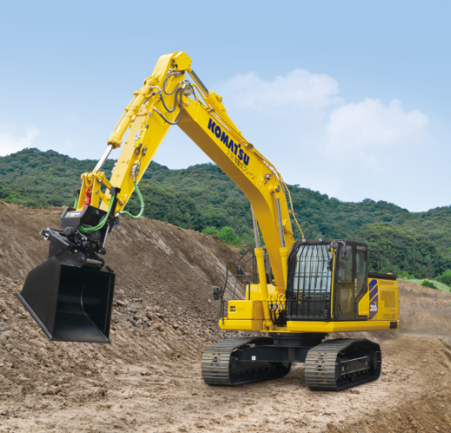
The ACE kit is deliberately platform-agnostic: Neya built it to run on the Naval Construction Force's existing vehicle fleets rather than requiring the purchase of new autonomous-capable equipment, with planned scalability to skid steer loaders, forklifts, bulldozers and front-end loaders. That design choice matters for a military customer in a way it would not for a commercial construction firm, because the Navy already owns a large, geographically dispersed fleet of conventional construction equipment, and replacing that fleet with purpose-built autonomous machines would be a far larger and slower procurement than bolting a retrofit kit onto equipment already in service at bases worldwide.
The kit supports three distinct capability levels, teleoperation, semi-autonomous operation and full autonomy, which lets a unit choose how much human control to retain depending on the specific task and threat environment rather than forcing an all-or-nothing choice. A Seabee crew clearing debris from a runway under indirect fire might keep a human in direct remote control for judgment calls, while routine grading or repeated material-moving tasks on a safer but GPS-denied site could run with less direct supervision, the kind of graduated autonomy that lets the same hardware serve very different risk profiles across different missions.
What GPS-Denied Actually Means for a Bulldozer
Neya describes the ACE kit as built to operate in GPS-denied, degraded, intermittent and limited conditions, a set of constraints the military shorthand calls DDIL. For an autonomous vehicle, that means the system cannot rely on the satellite positioning that most civilian autonomy stacks, including the vast majority of commercial construction robotics sold to solar and warehouse customers, treat as a given input. An adversary capable of jamming or spoofing GPS signals near an airfield or port under repair, exactly the kind of contested site the Naval Construction Force would be rebuilding, can degrade or corrupt that positioning data, which means an autonomy system that depends on it either stops working or, worse, continues operating on bad position data.
Operating reliably under DDIL conditions requires an autonomy stack that can fall back on other sensing, inertial navigation, visual odometry and terrain-relative positioning among them, to keep a multi-ton piece of construction equipment correctly positioned and safely maneuvering without a clean GPS fix. That is a materially harder engineering problem than the positioning challenge most autonomous construction and solar-site equipment solves, since those commercial systems can generally assume uncontested satellite coverage. It is also the main reason a defense-focused autonomy specialist like Neya, rather than a commercial construction-robotics startup, won this contract: the GPS-denied requirement is a defense-specific capability that few vendors outside the military autonomy market have had reason to build.
The Software Stack Behind the Kit
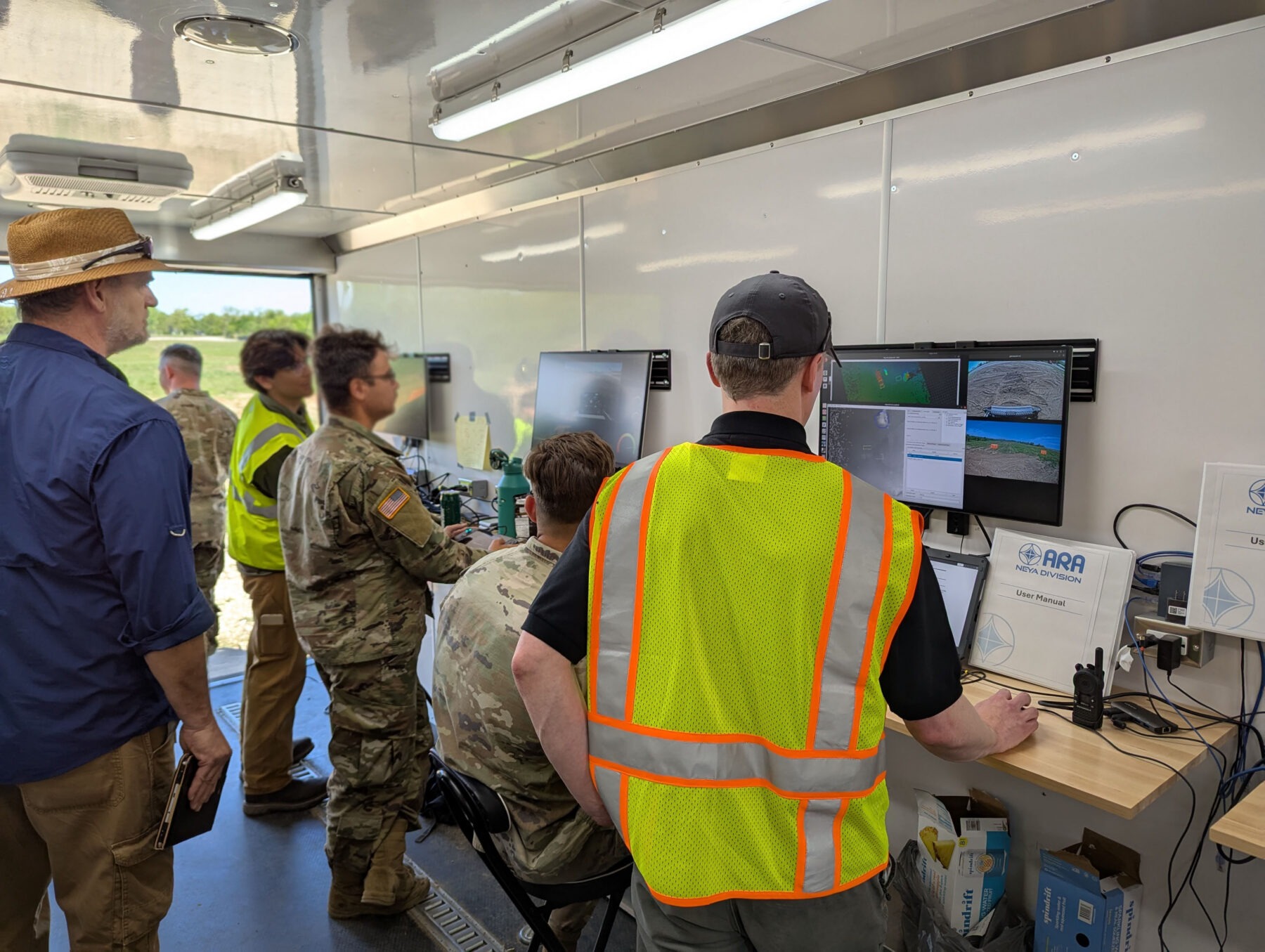
Neya's own N-Drive autonomy software supplies the core driving behaviors, while FOCUS ATAK, a command-and-control application built on the Android Tactical Assault Kit framework the military already uses for battlefield coordination, gives operators and commanders a familiar interface for directing the equipment rather than a bespoke control system Seabees would need separate training to use. A Mission Planning and Management System handles coordination across multiple vehicles at once, letting a single operator or small crew oversee a group of autonomous machines working a site simultaneously rather than requiring one person per machine, which is the actual labor-saving mechanism behind the contract: not eliminating equipment operators, but letting fewer of them cover more machines and more hazardous ground.
Building the ACE kit on FOCUS ATAK specifically is a pragmatic integration choice rather than a technical requirement, since the Android Tactical Assault Kit ecosystem already has an established user base across the services. A construction-equipment autonomy system that plugs into software troops already know how to operate removes a training barrier that a fully custom interface would have had to overcome from scratch.
A Contract That Flows Through Three Layers of Procurement
The award itself illustrates how the Pentagon increasingly buys autonomy technology from smaller specialists rather than large, traditional defense primes. The contract is administered for the U.S. Army Contracting Command and Detroit Arsenal through the National Advanced Mobility Consortium, an industry group the Army uses to award Other Transaction Authority agreements, a procurement mechanism designed to move faster and with fewer bureaucratic steps than a standard defense acquisition contract. Routing a Navy construction need through an Army contracting office and an Army-affiliated consortium reflects how unmanned-ground-vehicle procurement has consolidated around shared Army infrastructure across the services, rather than each branch running entirely separate autonomy procurement programs for similar underlying technology.
For a company the size of Neya, that consortium-based procurement path is also the realistic route into a defense contract of this kind: a direct, full-scale defense acquisition program is a multi-year process generally reserved for far larger awards, while an Other Transaction Authority agreement through an established consortium lets a specialist autonomy vendor win and deliver a focused capability like the ACE kit on a timeline closer to commercial software development than traditional defense procurement.
The Broader Push Toward Robotic Combat Engineering
Neya is not the only autonomy vendor the military has funded to automate combat engineering tasks in recent months. Gecko Robotics has expanded a separate Navy inspection contract to roughly US$300 million, and a range of smaller specialists have won defense construction-automation awards covering everything off-road mobility to autonomous welding, part of a broader Pentagon push to reduce how many personnel need to be physically present in contested logistics and engineering roles. What distinguishes the Naval Construction Force award from most of that activity is its focus on heavy earthmoving and repair equipment specifically, a category the commercial construction-robotics boom of the past two years, concentrated heavily on solar-site and warehouse automation, has mostly left to defense-specific vendors rather than general-purpose construction-robotics startups.
That gap exists for a structural reason rather than a lack of interest: a commercial construction robotics company optimizing for cost and speed on a predictable civilian job site has little incentive to engineer for GPS jamming, indirect fire risk or rapid cratered-runway repair, since none of those conditions exist on the solar farms and warehouses where most civilian construction automation investment has gone. Defense-focused autonomy specialists like Neya have effectively inherited the heavy-equipment automation niche the commercial sector has not needed to solve, which gives them a defensible position in military contracting even as larger, better-funded civilian construction-robotics companies continue to raise far bigger funding rounds for site conditions the Navy's Seabees will never actually encounter.
An Unconfirmed Thread Worth Watching
In August, Neya separately announced a teaming arrangement with GS Engineering to pair its N-Drive autonomy software with GS Engineering's REAPr uncrewed ground vehicle for construction tasks, a partnership aimed at the same broad category of autonomous military construction work the Navy contract now covers. Neya has not said whether that REAPr teaming connects to this week's Naval Construction Force award, and nothing in the public contract announcement names GS Engineering or the REAPr platform directly, so the two should be read as separate developments for now rather than assumed to be part of the same program.
What the August announcement does establish is that Neya was already building relationships aimed at exactly this market segment before the Navy contract materialized, evidence that the company has been positioning itself for military construction-automation work as a deliberate strategy rather than winning this award opportunistically. Whether the ACE kit eventually runs on a GS Engineering vehicle, a conventional Navy bulldozer, or both, the detail worth tracking next is how quickly Neya can scale the kit from the skid steers and forklifts named in this contract to the heavier bulldozers and front-end loaders it has only described as a future capability so far.
This account draws on Neya Systems' own contract announcement and prior public statements about its autonomy software and partnerships.
This article is provided for general information purposes only and does not constitute investment, procurement, legal, or engineering advice. Product specifications reflect public company information available at the time of writing and may change without notice.