RoboMIND Downloads Pass 50 Million
Beijing Humanoid's open robot dataset passed 50 million downloads, and the latest 10 million took 18 days.

Beijing Humanoid's open dataset just crossed 50 million downloads. The last 10 million took 18 days.
China National Radio reported on 27 October 2026 that the Beijing Humanoid Robot Innovation Center told its reporter the previous day that RoboMIND's cumulative global downloads had passed 50 million. The set has been open since December 2025. The first 10 million downloads took 223 days. The second 10 million took 39 days. The fifth took 18.
That curve is the news. A download counter is not a deployment count, and CNR does not claim that 50 million downloads equal 50 million trained robots. It does show that developers are pulling the same public manipulation corpus faster than they were at the start of the year.
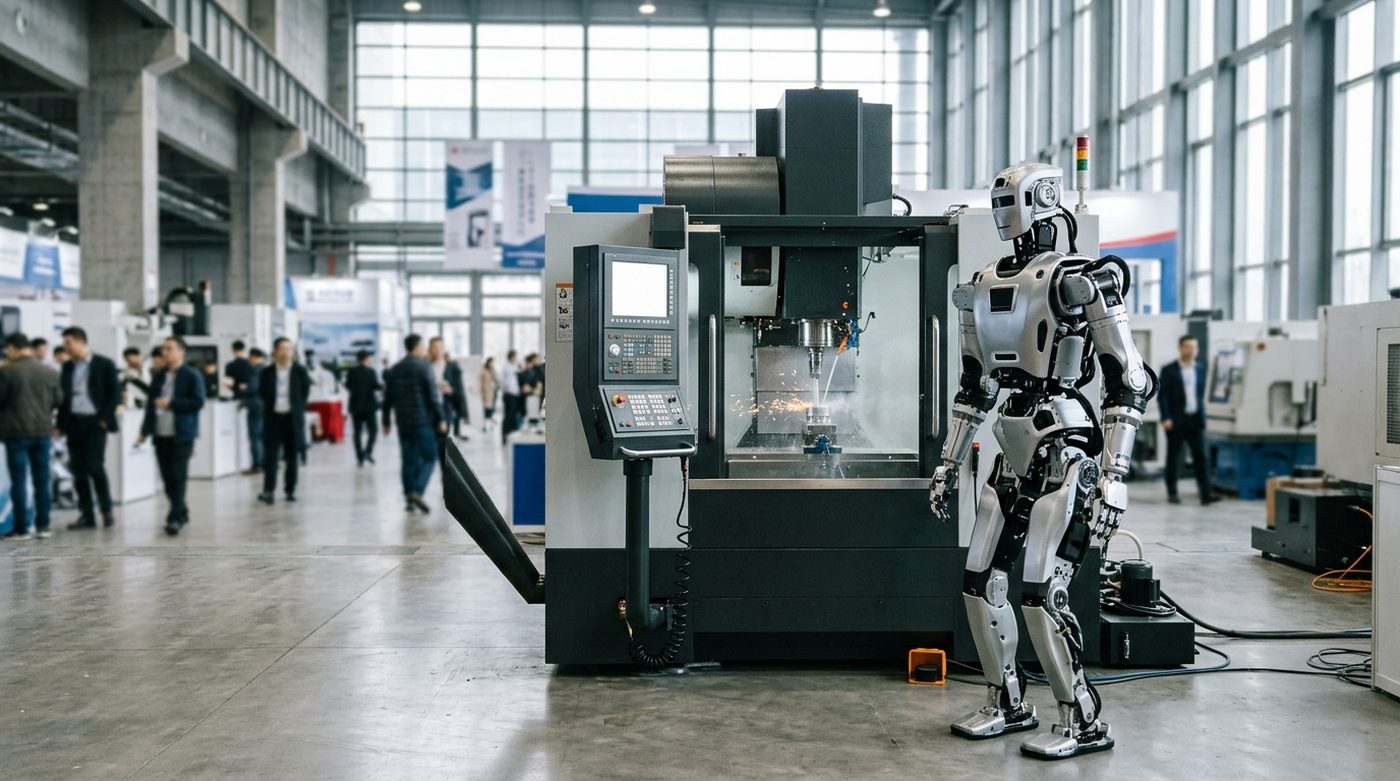
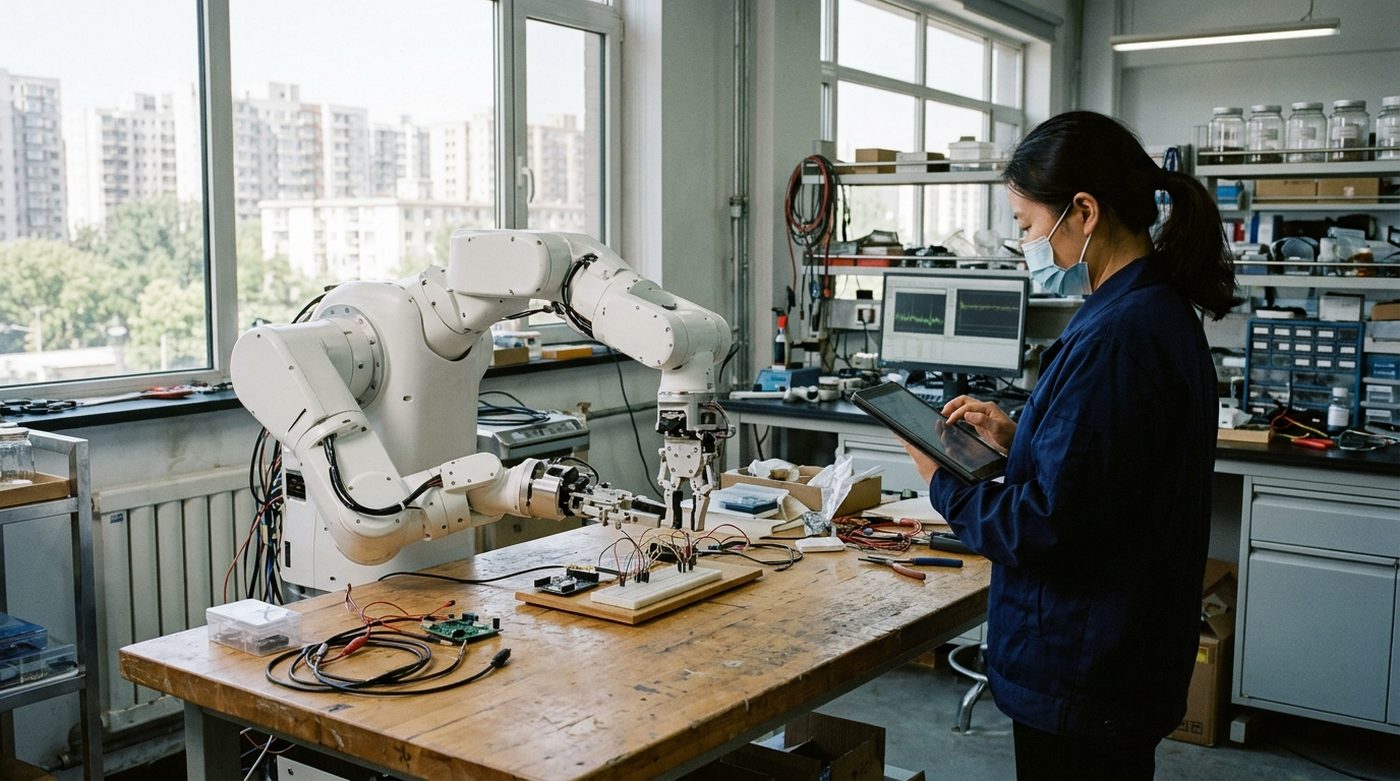
A center official described RoboMIND as the first open dataset to support dual-arm coordination, mobile manipulation, dexterous hands, and high-fidelity tactile sensing in one release. The open portion holds more than 400,000 dual-arm trajectories and covers more than 100 real operating tasks. Developers can train a grasp, a carry, and a fine manipulation step from the same corpus rather than stitching three incompatible sets together.
CNR also described the center's data base: more than 6,000 square meters, more than 30 typical scenes across home, retail, industry, and medicine, 40 robot configurations, more than 180 mainstream robots, and more than 100 body-free collection devices. The closed-loop toolchain runs from capture through cleaning, quality checks, labeling, model training, real-robot evaluation, and deployment feedback. Annual data capacity is 180,000 hours. More than 30,000 hours of high-quality data have already been delivered externally. The center also led China's first embodied-intelligence dataset industry standard, CNR reported.
Beside the open set, the center runs an application store called Huisi Kaiwu. Users can download a skill and deploy it to a robot without writing it from scratch. Developers can generate a skill from video or list a skill they built. A center official said the next step is shared data, co-created scenes, and joint model training.
The acceleration matters more than the round number. Eighteen days for the latest 10 million, against 223 days for the first, is what a training-data market looks like when labs stop treating teleoperation logs as a private asset. It also sets a bar other open sets now have to clear: one corpus that covers arms, mobility, hands, and touch, with a named operator and a dated count.
Downloads still do not prove that the trajectories are clean enough for a factory skill, or that the application store's one-click deploy works outside the center's own robots. Those are the next facts worth counting.
This article is for informational purposes only and does not constitute professional advice.