Jaipur Robotics Raises EUR4.3M to Automate Waste-to-Energy Plants
Swiss startup Jaipur Robotics raised a EUR4.3 million (US$4.6 million) Seed round to expand computer-vision hazard detection and crane automation across the world's roughly 3,100 waste-to-energy plants, most of which still run on manual inspection.


Jaipur Robotics, a computer-vision startup based at Technopole Ticino in Manno, near Lugano, Switzerland, announced Monday a EUR4.3 million (US$4.6 million) Seed round co-led by EquityPitcher Ventures and High-Tech Gründerfonds to expand its automation platform for waste-to-energy, cement, and biomass plants. Founded in 2024 by chief executive Ermes Zamboni and chief technology officer Nikhil Prakash, the 40-person company says its system already analyzes more than five million tonnes of waste a year across a customer base concentrated in Europe, and it will use the new capital to enter additional regions and deepen the product beyond its current core of hazard detection and crane automation. The company runs a second research and development center in Asia alongside its Swiss headquarters, a structure more commonly seen at later-stage industrial software companies than at a two-year-old startup, and one that signals an intent to build engineering capacity and customer relationships in Asian waste-management markets well ahead of any near-term revenue from the region.
The round targets a market that has barely begun to modernize. More than 3,100 waste-to-energy plants operate worldwide today, processing municipal and industrial waste into electricity and heat in a sector Jaipur estimates at roughly EUR40 billion (US$43 billion), and the large majority of that fleet still runs on manual visual inspection and analogue process control rather than computer vision or predictive software. That gap, more than any single technical breakthrough, is what Jaipur's pitch to investors rests on: retrofitting existing infrastructure with cameras and models is a materially cheaper and faster sale than any hardware capital project a plant operator would otherwise have to justify.
What the Cameras Are Actually Watching For
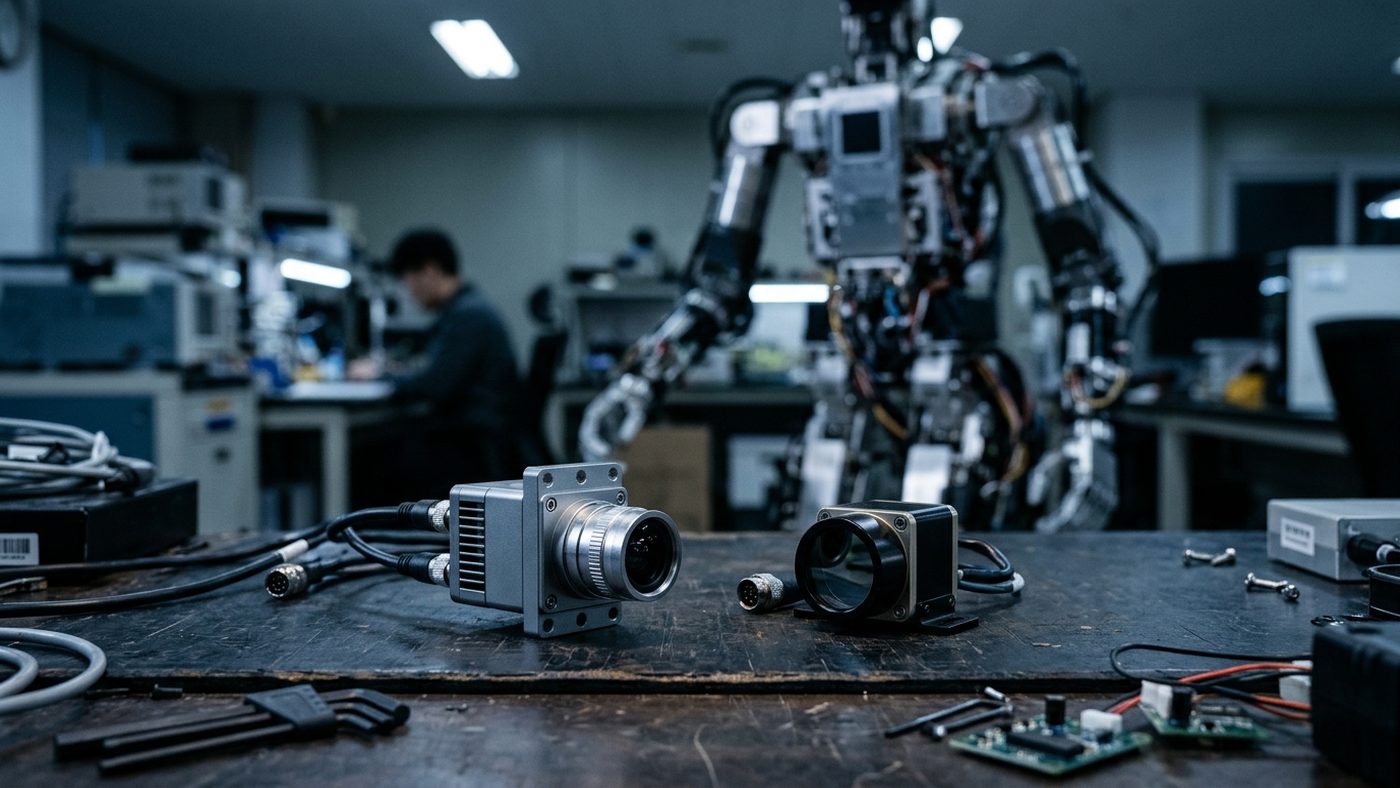
Jaipur's system does not deploy robots onto the tipping floor; it installs computer-vision hardware on existing infrastructure, primarily the overhead cranes that move waste from the storage pit into the incinerator, and layers AI models on top of the video feed those cameras generate. The company says its models detect hazardous materials mixed into incoming waste streams, such as gas canisters, batteries, or other items that can cause explosions or equipment damage if fed into a furnace undetected, with claimed accuracy of 99 percent across a training set the company describes as the largest waste-to-energy image library in Europe, more than 50 million labeled images. A second function maps the calorific value of waste in different sections of the storage pit, information a plant historically has had to estimate rather than measure, which Jaipur says lets operators blend waste more precisely for stable combustion. A third layer automates elements of crane operation itself, using the same hazard and composition data to guide loading decisions that have traditionally depended on an operator's visual judgment from a control room overlooking the pit.
Zamboni, whose background is in mechanical engineering, and Prakash, who holds a doctorate in deep learning from ETH Zurich and previously built computer-vision systems for satellite imagery, have pitched the combination as addressing a problem that is as much about safety and labor as it is about combustion efficiency. Unplanned shutdowns caused by hazardous material reaching the furnace, or by equipment damage from an unexpectedly dense or metal-heavy load, are the single largest source of downtime the company's system targets, and Jaipur reports that deployments have cut unplanned shutdowns by more than 80 percent at individual sites while adding roughly EUR1.1 million (US$1.2 million) in value per plant from improved waste-mixing decisions.
The Retrofit Argument Against Building New Automated Plants
A waste-to-energy plant is a decades-long capital asset; the incineration lines running today at most facilities were engineered without machine vision in mind and were not built to be replaced on a venture-backed startup's timeline. That reality is the structural argument behind Jaipur's entire business model: rather than compete with automation vendors who sell entirely new, purpose-built plant control systems, the company sells an overlay that a plant operator can install on infrastructure already in service, without the multi-year permitting and construction cycle a new facility or major retrofit would require. For an operator, that distinction determines whether a safety or efficiency upgrade is a capital project measured in years or a software and sensor deployment measured in months, and it is why Jaipur can point to revenue-generating customers now rather than describing a technology still validating on a single reference site.
The tradeoff is that Jaipur's economics depend on plants that already have functioning cranes and control infrastructure to attach cameras and software to, which limits how much of the value proposition transfers to a facility that would need substantial hardware upgrades before any vision system could be usefully deployed. It also means Jaipur is, in practice, selling into an operator's existing capital-expenditure cycle rather than creating a new one, competing for budget against every other efficiency or safety upgrade a plant manager is already considering rather than opening a wholly new spending category.
A Labor Shortage Is Doing as Much Selling as the Software
Jaipur's own investor materials frame the problem it solves less as a pure technology gap than as a workforce one: waste-to-energy plants lose more than 14 days of operation a year to downtime caused by hazardous waste, up to 5 percent of potential output to poorly mixed, heterogeneous waste streams, and struggle independently of either issue to recruit the specialized staff needed to run manual sorting and monitoring at the pace modern throughput demands. That framing matters commercially because it means Jaipur is not asking a plant operator to choose automation over a cheaper, adequately staffed manual process; it is offering a substitute for a workforce that plant operators say they increasingly cannot hire at any price, which is a materially easier sale than displacing an existing team a plant is otherwise satisfied with. It is also a claim a buyer should independently verify against their own hiring data rather than accept as a universal condition of the sector, since staffing pressure varies significantly by country and local labor market.
Why Two Specialist Investors, Not a Generalist Robotics Fund
The lead investors on this round are themselves a signal about how narrow Jaipur's addressable buyer is today. EquityPitcher Ventures focuses on Series Seed and Series A artificial-intelligence and deep-technology startups in the German-speaking DACH region, with a stated track record of 40 robotics and infrastructure investments and relationships with the industrial customers a company like Jaipur needs as reference accounts. High-Tech Gründerfonds is a German public-private early-stage investor with a mandate closer to deep technology and industrial software than to the humanoid and consumer robotics themes drawing the largest checks elsewhere in the sector this year. Neither fund's mandate centers on humanoid or mobile robotics, and their participation instead reflects a bet on industrial computer vision as a category adjacent to robotics rather than robotics itself, sold into operators of expensive, safety-critical infrastructure who care more about uptime and incident avoidance than about any humanoid platform's dexterity benchmarks.
That distinction matters for how a buyer outside Jaipur's existing customer base should read this funding round. A waste-to-energy, cement, or biomass plant operator evaluating Jaipur's pitch is not being asked to bet on a nascent robotics category the way a hospital evaluating a disinfection robot or a warehouse evaluating a mobile picking robot might be; computer vision for hazard and quality detection is a comparatively mature technology already deployed in adjacent industrial-inspection markets, and what Jaipur is really selling is domain-specific training data and integration expertise for a sector that has been slow to adopt tools already common elsewhere in heavy industry.
What a Plant Operator Should Ask Before Signing
The clearest gap in Jaipur's public disclosures is what happens when the system is wrong. A 99 percent accuracy claim on hazardous-material detection implies a real, if small, false-negative rate in an application where a single missed detection can mean equipment damage or a safety incident, and the company has not published what its false-negative rate looks like in absolute terms or how a plant's existing manual inspection protocols are meant to layer alongside the automated system during a transition period. An operator negotiating a deployment should ask Jaipur directly for incident data from existing customers, including near-misses the system caught that a human operator would plausibly have missed, and for the specific handoff procedure between automated detection and the human decision that still has to authorize what happens next when a hazard is flagged. A vendor already citing double-digit percentage reductions in unplanned shutdowns across live deployments should be able to produce that underlying incident data on request, and a plant operator's own liability exposure is the reason to ask before capital, not after.
Hero image credit: Jaipur Robotics.
This analysis draws on Jaipur Robotics' own public statements and its lead investors' funding disclosures. It is for general information purposes only and does not constitute investment, financial, or legal advice.