Imperial College and Smith+Nephew Open Surgical Robot Centre
Imperial College London and Smith+Nephew launched a five-year university technology centre to move computer-vision and sensing research into less invasive musculoskeletal robotic surgery.

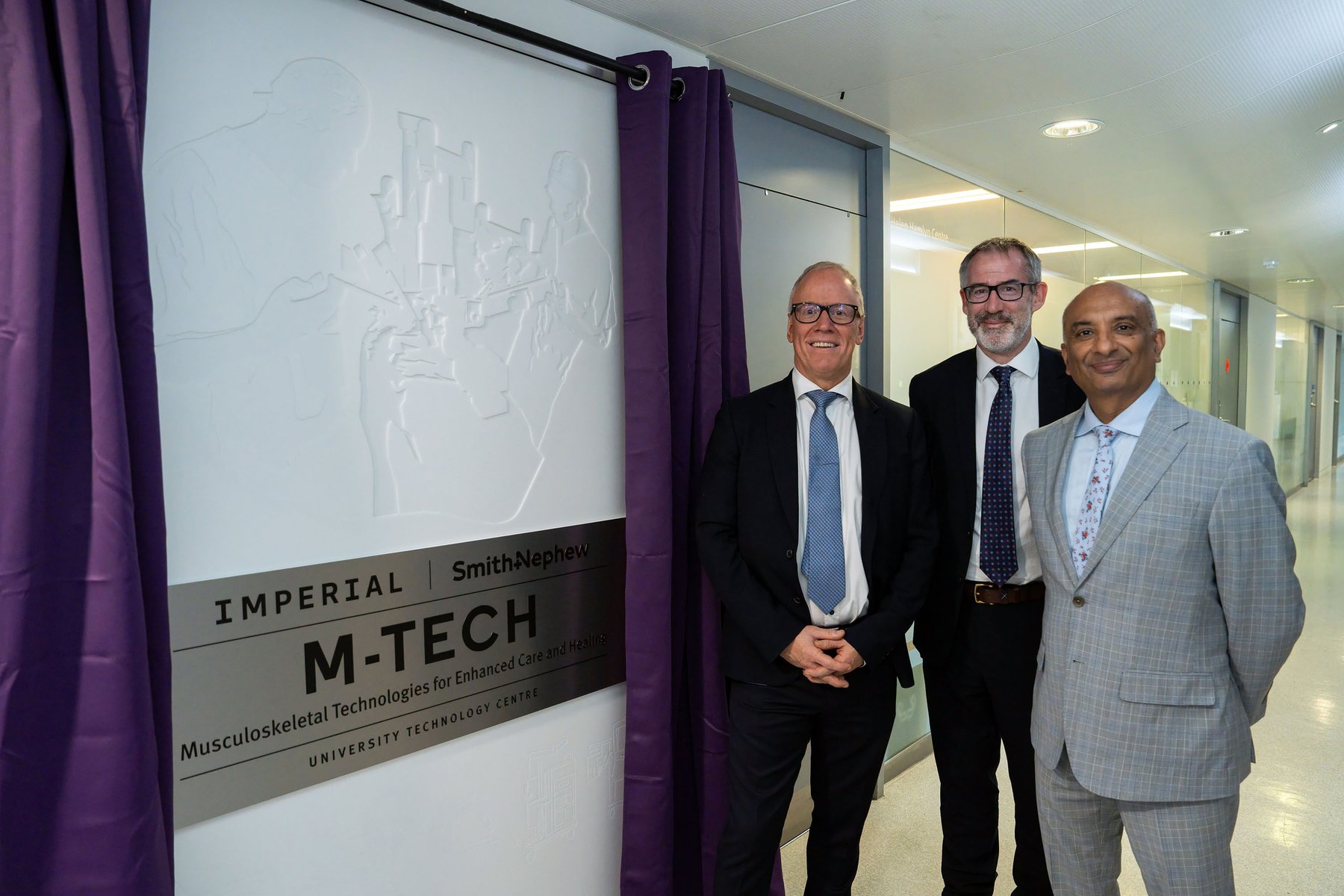
Imperial College London and Smith+Nephew opened a five-year university technology centre in London on 18 August to move academic work in computer vision and sensing into robotic surgery for musculoskeletal conditions. The centre is housed at the Hamlyn Centre for robotic surgery, which sits in Imperial’s Institute of Global Health Innovation, and will be led by Professor Ferdinando Rodriguez y Baena of the Department of Mechanical Engineering. At full capacity it will support one senior postdoctoral researcher and up to seven funded doctoral students.
Smith+Nephew, the London-listed medical technology group now in its 170th year, called the site its first university centre of this kind. Imperial called it the college’s first industry research centre in medical technology. The design is the news. Company engineers are meant to work inside the academic lab rather than license a finished paper or wait for a spinout. Vasant Padmanabhan, Smith+Nephew president of research and development, ENT and emerging markets, said the point is to move research into operating theatres faster than a conventional university deal.
Hospital buyers should read the launch as a bet on the unglamorous layer of surgical robotics: registration, tracking, and scene understanding. The centre’s published topics include markerless registration and tracking, which would remove pins and rigid markers now bolted to bone, and computer vision that adapts to a patient’s anatomy in real time. Fewer pins means fewer incisions and less hardware on the patient. Better vision means a system that can be used outside a handful of specialist theatres.
The Third Path Between a License and a Spinout
Rodriguez y Baena said health-device research has usually reached patients in two ways: a license or a new company. The centre is offered as a third path, with academic engineers helping to develop products beside a large incumbent. That matters because surgical robotics has no shortage of laboratory demos and a long list of systems that never leave a teaching hospital. The bottleneck is not another arm. It is a sensing and software stack that a non-specialist surgical team can set up without a research engineer in the room.
The Hamlyn Centre already works on robotic surgery. Placing an industry unit there is a way to keep the work next to people who operate on bone and soft tissue rather than next to a corporate campus that sees patients only in marketing films. Vice-Provost Mary Ryan said direct work with Smith+Nephew should bring innovations into clinic faster by pairing Imperial’s academic bench with the company’s scale.
Scale is the part universities cannot fake. Smith+Nephew already sells orthopaedic reconstruction, sports medicine, and wound-care products into hospital systems worldwide. If a markerless method works, the company has a sales force, a regulatory file, and a service network. If it does not, the company can stop the line without pretending a campus prototype is a product. That discipline is exactly what many surgical-robot startups lack, and exactly what can also smother a fragile idea if the corporate stage-gate is too coarse.
The staffing plan is small on purpose. One senior postdoc and seven doctoral students is not a factory. It is a focused research cell. Buyers should not expect a new robot brand in 2027 from this headcount. They should expect papers, prototypes, and, if the model works, software and sensing features that appear inside Smith+Nephew’s existing robotic surgery tools.
Pins, Markers, and the Cost of a Specialist Theatre
Current orthopaedic robots often depend on physical markers. Surgeons or technicians fix rigid arrays to bone so the system knows where the patient is. The method is accurate and invasive. It adds incisions, hardware, setup time, and a failure mode if a marker moves. Markerless registration tries to replace that scaffolding with cameras and models. The clinical prize is a shorter setup and a procedure that more hospitals can staff. The engineering risk is a tracking error that the surgeon cannot see until the cut is wrong.
That is why this centre is a procurement story as well as an academic one. A hospital evaluating a surgical robot is really evaluating downtime, training, and whether the system still works when the star surgeon is on leave. A platform that needs a specialist centre, a dedicated technician, and a tray of bone pins has a narrow market. A platform that can register a joint with cameras and update the plan as tissue moves has a wider one. Smith+Nephew is paying for the second option.
Computer vision that “reads and adapts to a patient in real time,” in the university’s phrasing, is the companion problem. Bodies are not computer-aided design files. Swelling, breathing, and tool glare change the scene. A model trained on tidy cadaver labs can fail under lights and blood. The honest test is not a launch plaque. It is whether a registrar in a busy theatre can complete registration without calling the vendor.
The hard truth is that industry-on-campus centres often produce pleasant photographs and slow software. Five years is long enough to do real work and long enough to drift. The useful public commitments are therefore the narrow ones already on the record: markerless tracking, real-time vision, fewer incisions, and a staffing cap that forces focus. Anything beyond that, including claims about better patient outcomes, remains a goal.
Regulators will also shape the payoff. A change in how a robot finds bone is not a cosmetic update. It can trigger a new clinical file, new human-factors evidence, and new training obligations. Hospitals should ask whether any output of the centre will be offered as a software upgrade to installed systems or only as a next-generation capital sale. The first path can improve a fleet. The second path can orphan it.
What Hospital Buyers Should Watch for Five Years
Training and service contracts will move if markerless methods work. Today a hospital often pays for a vendor technician on early cases and for a tray of disposable or reusable markers. A vision-first workflow shifts cost into cameras, compute, and software maintenance. That can be cheaper per case and still more expensive over a decade if the hospital cannot keep the software current without a capital refresh. Finance teams should model both a per-case saving and a forced-upgrade year, then pick the worse case as the planning case. Smith+Nephew did not publish a centre budget, a device timeline, or a hospital pilot site on 18 August, so none of those items should be assumed in a 2026 capital plan.
Do not treat Tuesday’s launch as a reason to freeze other surgical-robot tenders. Treat it as a signal of where an incumbent thinks the next cost and safety gains sit. If Smith+Nephew is putting engineers inside a vision lab, the company is telling the market that arms and implants are no longer the scarce layer. Perception is.
Ask the vendor, and any rival, three questions that follow from this design. A fourth question is whether intraoperative video from the new vision stack will be stored in the hospital picture-archiving system or only in a vendor cloud. That choice affects incident review, staff training, and data-protection filings in the United Kingdom and the European Union. First, how does the system register anatomy today, and how many extra incisions does that require? Second, what is the fallback when vision fails mid-case? Third, who owns the intraoperative video and models: the hospital, the vendor, or a joint research file that cannot be audited? The last question is the same data-ownership problem now appearing in factory robots, only the payload is a patient.
There is also a competitive reading. Intuitive Surgical still defines what many hospital boards think a surgical robot is. Orthopaedic specialists have been trying to make registration less painful for years because setup time, not cutting time, often decides whether a list overruns. If Smith+Nephew can ship markerless tracking as an upgrade, it attacks the switching cost that keeps theatres loyal to the first robot they trained on. If it can ship that upgrade only as a new capital tower, rivals will tell hospitals the centre is a reason to wait, not a reason to buy.
Waiting has a cost too. Every year a hospital keeps bone pins is a year of extra incisions and extra trays. Every year it waits for a campus centre to finish is a year the incumbent installed base gets stickier. The rational path for a theatre manager is to keep buying the current generation on a short service term, write markerless registration into the next tender as a scored item, and refuse a ten-year lock that predates the research.
Imperial and Smith+Nephew have chosen a small, named, five-year cell instead of a broad alliance press release. That is the right size for the problem they described. The centre will have done its job if, before the five years end, a surgeon can skip the bone pins and still trust the cut. Until then it is a well-aimed research programme, not a new robot on a theatre list.
-----
This article is for informational purposes only and does not constitute investment, legal, engineering, or procurement advice. Buyers should verify current specifications, commercial terms, safety certification, and regulatory status with the relevant companies and authorities before making purchasing or partnership decisions. Analysis synthesizes company statements and public market activity.