Gravis Robotics Raises US$200 Million for Construction Autonomy
Gravis Robotics announced a US$200 million Series A from SoftBank to scale autonomous heavy machinery for construction, giving procurement teams a fresh test case for physical AI outside factories and warehouses.
Construction Autonomy Moves Into the Capital Markets
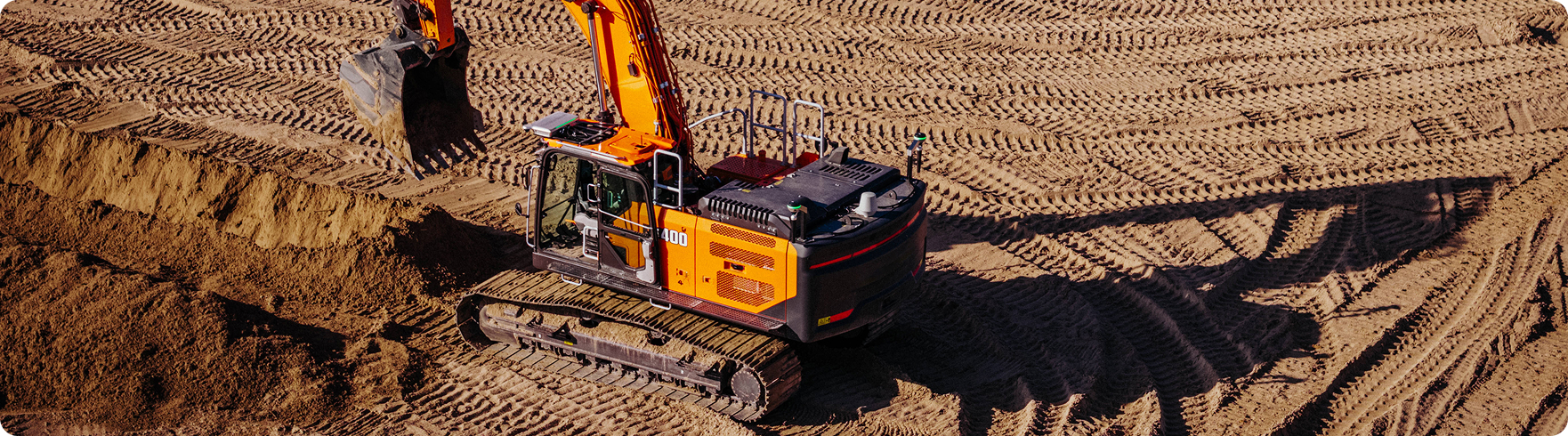
Gravis Robotics announced on 17 August 2026 that SoftBank is investing US$200 million in the Zurich-based construction robotics company in a Series A round. Gravis says the financing will accelerate its mission to bring physical AI to autonomous heavy machinery and scale the business across global infrastructure markets. The announcement places construction equipment, rather than a humanoid or warehouse robot, at the centre of the latest large physical-AI financing signal.
For procurement leaders, the important fact is not the size of the cheque alone. It is the type of machine that Gravis is trying to change. Construction sites already contain expensive mobile equipment, trained operators, and established maintenance routines. A retrofit or autonomy layer that improves the use of that installed base could offer a different commercial route from replacing fleets with purpose-built robots. That route is promising, but it will be judged by safety evidence, site integration, utilisation, and measurable production gains.
SoftBank Is Funding a Retrofit Thesis
Gravis describes its mission as bringing artificial intelligence into precise, real-world physical execution. In the announcement, the company frames construction as an industry where much of the heavy equipment still operates in ways that have changed little over decades. The implication is a retrofit thesis. Existing machines may become more autonomous through a combination of perception, planning, control, and operator interfaces rather than through a wholesale replacement programme.
That distinction matters to buyers. A new autonomous excavator fleet would require a capital plan, a service model, operator retraining, spare-parts planning, and a response to the risk that a new platform may not fit current contractors’ workflows. A software and autonomy layer applied to equipment already understood by the organisation could reduce some switching costs. It would not remove them. Retrofit autonomy still has to account for machine variants, hydraulic response, sensor placement, connectivity, site geometry, weather, human workers, and the rules governing who retains control when the system encounters an unfamiliar situation.
The funding also creates a commercial expectation. A US$200 million Series A gives Gravis resources to hire, build infrastructure, support deployments, and pursue international expansion. It does not prove that autonomous construction has reached broad commercial scale. Financing is a capacity signal, not a deployment metric. The next evidence procurement teams should seek is a record of repeatable operating performance across sites, machine types, and contractors.
Construction Sites Expose the Limits of Demo Logic
Construction is an unforgiving test for physical AI because the operating environment changes every day. A warehouse can still be difficult, but its lanes, shelves, charging areas, and work instructions are usually designed around repeatable processes. A construction site can change as foundations are poured, materials arrive, surfaces become uneven, and people and vehicles enter the same working envelope.
That volatility makes the autonomy stack more important than the machine label. A system may need to maintain a stable understanding of its surroundings while the map changes beneath it. It must distinguish a worker from a material pile, determine whether a new obstacle is temporary or structural, and behave safely when visibility is reduced. The buyer’s question is not whether a robot can complete a controlled task once. It is whether the system can manage the long tail of ordinary site variation without converting every exception into a human intervention.
This is where the distinction between a demo and a deployable system matters. A demonstration can show a machine executing a compelling movement under carefully selected conditions. A procurement-grade deployment requires incident procedures, audit trails, maintenance support, cybersecurity controls, software update discipline, and a clear allocation of responsibility. The financing announcement does not answer those questions. It does, however, identify them as the commercial tests for the next phase.
The value of construction autonomy will be measured less by how dramatically a machine moves than by how rarely a site supervisor has to stop work and take control.
The Buyer’s Economics Start With Utilisation
Heavy construction equipment is a capital asset whose economics depend on productive hours, operator availability, project schedules, fuel or energy use, maintenance, and resale value. Autonomy can create value if it increases productive utilisation, enables work during periods of labour scarcity, or makes difficult tasks safer and more repeatable. It can destroy value if commissioning takes too long, supervision requirements remain high, or a site cannot provide the connectivity and data quality the system expects.
A useful evaluation therefore begins with the existing fleet rather than the technology demo. Buyers should map machine models, operating hours, idle time, common site tasks, safety incidents, and the cost of specialist operators. They should then test whether autonomy addresses a measurable constraint. If the problem is a shortage of qualified operators, the programme must show how supervision is organised. If the problem is inconsistent excavation quality, the measurement should focus on rework and material movement. If the problem is site safety, the buyer needs a defined baseline and a transparent incident methodology.
The financing could help Gravis build the support structure required for these evaluations. More capital can fund integration teams, field engineering, simulation, safety validation, and customer support. Those activities are less visible than a robot demonstration, but they determine whether an autonomy product can survive the procurement cycle. A construction contractor does not buy a concept. It buys equipment availability, predictable output, and a response when something fails.
Retrofit Autonomy Faces an Integration Bill
The retrofit strategy also carries a technical bill that should be visible in every business case. Each machine may have different control interfaces, hydraulic behaviour, sensor mounting constraints, and maintenance histories. A platform that works well on one excavator may need further calibration on another. The result can be a product that looks like software to the vendor but behaves like a multi-year systems-integration programme for the customer.
The site itself adds another layer. Construction projects often move equipment between locations, and the operating context may be controlled by a general contractor, a specialist subcontractor, or a rental provider. Data rights can become unclear when the machine, autonomy system, operator, and project owner belong to different organisations. A buyer should define who owns logs, who can access them, how they are retained, and whether the data can support future optimisation without creating a new vendor lock-in.
Safety governance deserves the same attention. Human-machine interaction is not limited to a remote-control interface. It includes site induction, exclusion zones, emergency stops, maintenance lockout, shift handover, and the behaviour of the machine when sensors disagree. A deployment plan that treats these matters as training details will be weaker than one that designs them into the operating model from the start.
The European Physical-AI Bet Gains a New Test Case
Gravis identifies Zürich, Switzerland, as one of its headquarters and lists Austin, Texas, and Oxford, United Kingdom, among its locations. That footprint places the company within a European physical-AI story that is tied to heavy industry rather than consumer robotics. The commercial opportunity is substantial because infrastructure renewal, energy projects, housing, and data-centre construction all require machines that can operate in difficult environments.
The competitive question is whether a smaller autonomy company can build enough operational depth to support global customers while adapting to local regulation and contractor practices. The answer will depend on more than model performance. It will depend on service coverage, integration partners, financing options, liability arrangements, and the ability to show that the platform improves the total economics of a project.
SoftBank’s investment gives Gravis the financial room to pursue that test. It also raises the standard by which the company will be judged. A large funding round can accelerate commercialisation, but it can also create pressure to expand before field processes are mature. The best signal for buyers will be disciplined deployment evidence, not a faster stream of promotional announcements.
The Procurement Readout
Construction autonomy is entering a phase in which capital markets are willing to fund the retrofit of heavy machinery with physical-AI systems. Gravis Robotics’ US$200 million Series A is a substantial commercial signal, but it is not proof that autonomous construction has become a routine purchase category. Procurement teams should treat the announcement as a reason to update their market map and prepare a disciplined pilot framework.
That framework should require a clearly bounded task, a baseline for human-operated performance, a safety case, defined supervision, machine compatibility data, an uptime target, and an exit plan if the autonomy layer does not deliver. It should also separate claims about technical capability from claims about production economics. A system may be technically impressive and still fail a site-level return-on-investment test.
The strategic implication is clear. Physical AI is moving into sectors where the valuable machine already exists and the hard problem is making it work safely in changing environments. Gravis has attracted the capital to pursue that opportunity. The next proof point must come from repeatable construction operations, where the cost of an exception is measured in downtime, rework, safety exposure, and project delay.
-----
*Disclaimer: This article is for informational and educational purposes only. It synthesizes verified company disclosures and public market information available on 17 August 2026. Readers should conduct independent due diligence before making operational, procurement, or investment decisions.*