A humanoid that feels: Generative Bionics unveils Gene.01 for industrial work
Generative Bionics announced Gene.01, a sensorised humanoid with distributed tactile skin and industrial partners. Price and mass production schedule: Not disclosed.

A humanoid platform built to feel, not just see
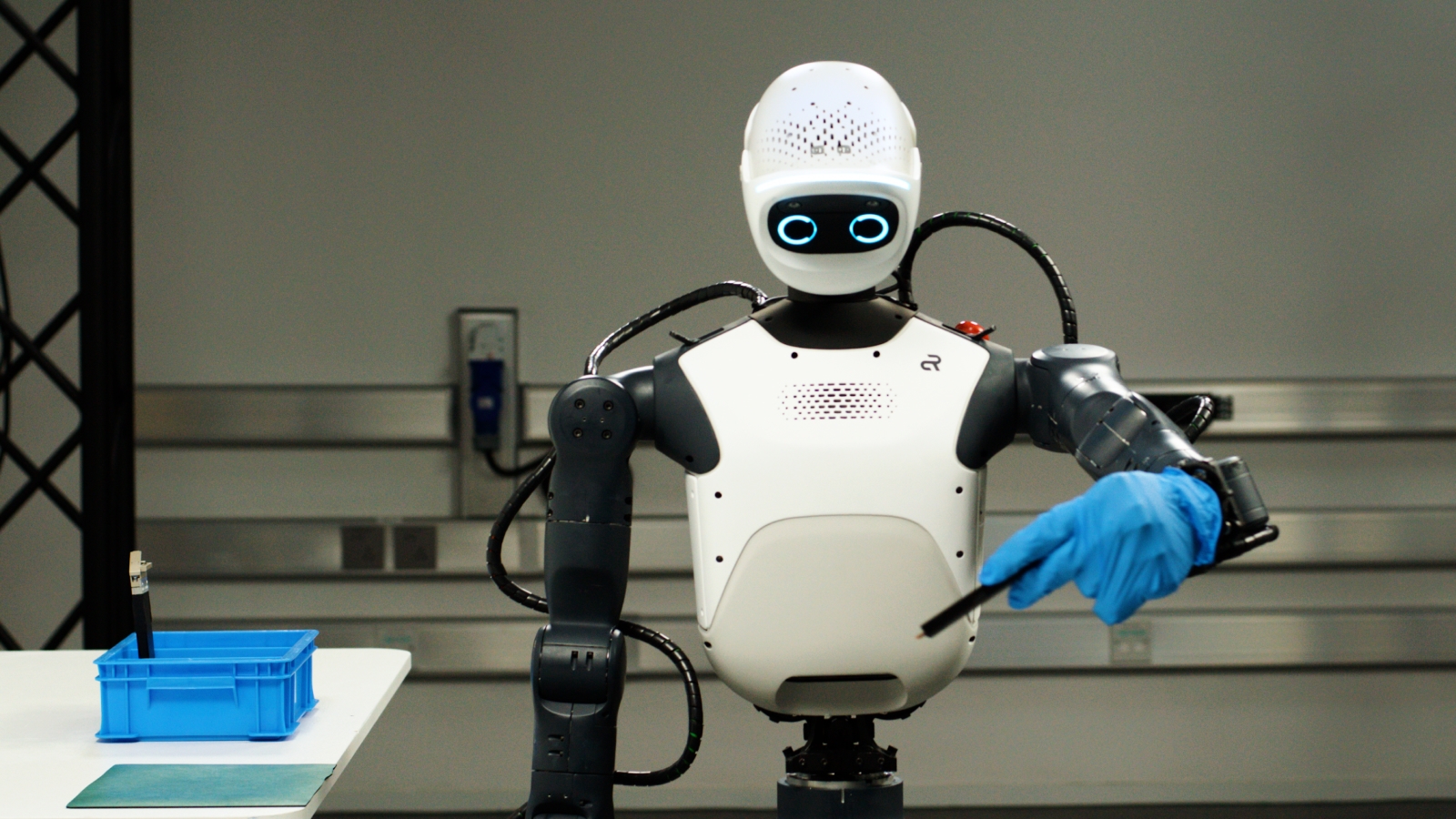
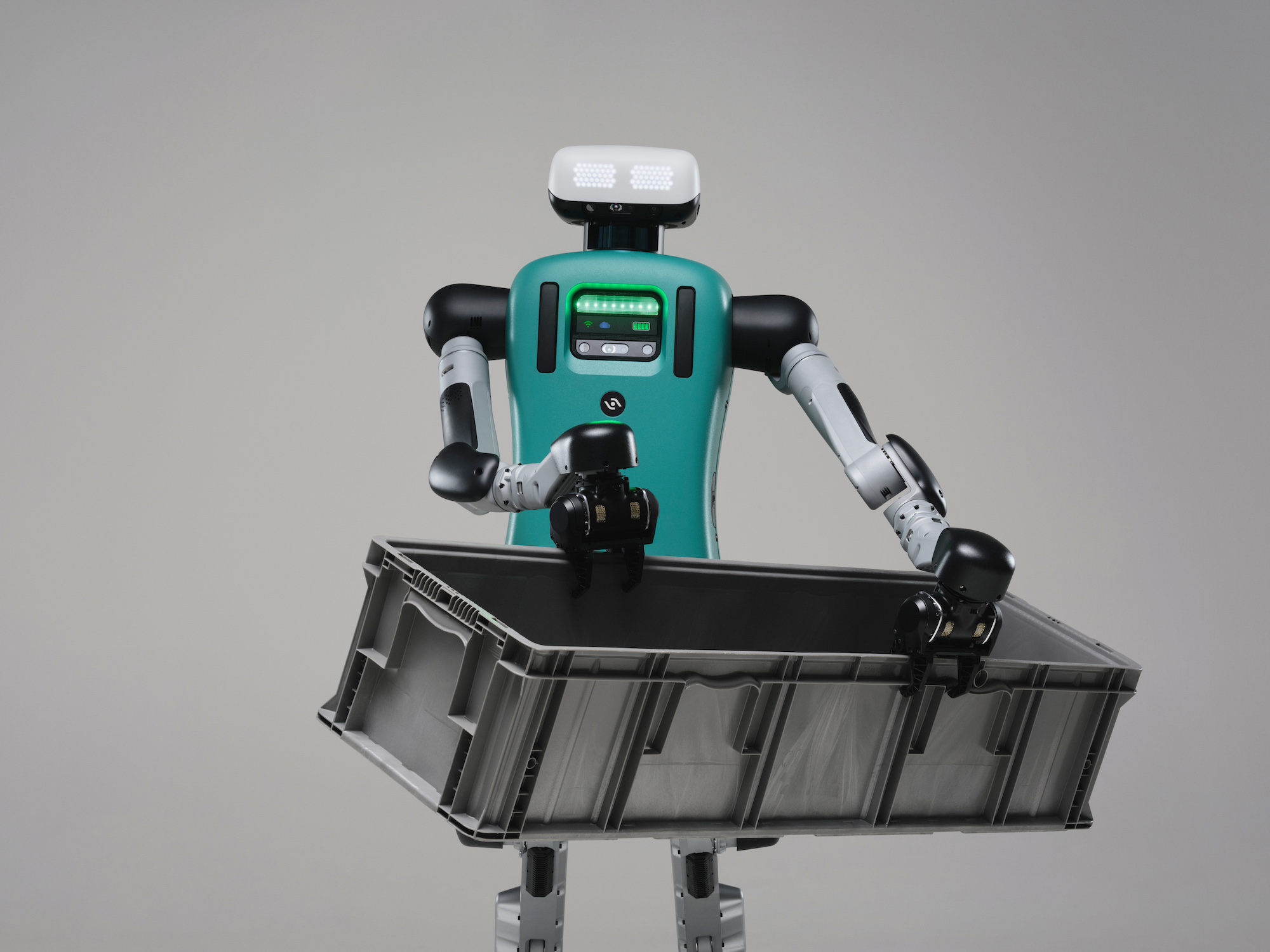
Generative Bionics describes Gene.01 as a fully functional sensorised humanoid platform for industrial work around people. [1] The company says the platform’s distributed tactile skin is designed to detect touch, proximity, force, and temperature. [1] That disclosure makes tactile sensing central to the platform’s stated design, rather than merely an add-on description of the robot’s exterior.
The company’s emphasis is not only on detecting contact. Generative Bionics says force sensing lets people teach not only motion but also task force, which it contrasts with video-only learning that cannot capture task force. [1] In other words, the company is arguing that a robot intended to work around people and materials needs information about interaction forces, not only information about where parts of the body move.
Why force matters for teaching robots
Generative Bionics contrasts its touch-and-force approach with video-only learning approaches. [1] As a conceptual distinction, video-only learning can observe visible motion, but it lacks direct access to applied task forces. For contact-rich work, that difference matters because a demonstrated path and the force used during that path are different signals.
The disclosed Gene.01 design also supports a conceptual comparison with isolated end-effector sensing. A sensor at an end effector can be useful for tool or hand interaction, but it observes only a limited part of the body. A distributed tactile skin, as described by Generative Bionics, can in principle provide signals from more contact locations across the platform. The announcement does not provide sensor density, body coverage metrics, or performance benchmarks, so this comparison should be read as an implication of the disclosed design rather than a measured claim about Gene.01’s performance.
Physics native AI and research lineage
The company describes its approach as physics native AI that jointly optimises body, mechanics, motion, ergonomics, and walking stability. [1] Generative Bionics says the approach builds on work by the founding team at Istituto Italiano di Tecnologia and a July 13, 2026 Nature Machine Intelligence paper on the human aware ergoCub robot. [1]
That framing connects Gene.01 to a research lineage centered on humanoid embodiment, ergonomics, and human-aware behavior. The announcement does not detail how each research element maps into the Gene.01 software stack, but it does present the platform as an integrated body and AI system rather than a standalone robot shell.
From concept to platform in six months
Generative Bionics says it moved Gene.01 from concept to functional platform in six months. [1] The announcement does not provide dimensions, degrees of freedom, weight, payload, walking speed, sensor density, selling price, or a mass production schedule. [1] The disclosed readiness claim is therefore best understood through the company’s stated integration of sensorised hardware, tactile sensing, force-aware teaching, physics native AI, and industrial configuration work.
The absence of public price and mass production timing is important for buyers and integrators. It means the announcement establishes the company’s platform thesis and early industrial direction, but it does not yet give procurement teams the commercial or availability detail needed for purchase planning.
Digital twin distribution and developer pathway
Open digital twin across named channels
Generative Bionics says Gene.01’s open digital twin is distributed through PyPI, conda forge, and the official ROS build farm. [1] Those channels are familiar in robotics and software development contexts, and their use may lower access friction for developers. However, the announcement does not specify the twin’s contents, fidelity, APIs, integration workflows, or evaluation procedures. [1]
Developers familiar with Python and ROS may be able to access the twin through familiar channels, though the announcement does not detail integration workflows or APIs. That makes the digital twin notable as a distribution signal, but not yet enough to judge simulation depth, controller testing support, or commissioning value.
Customization scope for tasks and form
According to the announcement, the base platform will be customised in task specific AI, exterior design, and end effectors. [1] This suggests a platform approach, although the announcement does not explain SKU strategy, partner roles, accessory ecosystems, interface standards, or scaling model.
The customization scope is still significant. Task specific AI points to adaptation at the behavior layer, exterior design points to context-specific presentation or protection choices, and end effectors point to application-specific interaction with workpieces or environments. Those categories help define where Generative Bionics expects variation across use cases, while the base platform remains the common element described in the announcement.
Industrial collaboration as validation path
First industrial configuration with Fincantieri
Generative Bionics says its first industrial configuration is being developed with Fincantieri for welding in shipyards. [1] Welding is a contact-rich use case, and the disclosed force and temperature sensing are conceptually relevant to such environments. The announcement does not provide performance benchmarks, customer deployment dates, delivery timing, acceptance criteria, or production volumes for the Fincantieri configuration. [1]
The Fincantieri work is important because it grounds Gene.01 in a named industrial configuration rather than presenting only a general-purpose humanoid concept. At the same time, development with an industrial partner is not the same as a disclosed commercial deployment. The announcement supports the existence of the collaboration and its welding-in-shipyards focus, but it does not establish field performance, sales, or deployment scale.
EU actuation stack and European assembly with Synapticon
A partnership with Synapticon covers an EU protected actuation stack, European final assembly, calibration, safety testing, and tailored actuators, according to Generative Bionics. [1] This indicates a focus on European assembly and safety testing for core actuation subsystems, along with tailored actuator work. The announcement does not specify the scope of the protected actuation stack, the safety tests performed, or any certification outcome. [1]
For a humanoid platform, actuation is a central subsystem because it affects motion, control, and interaction with people and environments. The Synapticon partnership therefore sits close to the platform’s practical industrialisation path. Still, the disclosed information should not be read as a regulatory compliance claim or a production throughput claim.
Market entry timing and event visibility
Gene.01 is scheduled for a US debut at AMD Advancing AI 2026 on July 22 and 23. [1] That timing places the platform at an AI-focused event audience shortly after the July 20 announcement. The announcement does not detail demo content, order mechanisms, hands-on access, or availability tied to the event. [1]
The event is a near-term visibility milestone. It may give observers a clearer look at how Generative Bionics presents Gene.01’s tactile sensing, force-aware teaching, and physics native AI, but the announcement itself should remain the boundary for factual claims until further details are disclosed.
Target markets named, pricing not disclosed
Generative Bionics names logistics, manufacturing, public safety and inspection, and healthcare as target verticals. [1] These areas differ in workflows, environments, and human interaction requirements. The company does not name specific healthcare applications, public safety missions, logistics tasks, or manufacturing deployments beyond the first industrial configuration with Fincantieri for welding in shipyards. [1]
Across the named verticals, the disclosed tactile skin capabilities are conceptually relevant to close-range interaction because the platform is designed to detect touch, proximity, force, and temperature. [1] That does not establish suitability for any regulated or safety-critical application. It only explains why the company’s sensorised approach may be relevant to verticals where robots operate around people or contact the environment.
No selling price or mass production schedule was disclosed. [1]
Company background and team signals
Generative Bionics says it has a 100 person team, nearly half with PhDs, with experience in iCub, iRonCub, ergoCub, wearables, teleoperation, and Physical AI. [1] The company identifies Federico Santini, formerly a Ferrari vehicle assembly and plant manager, as chief production and industrialisation officer. [1] His appointment signals attention to production and industrialisation experience, without by itself establishing production readiness or manufacturing scale.
According to the announcement, Generative Bionics is backed by an $81 million seed round led by CDP Venture Capital with AMD Ventures, Duferco, Eni Next, RoboIT, and Tether. [1] The $81 million seed round may suggest meaningful resources, but it does not replace line-item cost visibility, pricing, or production schedule disclosure. [1]
Conceptual comparison: tactile humanoids vs video only and end effector sensing
Generative Bionics explicitly highlights a gap in video-only learning, stating that force sensing lets people teach not only motion but also task force, which video-only learning cannot capture. [1] This is the core distinction in the company’s positioning. A video-only method can observe motion, while force sensing can provide information about how much force is applied during a task.
For humanoid work around people, the location of sensing also matters conceptually. Isolated end-effector sensing can inform contact at the tool or hand. Distributed tactile sensing, as disclosed for Gene.01, is designed to detect touch, proximity, force, and temperature across the platform’s tactile skin. [1] That can make tactile and force signals part of the robot’s broader interaction model rather than confining contact awareness to one endpoint.
This comparison should not be overstated. The announcement does not disclose sensor density, whole-body coverage maps, control-loop performance, or application benchmarks. It supports the conclusion that Generative Bionics frames tactile and force sensing as central to Gene.01’s design and teaching approach. It does not support claims that tactile and force signals are co-equal with vision in a specific architecture, or that Gene.01 has proven superiority over video-only or end-effector-only systems.
Developer and integrator implications of the open digital twin
The open distribution of the Gene.01 digital twin through PyPI, conda forge, and the official ROS build farm is a practical developer signal. [1] These channels may reduce the effort required to locate and install the twin, but the announcement does not describe what models, parameters, interfaces, examples, or workflows are included. [1]
If the twin includes sufficient simulation detail, it could help with early evaluation of workspace interactions and human-robot proximity. That is a conditional implication, not a disclosed capability. The announcement does not specify contact modeling, human-proximity simulation, virtual commissioning tools, license terms, or application evaluation workflows. [1]
For integrators, the most relevant disclosed point is that the twin is open and distributed through multiple named channels. The practical value will depend on documentation, fidelity, update cadence, and how closely the twin tracks the physical platform, none of which are specified in the announcement.
Developer implications and integration barriers
· Adoption signals: The first industrial configuration with Fincantieri for welding in shipyards is a concrete signal that the company is working with an industrial partner on a contact-rich application where tactile and force sensing are strategically relevant. [1] The Synapticon partnership covering an EU protected actuation stack, European final assembly, calibration, safety testing, and tailored actuators further signals an intent to focus on core motion subsystems and European assembly. [1] The open digital twin distribution across PyPI, conda forge, and the ROS build farm is an additional signal that the company is seeking developer accessibility. [1] The planned US debut at AMD Advancing AI 2026 on July 22 and 23 adds near-term exposure to an AI-focused event audience. [1]
· Buyer questions: Prospective buyers will likely ask about performance specifications, safety evidence, integration support, pricing, and availability. The announcement does not disclose selling price or a mass production schedule. [1] It also does not provide technical specifications such as payload, walking speed, or sensor density. Buyers may also ask how task specific AI, exterior design, and end effectors will be customised, because those are the areas Generative Bionics names for adaptation of the base platform. [1]
· Risk and cost visibility: The lack of disclosed selling price and mass production schedule leaves total cost and availability timing unresolved. [1] Without those details, buyers cannot assess procurement timing from the announcement alone. The $81 million seed round may suggest meaningful resources, but it does not replace line-item cost visibility or published production planning. [1]
· Path to scale: The company’s named partnerships and European assembly plan point to attention on actuation, calibration, safety testing, and final assembly. [1] Generative Bionics also reports a 100 person team, nearly half with PhDs, with experience in iCub, iRonCub, ergoCub, wearables, teleoperation, and Physical AI. [1] The customization model suggests a platform approach, although the announcement does not explain SKU strategy, partner roles, manufacturing throughput, or scaling model.
· Deployment friction: For industrial buyers, open questions include safety evidence, integration detail, end-effector adaptation, task specific AI development, and support for the digital twin. Generative Bionics notes safety testing in the Synapticon collaboration, but the announcement does not specify standards, test results, or certification bodies. [1] The digital twin distribution may help developers access platform-related simulation assets, but the announcement does not specify commissioning tools or integration kits. [1]
· Timeline and milestones: The near-term milestone is the US debut at AMD Advancing AI 2026 on July 22 and 23. [1] The first industrial configuration with Fincantieri is in development for welding in shipyards, though no production deployment date is given. [1] No selling price or mass production schedule was disclosed. [1]
Company context and research heritage
Generative Bionics ties Gene.01’s approach to the founding team’s work at Istituto Italiano di Tecnologia and to a July 13, 2026 Nature Machine Intelligence paper on the human aware ergoCub robot. [1] The company describes physics native AI as jointly optimising body, mechanics, motion, ergonomics, and walking stability. [1]
This context frames Gene.01 as part of a broader humanoid robotics effort focused on body design, movement, ergonomics, and stability together. The announcement does not specify implementation details, but it does present the platform as a result of combining mechanical design and AI rather than treating them as separate concerns.
Industrial focus areas and customization boundaries
The named target verticals are logistics, manufacturing, public safety and inspection, and healthcare. [1] The base platform will be customised in task specific AI, exterior design, and end effectors, according to Generative Bionics. [1] That gives a broad outline of how Gene.01 may vary across use cases, while leaving detailed application configurations unspecified.
For manufacturing and shipyard welding, the disclosed force and temperature sensing are conceptually relevant to contact-rich environments. In logistics, public safety and inspection, and healthcare contexts, touch, proximity, force, and temperature sensing may be relevant to work around people or objects. These are conceptual implications of the disclosed sensing design, not claims of validated deployments or certified applications.
Funding and operating capacity
Generative Bionics reports an $81 million seed round led by CDP Venture Capital with AMD Ventures, Duferco, Eni Next, RoboIT, and Tether. [1] The company also says it has a 100 person team, nearly half with PhDs, with experience in iCub, iRonCub, ergoCub, wearables, teleoperation, and Physical AI. [1]
Those details support the view that the company is presenting both financial backing and technical depth alongside Gene.01. They do not disclose valuation, round structure, production capacity, sales, or customer deployment numbers.
The appointment of Federico Santini as chief production and industrialisation officer adds a production and industrialisation signal because of his stated background as a former Ferrari vehicle assembly and plant manager. [1] The announcement does not state a mass production schedule.
What to watch next
Near-term observation points include the US debut at AMD Advancing AI 2026, where Generative Bionics is scheduled to present Gene.01 on July 22 and 23. [1] Another key milestone is progress on the Fincantieri welding configuration, which is the first industrial configuration named in the announcement. [1]
Developer access to the open digital twin through PyPI, conda forge, and the official ROS build farm will also be worth watching. [1] Its practical value will depend on details not provided in the announcement, including fidelity, APIs, workflows, and documentation.
For buyers, the largest remaining questions are price, production timing, technical specifications, safety evidence, and integration process. Generative Bionics has presented a clear thesis around distributed tactile sensing, force-aware teaching, physics native AI, and industrial customization. The next step is evidence that shows how that thesis performs in specific applications and how the platform will be made available commercially.
References
[1] https://www.prnewswire.com/news-releases/generative-bionics-introduces-gene01-a-fully-functional-smart-skin-humanoid-robot-platform-designed-for-safe-human-collaboration-302829062.html
Disclaimer: The information provided in this article is for informational purposes only and should not be construed as financial, investment, or strategic advice. RobotAIGeek does not endorse any specific company or product mentioned.