Universal Robots Calls It Physical AI. Yaskawa Just Calls It a Thinner Arm.
Universal Robots and Yaskawa launched competing cobot platforms the same week: one wrapped entirely in "physical AI" branding, the other never using the word AI at all, revealing how selectively the industry's hottest term actually gets applied.
Two cobot makers put out new hardware this week. One put the phrase "physical AI" in its headline, gave the release a subheading called "A showcase of the physical AI ecosystem," and lists Physical AI as a permanent tab in its own site navigation, alongside Products and Solutions. The other, describing a comparably significant piece of engineering, never used the word AI once. Read what actually shipped in each case, and the split tells you more about what "physical AI" means in 2026 than either press release does on its own.
"Physical AI" is doing marketing work right now, not descriptive work, and buyers who can't tell the difference will overpay for plumbing.
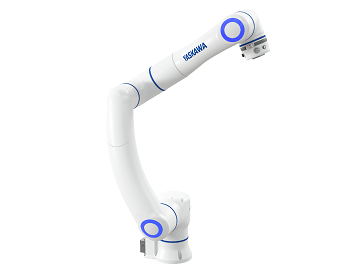
On Monday, Teradyne's Universal Robots unveiled Gen 7 at the IMTS tradeshow in Chicago, its seventh-generation cobot platform, and framed nearly every feature of it as an entry into what the company's own newsroom calls "physical AI deployment." The new CB7 Core controller, three new arms (the UR10g-1750, UR17g-1300, and UR18g-950, named for their payload and reach), and a redesigned tool flange all get the label. The same Monday, on the other side of the world, Yaskawa announced the MOTOMAN-HC12 from its headquarters in Kitakyushu, Japan: a 12-kilogram payload, 1,410-millimeter reach cobot whose entire pitch is a forearm shrunk from 275 millimeters in diameter to 170, a 38 percent reduction built for confined cells and shared workspaces. Yaskawa's own release does not mention artificial intelligence once.
Both are legitimate engineering releases from serious, decades-old manufacturers. Only one of them borrowed 2026's most valuable industrial adjective to describe it, and the borrowing is worth examining closely, because it is not free.
What "AI-Ready" Actually Means When You Read Past It
Universal Robots' own language is more careful than the headline framing suggests, and the care is the tell. The company describes Gen 7 as "out-of-the-box AI-ready," not AI-equipped. The new tool flange "enables the vision and sensing needed for AI models to run in real time with the robot," which is a sentence about wiring, not intelligence: it delivers data, power, and safety to the flange so a camera or force-torque sensor can be attached without extra cabling. The CB7 Core controller offers 40 percent more compute in a 30 percent smaller footprint and supports "edge-AI applications utilizing IPCs and external AI processing" through the new PolyScope X software layer. Every one of those upgrades is real and useful. None of them is an AI model. They are the interconnect, the compute headroom, and the safety compliance layer that some other company's AI model will eventually run on top of.
Jean-Pierre Hathout, president of the Teradyne Robotics Group, put it plainly in the same release: "The robots of the AI era must be advanced, not complicated." That is a statement about integration friction, not cognition. Gen 7 is a robot built to accept somebody else's intelligence more easily than its predecessors could. That is a genuinely useful generation of hardware. It is also, on the evidence in the release itself, a controller and connectivity refresh wearing a much bigger word.
Contrast that with what Yaskawa disclosed for the HC12. A forearm 38 percent thinner is not a trivial spec. It changes what a workcell layout can look like, how close a human can stand to the arm without triggering a safety stop, and whether the robot fits into a footprint that previously required a fence. That is exactly the kind of unglamorous mechanical problem, arm geometry, weight distribution, actuator packaging, that has limited how "collaborative" collaborative robots actually feel on a factory floor for a decade. Yaskawa chose to sell that achievement in purely mechanical terms. Nothing about the physics of a thinner arm required the word AI, and the company didn't reach for it anyway.
The Buzzword Has a Sponsor, and the Sponsor Has a List
Neither company arrived at this vocabulary by accident. NVIDIA has spent much of 2026 building "physical AI" into an industry-wide platform narrative, and its own newsroom names the specific companies it counts as partners: FANUC, ABB Robotics, Yaskawa, and KUKA, a group with a combined global install base the company puts at more than 2 million robots, integrating NVIDIA's Omniverse simulation libraries and Isaac frameworks into their commissioning tools, alongside Jetson modules for real-time edge inference. Jensen Huang's own framing of the campaign is unambiguous: "Physical AI has arrived," he said, adding that "every industrial company will become a robotics company."
Here is the detail that actually matters for reading this week's two press releases correctly: Yaskawa is on that list. The same company that shipped an entirely AI-free product announcement for the HC12 is, in a different context, one of NVIDIA's named physical-AI ecosystem partners. That is not a contradiction so much as a demonstration. "Physical AI" gets deployed when a company is selling a platform story, an ecosystem, a roadmap, a partnership, and gets dropped when a company is simply describing what shipped. Yaskawa used the term where it serves a platform narrative and skipped it where it would have oversold a mechanical redesign. Universal Robots used it everywhere, for a product launch that is, by its own most careful language, infrastructure for AI rather than AI itself.
That selective use is the actual signal. A term applied inconsistently by the same company, present in one announcement and absent in another covering comparably significant engineering, is functioning as a sales register, not a technical classification.
Why This Isn't Pedantry
It would be easy to wave this off as branding noise that doesn't change what a buyer gets. It changes exactly what a buyer should evaluate, and in the wrong direction if the label is taken at face value. A procurement team reading "physical AI" on a spec sheet and inferring the robot arrived with new cognitive capability is pricing the wrong thing. What actually shipped in Gen 7, the parts worth paying for on their own merits, are the controller compute increase, the reduced cabling complexity, and ISO 10218-1 safety compliance baked into the new software stack. Every one of those is a legitimate reason to prefer Gen 7 over an older UR generation. None of them requires believing the robot got smarter, because it didn't; the model that will eventually run on that hardware is still coming from somewhere else; the release itself names third-party application partners like Rocketfarm and Inbolt rather than an in-house UR model doing the reasoning.
The honest way to read a "physical AI" claim in 2026 is to ask which of three separate things it is actually describing: a new AI model that changes what the robot can perceive or decide; new physical infrastructure, sensors, compute, wiring, that makes it easier for someone else's model to run on the hardware; or a platform-ecosystem relationship, like Yaskawa's own NVIDIA partnership, that has nothing to do with the specific product in front of you. Gen 7 is almost entirely the second category dressed in the vocabulary of the first. The HC12 is a pure mechanical-engineering release that never claimed to be anything else, which is one reason it reads, oddly, as the more trustworthy of the two announcements this week even though it is the less ambitious one on paper.
What I Watch For Instead
Running a platform that tracks robot and manufacturer disclosures for a living means reading a lot of press releases that use "AI" as connective tissue between facts that don't need it. The releases worth taking at face value are the ones where the AI claim is falsifiable, a named model, a benchmark, a customer using it to do something the hardware alone could not, the way NVIDIA's own GR00T foundation-model releases at least specify what the model does and when it ships. The releases worth discounting are the ones where "AI" modifies a noun, AI-ready, AI era, AI deployment, without a verb attached to it: nothing in the sentence says what the AI actually does, because nothing new is doing anything yet.
Gen 7 and the HC12 will both sell well, on their real merits, to buyers who evaluate the mechanical and connectivity specifications underneath the marketing layer. The interesting question for next year is whether "physical AI" survives as a useful term at all once every cobot generational refresh, on both sides of this contrast, has been through a cycle of using it. A label that gets applied to a thinner arm's silence as readily as to a controller's sensor wiring has already stopped telling a buyer anything a spec sheet doesn't. Watch whether the vendors distinguishing themselves next are the ones still reaching for the word, or the ones who have quietly stopped needing it.
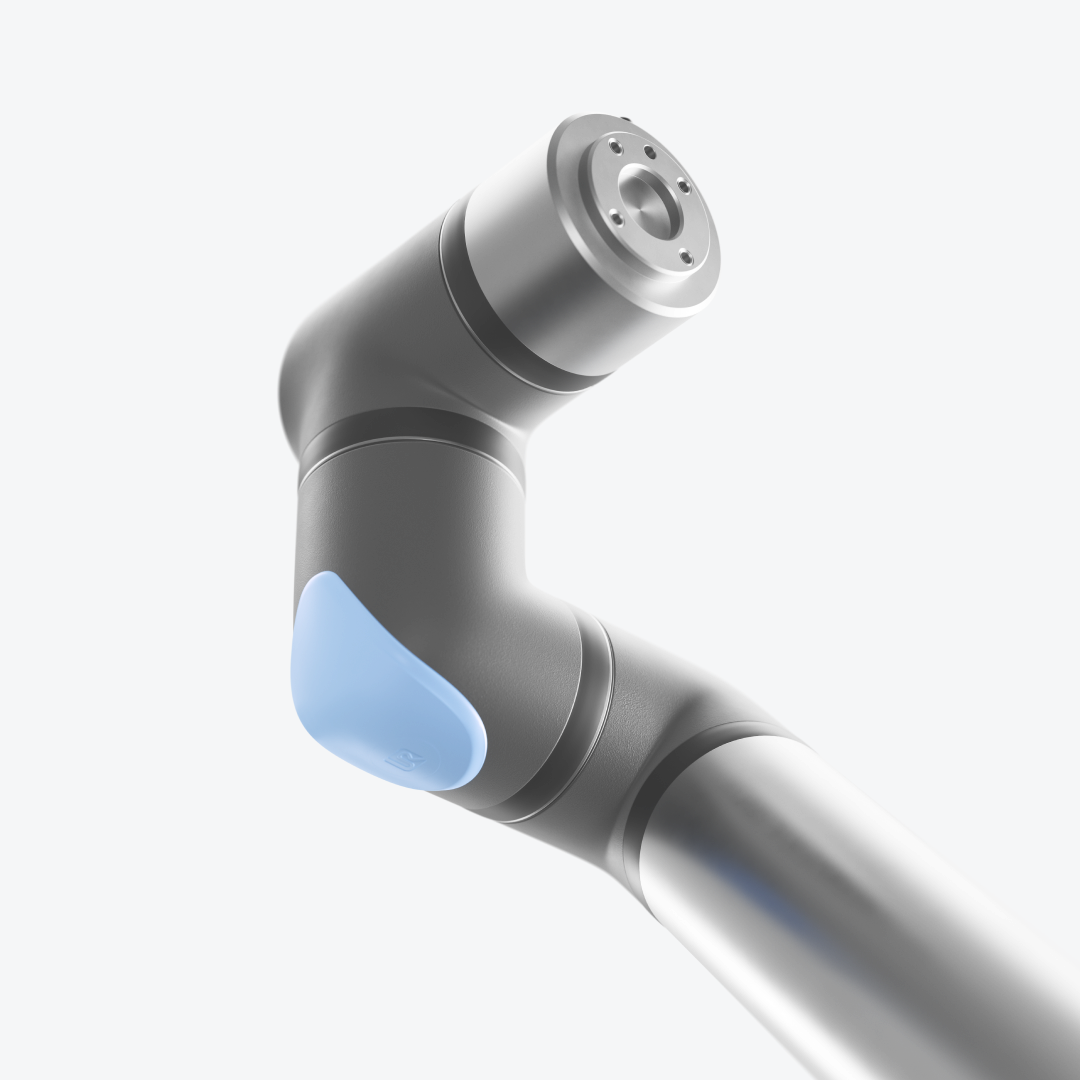
Hero image: Yaskawa MOTOMAN-HC12 collaborative robot, official product image from Yaskawa Electric Corporation.
Disclaimer: This article is for general information purposes only and does not constitute investment, legal, or procurement advice. Readers should verify details with primary sources before making business decisions.