
AI & Robotics
Our AI & Robotics in-depth articles
263 articles found • Page 15 of 22

Why Investors Are Betting Big on the Collaborative Robot Sector
Capital is flowing into collaborative robotics faster than the sector's modest revenue base would seem to justify. A private Chinese cobot maker just raised RMB 600 million (about USD 84 million), the listed pure play grew revenue 31.7 percent in 2025 yet still runs at a loss, and Western incumbent demand remains cyclical. In the closing analysis of our ten-part cobot series, we examine the verified market data behind the enthusiasm, map where the money moved in the first half of 2026, weigh the risks from tariffs to price erosion, and score the three ways investors can actually get exposure, so procurement leaders understand why their supplier market is crowded, subsidised, and unusually favourable to buyers.

Total Cost of Ownership: The Real Price of a Collaborative Robot
A complete financial picture of cobot ownership beyond the invoice, with all prices explicitly denominated (USD model; RMB and GBP anchors): integration and safety validation under ISO 10218-2:2025, training and wage time, maintenance and spare parts, downtime exposure, depreciation and end-of-life economics, assembled into an original three-scenario five-year total cost of ownership model showing why the sticker price is a minority of the real cost, set against the WAIC 2026 procurement wave.
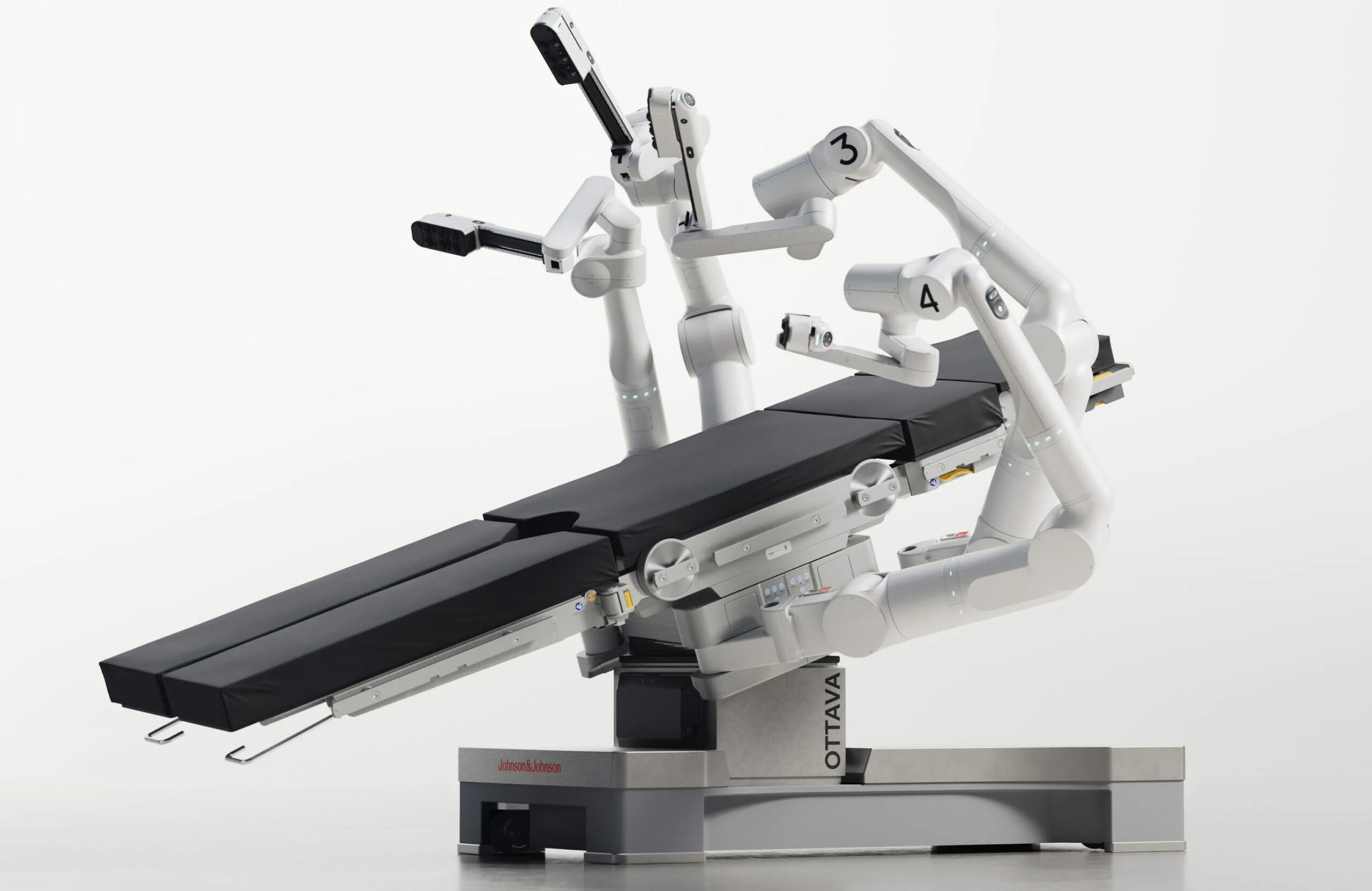
The Surgical Robotics Shakeout: A Bankruptcy, a Duopoly Test, and the Buyer's New Leverage
Surgical robotics just lost one of its most hyped startups to bankruptcy in the same week the premium market gained its first credible second supplier in a generation. This analysis maps the consolidation economics deciding who survives, China's parallel game, and a practical evaluation framework for hospitals entering the duopoly era.

The Buyer's Guide to Sourcing a Collaborative Robot
A practical procurement playbook for collaborative robots covering the specifications that separate suppliers, a seven-question due-diligence checklist, lead time and supply chain exposure, the 2025 rewrite of ISO 10218 and R15.06, a total cost of ownership preview, and an original five-dimension sourcing readiness matrix.
Future Trends: The Next 3 Years of Collaborative Robot Innovation
The next three years of cobot progress will be defined less by arm mechanics than by safer integration, perception, retasking, and bounded AI workflows. This buyer roadmap separates practical procurement priorities from research-stage claims.

The Global Battle for Collaborative Robot Market Share: China vs the West
An analytical review of China's rise in collaborative robotics, exploring how domestic supply chains, policy drivers, and scale are reshaping global procurement options and the competitive balance between Chinese, European, and Japanese manufacturers.

WAIC 2026: The Robot Stack Is the Product
WAIC 2026 revealed a robotics market whose most important product is no longer a single machine. The conference brought together task specific robot bodies, dexterous manipulation, sensing, batteries, control hardware, and embodied AI software as interdependent parts of a deployable stack. The industry is beginning to standardize the building blocks that can turn advanced robotics from bespoke engineering programs into repeatable industrial products.

Robotics Capital Shifts to Factory Integration
Capital allocation in advanced robotics is shifting from valuation stories to control of factory integration, software capability, and deployment operations. Hyundai's proposed ownership consolidation around Boston Dynamics and Agility Robotics' expansion of its physical AI capacity show that investors now value the operational systems required to make robots perform reliable work. The market is placing an execution premium on firms that can connect a robot platform to repeatable customer outcomes.

Physical AI Moves From Models to Data Factories
The main constraint in physical AI is shifting from algorithm design to the collection and validation of reliable real world interaction data. Recent releases in depth sensing, brain to robot interfaces, edge reasoning, and simulation show an industry constructing the data infrastructure required for capable embodied systems. The most durable technical advantage will come from the ability to capture, label, simulate, validate, and reuse physical experience at scale.

A Robot Subscription Is a Risk Contract
Robot as a Service is changing robotics from a hardware purchase into a recurring operating contract. Current deployments show that the monthly fee is only one part of the economics, alongside maintenance, local service, software, regulatory permission, uptime, and the remaining human work around a machine. The strongest RaaS offerings will be those that can price and operate this full risk stack without relying on unrealistic labor replacement claims.
Top 5 Collaborative Robot Manufacturers in 2026: Who Dominates and Who Is Gaining
The 2026 collaborative robot market does not have one undisputed leader because manufacturers disclose their performance on different bases. Some report cobot revenue, while larger automation groups combine collaborative and conventional robots. A credible ranking must therefore consider ecosystem strength, product breadth, service reach, geographic momentum, commercial scale, and disclosure quality, rather than comparing headline revenue alone.

The 2026 Price Benchmark for Collaborative Robots
This pricing guide separates factory average selling prices from arm and software packages so buyers can compare collaborative robot quotations on a consistent basis. It uses disclosed Chinese manufacturer data and a 2026 UK public contract to establish a practical evidence ladder, while explaining why headline price gaps often overstate true brand differences.