A Robot Subscription Is a Risk Contract
Robot as a Service is changing robotics from a hardware purchase into a recurring operating contract. Current deployments show that the monthly fee is only one part of the economics, alongside maintenance, local service, software, regulatory permission, uptime, and the remaining human work around a machine. The strongest RaaS offerings will be those that can price and operate this full risk stack without relying on unrealistic labor replacement claims.
Robotics buyers want predictable operating cost while robot providers need sufficient recurring revenue to fund fleets, service teams, and continuous software improvement. The market reality is that a low monthly price does not prove a good business model for either party. The structural shift is that RaaS transfers a growing share of the technical and financial risk from the customer to the supplier. The implication is that commercial success will be decided by utilization, service coverage, and task fit long before it is decided by the headline subscription fee.
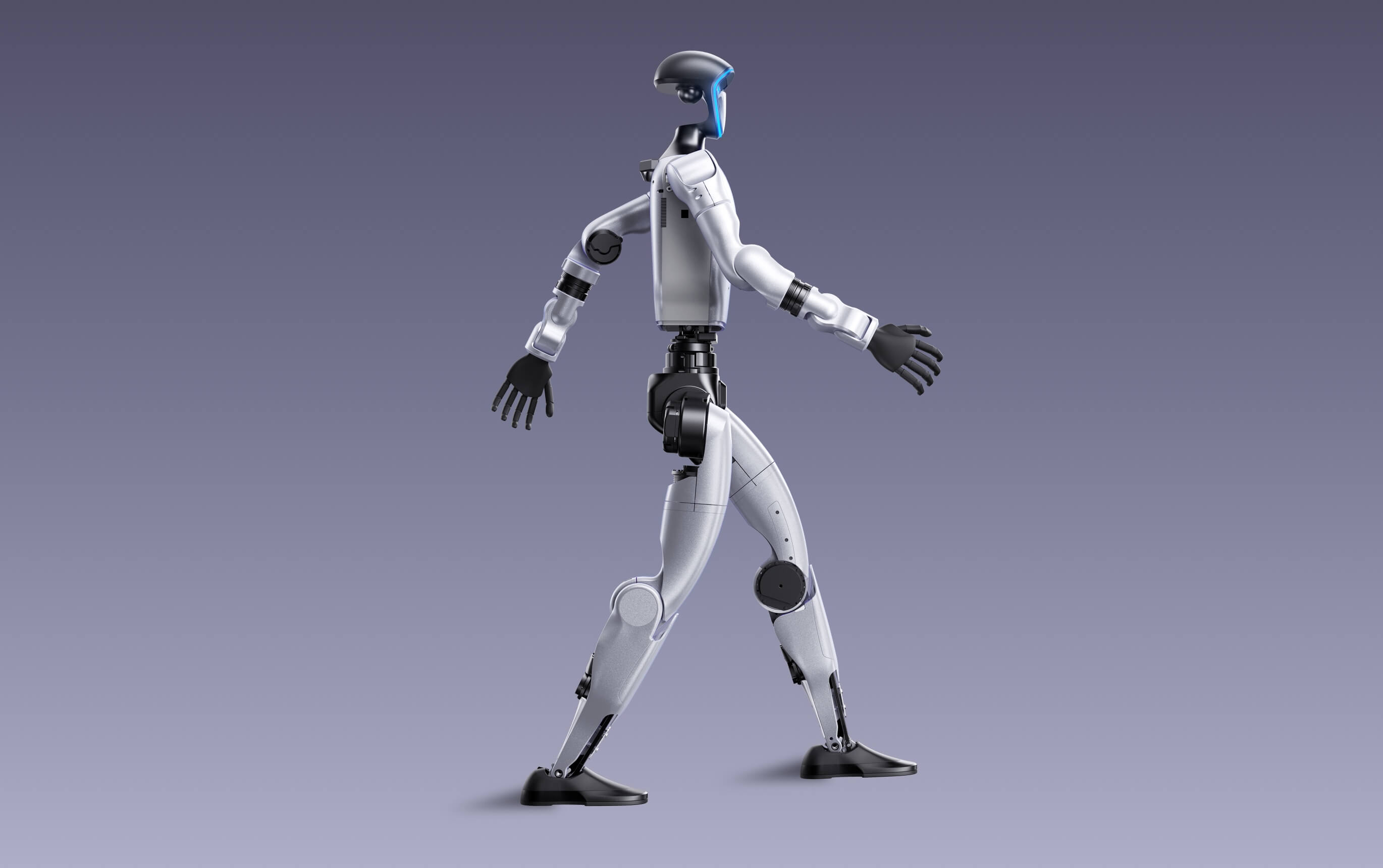
The following robotic company can be a case study to draw lessons. AGIBOT is headquartered in Shanghai and develops embodied AI systems across humanoids, quadrupeds, dexterous platforms, and commercial cleaning robots. Its Australia and New Zealand partner conference established a local RaaS network that combines robot capability with local logistics, service, technical support, customer service, and deployment operations. 1X, a Palo Alto, California developer of home humanoid robots, provides a separate consumer subscription price anchor for the same broader shift from ownership to recurring service. This makes the commercial model visible. The customer is not paying only for a machine. The customer is paying for an operating commitment that must survive a real industrial environment.
The Subscription Transfers More Than the Machine
A conventional equipment purchase makes the customer responsible for much of the risk after delivery. The buyer pays the capital cost, owns the asset, decides how to maintain it, absorbs residual value risk, and often pays separately for support or upgrades. A RaaS contract reverses many of those responsibilities. The provider retains the hardware, packages software and maintenance into a recurring fee, and promises a level of ongoing service.
That reversal is attractive to buyers because robotics technology changes quickly. A facility manager may hesitate to make a large purchase when the next generation of sensors, batteries, or software could arrive before the equipment is fully depreciated. A subscription reduces that fear. It can allow the buyer to experiment with automation while preserving cash for the rest of the operation.
The transfer also creates a demanding financial burden for the provider. A RaaS company must finance the robot before it has earned enough recurring revenue to pay back the asset. It must maintain spare parts, support staff, remote monitoring, software infrastructure, insurance, and field service capacity. It may need to absorb travel, training, charging equipment, site integration, and remediation when a deployment does not perform as expected. The monthly payment is therefore a compressed expression of a much larger operational system.
AGIBOT’s partner model in Australia and New Zealand demonstrates why local capability matters. The planned application solutions target mining, commercial cleaning, research and education, and cultural entertainment. These sectors vary in physical demands, service expectations, and tolerance for downtime. A machine in a research setting can be paused for adjustment. A machine expected to support a cleaning schedule or an industrial workflow must be restored quickly when something goes wrong. The provider’s partner network becomes part of the product.
The Price Anchor Is Only a Starting Point
Transparent robotics pricing is beginning to give buyers useful anchors. 1X, a Palo Alto, California developer of home humanoid robots, currently presents two paths for its NEO platform: $20,000 for early access ownership or a $499 monthly subscription. The company states that United States deliveries start in 2026. That price is important because it makes a sophisticated form of mobile manipulation legible as a monthly household expense rather than an abstract technology promise.
The consumer price should not be used as an industrial benchmark. A home robot and a commercial fleet have different duties, utilization levels, service requirements, insurance exposures, and performance thresholds. But the comparison matters psychologically. As more robotics companies publish subscription terms, customers will ask why a commercial machine costs more and what additional value the provider is delivering. A company that cannot explain its service, uptime, and support model will struggle to defend its price.
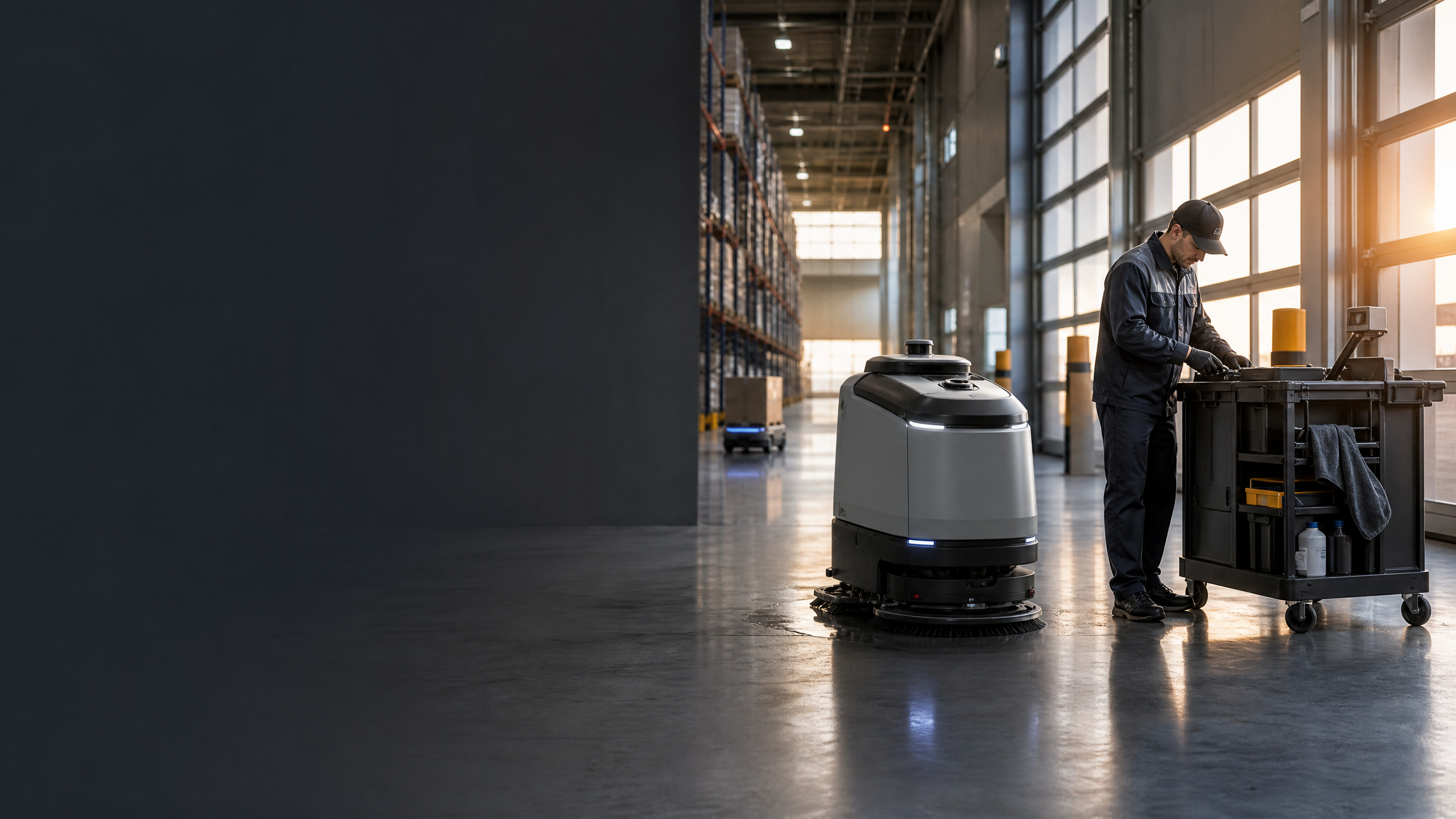
A commercial cleaning vendor currently lists a RaaS subscription of approximately $1,200 per month, or $14,400 annually. That example is not a market wide rate and should not be treated as a universal benchmark. It does, however, show the basic logic of task specific RaaS. A customer can compare a recurring cleaning automation payment against a defined portion of the labor cost required to cover a repetitive floor care task. The provider can retain ownership, update the software, and build a recurring relationship rather than depending on a one time equipment sale.
The important distinction is between a price anchor and a complete economic case. A low subscription price may signal efficient manufacturing, a narrow task scope, an aggressive growth strategy, or a subsidy funded customer acquisition program. It does not automatically show positive unit economics. Buyers should ask what the price includes, how much onsite support is assumed, who carries liability, what happens during downtime, and what performance threshold triggers a service response.
Utilization Is the Silent Variable
The most important RaaS metric is often utilization. A robot that performs useful work for many hours across a stable set of tasks can spread its capital and service costs over a larger amount of output. A robot that sits idle, waits for a human supervisor, or is limited to a small portion of a shift cannot.
This is why task selection matters more than broad claims of general intelligence. A commercial floor care robot may operate a consistent route in a predictable environment. A logistics robot may move material between fixed points. A delivery robot may execute repeated routes in a tightly mapped zone. In each case, the provider can estimate energy use, wear, maintenance intervals, teleoperation needs, and service load with greater confidence.
The boundary of the task matters as much as its automation level. A human worker can often move from floor care to spill response, customer assistance, stocking, and exception handling. A robot may perform the first task with excellent consistency but require a human to handle the other four. A responsible commercial analysis therefore compares a subscription with the cost of a defined work package, not with the total wage of a person who performs many kinds of work.
This is also why workforce framing matters. The strongest deployments do not need an implausible claim that one machine replaces one full time employee. They need a credible explanation of how the machine removes a repeatable burden, increases consistency, extends coverage, or allows human staff to focus on higher value tasks. The economics improve when the robot’s output is measurable and the human work that remains is clearly defined.
Municipal Rules Set a Revenue Ceiling
Fleet economics can be constrained before the first customer order is completed. The District Department of Transportation in Washington, D.C. issued personal delivery device permits to two operators during the week. For the first three months, each may operate within zones of up to one square mile with a maximum fleet of 25 devices. Future expansion depends on compliance with the permit terms.
This is a safety and public access rule, but it is also a financial variable. A provider must establish local maintenance, charging, remote support, and operating procedures even when the permitted fleet is small. The revenue available from the first 25 machines has to support more than the robots themselves. It has to support the local service footprint required to make the operation acceptable to customers and regulators.
The permit can also improve the commercial model over time. A bounded launch allows a provider to measure performance, pedestrian interactions, maintenance demand, and customer adoption in a controlled area. If the operator meets the conditions for expansion, it gains the evidence needed to deploy a larger fleet with lower uncertainty. Regulation does not simply slow robotics. It creates a staged route by which a city can decide whether fleet scale is warranted.
The commercial lesson is that RaaS providers must build political and operational capacity alongside technology. A robot fleet cannot generate durable revenue if it loses permission to operate, fails to serve pedestrians safely, or cannot demonstrate a service response when an incident occurs. The city is part of the business model.
The Labor Crossover Must Be Task Specific
A neutral wage reference helps frame the buyer’s comparison. The United States Bureau of Labor Statistics lists median pay for hand laborers and material movers at $37,680 annually, or $18.12 per hour, based on May 2024 data. That figure is useful as a gross wage baseline. It is not a fully loaded employer cost, a janitorial wage, or a statement that a robot can assume an entire role.
The proper calculation starts with a task. How many hours does the task require? When must it be performed? Does it need a human present for quality assurance, recovery, or safety? What costs remain when the robot is deployed? Is the customer gaining coverage, consistency, capacity, or direct labor savings? Only after those questions are answered can a subscription price be compared with human cost.
This approach is more rigorous than a promotional return on investment claim. It recognizes that RaaS is a risk contract. The buyer pays to reduce technology risk, capital risk, and operating variability. The provider accepts responsibility for a portion of the equipment and service risk. The contract succeeds when both sides understand the limits of the automated task and the cost of managing the exceptions.
A $14,400 annual subscription is 38.2 percent of the $37,680 annual median pay baseline.
This analysis synthesizes company statements and public market activity.