
AI & Robotics
Our AI & Robotics in-depth articles
263 articles found • Page 13 of 22

The Macro View: The Investment Thesis Behind AMR and AGVs
Zebra Technologies divested its robotics automation business in April 2026 for cash and an equity stake. Honeywell Technologies completed the all-cash sale of its warehouse automation business on 27 July, stating in its own release that the sale sharpens it as a pure-play automation company. A major industrial concluded that warehouse automation does not belong inside a pure-play automation portfolio. Post 10 of our AMR and AGV series tests seven pillars of the conventional investment case against official sources only, meaning national statistical agencies, official federations, industry association releases, listed-company disclosure and primary regulatory instruments. Two pillars hold: physical adoption, with a warehousing and logistics installation category up 41 percent, and the service annuity, now larger than new machine revenue at KION. Four are contradicted, including growth that is not converting into vendor revenue, where North American orders held flat in units while order value fell 6.4 percent. One cannot be tested from official sources at all, and the article says so rather than substituting a commercial estimate. The article deliberately asserts no market size, because no official source publishes one.
Beyond the Invoice: Calculating the True Cost of an AMR and AGV
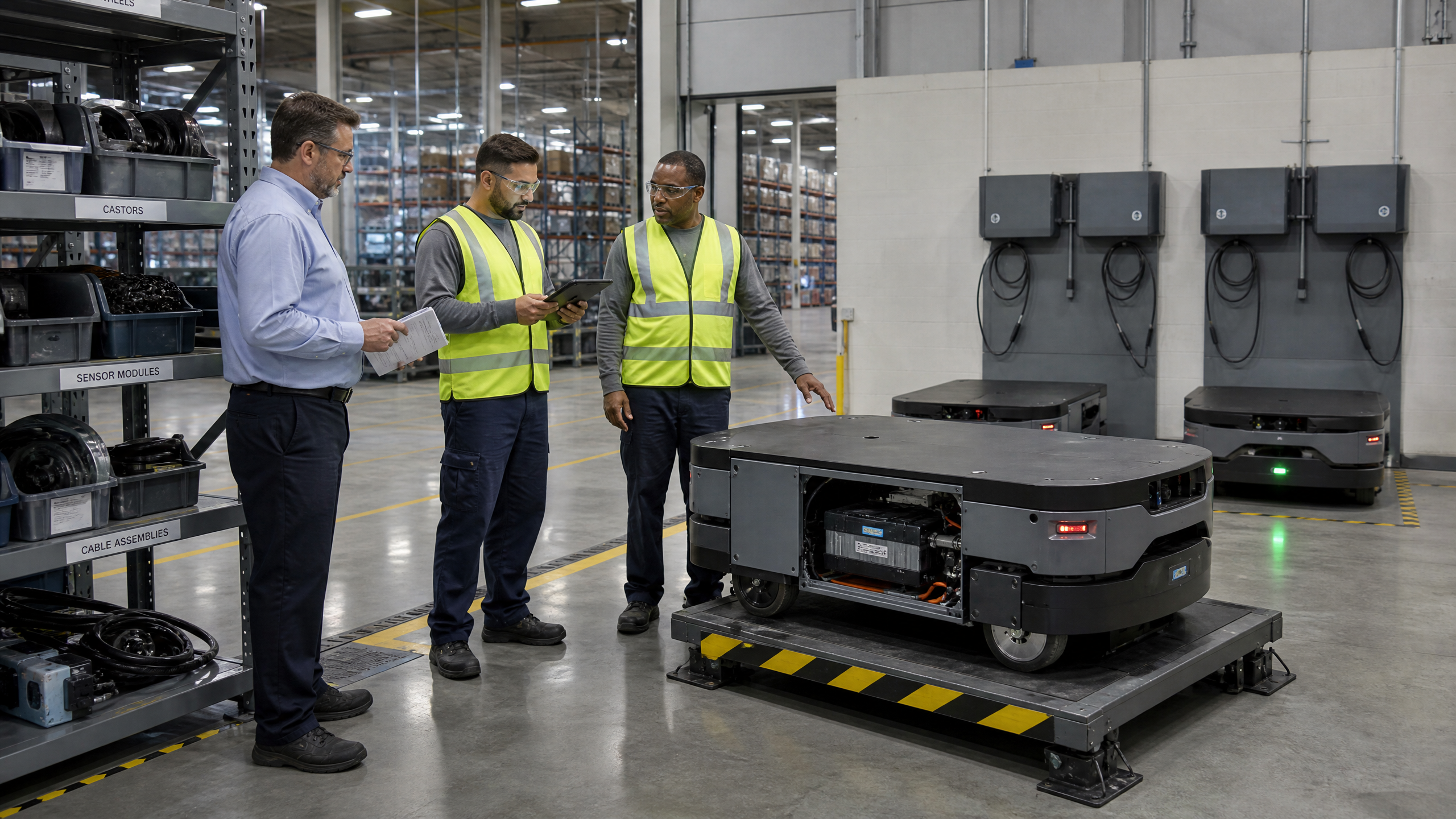
In the first half of 2026 a listed intralogistics group earned more from servicing its installed fleet than from selling new machines, while North American robot order value per unit declined. Equipment pricing is under pressure and the service annuity is not, which means the buyer who negotiates hardest on the invoice is contesting the part of the relationship the vendor most willingly concedes. Post 9 of our AMR and AGV series introduces the ARPI Cost Certainty Ladder, which classifies each lifetime cost line not by size but by how its number becomes knowable, from contracted through quoted, derivable and contingent to genuinely unknowable. Applying it reorders the negotiation: derivable lines should be calculated rather than requested, and contingent and unknowable lines require contract structure rather than a better forecast. The article declines to publish a downtime cost per hour, a maintenance percentage or a battery replacement figure, because twenty-seven candidate sources for those numbers proved inadmissible, and it explains what to require instead.
Procuring an AMR and AGV: Key Specs and Supplier Questions
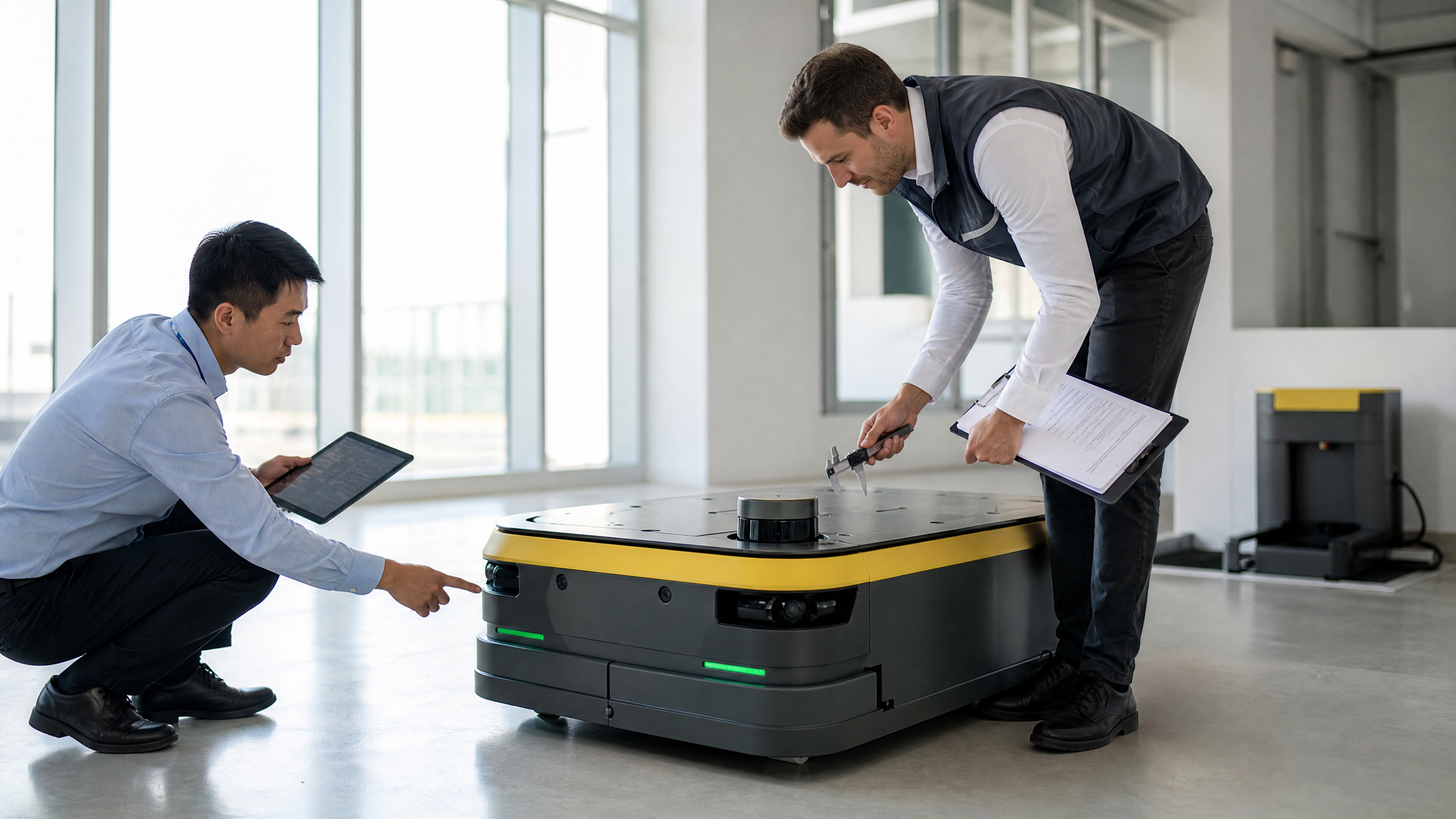
There is a specification error sitting in live tender documents that no commercial review will catch, because it looks like diligence: a requirement to conform to ISO 3691-4:2020, an edition the international standards body records as withdrawn. Post 8 of our AMR and AGV series introduces the ARPI Specification Verifiability Test, which scores each specification line on four binary attributes before it is allowed into a comparison matrix, and finds that navigation accuracy, interoperability support and certification claims are routinely non-comparable as published. It pairs that with the Obligation Allocation Matrix, which maps every compliance obligation to the party that carries it and identifies the most consequential procurement development of 2026: the completion of the three-part American national standard series, whose Part 3 places a conformity obligation on the operating company. The article also documents why the primary vehicle safety standard excludes power sources entirely, and why trade measures now make landed cost contingent rather than fixed.
What to Expect from the Next Generation of AMR and AGVs
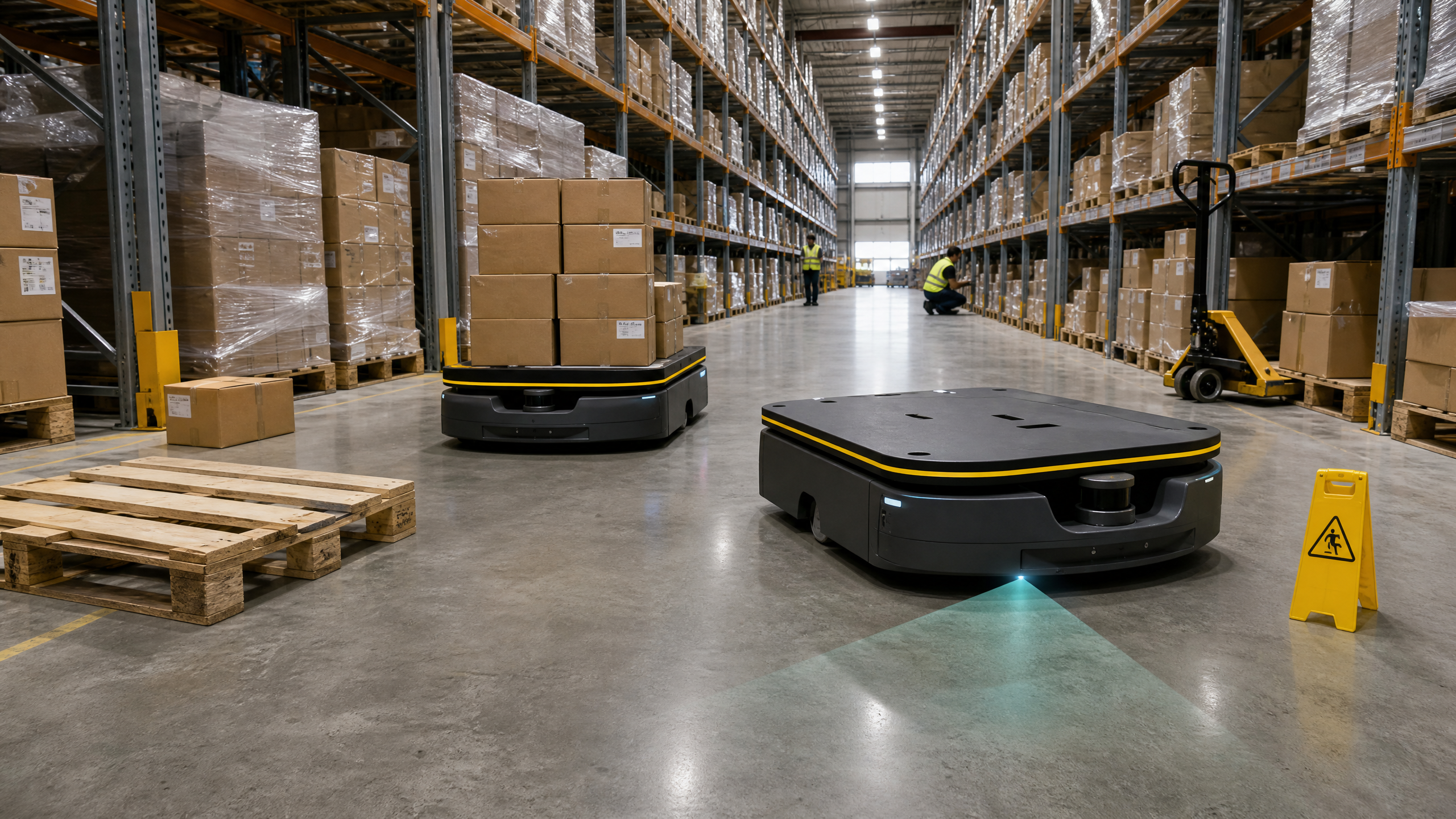
In October 2025 Amazon introduced Blue Jay, a next-generation warehouse system already handling roughly three quarters of its stored item types. Four months later the project was halted and a spokesperson reclassified it as a prototype. The operator of more than a million warehouse robots still could not distinguish a system that worked from a system that was ready until it ran in a live building. Post 7 of our AMR and AGV series introduces the ARPI Capability Readiness Gate Model, which separates the four evidentiary states that vendor roadmaps collapse into the single word can, and pairs it with a Component Cost Pass-Through Test explaining why falling battery, sensor and compute prices do not translate proportionally into a cheaper deployed robot. Peer-reviewed evidence on generalisation failure, the Clopper-Pearson statistics behind pilot success rates, and the move to version 3.0.0 of the VDA 5050 interoperability specification give buyers concrete grounds for specifying, timing and pricing the next generation.
China's Humanoid Robot Industry Reaches 100,000 Units but the Real Competition Has Not Yet Begun
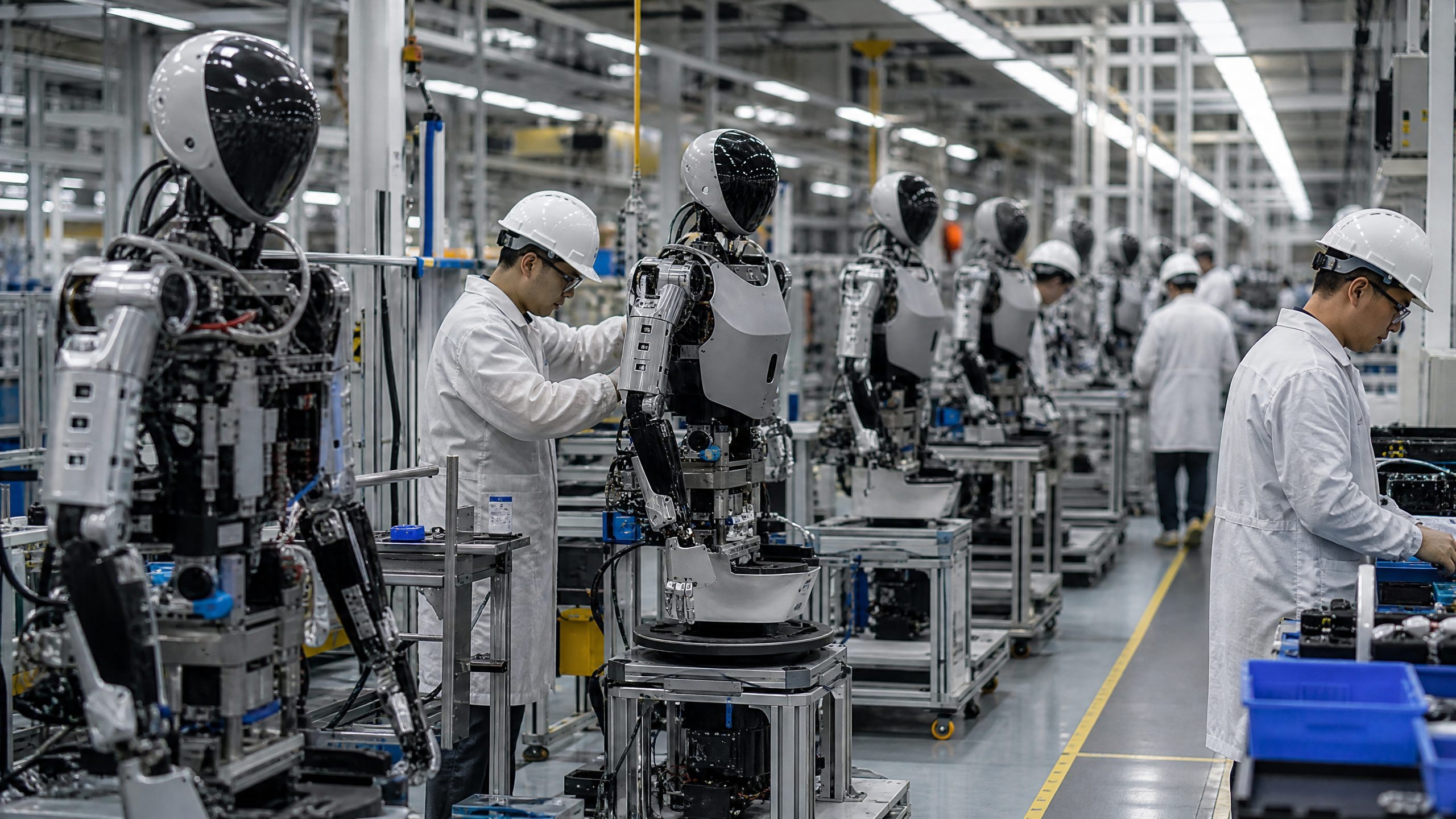
China's humanoid robot industry is on track to produce 100,000 units in 2026, a supply-side achievement that masks a more complex reality: the gap between production milestones and sustainable commercial deployment. A 36Kr analysis of five companies at WAIC 2026 reveals that most current humanoid robot companies lack a genuine moat, and that the real competition -- for data flywheels, AI brain capability, and deployment scale -- has barely begun.

When AI Labs Start Buying Robot Companies
Google, OpenAI, DeepMind, and Anthropic are all pursuing embodied AI through different mechanisms. The convergence reveals that inference alone cannot close the sim-to-real gap, and the translation layer between language models and physical robots is the next platform prize.
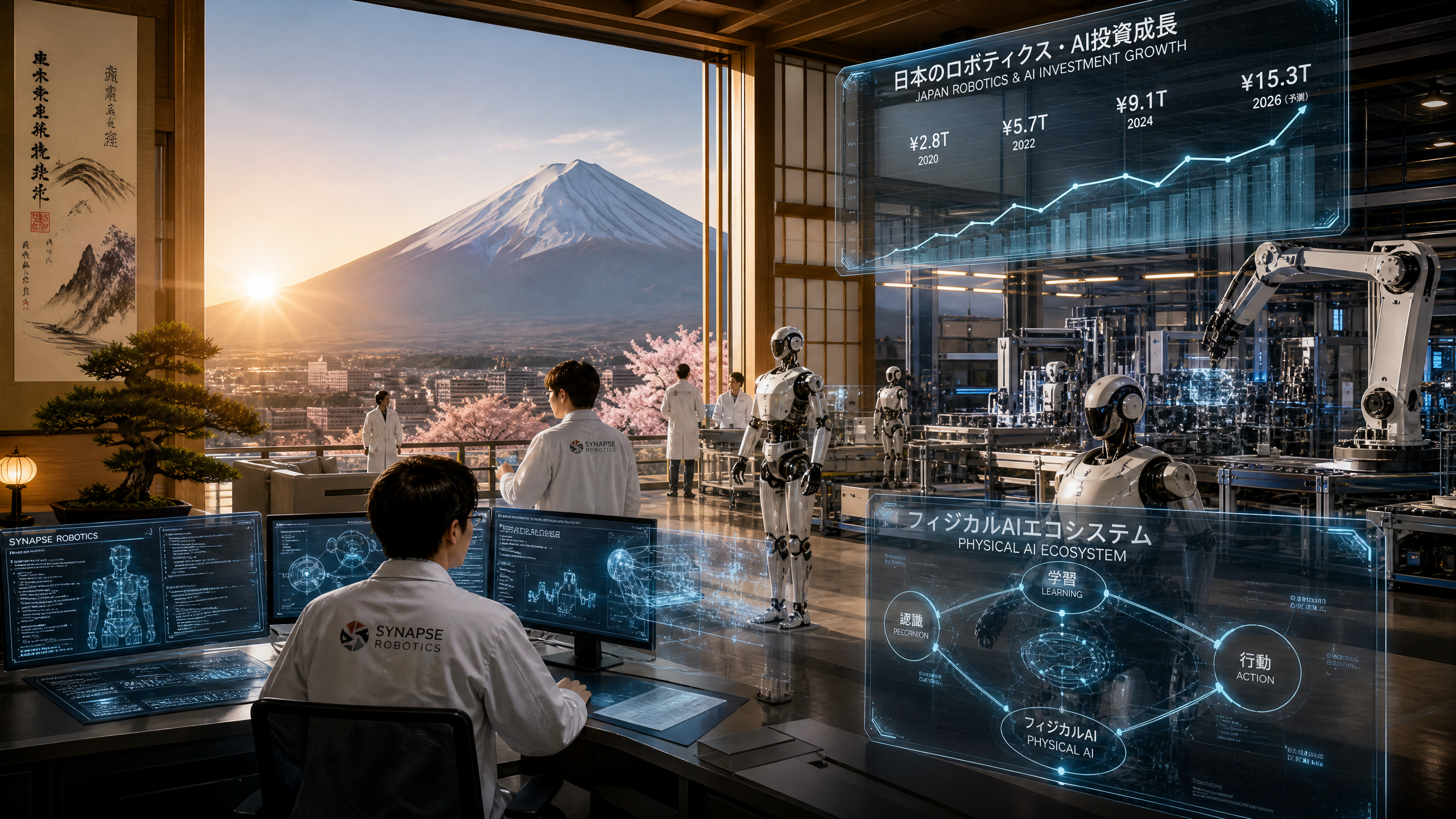
NTT and Toyota Lead Record Japan Capex
A Nikkei survey of 700+ Japanese firms shows fiscal 2026 capex at JPY 35.67 trillion, up 14.2 percent and an all-time high. NTT and Toyota lead the surge into data centres, AI factories, and chipmaking.
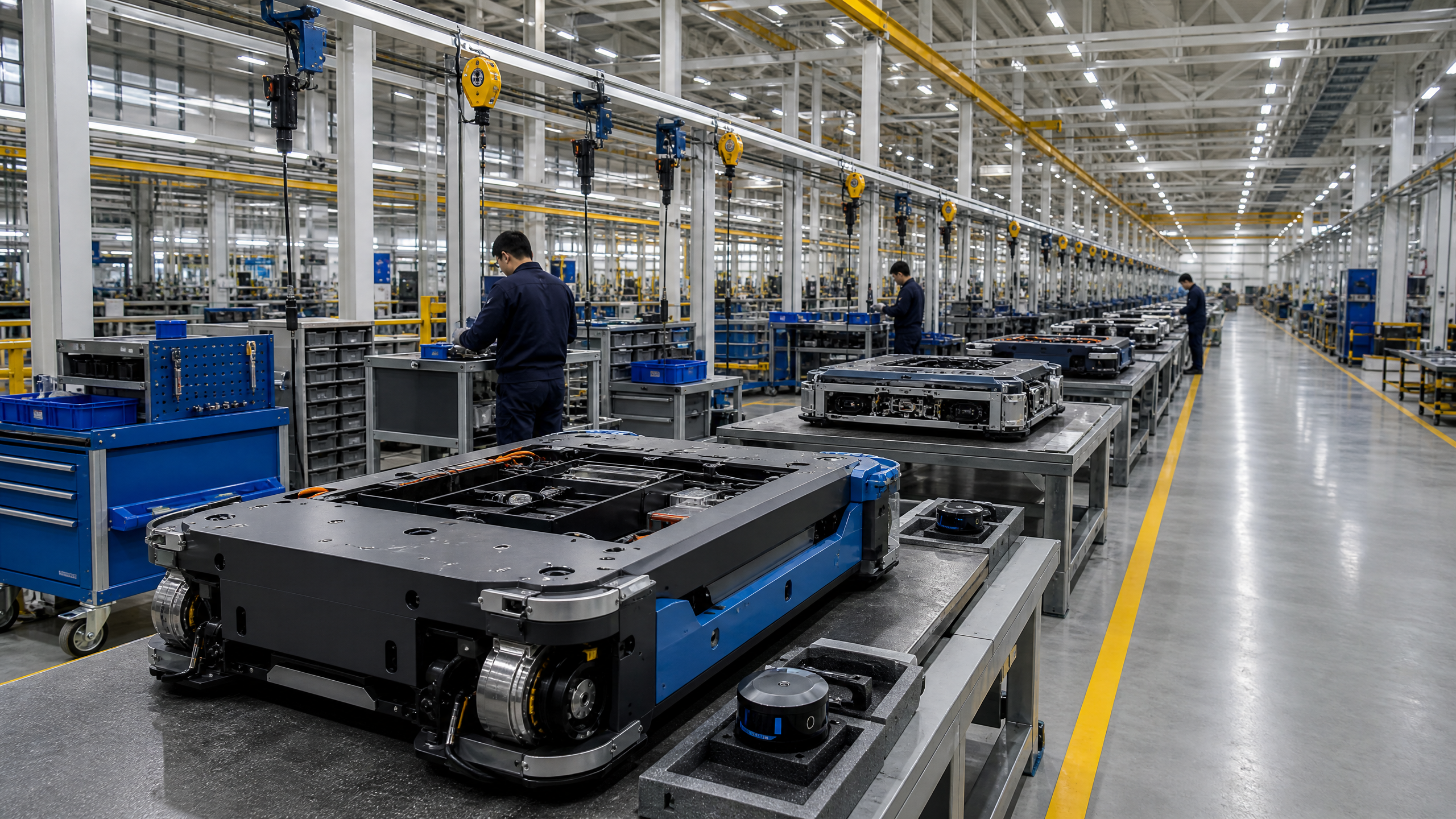
Mapping the Shift in Global AMR and AGV Production
The International Federation of Robotics puts Asia-Pacific at almost 84 percent of intralogistics mobile robot origin. Interact Analysis puts China at 36 percent of mobile robot revenue, falling towards 27 percent by 2030. Both figures are defensible, and the gap between them is not a measurement error but the shape of the industry. Post 6 of our AMR and AGV series introduces the ARPI Production Leadership Layer Model, a five-layer decomposition of the value chain showing that leadership migrates down the stack: Chinese dominance is decisive at vehicle assembly, contested at safety certification and precision components beneath, and weakest at autonomy compute and systems integration above. With China now a net exporter of industrial robots, a pending Section 232 determination, and a rare earth control suspension expiring 10 November 2026, the analysis converts manufacturing geography into five distinct procurement risk types and the supplier questions that surface each one.

Weekly Robot Economics Wrap-Up: Regulation Sets the Price
The commercial tension in robotics has shifted from the cost of the hardware to the cost of the permission to operate it. With airlines banning humanoids over battery risks and Zoox securing a landmark federal exemption for its robotaxis, the regulatory layer is now the primary determinant of deployment economics.

The Hardware Reality Check
The proliferation of robotic foundation models has exposed the physical limitations of the hardware they control. With a teleoperated humanoid performing surgery and a high-profile stage collapse at Computex, the technical focus has shifted from artificial intelligence reasoning to actuation, simulation transfer, and raw electromechanical reliability.

Global Exhibitions & Ecosystem
The exhibition circuit has transformed from a venue for speculative demonstrations into a hard procurement battleground. With IFA Berlin announcing a dedicated humanoid catwalk and Computex Taipei exposing the friction between silicon ambition and physical reliability, convenings are now the primary mechanism for supply chain allocation.

Weekly Robotics Funding Wrap-Up: Capital Moves to Infrastructure
The week ending August 1, 2026, marked a structural shift in robotics financing as infrastructure-scale capital eclipsed traditional venture rounds. With an 845 million dollar acquisition by Procore and a 1 billion dollar Nvidia commitment in Korea, the sector's financial center of gravity has moved from startup deployment to national and industrial infrastructure.