When AI Labs Start Buying Robot Companies
Google, OpenAI, DeepMind, and Anthropic are all pursuing embodied AI through different mechanisms. The convergence reveals that inference alone cannot close the sim-to-real gap, and the translation layer between language models and physical robots is the next platform prize.
Anthropic tried to buy Physical Intelligence. The talks happened in spring 2026. They did not produce a deal. But the attempt, confirmed by The Information and Bloomberg, reveals something more important than any single transaction. The company that makes Claude, one of the world's most capable language models, concluded that it needs to own the software that translates language understanding into physical robot control. It concluded that building that software internally would take too long. And it concluded that the fastest path was to acquire a company that had already solved the problem.
Anthropic is not alone in that conclusion. Every major foundation-model company has reached the same place through a different door. The pattern is now unmistakable. The language-model industry is vertically integrating into embodied AI because inference alone, no matter how sophisticated, cannot make a robot pick up a cup reliably in a kitchen it has never seen.
The Evidence Chain
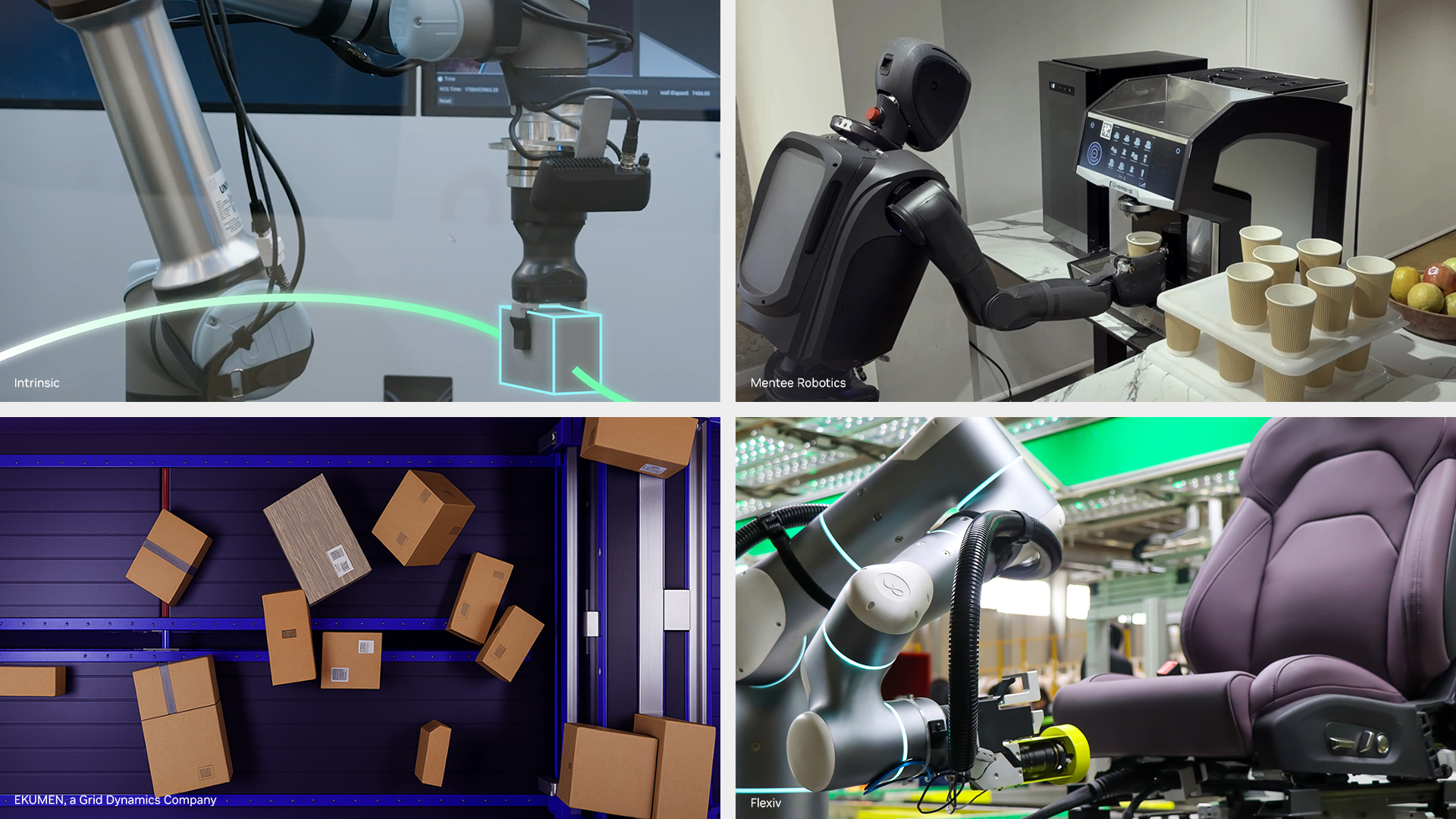
Google was first. In 2021, it created Intrinsic, an internal subsidiary dedicated to building robot software. The idea was that Google's AI capabilities could be applied directly to industrial robotics. The subsidiary operated for three years. It hired hundreds of engineers. It spent hundreds of millions of dollars. It shut down in 2024 without shipping a commercial product. The failure was not a failure of talent or funding. It was a failure of approach. Building robot intelligence from scratch inside a company whose core competency is search and advertising proved harder than the leadership expected.
DeepMind took a different path. Rather than creating a separate subsidiary, it embedded robotics research inside its existing AI research organisation. The result, announced on July 30, is Gemini Robotics 2. This is a foundation model specifically designed to control physical robots with what DeepMind calls "whole-body intelligence." It processes visual input, proprioceptive feedback, and language instructions simultaneously and outputs motor commands that coordinate an entire robot body. The model is not a separate product from Gemini. It is Gemini extended into the physical world. DeepMind's bet is that the same architecture that processes text and images can process torque and force if trained on the right data.
OpenAI chose investment over integration. It put money into Physical Intelligence without attempting to build robotics capabilities in-house. The investment gives OpenAI access to PI's technology through a commercial relationship rather than an employment one. It is the lightest-touch approach in the group. OpenAI gets optionality without operational burden. If PI succeeds, OpenAI benefits as a shareholder. If PI fails, OpenAI has not diverted engineering resources from its core language-model work.
Anthropic chose the heaviest approach short of building from scratch. It tried to acquire PI outright. That would have given it full ownership of the translation layer between language models and physical robots. The acquisition failed, at least for now. But the attempt tells us that Anthropic's leadership believes the translation layer is strategically critical, that it cannot be replicated quickly internally, and that the price of acquisition is worth paying.
The Sim-to-Real Gap Explained
The reason all four companies are converging on embodied AI is a single technical problem that none of them has solved from their existing position. A language model can understand the instruction "pick up the red cup and place it on the shelf." It can decompose that instruction into sub-tasks. It can reason about which cup is red, where the shelf is, and what sequence of actions is required. But it cannot generate the precise motor commands that close a gripper around a ceramic cylinder without crushing it, lift it without spilling its contents, and place it on a surface without tipping it over.
That gap between understanding and execution is called the sim-to-real problem. In simulation, the gap does not exist. A simulated robot can pick up a simulated cup with perfect accuracy because the physics engine provides exact information about every surface, every force, and every contact point. In reality, surfaces are uneven. Lighting changes. Friction varies. The cup is wet. The shelf is not level. The gripper's rubber pads have worn unevenly. Each of these real-world variations introduces errors that compound across the sequence of movements.
Physical Intelligence's entire business is building software that closes this gap. Its models learn from real-world interaction data, not just simulation. They adapt to novel environments without retraining. They handle the uncertainty and variability that simulation cannot replicate. That is why Anthropic wanted to buy the company. Not because PI has a better language model. Anthropic's own language model is among the best in the world. But because PI has something Anthropic does not have and cannot build quickly. It has the translation layer.
The Platform Economics
The strategic logic becomes clearer when viewed through the lens of platform economics. In the mobile era, the platform owners were Apple and Google. They controlled the operating systems that sat between hardware and applications. Every app developer paid them a tax. Every hardware maker depended on their software. The platform layer captured the majority of the industry's profits.
In the embodied AI era, the equivalent platform layer is the translation software between foundation models and physical robots. Whoever owns that layer can charge both the model providers above and the hardware makers below. A robot manufacturer that wants its machine to understand natural language instructions needs access to the translation layer. A foundation-model company that wants its model to control physical robots needs access to the translation layer. The company that owns both sides of that interface controls the industry's chokepoint.
Physical Intelligence is building that layer as an independent company. Its independence is what makes it valuable. It can sell to any model provider and any hardware maker. It is not locked into a single ecosystem. Anthropic's acquisition attempt was an effort to end that independence, to capture the platform layer before it becomes too expensive or too entrenched to acquire. PI's refusal suggests that its leadership believes the standalone platform position is more valuable than any acquisition price currently on offer.
The Counterargument
There is a credible case that vertical integration is unnecessary. Foundation models are improving rapidly. Each generation closes more of the sim-to-real gap through better reasoning, better world models, and better physical understanding. It is possible that within two or three generations, a language model will be able to generate reliable motor commands without a dedicated translation layer. If that happens, the entire embodied AI middleware category becomes redundant. Physical Intelligence's software becomes unnecessary. The acquisition talks become a footnote.
DeepMind's Gemini Robotics 2 is the strongest evidence for this counterargument. It attempts to solve the problem end-to-end within a single model architecture rather than through a separate translation layer. If Gemini Robotics 2 works at production quality, it proves that the middleware approach is a temporary solution to a temporary problem. The foundation model can do everything itself once it is large enough and trained on enough physical-interaction data.
But "if" is doing a lot of work in that sentence. Gemini Robotics 2 was announced on July 30. It has not been deployed at scale in commercial settings. Its performance in controlled demonstrations does not guarantee performance in the uncontrolled environments where real robots operate. The sim-to-real gap has resisted end-to-end solutions for a decade. It may continue to resist them. The safest bet for a company that needs embodied AI capabilities today is to acquire or partner with a company that has already demonstrated reliable real-world performance. That is exactly what Anthropic tried to do.
The Investment Implication
The convergence of four major AI companies on embodied AI through four different mechanisms tells investors something specific. The market believes that physical robot control is the next major capability frontier after language, code, and image generation. The companies that solve it will capture a new revenue stream that does not exist today. The companies that fail to solve it will be locked out of the physical world while their competitors operate in it.
The diversity of approaches also tells investors that no one knows which approach will win. Google's internal build failed. DeepMind's integrated model is unproven at scale. OpenAI's investment is passive. Anthropic's acquisition attempt was rebuffed. Each failure or partial success narrows the solution space. But the solution space is still wide. The company that eventually owns the embodied AI platform layer may not yet exist. Or it may be Physical Intelligence, operating independently and selling to everyone. Or it may be DeepMind, proving that end-to-end models make middleware obsolete. The uncertainty is the opportunity.
What is certain is that the labs have decided the question matters. Eighteen months ago, embodied AI was a research curiosity that attracted academic interest but not corporate capital. Today it attracts billion-dollar acquisition offers, dedicated product launches from the world's largest AI companies, and a competitive intensity that suggests the participants believe the prize is enormous. They may all be wrong. But they are rarely all wrong at the same time about the same thing.
Disclaimer: This article is for informational purposes only and does not constitute investment advice, endorsement, or recommendation of any company, product, or technology mentioned.