How a Chinese Robotics Startup Won Europe's Biggest Warehouse Deal
Hai Robotics is installing 1,500 climbing robots inside a Dutch fashion retailer's fulfillment center, the largest rack-climbing robot deployment on record and a signal that Chinese vendors now win Europe's flagship automation contracts.

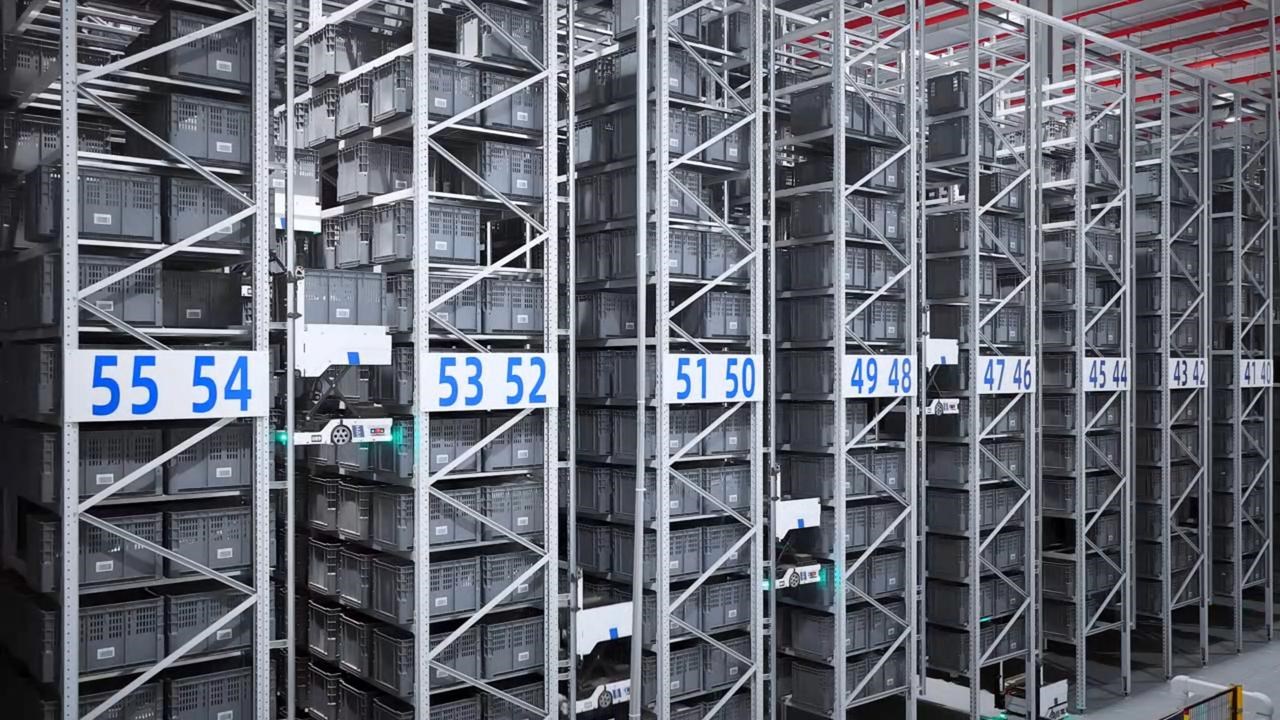
A European fashion retailer is about to run the largest single deployment of rack-climbing warehouse robots anywhere in the world, and the company building it is not a European or American automation incumbent but Hai Robotics, a Shenzhen-founded company that did not exist before 2016. The deal, disclosed September 8, places more than 1,500 of Hai Robotics' HaiPick Climb robots inside a 30,000 square meter fulfillment center in Hoofddorp, Netherlands, built to hold 1.2 million double-deep storage locations and move more than 24,000 totes an hour. It is a useful data point for a question that has been building quietly across European logistics procurement for two years: whether the continent's largest automation contracts are starting to default to Chinese suppliers, and if so, why.
Hai Robotics builds what the industry calls automated case-handling mobile robots, compact machines that climb vertical racking to retrieve totes and bring them to a picking station, an approach designed to retrofit into existing warehouse buildings rather than require the kind of purpose-built automated structure that competing technologies demand. The company's HaiPick Systems combine the climbing robots, orchestration software, and compatible racking into a single package, and it has grown from zero to what it now describes as more than 10,000 robots deployed across global customer projects in under a decade, a growth rate that outpaces most of the European and American incumbents it now competes directly against for the same large retail and logistics contracts.
What "Largest Deployment" Actually Buys a Retailer
The Hoofddorp facility's numbers are worth translating into what they mean operationally rather than treating them as marketing superlatives. A system moving more than 24,000 totes per hour across 1.2 million storage locations is built for a retailer managing an enormous, fast-changing product catalog, the kind fashion retail generates through constant seasonal turnover, frequent new-product introductions, and returns processing that traditional fixed-shelf warehousing handles poorly. Peter Guan, Hai Robotics' general manager for Europe, the Middle East, and Africa, described the project as demonstrating the continued shift toward highly scalable robotic automation and called it an important milestone reflecting customer confidence in the company. Those are standard vendor talking points, but the underlying commercial logic they describe is real: a fashion retailer choosing this scale of automation is betting that flexible, software-orchestrated robotic storage will outperform either continued manual fulfillment or a rigid, purpose-built automated storage and retrieval system as its catalog keeps changing.
The retrofit angle matters as much as the raw throughput numbers. Competing automated storage technologies, including grid-based cube storage systems popularized by Nordic and British vendors, generally require a building designed or substantially modified around the automation system itself. Hai Robotics' pitch, like several of its Chinese peers, is that its climbing robots can be installed into a broader range of existing warehouse structures with less structural modification, which lowers both the capital cost and the construction timeline for a retailer trying to stand up new fulfillment capacity quickly. For a European retailer weighing a multi-year automation investment against the risk of picking the wrong building format, that flexibility is a genuine differentiator, not just a sales pitch, though it does typically trade off against the peak storage density that a purpose-built cube system can achieve in the same floor area.
The Incumbents Did Not Get Complacent, They Got Outpaced
It would be a mistake to read this deal as evidence that established European automation vendors, several of which have decades of warehouse robotics experience and deep relationships with the continent's largest retailers, have been asleep at the wheel. Those companies have continued winning large contracts of their own throughout 2026, including automated fulfillment agreements with major European grocery and retail chains. What has changed is the competitive field those incumbents now face for every new large contract, which increasingly includes at least one, and often several, Chinese ACR and autonomous mobile robot vendors bidding aggressively on price, delivery timeline, or both.
That shift mirrors a pattern already visible in adjacent categories of industrial and collaborative robotics, where Chinese manufacturers have moved from being dismissed as lower-quality alternatives to winning head-to-head evaluations against established Western and Japanese suppliers on total cost of ownership. The mechanism is less about any single technological breakthrough and more about manufacturing scale. A company like Hai Robotics, selling into a domestic Chinese market with intense competition and thin margins, has strong incentives to drive down the bill of materials cost of each robot far faster than a competitor selling primarily into a smaller, higher-margin Western market can justify. That cost structure, once achieved domestically, becomes a genuine export advantage once the company's software and support infrastructure are mature enough to serve customers reliably outside China.
Software and Support Are the Actual Battleground Now
Robot hardware alone has become a less durable differentiator across the warehouse automation industry generally, as the core mechanics of case-handling and shelf-climbing robots have converged across multiple vendors over the past several years. What increasingly separates a winning bid from a losing one is the orchestration software that schedules robot movement across a facility to hit a target throughput number, and the on-the-ground support infrastructure that keeps a 1,500-robot fleet running reliably once it is installed. This is the area where Chinese vendors expanding into Europe have historically faced the most skepticism from procurement teams, since a software platform and support organization built primarily to serve Chinese customers does not automatically translate into reliable, timezone-appropriate, language-appropriate support for a Dutch fulfillment center operating around the clock.
Hai Robotics' decision to build a dedicated European, Middle East, and Africa organization, with Guan as its named general manager, is a direct response to that skepticism, and the Hoofddorp deal is effectively a proof point that the localization investment is working commercially. A retailer committing to 1,500 robots inside a single facility is making a bet not just on the hardware but on Hai Robotics' regional organization being capable of servicing that fleet reliably for years, since a fulfillment center running at this scale cannot tolerate extended downtime while a support ticket is escalated across time zones to an engineering team on the other side of the world.
What This Means for the Next Procurement Cycle
For a European or North American retailer currently evaluating warehouse automation vendors for a large new facility, the practical implication of the Hoofddorp deal is that Chinese ACR vendors are no longer a lower-cost alternative worth a courtesy look alongside the established incumbents. They are now credible bidders for the largest, most demanding projects available, with reference deployments large enough to answer the scale-risk question that used to disqualify them from consideration for anything beyond a small pilot facility. A procurement team that previously limited Chinese vendors to smaller regional distribution centers while reserving flagship facilities for established Western suppliers no longer has a strong evidentiary basis for that distinction, at least not on deployment scale alone.
That does not mean price and hardware capability are the only variables that should drive a vendor decision. Buyers should still press any vendor, Chinese or otherwise, on specifics that a press release does not answer: guaranteed uptime commitments backed by contractual penalties, the size and location of the local support organization relative to the fleet being deployed, and references from existing customers running comparable robot counts for at least a full year rather than a few months post-installation. The Hoofddorp facility, once it is fully operational, will itself become exactly that kind of reference point, for Hai Robotics and for the broader argument that Chinese warehouse robotics vendors have crossed the threshold from emerging challenger to default consideration for Europe's largest automation contracts.
The Scoreboard Europe's Automation Buyers Should Actually Watch
The number worth tracking after this deal goes live is not the installation count but the facility's realized throughput against the 24,000-totes-per-hour design target during a genuinely peak period, such as the fourth-quarter holiday shopping surge that will hit within months of a Netherlands fashion fulfillment center opening on this timeline. A system that hits its design throughput under real peak-season load, with acceptable robot uptime and manageable exception handling, will do more to settle the debate over Chinese warehouse robotics reliability than any number of new contract announcements. A system that falls meaningfully short will hand European incumbents a concrete talking point the marketing claims currently deny them. Either outcome will shape how the next round of large European automation contracts gets bid, and buyers evaluating vendors over the next year should ask directly for that performance data once it exists, rather than relying on announcement-stage superlatives from any vendor, Hai Robotics included.
Hero image credit: Hai Robotics.
This analysis draws on Hai Robotics' public announcement of the Hoofddorp, Netherlands deployment and the company's published product and corporate background materials. It is for general information purposes only and does not constitute investment, financial, or legal advice.