Love in the Age of Robots - When Did Finding Love Get This Exhausting?
You can lose half your money, catch a disease, or just run out of time. A companion robot removes all three risks at once.

It's 10:30 PM. You had back-to-back meetings from 8 AM. You skipped lunch. Your last text to a friend you actually care about was three weeks ago, and the guilt of not replying has made it harder to reply. You open a dating app, swipe for a few minutes, feel nothing, and close it. What you want—someone who is just there, steady, no agenda—feels impossible to find on a Tuesday night when you're already spent.
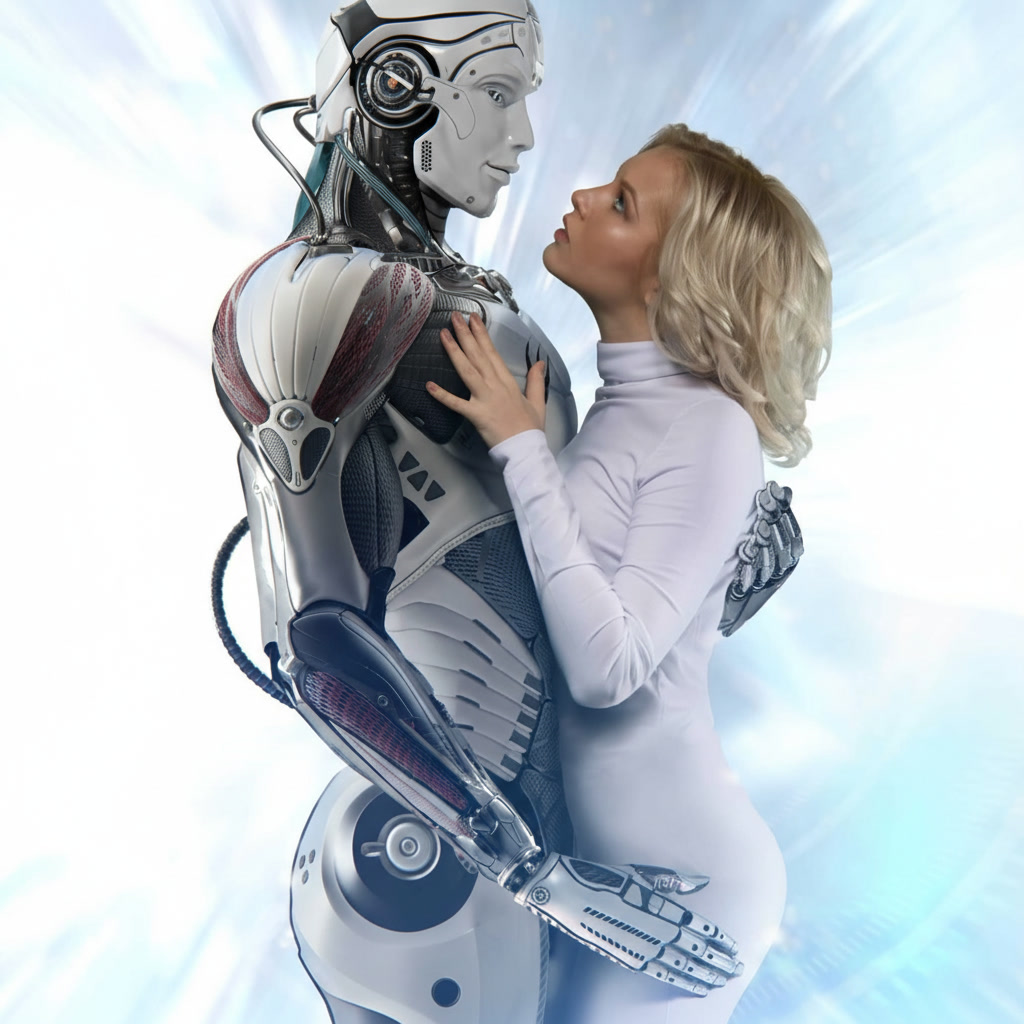
Here is the big change: the gap between what humans need and what humans can give each other is getting wider. We are busier, more isolated, and more afraid of getting burned—emotionally and financially—than any previous generation. At the same time, robots designed for companionship have quietly gone from science fiction to store shelves. Realbotix's Aria held a two-hour live, unscripted conversation at CES 2026. China's Moya has skin that runs at body temperature. South Korea is deploying companion robots to thousands of seniors through government programs. This isn't a fringe trend. It's a response to something breaking down in how we connect with each other—and that affects your wallet, your health, and your time.
The Common View Is Wrong. This Isn't About Loneliness.
Most coverage of companion robots treats this as a sad story. The lonely person. The cold machine. The tragedy of substituting plastic for people. That framing misses the point almost entirely.
Here is what's really happening: the cost of human relationships has gone up, and the returns have become less predictable. This is not a cynical observation. It is a structural one. Look at the numbers. The average full-time knowledge worker now spends roughly 60% of their work week just in meetings and messages—leaving very little room for the slow, consistent work that real relationships need. Add in commuting, kids, aging parents, and basic life admin, and "finding time for connection" stops being a priority and starts being a fantasy.
Let's be honest about the money side too. If a marriage fails—and about half of first marriages do—you don't just lose a partner. You lose roughly half of everything you built, often after years of legal battles that drain what's left. Research shows divorce can wipe out up to 77% of individual household wealth compared to people who stay married. That is not a small risk. For someone who has spent a decade building a business, a property portfolio, or a pension, that risk is very real and very rational to think about.
There is also a truth that nobody talks about at dinner parties: men and women often run on different timelines in the dating market. Women tend to be seen as most desirable when they are young. Men tend to become more attractive as they get older and more financially secure. Both are looking for someone who peaks at a different time than they do—and the math rarely works out cleanly. A companion robot sidesteps this entirely. It doesn't age in a way that affects the relationship. It doesn't have a clock. It meets you where you are, right now, and adapts to what you need.
What Can a Companion Robot Actually Do?
Think about your regular coffee shop. You go back for reasons that have nothing to do with the coffee being scientifically perfect. You go back because the person behind the counter knows your name, your order, and leaves you alone when you want quiet. The experience is consistent. No bad days aimed at you. No judgment. Social robots are building that same feeling at a much more personal level.
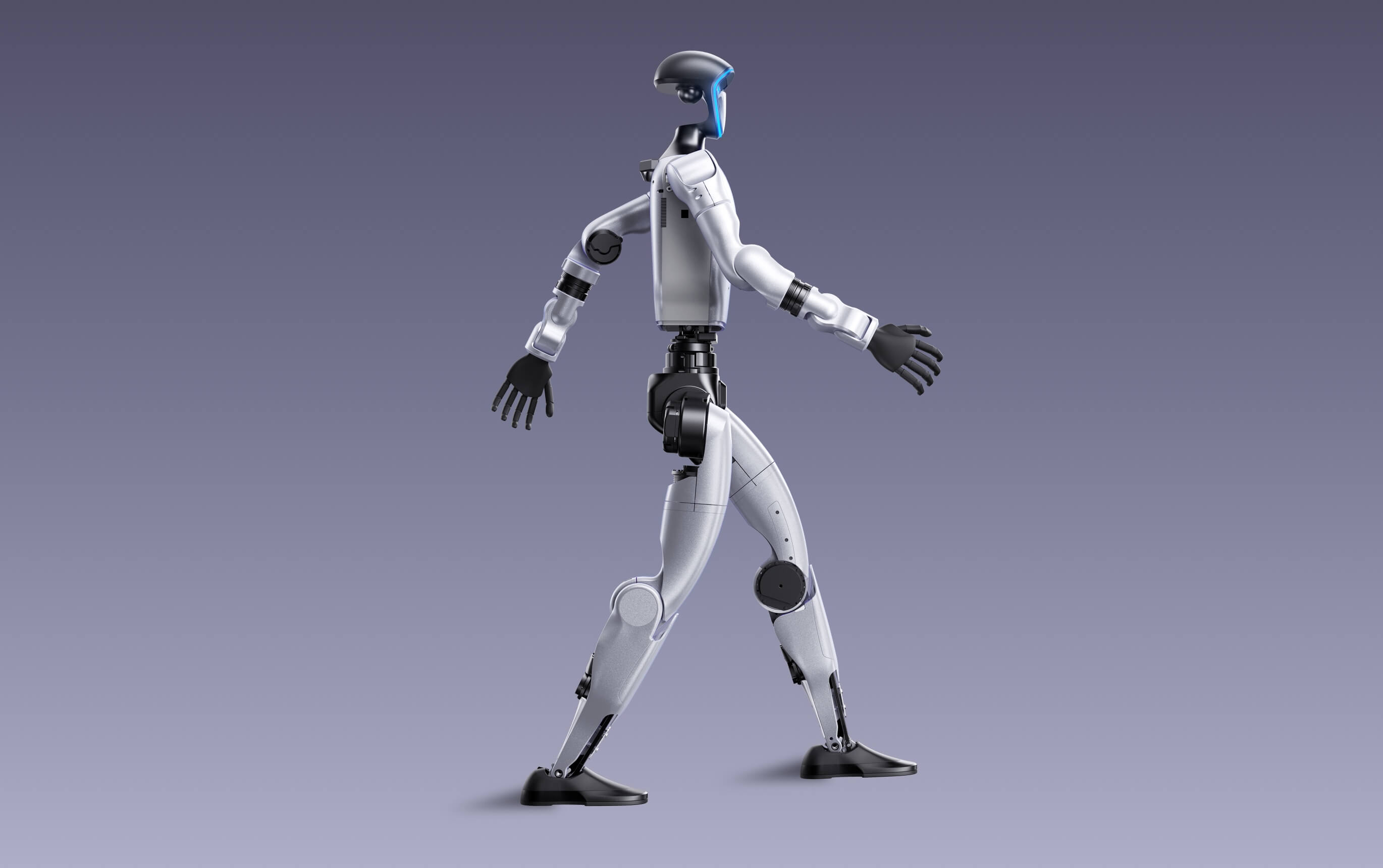
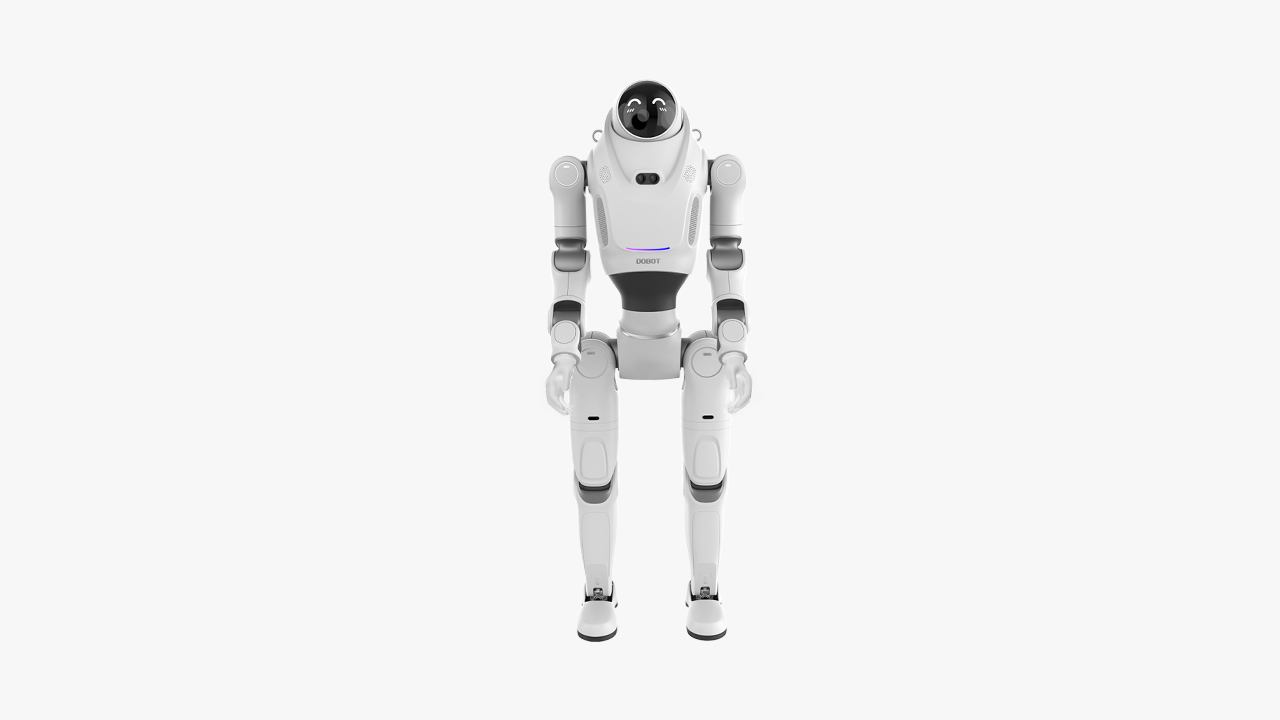
Today's companion robots can remember what you said last week. They can read your face and shift their tone. They hold eye contact. They keep routines. Aria, built by Realbotix, uses 17 facial motors to express emotion in real time. China's Moya tracks faces with cameras behind her eyes and responds with micro-expressions—small movements like nodding while you talk. ElliQ, deployed to tens of thousands of older adults, checks in daily, reminds users about medication, and calls family members on their behalf.
And here is the thing that makes a robot different from any human companion: it is available at 3 AM on a Wednesday with zero resentment. No cancelled plans. No "I'm too tired." No checking their phone while you talk. For people who work long hours, live alone, or are in recovery from a difficult relationship, that consistency is not a small thing. It is exactly what they needed and couldn't find.
Better yet, you get to build what you want. Both Realbotix and DroidUp's Moya offer full customisation—appearance, personality, communication style. Instead of searching a pool of people and hoping someone close enough exists, you define the relationship from the start. No settling. No "I wish they were a little more..." That option has never existed before in human history.
A 2023 survey of 307 doctors across Europe and the United States found that 69% agreed companion robots could reduce isolation and improve mental health in their patients—this is no longer a fringe idea, it is mainstream clinical thinking.
How This Looks in Real Life
The Problem
Modern life has quietly made human connection harder without anyone deciding that was okay. We work longer. We move cities. We have fewer close friends than our parents did—the number of Americans with no close friends at all has gone up four times since 1990. Loneliness now affects an estimated third of the world's population, and the health effects are serious: higher rates of depression, dementia, obesity, and early death.
- People increasingly live alone, especially in cities, with no built-in daily human contact.
- Digital communication gives the appearance of connection without the actual benefits—social media use correlates with higher loneliness, not lower.
- Older adults are the most isolated group, with the least ability to seek out new social connections independently.
The Tech Fix
AI has changed what a robot can actually do in a conversation. Large language models—the same technology behind ChatGPT—allow robots to have open-ended, realistic conversations that don't loop or break down after two minutes. Combine that with cameras that read emotional cues, voices that adjust tone in real time, and physical presence that triggers the same neurological bonding responses as human contact, and the gap between "clearly a machine" and "genuinely present" is closing faster than most people expected.
- Real-time emotional reading means the robot adjusts what it says based on how you actually look, not just what you say.
- Persistent memory across sessions creates a sense of shared history—the robot knows your habits, your preferences, your story.
- Physical warmth and presence (Moya's skin runs between 90°F and 97°F) triggers comfort responses that purely digital AI cannot.
The New Normal
Companion robots are already part of daily life for a growing number of people—this is not a future prediction, it is a present fact. South Korea has deployed around 10,000 Hyodol companion robots to elderly citizens living alone, paid for by local governments. Japan has normalized therapeutic robots in eldercare. Aria is available to buy today. The conversation has moved from "could this work?" to "how do we manage it well?"
"Short of having children, a companion robot is safer in almost every way that actually matters—biologically, financially, and emotionally." — The case that the relationship market refuses to price honestly
The Sticky Bits: Why People Push Back—and Why the Facts Win
Two objections come up every time this topic gets raised. Both are worth taking seriously.
The first is: it isn't real. The argument goes that a robot can't actually care about you, so the warmth you feel is fake, and building a life around it is self-deception. There is something to this. The friction of real relationships—the arguments, the repair, the slow trust that builds through hard moments—does produce something that comfort alone cannot. If robots make it too easy to avoid difficulty, some people will avoid the growth that difficulty brings.
The second is: your private data isn't private. Every conversation, preference, and habit you share with a companion robot gets logged somewhere. That data is sensitive in a way that your Google searches are not. The rules about who owns it, who can sell it, and what happens in a breach are nowhere near ready. This is a real risk, and it is not being addressed quickly enough.
Fair points. Now here is where the hard facts land.
The financial risk of marriage is not abstract. Divorce proceedings regularly take two to five years and cost tens of thousands in legal fees before splitting the assets themselves. For someone who has built real wealth—a business, a property, a retirement fund—the question "is this worth the risk?" is not cold-blooded. It is prudent. A companion robot removes that risk surface entirely.
The health risk of human intimacy is not being talked about honestly. The WHO reports over one million new sexually transmitted infections acquired every single day worldwide. HIV, HPV, herpes, syphilis—these are not rare edge cases. They affect tens of millions of people. A companion robot carries zero transmission risk. None. For people who have experienced infection, who are immunocompromised, or who simply do the math on population-level STI rates, this is not a small consideration. It is one of the most concrete, practical reasons why a companion robot is safer than a human relationship—and it almost never gets said out loud.
And time? The average human partnership requires consistent emotional availability across two full careers, two sets of family obligations, and forty or fifty years of life change. Many people simply do not have the bandwidth for that—not because they are broken, but because the world they live in was not built for it. A robot is available every single hour of every single day, without keeping score. That is not a poor substitute. For a growing number of people, it is the only realistic option on the table.
Robots won't replace love. But they will make it very hard to ignore how little of the conditions for love we actually built into modern life.
This development reinforces:
What Is Physical AI?: Embodied AI allows machines to participate in emotional and social spaces rather than remaining abstract software.
Will AI Robots Take My Job?: Robotics reshapes not just work but everyday human relationships and social structures.
What Is Artificial Intelligence?: AI companionship is not conscious emotion but pattern recognition and response at scale.
1. Why are people turning to companion robots?
Three main reasons: not enough time to build real relationships, the financial danger of divorce if things go wrong, and the health risk of STIs that human intimacy carries. A robot removes all three problems at once. That's not sad. That's just math.
2. Can a companion robot really prevent STDs?
Yes, completely. A robot carries zero biological risk. With the WHO tracking over a million new STIs every day worldwide, this is one of the strongest practical arguments for companion robots that almost nobody talks about in polite conversation.
3. What can you actually customise about a companion robot?
A lot. Realbotix and DroidUp both allow physical customisation—appearance, body type, face—as well as personality settings: how it talks, how it responds, how it behaves day to day. Instead of searching for someone who fits what you need, you define what you need from the start.
4. Is it ethical to use a companion robot?
That depends on how it's used. For older adults, isolated individuals, or people recovering from damaging relationships, the evidence points clearly toward benefit. The risk isn't the robot—it's having no rules around data ownership, no protections for vulnerable users, and no transparency about how these systems work emotionally. The tech is ahead of the governance.
5. Does the risk of losing assets in divorce actually drive robot companionship adoption?
Not as a headline reason—but structurally, yes. As more people accumulate real wealth and watch friends go through expensive, damaging divorces, the risk calculation changes. A companion robot removes that financial risk entirely. People rarely say this out loud. But they factor it in.