What Is Physical AI?
Most people think AI lives inside computers and phones. That is no longer true. The moment AI gained sensors, motors, and the ability to act in physical space, its mistakes stopped being reversible. This affects every worker, patient, infrastructure manager, and policymaker whose environment now includes a machine that can move and decide. The question no one is answering clearly enough is: what exactly is physical AI, and why does it change the stakes so fundamentally?

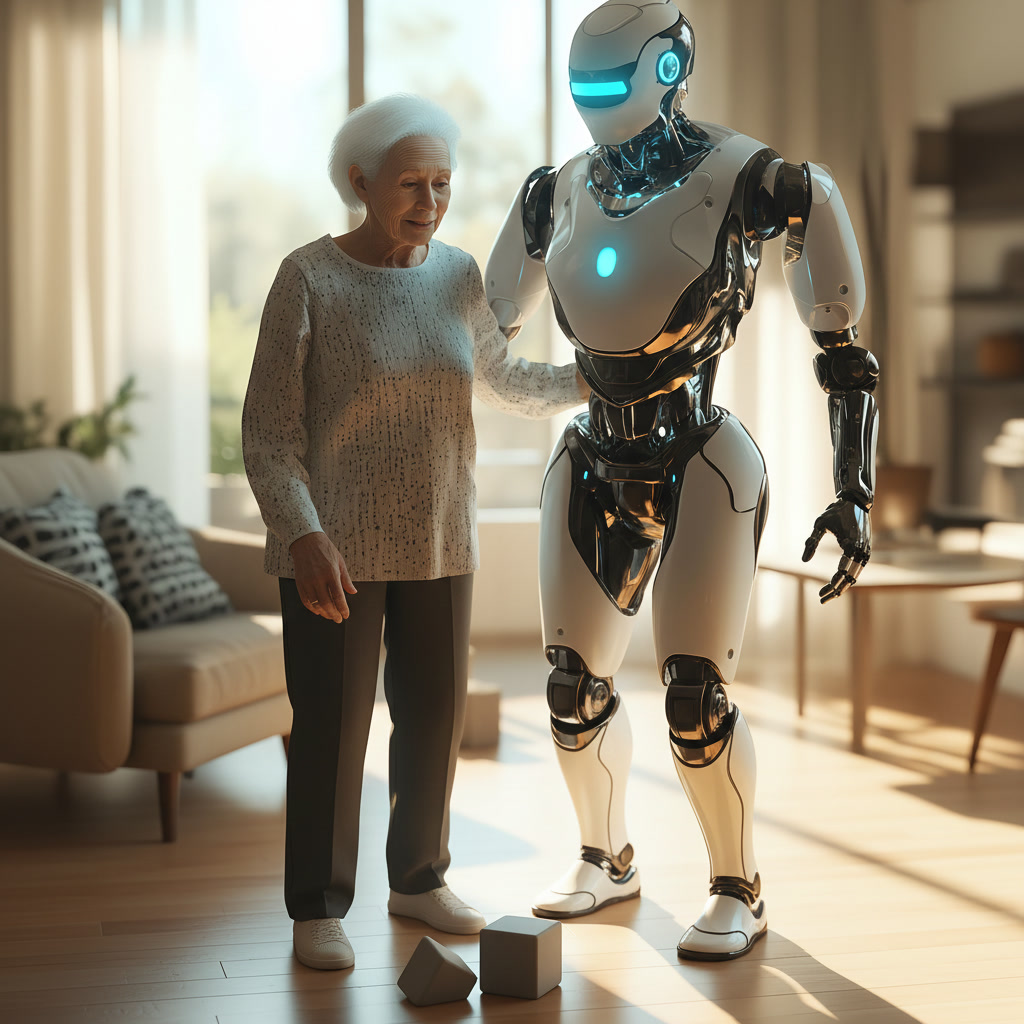
The hospital corridor outside the operating theatre looks the same as it did five years ago. The same trolleys, the same fluorescent light, the same nurses moving between stations. Inside the theatre, though, the surgeon's hands are not the only ones performing the procedure. A robotic system is moving in concert with her — reading the tissue, adjusting its instruments by fractions of a millimetre in real time, responding to conditions that no pre-written script could have anticipated when the patient was still in pre-op. The surgeon is not watching it work. She is working with it, in a collaboration that neither of them fully controls alone. When something unexpected happens — a vessel close to the margin, a tissue response outside the normal range — she makes the call. The machine holds the field.
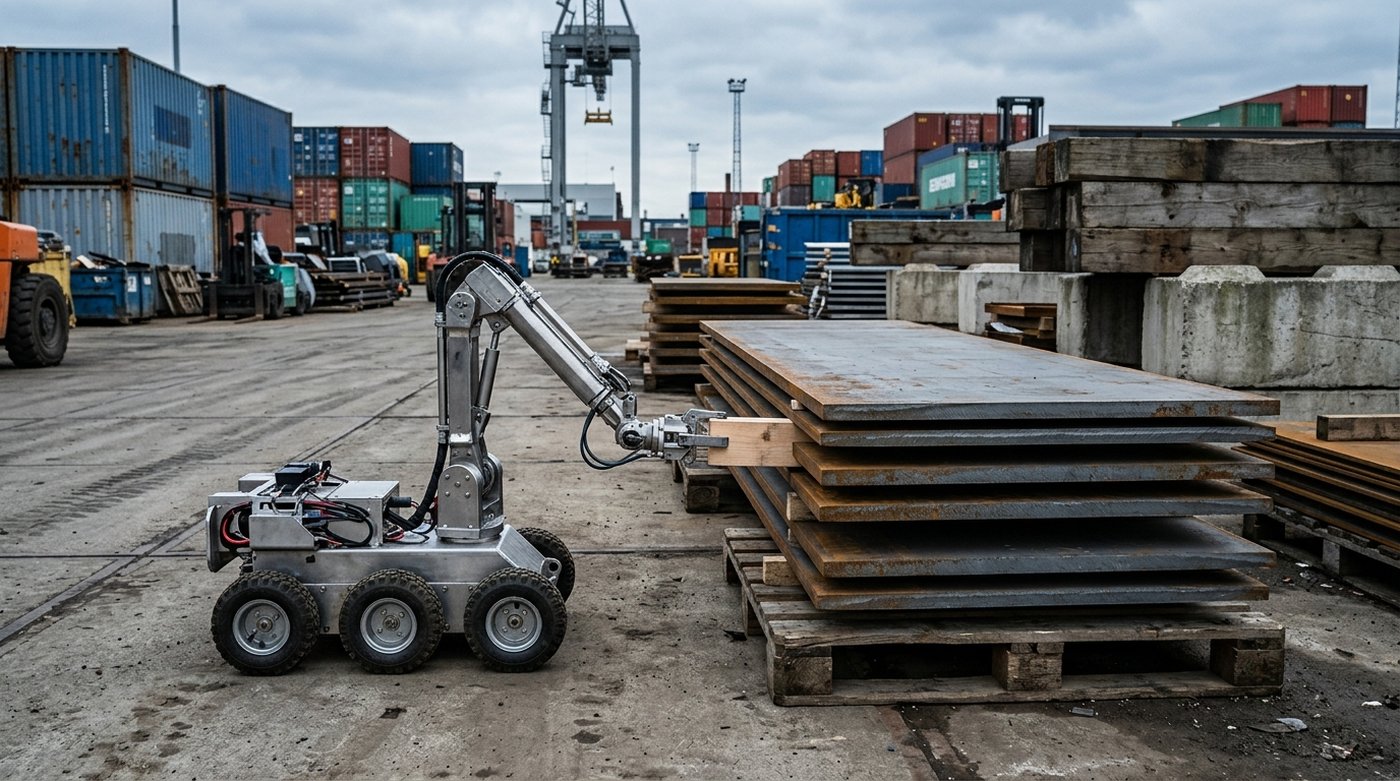
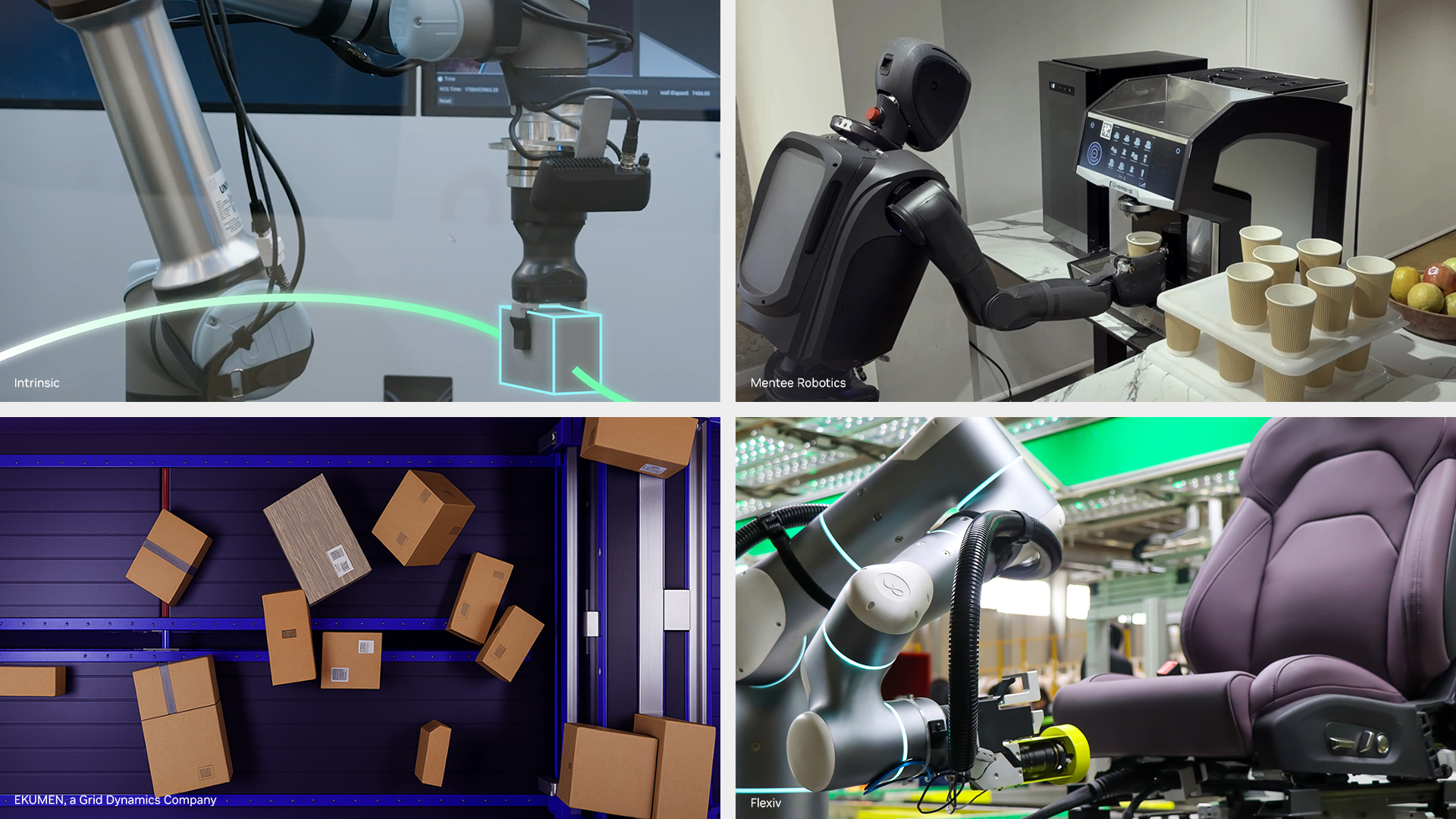
That moment — intelligence acting through a machine in a shared physical space, with real consequences — is what physical AI refers to. And it is not happening only in operating theatres. It is happening in warehouses where autonomous robots reroute themselves around human workers without being told to, in ports where cranes make sequencing decisions faster than any dispatcher could, and in factories where an AI-guided arm adjusts its grip when a component arrives slightly warped. The shift that matters here is not a technical detail. It is a change in where accountability, safety, and decision-making now live. If you manage a facility, design a product, set policy for a sector, or simply work in a building where machines are starting to move and reason, physical AI already affects the decisions being made around you — whether or not anyone has named it clearly yet.
What Is Physical AI?
Physical AI is artificial intelligence integrated into machines that can sense, decide, and act within real-world physical environments. It exists because advances in sensors, computing, and machine learning have dissolved the barrier that once kept AI confined to screens and servers — making it possible for intelligence to operate where gravity, friction, and human safety all apply. For anyone working in manufacturing, healthcare, logistics, infrastructure, or defence, this means the systems that shape your physical environment are now capable of learning and adapting, not just executing fixed instructions.
How Is Physical AI Deployment Developing Across the World?
The gap between regions in physical AI adoption reflects not just different levels of investment but fundamentally different approaches to what these systems are for and who should govern them.
Japan and the broader Asia-Pacific region illustrate what widespread deployment actually looks like at the human level. Approximately 50% of surgeons globally now perform some form of robotic surgery, up from just 9% in 2012, and Japan is among the top markets for Intuitive Surgical's da Vinci system, which reached a global installed base of 10,488 units by June 2025, according to GlobalX ETFs and Intuitive Surgical. That number is not a projection — it is a real-world count of intelligent automation systems operating in physical proximity to human bodies, making real-time adjustments during procedures. Across Asia-Pacific more broadly, over 120,000 autonomous warehouse robots were deployed in e-commerce facilities to handle intelligent automation at scale, with embodied AI systems becoming standard infrastructure in high-volume logistics environments.
Europe is responding to the same underlying pressure with a distinctly regulatory lens. The European physical AI market was valued at $1.2 billion in 2024 and is projected to reach $15.69 billion by 2034, growing at over 30% annually, according to Towards Healthcare and Precedence Research (2024). That growth is happening inside a governance structure that does not exist anywhere else — the EU AI Act, which entered into force in August 2024, explicitly covers AI systems embedded in physical machinery and classifies many robotic applications as high-risk, requiring conformity assessments, risk documentation, and human oversight. Europe is not trying to slow physical AI. It is attempting to become the jurisdiction that defines how it is built and held accountable — which is a different kind of industrial strategy.
The United States is the largest single-country physical AI market by value, with the sector reaching $1.52 billion in 2025 and projected to grow to $14.13 billion by 2033 at a CAGR of 32.17%, according to SNS Insider (2025). The US leads in enterprise adoption for human-machine interaction applications — over 46% of large technology firms deployed AI-enabled robotics for warehouse automation and smart manufacturing by 2024. But the country imports most of its industrial robots from Japan and Europe and has no comprehensive federal regulatory framework governing AI in physical systems. The Trump administration's late-2025 Section 232 investigation into robotics imports — explicitly naming data control and national security — signals that Washington is beginning to treat real-world AI systems as infrastructure with strategic dimensions, not just commercial products.
How Does Physical AI Actually Work — and What Makes It Different?
Physical AI systems work by continuously sensing their environment, interpreting what they perceive, choosing an action based on that interpretation, and updating their behaviour based on what happens — all in real time, in environments that do not stay still.
Think about how a doctor trains a new resident to assist in surgery. You do not hand the resident a manual covering every possible case. You train them on principles, put them in the room, and let them build judgment through exposure — correcting them when they err, advancing their responsibilities as trust is established. The resident perceives what is happening, makes a decision, acts, and learns from the result. That adaptive loop — sense, reason, act, learn — is the fundamental operating pattern of a physical AI system. The critical distinction from a traditional robot is that a traditional robot follows a script written for conditions that were fully specified in advance. A physical AI system interprets the situation it actually encounters and responds to it. When the tissue behaves differently than expected, the surgical robot does not freeze — it reads the new condition and adjusts, within the boundaries its human operator has set.
"The global physical AI market grew from $4.12 billion in 2024 to $5.41 billion in 2025 and is projected to reach $61.19 billion by 2034 — making intelligent automation one of the fastest-scaling technology markets on record." (Source: Towards Healthcare / Precedence Research, 2025)
Sensors Fell in Cost, Systems Left the Lab
Physical AI existed as a research ambition long before it became a commercial reality. The reason it did not reach operating theatres, warehouse floors, and port terminals for so many years was not a failure of imagination — it was the cost and unreliability of sensors. Cameras, depth sensors, LIDAR, and force-feedback systems needed to become cheap enough and accurate enough to deploy at scale, in imperfect conditions, without constant human recalibration. That shift happened through the 2010s, driven by the consumer electronics and automotive industries pushing component costs down. Companies that recognised this timing early began positioning for the sensor-cost inflection point — designing physical AI systems to take advantage of a sensor landscape that would be unaffordable today but commonplace within five years. The result was that by the early 2020s, the hardware prerequisites for physical AI were available at prices that made industrial deployment economically viable for the first time.
Real Environments Broke What Simulations Built
The second obstacle was harder to engineer around: real-world AI systems kept failing when they left controlled environments. A robot that performed flawlessly in a lab would struggle with lighting conditions, irregular surfaces, unpredictable objects, or human behaviour that no simulation had modelled. The gap between demonstration and deployment became the defining challenge for every organisation attempting to scale real-world AI systems. The survival response was to treat early physical deployment not as a finished product launch but as a structured data-collection exercise — capturing real-world operational data that simulations cannot generate, using it to retrain and refine the system, and iterating faster than any competitor who stayed in the lab. Tesla's Optimus programme, DeepMind's Gemini Robotics models, and the wave of warehouse robotics deployments across Asia-Pacific all reflect this logic: the field is the training environment, and operating data is the competitive resource.
Liability and Governance Entered the Equation
As physical AI systems moved into hospitals, roads, and public infrastructure, the question of who is responsible when they fail became impossible to defer. A software error in a recommendation algorithm causes a bad outcome in information space. A physical AI error in a surgical robot, a port crane, or an autonomous vehicle causes a physical outcome with legal, medical, and financial consequences. The organisations that are getting ahead of this are treating liability frameworks as a design input — building physical AI systems with audit trails, human override mechanisms, and interpretable decision logs from the start, rather than retrofitting them under regulatory pressure. The EU's Revised Product Liability Directive, effective from December 2026, formally classifies AI software embedded in physical machines as a product subject to liability claims — a legal shift that makes governance not a future concern but a present engineering constraint.
Is Physical AI Too Risky to Deploy at Scale — or Too Consequential to Delay?
Two genuine anxieties circulate among people who are making decisions about physical AI right now, and both deserve to be taken seriously.
The first is that the technology is not yet reliable enough to be trusted in high-stakes physical environments. Robotic surgery demonstrations are compelling; surgical robot failures, when they occur, are catastrophic. Autonomous warehouse systems improve throughput until one malfunctions in a way that injures a worker. The concern here is not that physical AI is bad in principle — it is that the pressure to deploy is outrunning the rigour of safety validation, particularly in environments where the consequences of failure involve human bodies rather than data records.
The second fear runs in the opposite direction: that hesitation now creates a competitive and strategic deficit that cannot be recovered later. The organisations and nations deploying physical AI at scale today are accumulating real-world operational data that makes their systems smarter with each cycle. A company that waits for perfect safety assurance before deploying intelligent automation is not avoiding risk — it is building a data deficit that its less cautious competitors are compounding into a learning advantage every single day.
The hard structural truth specific to physical AI is this: unlike software AI, which can be updated remotely and instantly when a flaw is discovered, physical AI systems embedded in machinery must be recertified, retested, and often physically reconfigured when they fail. That means the cost of getting it wrong in physical AI is not a patch — it is a recall, a shutdown, a liability claim, and months of revalidation. The organisations that will win in physical AI are not the fastest deployers or the most cautious ones. They are the ones building the governance architecture — audit logs, override systems, liability structures, and real-world data pipelines — at the same pace as they build the robots themselves. The difference between physical AI as a competitive advantage and physical AI as a liability is not the intelligence in the machine — it is the discipline of the people who deploy it.
This question is inseparable from the broader transformations physical AI is driving across work, governance, and power — and the links below ground it in those larger contexts.
This development reinforces:
What is AI Robotics: Physical AI is the operating core of what AI robotics actually means — understanding what physical AI is clarifies why AI robotics represents a structural shift rather than an incremental improvement in industrial machinery.
Ethics & Governance: The moment AI can act physically, errors carry liability and safety stakes that purely digital systems do not — and the governance frameworks now emerging in Europe and elsewhere are direct institutional responses to exactly that shift.
Will AI Robots Take My Job: Physical AI is the specific mechanism through which job automation risk moves from digital work into physical roles — understanding how physical AI actually operates explains why task displacement is happening in warehouses, hospitals, and factories rather than only at office desks.
The surgeon in that theatre will tell you the robot does not make her less necessary — it makes her responsibility more concentrated. Everything the machine removes from her attention frees her to do the thing only she can do: read the full situation and decide. That redistribution of responsibility — from execution to judgment — is what physical AI does everywhere it lands. It does not reduce human agency. It changes where that agency is most needed, and raises the cost of exercising it badly.
1. What is physical AI in simple terms? Physical AI is artificial intelligence embedded in machines that can sense, reason, and act in the real world — not just on screens or servers. Unlike a chatbot or recommendation algorithm, a physical AI system operates under real-world constraints: gravity, friction, human proximity, and legal liability for its actions. The global physical AI market reached $4.12 billion in 2024, according to Towards Healthcare / Precedence Research, and is projected to reach over $61 billion by 2034.
2. How is physical AI different from regular AI? Regular AI processes information and produces outputs — recommendations, predictions, text, images. Physical AI does all of that and then acts on it through machines that move and interact with the physical environment. The critical difference is consequence: a software AI error can be corrected with an update; a physical AI error in a robot or autonomous vehicle can cause injury, property damage, or legal liability before any correction is possible.
3. Where is physical AI already being used today? Physical AI is in active use in surgical theatres, warehouses, ports, manufacturing plants, agricultural systems, and infrastructure inspection. Approximately 50% of surgeons globally now perform some form of robotic surgery, up from 9% in 2012, according to GlobalX ETFs (2025). In logistics, over 120,000 autonomous warehouse robots were deployed across Asia-Pacific e-commerce facilities, handling intelligent automation at a scale that human pickers cannot match on speed or consistency.
4. Is physical AI the same as a robot? Not quite. A traditional robot follows pre-programmed rules for specific, fixed tasks. Physical AI refers to the intelligence layer — the capacity to perceive, reason, and adapt — that makes a robot capable of responding to conditions it was not explicitly programmed for. A physical AI system can encounter a situation it has never seen before and still act toward its goal. That adaptive capacity is what makes physical AI categorically different from conventional automation.
5. What are the risks of physical AI? The main risks are reliability in uncontrolled conditions, accountability when systems fail, and the speed of deployment outpacing safety validation. Physical AI systems that malfunction in proximity to humans can cause physical harm, and unlike software failures, they cannot be patched instantly — they require physical reconfiguration, safety retesting, and often regulatory recertification. The EU's Revised Product Liability Directive, effective from December 2026, formally extends liability to AI software embedded in physical machines, meaning legal exposure for physical AI failures is now a matter of active law, not future policy.