Light, Medium, Heavy: How Payload Class Determines Which Robot Goes Where
A procurement-focused guide for business leaders and buying teams on how industrial 6-axis robot payload classes (light, medium, heavy) dictate application suitability, what each class costs, and how to specify capacity from real operating conditions rather than nominal part weight, including a documented case of underspecification.
Selecting the right industrial robot for a manufacturing application is one of the most consequential decisions in any automation project. While speed and reach are often the first metrics discussed, the fundamental determining factor of a robot's capability is its payload class. For a procurement team, payload class is not just an engineering specification. It sets the price band you will pay, the foundation and safety work you will budget for, and the maintenance risk you will carry for the next decade. Understanding the distinction between light, medium, and heavy payload robots is essential for matching the machine to the task without overspending on unnecessary capacity or undersizing a critical asset.
1. The Foundation of Payload Capacity
Payload capacity is not merely the weight of the object a robot can lift. It represents the total mass the robot can safely and repeatedly manipulate at the end of its arm while maintaining its specified precision and speed. This calculation must include the weight of the part being handled, the weight of the end effector or gripper, any mounting hardware, and the dynamic forces generated during rapid acceleration and deceleration.
A common pitfall in robot selection is ignoring the payload moment diagram, which illustrates how the center of gravity affects the robot's lifting capability. A robot rated for 50 kilograms at its tool flange might only handle 30 kilograms if the part is long and its center of gravity extends far beyond the wrist. The lesson for buyers is direct. The number on the datasheet is a ceiling measured under ideal conditions, not a promise for your specific part, gripper, and motion path. Treating it as a structural framework for facility planning and capital allocation, rather than a single lifting figure, is what separates a reliable purchase from an expensive correction.
2. Light Payload Class: Precision and Speed
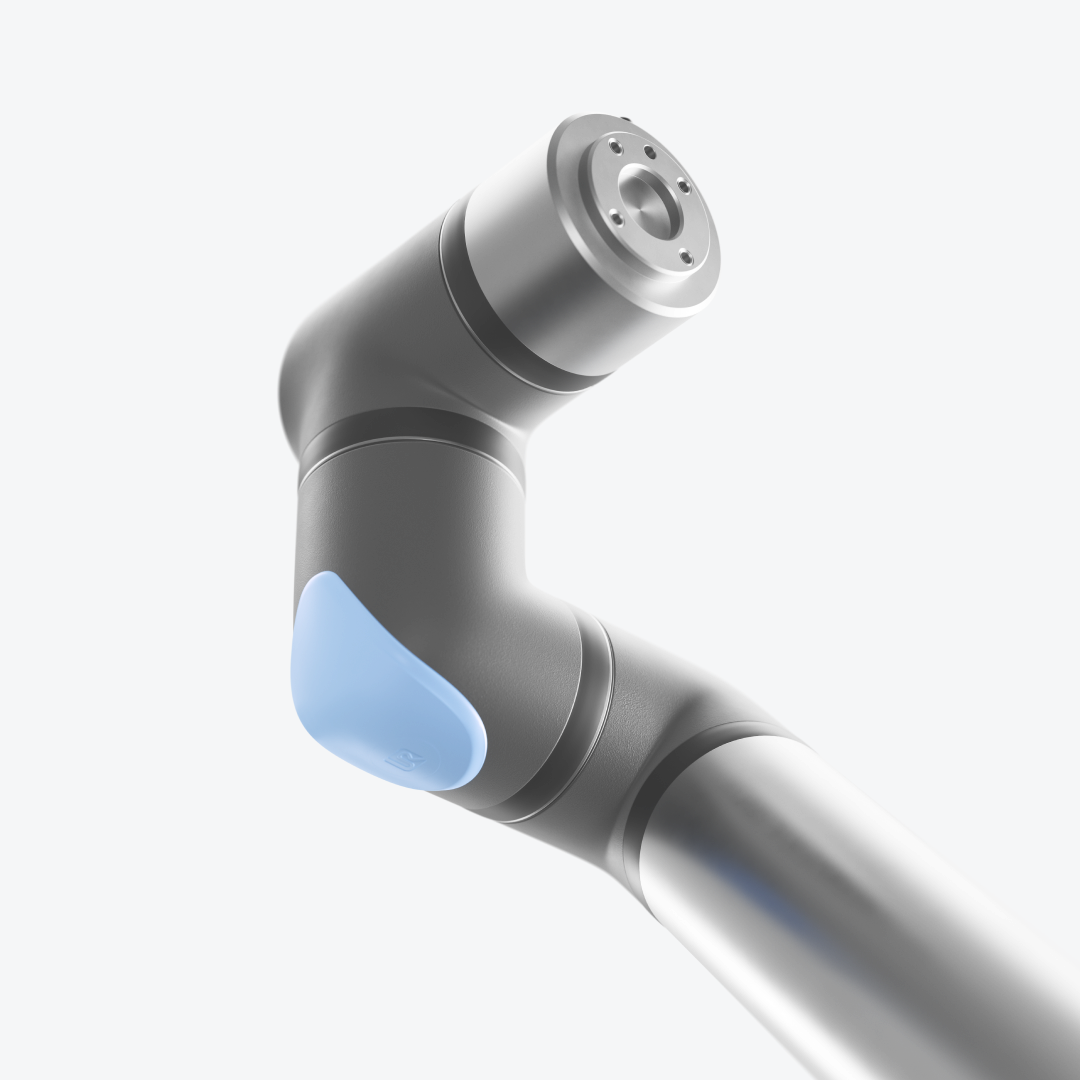
Light payload industrial robots typically handle loads ranging from less than 1 kilogram up to 20 kilograms. These machines are engineered for tasks where speed, dexterity, and a compact footprint are paramount.
The primary applications for light payload robots are found in the electronics, pharmaceutical, and food processing industries. In electronics manufacturing, these robots perform high speed pick and place operations, printed circuit board assembly, and delicate testing procedures. The pharmaceutical sector utilizes them for precise dispensing, sorting, and packaging of medical products in cleanroom environments.
Manufacturers like FANUC offer the LR Mate series, which excels in this category, providing rapid cycle times for small part handling. Similarly, the ABB IRB 1200 and Yaskawa Motoman GP series are staples in light payload applications. The return on investment for these robots is driven by their ability to drastically increase throughput while maintaining exacting quality standards in confined spaces.
Estimated market pricing for the light class. For the robot arm and controller alone, light payload models generally fall between roughly 10,000 and 50,000 United States dollars. Four axis SCARA units such as the FANUC SR-3iA sit near the bottom of that band at about 10,000 to 13,000 dollars, while six axis collaborative arms run higher, with the FANUC CRX-5iA quoted around 43,000 dollars and the CRX-10iA around 46,000 to 51,000 dollars. Value oriented and imported industrial arms in the 10 kilogram range, such as the Aubo i10, are advertised by distributors closer to 15,000 to 20,000 dollars, and the Standard Bots Spark, a 7 kilogram arm, starts near 29,500 dollars. These figures are approximate manufacturer and distributor list prices and should be treated as a starting point rather than a quote, because the final number is shaped by reach, repeatability, vision requirements, and volume discounts.
3. Medium Payload Class: The Versatile Workhorse
The medium payload class encompasses robots capable of lifting between 20 kilograms and 100 kilograms. This category represents the most versatile segment of the industrial robotics market, balancing significant lifting power with considerable reach and agility.
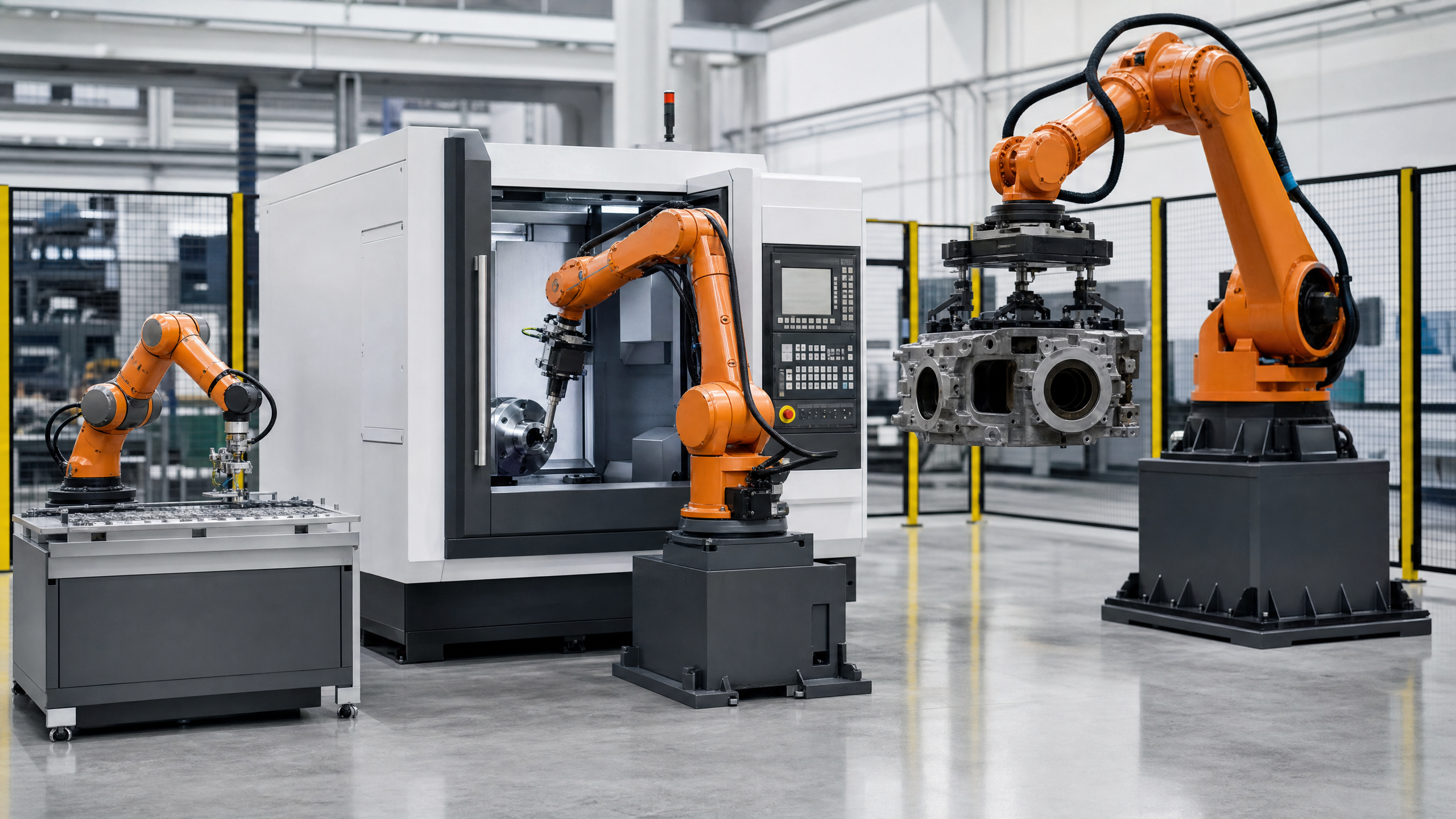
Medium payload robots are the backbone of the automotive tier supplier network and general manufacturing. They are routinely deployed for arc welding, machine tending, material removal, and moderate palletizing tasks. In a machine tending application, a medium payload robot can efficiently load heavy metal blanks into a CNC machine and remove the finished parts, a task that poses ergonomic risks to human operators.
The FANUC M-20 and M-710 series are prominent examples of medium payload robots, offering a blend of strength and precision. KUKA's KR IONTEC series also serves this market segment effectively. For a business owner, the medium payload robot offers the highest degree of flexibility, as it can be retooled for various tasks as production demands shift over time.
Estimated market pricing for the medium class. Robot arm and controller pricing in this class generally runs from roughly 37,000 to 90,000 United States dollars. The Standard Bots Core, an 18 kilogram arm, starts near 37,000 dollars, and the same maker's 30 kilogram Thor starts near 49,500 dollars. FANUC collaborative units such as the CRX-20iA/L and CRX-30iA are quoted around 56,000 and 61,000 dollars respectively, while traditional fenced industrial models such as the FANUC M-20iD and M-710 are estimated near 65,000 to 85,000 dollars. A widely cited industry benchmark for a new six axis industrial robot with controller and teach pendant sits in the 50,000 to 80,000 dollar range, which places most of this class. As with every figure here, treat these as approximate. The drivers that move a medium class quote up or down are reach, required repeatability, duty cycle, and whether the robot must run fenced or collaboratively alongside people.
4. Heavy Payload Class: Brute Force and Structural Integrity
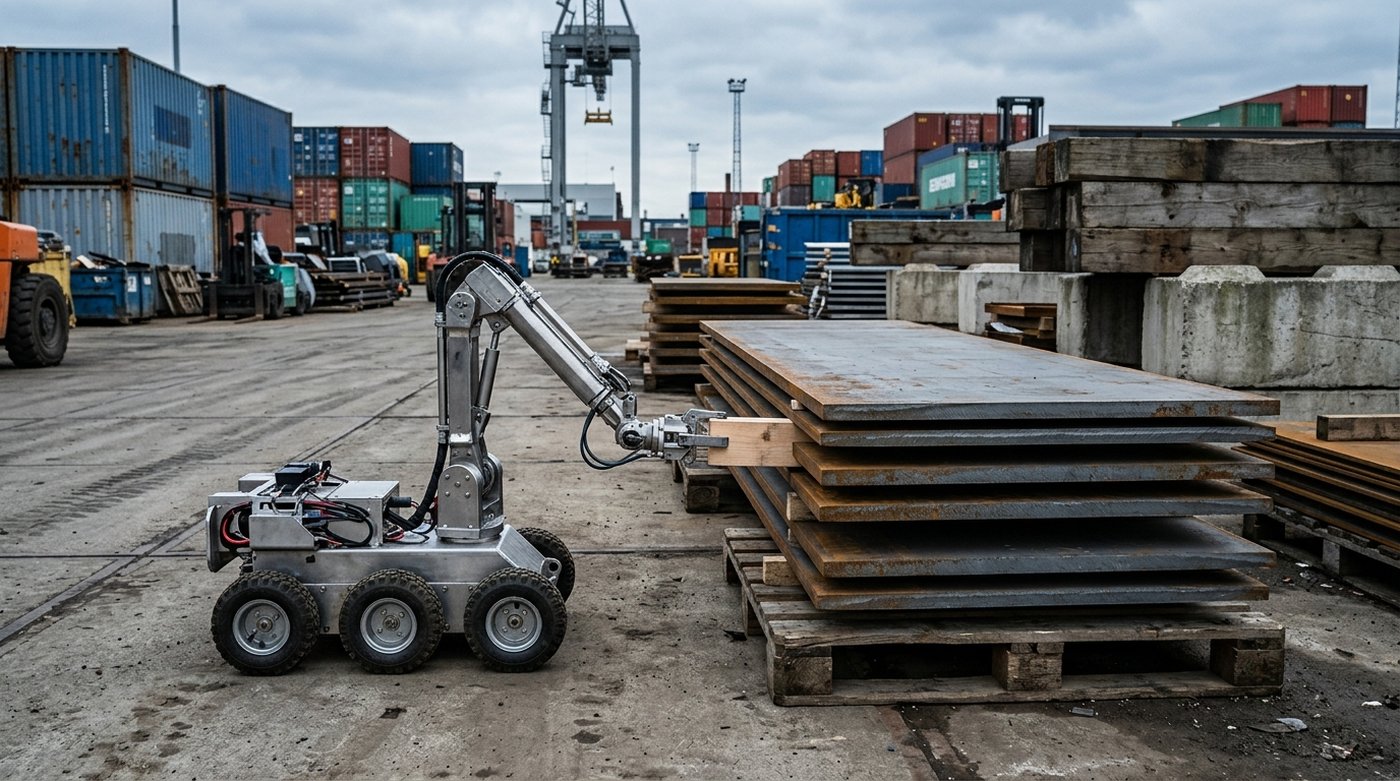
Heavy payload robots are designed to manage loads from 100 kilograms up to 1000 kilograms or more. These massive machines require specialized engineering, robust foundations, and significant floor space.
The applications for heavy payload robots are found in heavy automotive manufacturing, aerospace, foundry operations, and large scale palletizing. In an automotive assembly plant, heavy payload robots are responsible for spot welding entire car chassis and transferring engine blocks. In foundries, they handle heavy castings in environments that are too hazardous for human workers.
The FANUC R-2000 and M-900 series are industry standards for heavy lifting, with some models capable of handling over 700 kilograms. ABB's IRB 6700 and IRB 8700 series similarly dominate the heavy payload space. Deploying a heavy payload robot is a major infrastructure project, often requiring reinforced concrete floors to withstand the dynamic forces generated when moving massive weights at high speeds.
Estimated market pricing for the heavy class. The robot arm alone spans a very wide band, from roughly 80,000 dollars for the lighter end of the class to more than 400,000 dollars for the largest models. Industry pricing guides place top end FANUC heavy payload arms, including the roughly 1200 kilogram class, above 400,000 dollars on list. Buyers should note that for payloads above 1000 kilograms the field narrows to a handful of models from FANUC, KUKA, and ABB, the robot itself can weigh several tons, and the installation requires reinforced concrete foundations, typically a minimum 300 millimeter pad and often 500 millimeters or more. These are approximate list prices for the manipulator. In this class especially, the foundation, structural pedestal, heavy duty tooling, and safety architecture frequently cost as much as or more than the robot, so the arm price alone understates the true commitment.
5. The Hidden Cost Multiplier Every Buyer Should Budget
A recurring and expensive misconception in procurement is treating the robot arm price as the cost of automation. In practice, the robot hardware typically represents only 25 to 40 percent of the total investment required to get a functioning production cell running reliably. Once tooling, safety systems, peripherals, and integration are added, a typical welding or assembly cell costs two to four times the price of the robot alone, and the full lifecycle total cost of ownership across a ten to fifteen year service life commonly reaches three to five times the initial purchase price.
The line items that buyers most often miss are predictable. A machine vision system adds roughly 10,000 to 30,000 dollars, and models with advanced artificial intelligence features carry a 20 to 40 percent premium. Safety fencing and facility modifications such as power and compressed air upgrades add another 10,000 to 50,000 dollars. System integration, meaning the engineering, programming, installation, and commissioning that makes the cell actually run with your parts at your cycle time, typically accounts for 30 to 50 percent of total project cost. Operator and maintenance training ranges from a few hundred dollars for a basic course to several thousand for advanced programming instruction. Carrying these numbers into the business case from the start is the difference between a project that delivers its projected return and one that stalls after installation because the remaining 60 to 75 percent of the real expense was never budgeted.
6. Why Payload Selection Must Start With Real Operating Conditions
The single most important shift for a procurement team is to stop specifying robots against the nominal weight of the part and start specifying against the full dynamic load under real operating conditions. The nominal part weight is almost never the figure that determines whether a robot succeeds or fails on the floor.
The first correction is the end effector. A robot rated for 20 kilograms cannot handle a 20 kilogram product if the gripper weighs 5 kilograms, because the effective part handling capacity has already dropped to 15 kilograms. Industry integrators report that the most common cause of payload errors is simply failing to include the weight of the end of arm tooling in the calculation.
The second correction is inertia and center of gravity, which is far less intuitive than weight. A published worked example using a 7 kilogram rated arm carrying the same 5 kilogram load shows the effect clearly. When the load sits 0.05 meters from the robot faceplate, the inertia on the wrist axes is an acceptable 10 to 15 percent of the maximum. Move that identical load out to 0.175 meters and the inertia jumps to between 40 and 110 percent of the maximum, which is borderline. Extend it to 0.30 meters and the inertia reaches 110 to 310 percent of the maximum, which is unacceptable and will fault the robot or prevent it from running. The weight never changed. The geometry did. This is why a robot can pass a payload check on paper and still stall the wrist axes in production.
The third correction is reach combined with vertical envelope. Maximum payload ratings usually apply only at reduced reach, so capacity must be verified at the actual working distance the application requires. Palletizing illustrates the trap well. A line that stacks pallets to 1.6 or 1.8 meters from a pick point near 800 to 900 millimeters demands far more vertical reach than buyers initially assume, frequently forcing either a larger robot or an added lift axis.
The fourth correction is acceleration and cycle time. Robots slow as they approach pick and place points for accuracy and cannot hold peak velocity through a complex path, so real world cycle times typically run 15 to 25 percent longer than theoretical calculations. A robot specified at its limit to hit a theoretical rate will miss the real one and become a bottleneck.
The final correction is future production requirements. If there is any realistic prospect of heavier products or higher stacks within the next three to five years, the capacity should be specified for that future now, because upgrading a robot after installation costs far more than selecting the right one at the outset.
7. A Documented Case of Underspecification and What It Cost
The consequences of ignoring these corrections are well documented across the integration industry, and they follow a consistent and costly pattern. As one robotics engineer writing in an industry trade publication put it, most automation failures are not execution failures but learning failures, where teams make reasonable assumptions about reach, payload, and inertia that only reveal their flaws once the robot is interacting with real tooling at full speed, by which point change has become expensive disruption rather than routine engineering. The following representative case is a composite drawn from the failure modes that integrators such as Automation.com, AMD Machines, and Unchained Robotics report repeatedly, assembled here to show how a single specification shortcut cascades into real losses.
A general manufacturer selected a 20 kilogram rated six axis robot to tend a press, working from the part weight of 16 kilograms and concluding it had comfortable margin. The specification omitted two realities. The custom gripper weighed 5 kilograms, which pushed the true load to 21 kilograms, just over the rating, and the part was held well forward of the faceplate, so the inertia at the wrist sat far above the acceptable band during the fast transfer move.
The cell ran, which is precisely why the error was missed at sign off, but it ran at the edge of its capacity. Within the first months the symptoms appeared in sequence. Positioning accuracy drifted, so parts were placed inconsistently into the press, which raised scrap and triggered frequent quality stops. To hold tolerance, the team reduced robot speed, which extended the cycle time and quietly erased the throughput gain that had justified the purchase. The wrist axis gearboxes, loaded well beyond their intended duty, wore prematurely, and overloaded axes are exactly the components that integrators and manufacturers identify as susceptible to faster than expected failure. The reducer replacement alone falls in the 5,000 to 15,000 dollar range per event, before counting the lost production during each unplanned stop. Within roughly a year the line faced the worst outcome of all, which is replacing an undersized robot with the correctly sized model that should have been purchased at the start, paying a second time for installation, integration, and commissioning, and absorbing the downtime of the changeover. A specification shortcut that saved perhaps fifteen to twenty thousand dollars at purchase produced scrap, slowed cycles, premature wear, and a full replacement that cost many times the original saving. In heavy payload settings the same root cause carries an additional and graver dimension, because a several hundred kilogram part released through an overloaded or faulted system is a serious safety event, not merely a budget problem.
The takeaway for procurement is that an undersized robot rarely fails on day one. It fails slowly and expensively through reduced accuracy, premature equipment wear, lost throughput, and eventual replacement, which is why payload must be specified from the real load, the real geometry, the real motion, and the real future of the line.
Conclusion: Matching Capability to Need
The industrial 6-axis robot is not a one size fits all solution. The division of these machines into light, medium, and heavy payload classes reflects the diverse needs of modern manufacturing, and each class carries its own price band, its own installation burden, and its own margin for error. Whether it is assembling delicate electronics at high speed, tending CNC machines, or moving automotive chassis, the payload class dictates the robot's structural design, its place on the factory floor, and the budget a buyer must commit. By understanding these distinctions, pricing the full system rather than the arm alone, and specifying capacity from real operating conditions rather than nominal part weight, procurement teams can make informed decisions that protect both the capital investment and operational safety.
Pricing note: All prices in this guide are approximate manufacturer and distributor list figures for the robot arm and controller current as of 2026 and are provided for budgeting orientation only. Actual quotes vary with reach, repeatability, options, regional pricing, and volume, and full installed cell and lifecycle costs are several times the arm price. Confirm pricing directly with manufacturers and authorized resellers.
References
[1] Vention: FANUC Robot Cost Guide 2025
[2] Standard Bots: How Much Do Robots Cost, 2026 Price Breakdown
[3] robots.com: What is the Cost of an Industrial Robot
[4] AMD Machines: Heavy Payload Handling, and Robot Total Cost of Ownership
[5] Unchained Robotics: Common Mistakes to Avoid When Planning a Palletizing Project
[6] Motion Controls Robotics: Robot Inertia vs Payload
[7] Automation.com: The Top 10 Robotics Application Mistakes
[8] Blue Sky Robotics: Understanding Payload Capacity in Robotics and Automation
[9] The Robot Report: Fail Fast, Fail Small, Fail Safe, A Practical Model for Robotic Automation, April 2026
[10] IFR: World Robotics 2025, Industrial Robots
[11] FANUC America: Robot Series Specifications