AI & Robotics Glossary Made Simple
Confused by AI buzzwords like RAG, tokens, or hallucinations? This easy-to-understand guide breaks down the most important AI and robotics terms using simple explanations, real-world examples, and memorable analogies—perfect for beginners and professionals alike.

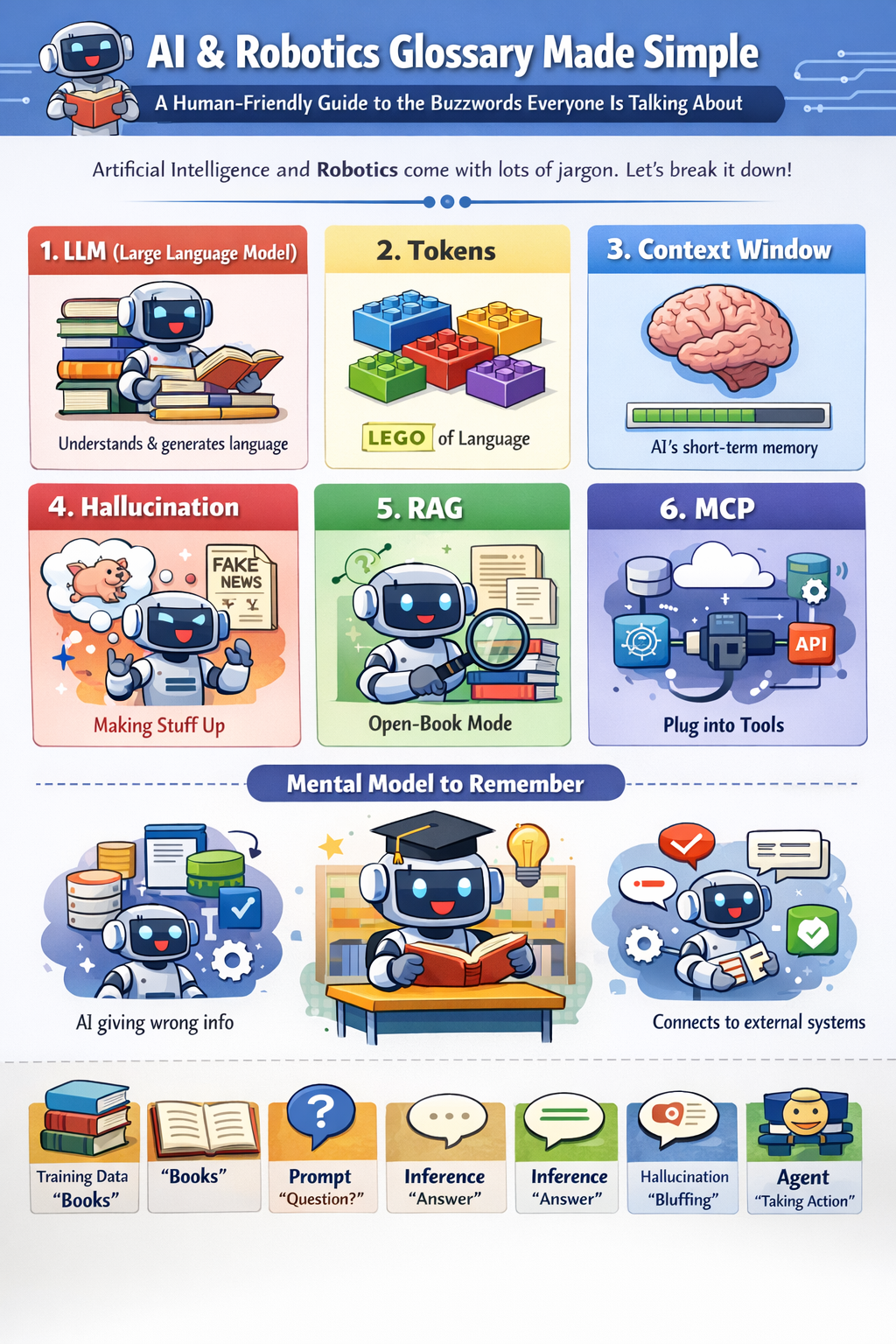
A Human-Friendly Guide to the Buzzwords Everyone Is Talking About
Artificial Intelligence and Robotics are evolving fast—and with them comes a flood of technical jargon that can feel overwhelming.
If you’ve ever heard terms like RAG, tokens, or hallucination and thought, “I should probably know this”… this guide is for you.
We’ll break down the most important concepts in simple language, with relatable examples and memory tricks to help them stick.
🧠 1. Large Language Model (LLM)
What it is:
An AI system trained on massive amounts of text to understand and generate human-like language.
Example:
ChatGPT answering your questions or writing code.
Think of it as:
📚 A super librarian who has read millions of books and can instantly respond to almost anything.
🧩 2. Tokens
What it is:
The smallest pieces of text an AI processes (words, parts of words, or characters).
Example:
“ChatGPT is amazing” → might be split into tokens like:
Chat + GPT + is + amazing
Why it matters:
- Pricing is often based on tokens
- Limits how much AI can process at once
Think of it as:
🧱 LEGO blocks of language
🪟 3. Context Window
What it is:
The maximum number of tokens an AI can “remember” in a single conversation.
Example:
If the context window is 8,000 tokens, anything beyond that gets forgotten.
Think of it as:
🧠 Short-term memory of the AI
🤯 4. Hallucination
What it is:
When AI confidently gives incorrect or made-up information.
Example:
An AI invents a fake research paper or cites a non-existent source.
Think of it as:
🎭 The AI “guessing” and pretending it's right
🔍 5. Retrieval-Augmented Generation (RAG)
What it is:
A method where AI retrieves real data (like documents or databases) before generating a response.
Example:
A chatbot that answers based on your company’s internal documents.
Think of it as:
📖 Open-book exam instead of guessing from memory
🔌 6. MCP (Model Context Protocol)
What it is:
A standard that allows AI models to connect with external tools, data, and systems.
Example:
AI accessing your database, calendar, or APIs in a structured way.
Think of it as:
🔗 USB ports for AI—plugging into the real world
⚙️ 7. Prompt
What it is:
The input or instruction you give to an AI.
Example:
“Write a Python script to sort a list.”
Think of it as:
🗣️ How you talk to the AI determines how well it performs
🎯 8. Prompt Engineering
What it is:
The skill of crafting effective prompts to get better results from AI.
Example:
Instead of: “Explain AI”
You say: “Explain AI to a 10-year-old using simple analogies.”
Think of it as:
🎨 Designing instructions for better outcomes
🧬 9. Fine-Tuning
What it is:
Training an AI model further on specific data to specialize it.
Example:
Training a model on legal documents to make it a legal assistant.
Think of it as:
🏋️ Specialized training after general education
🔄 10. Inference
What it is:
The process of using a trained model to generate output.
Example:
You ask a question → AI responds → that’s inference.
Think of it as:
⚡ The moment AI “thinks and answers”
🧠 11. Embeddings
What it is:
Numerical representations of text that capture meaning.
Example:
“Dog” and “puppy” will have similar embeddings.
Think of it as:
📍 GPS coordinates for meaning
🤝 12. Agent (AI Agent)
What it is:
An AI system that can act autonomously to complete tasks.
Example:
An AI that books meetings, sends emails, and updates spreadsheets.
Think of it as:
🧑💼 A digital assistant that doesn’t sleep
🔁 13. Feedback Loop
What it is:
Using outputs to improve future performance.
Example:
Users rating responses → AI improves over time.
Think of it as:
🔄 Learning from experience
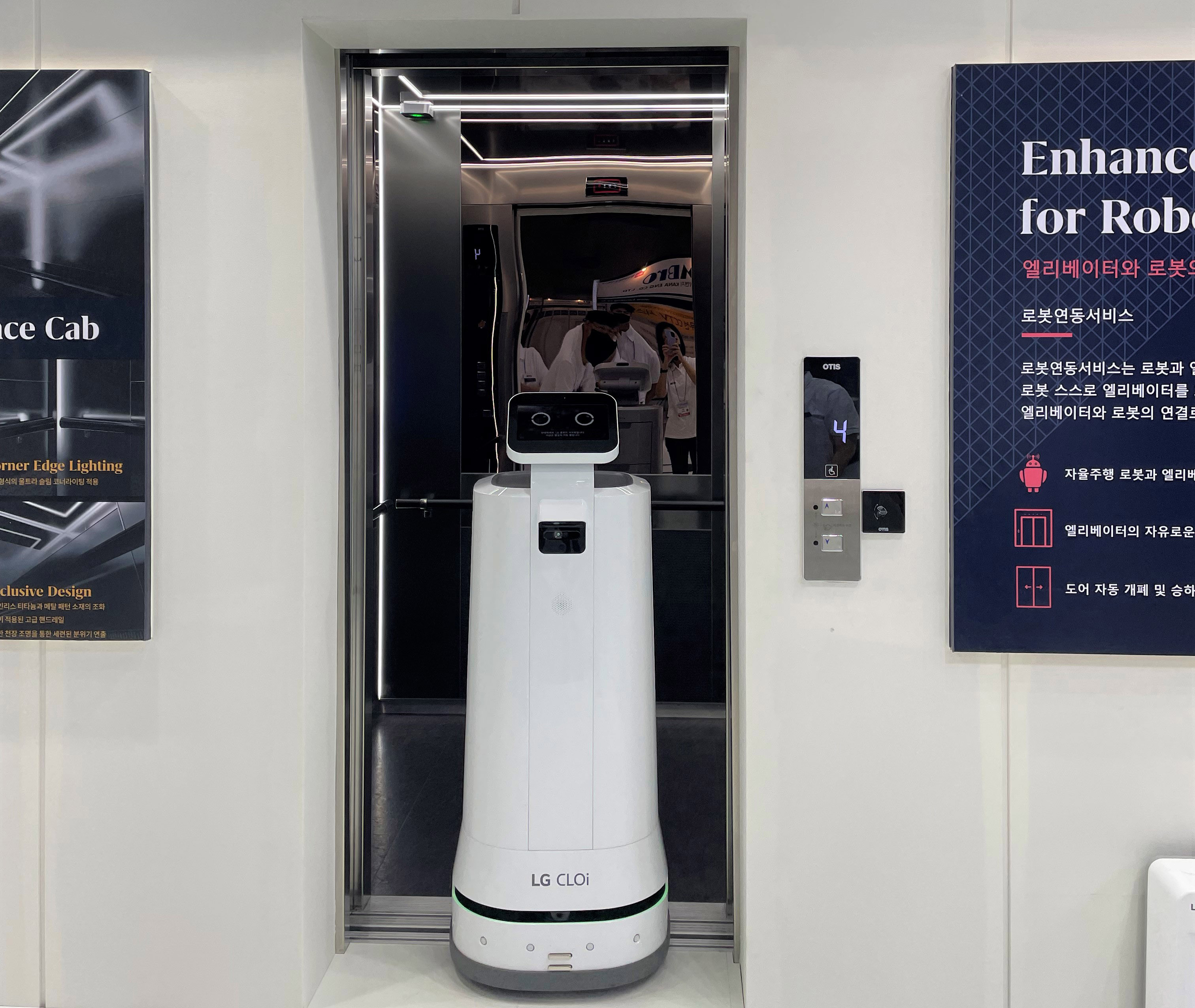
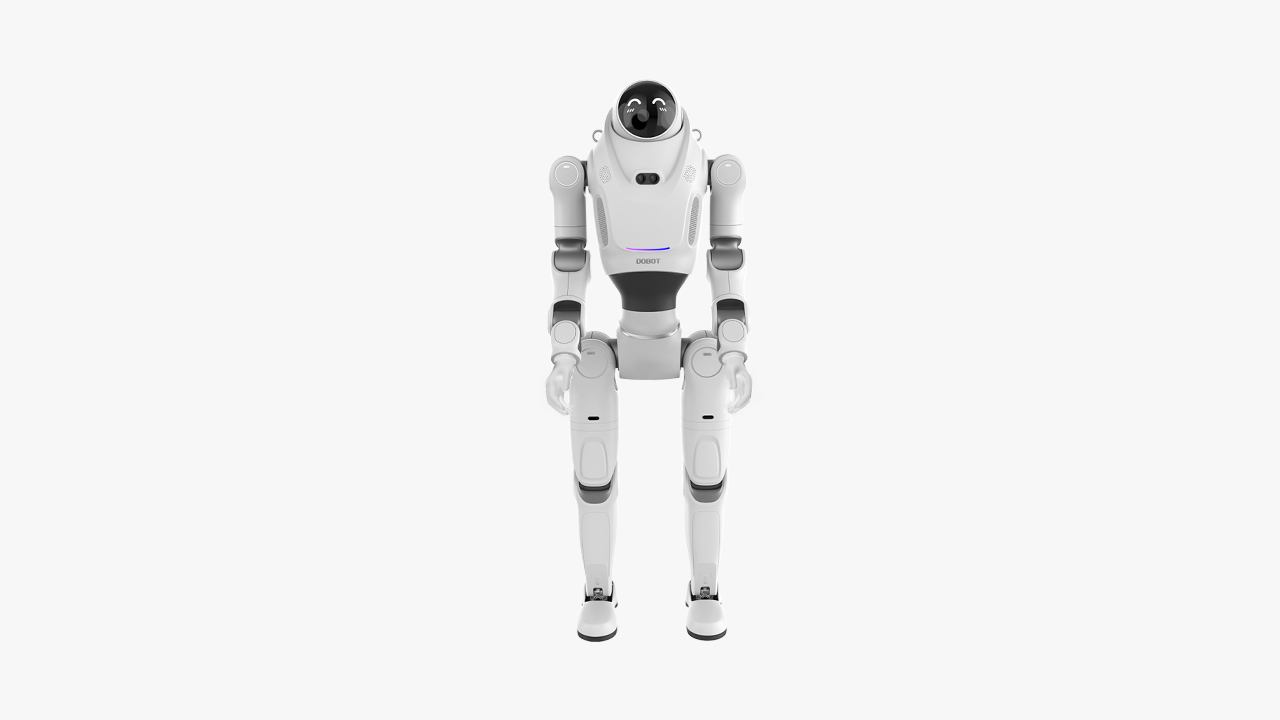
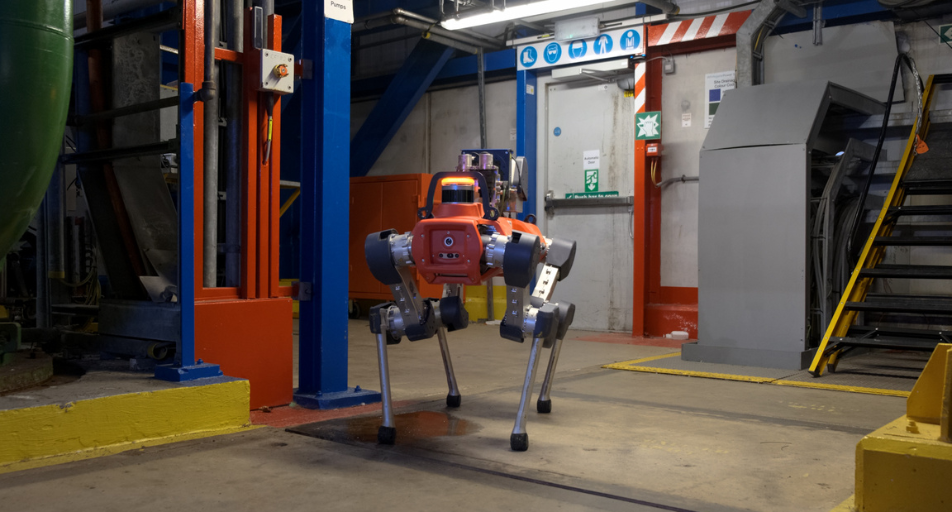
🤖 14. Robotics (in AI Context)
What it is:
The integration of AI into machines that interact with the physical world.
Example:
- Self-driving cars
- Warehouse robots
- Surgical robots
Think of it as:
🦾 AI with a body
🧭 15. Autonomous Systems
What it is:
Systems that operate without human intervention.
Example:
A drone navigating and delivering packages on its own.
Think of it as:
🚗 Self-driving intelligence
📊 16. Training Data
What it is:
The data used to teach AI models.
Example:
Books, websites, images, and videos.
Think of it as:
📚 What shapes the AI’s knowledge
⚠️ 17. Bias (in AI)
What it is:
When AI reflects unfair patterns from its training data.
Example:
AI favoring certain demographics unintentionally.
Think of it as:
🪞 AI reflecting human imperfections
🧪 18. Multimodal AI
What it is:
AI that can process multiple types of input (text, image, audio, video).
Example:
Uploading an image and asking AI to describe it.
Think of it as:
👀👂 AI that can “see” and “hear”
🧠 Final Mental Model (Easy Way to Remember)
Think of an AI system like a student:
- Training Data = Books they studied
- Tokens = Words they read
- Context Window = What they can remember right now
- Prompt = Your question
- Inference = Their answer
- Hallucination = When they bluff 😅
- RAG = When they check notes before answering
- Agents = When they start doing tasks on their own
🚀 Why This Matters
Understanding these terms helps you:
- Communicate better with developers and AI teams
- Make smarter decisions about AI tools
- Stay ahead in a rapidly evolving tech landscape
If you’re working in tech, business, or even governance (especially with digital transformation initiatives), this vocabulary is quickly becoming essential.