Weekly Technology Wrap-Up: The Data Collection Bottleneck
The technological focus of the robotics industry has pivoted from hardware design to data acquisition. With the emergence of dedicated physical artificial intelligence data service platforms like Maniformer and new embodied integrated development environments, the sector is acknowledging that high-quality, real-world human demonstration data is the ultimate constraint on autonomous capability.
The technological focus of the robotics industry has pivoted from hardware design to data acquisition. With the emergence of dedicated physical artificial intelligence data service platforms like Maniformer and new embodied integrated development environments, the sector is acknowledging that high-quality, real-world human demonstration data is the ultimate constraint on autonomous capability.
The robotics industry has spent the last decade relying on simulation to train autonomous systems, operating under the assumption that virtual environments could eventually replicate the complexity of the physical world. The first week of August 2026 marked the definitive collapse of that assumption for complex manipulation tasks. The structural observation is undeniable: simulated data tops out, particularly in unstructured environments like retail and domestic spaces. The new technological bottleneck is not the reasoning model or the physical actuator; it is the acquisition of high-quality, permissioned, real-world interaction data.
This shift was materialized in Shanghai, where a company named Maniformer began operating staffed data collection operations inside active convenience stores and supermarkets. Maniformer functions as a physical artificial intelligence data service platform, capturing time-synchronized, multimodal data of human workers performing tasks such as stocking shelves, facing products, and interacting with customers. The workers are instrumented to record their exact kinetic movements, visual inputs, and tactile feedback as they navigate the messy, unpredictable environment of a live retail floor.
The technical translator understands that this represents a fundamental change in how robotic intelligence is built. Instead of attempting to program the physics of a plastic bag or the friction of a glass bottle into a simulation engine, companies are simply recording humans interacting with those objects in reality. This approach bypasses the sim-to-real gap entirely, feeding the foundation models with the ground truth of physical interaction. The strategic advantage in the robotics sector is no longer held by the company with the best simulation engine; it is held by the company that controls the most comprehensive and useful real-world data loops.
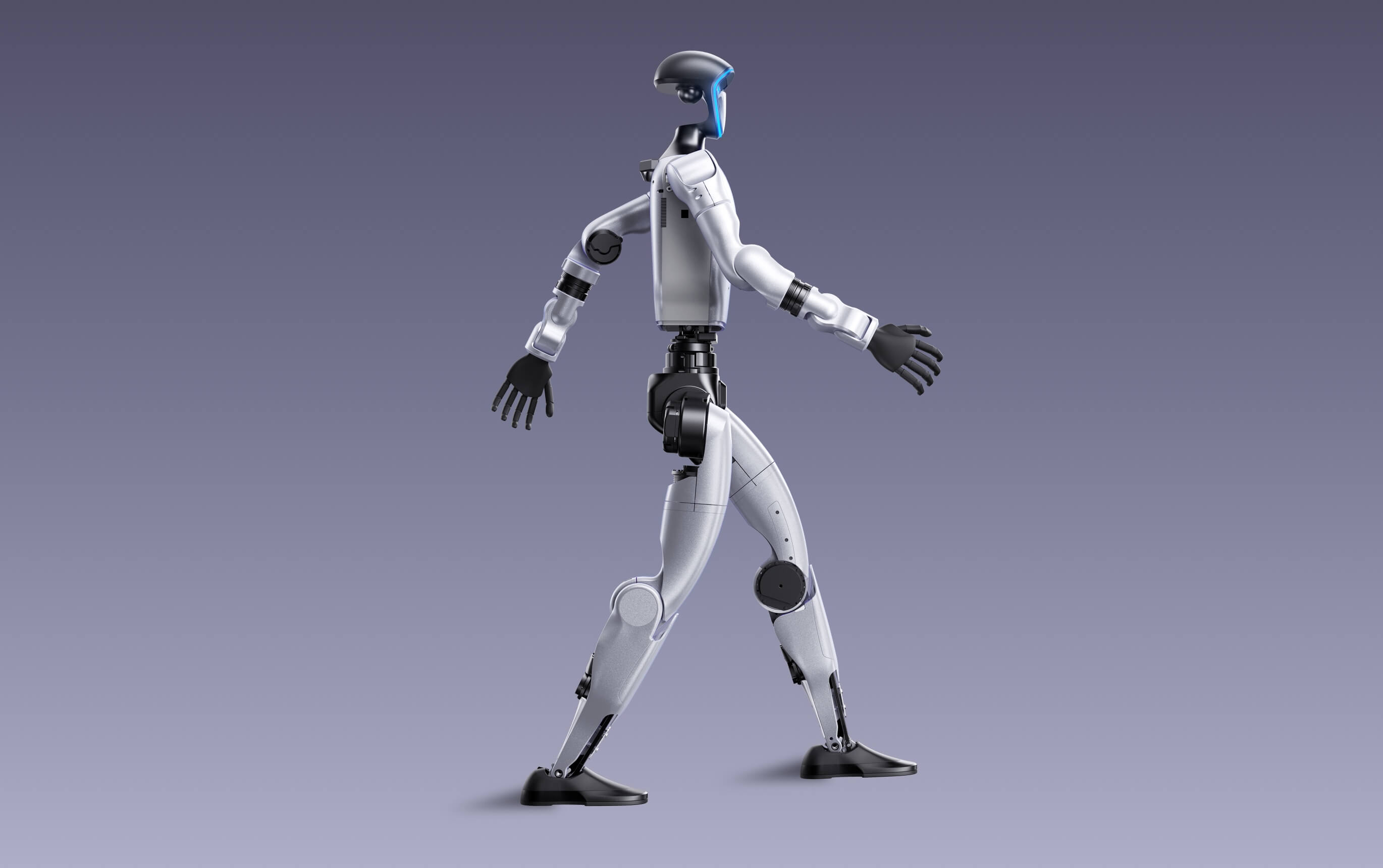
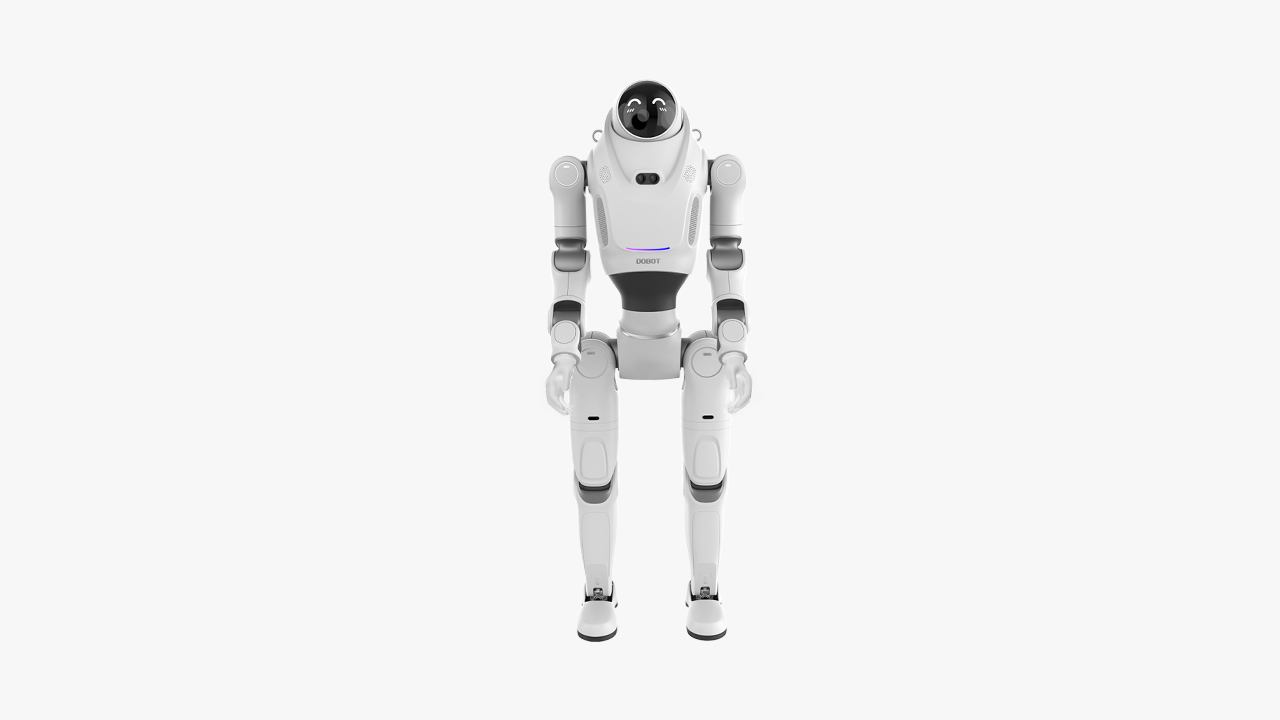
As the focus shifts to data acquisition, the infrastructure required to process and deploy that data is rapidly maturing. In Beijing, Acceleration Evolution, operating under the brand Booster, announced the shipment of more than 1,000 of its K1 humanoid robots, primarily to university campuses. Crucially, the company simultaneously launched Booster Studio, an all-in-one integrated development environment specifically designed for embodied artificial intelligence.
Booster Studio represents an attempt to standardize the software workflow for robotics, providing developers with a unified toolchain for data processing, model training, and hardware deployment. The lack of standardized development environments has historically forced robotics companies to build bespoke software stacks for every new hardware platform, creating massive friction in the development cycle. By providing a comprehensive integrated development environment, Booster is attempting to lower the barrier to entry for software engineers, enabling them to build applications for physical robots with the same ease they currently build mobile applications.
This standardization of the software layer is being matched by a specialization of the hardware components. On August 7, GigaDevice introduced two new microcontrollers explicitly tailored for humanoids and robot dogs. These chips are designed to provide industrial-grade safety, low power consumption, and precise timing control for complex actuation systems. GigaDevice projects that the global market will require more than 10 million of these specialized microcontroller units by 2026, noting that a single humanoid robot typically requires approximately 60 chips to manage its various joints and sensors.
The specialization of the hardware stack is extending beyond the robot itself and into the compute infrastructure that supports it. In a development that illustrates the extreme computational demands of physical artificial intelligence, SpaceX announced an exclusive partnership with NVIDIA to develop the Starmind AI1 satellite. This spacecraft is designed to process artificial intelligence workloads directly in low Earth orbit, utilizing a specialized NVIDIA module to deliver massive compute performance without the latency inherent in transmitting data back to terrestrial data centers.
While orbital compute may seem disconnected from terrestrial robotics, it solves a critical problem for autonomous systems operating in remote or contested environments. Robots deployed in agriculture, mining, or defense applications often lack the reliable, high-bandwidth connectivity required to offload complex reasoning tasks to cloud servers. By positioning the compute infrastructure in orbit, SpaceX and NVIDIA are attempting to create a ubiquitous, low-latency cognitive layer that can support autonomous operations anywhere on the planet.
The convergence of real-world data collection, standardized development environments, specialized microcontrollers, and orbital compute infrastructure indicates that the robotics industry is finally building the foundational layers required for scale. The era of the bespoke, handcrafted robotic prototype is ending. It is being replaced by an industrialized technology stack where data is harvested like a raw material, processed through standardized software pipelines, and executed by commoditized hardware components.
The speed of this industrialization is accelerating because the layers are reinforcing each other. Better data collection produces better foundation models, which demand more specialized hardware, which requires more standardized development tools, which in turn enables faster data collection. This virtuous cycle explains why the pace of progress in physical artificial intelligence has accelerated dramatically in 2026 compared to the preceding years. The individual components have existed for some time; what is new is the integration of these components into a coherent, self-reinforcing technology stack that can be deployed at industrial scale.
The data infrastructure being built by companies like Maniformer feeds directly into the foundation models that will ultimately govern autonomous systems. This week, Google confirmed that Gemini Robotics ER 2 is its most capable embodied reasoning model to date, with Yaskawa deploying it in industrial robots. Simultaneously, NVIDIA released Alpamayo 2 Super under a permissive open commercial license, delivering frontier-scale autonomous driving reasoning that ranks first on the LingoQA benchmark among nearly 40 evaluated models.
The convergence of these releases indicates that the foundation model layer for physical artificial intelligence is maturing rapidly. The competition is no longer between a handful of research labs producing proof-of-concept demonstrations; it is between production-ready models being deployed in real industrial environments. The open licensing of NVIDIA's model is particularly significant, as it allows any hardware manufacturer to integrate frontier reasoning capabilities without paying a per-unit licensing fee. This commoditizes the cognitive layer and shifts the competitive advantage back toward the data collection and hardware integration layers.
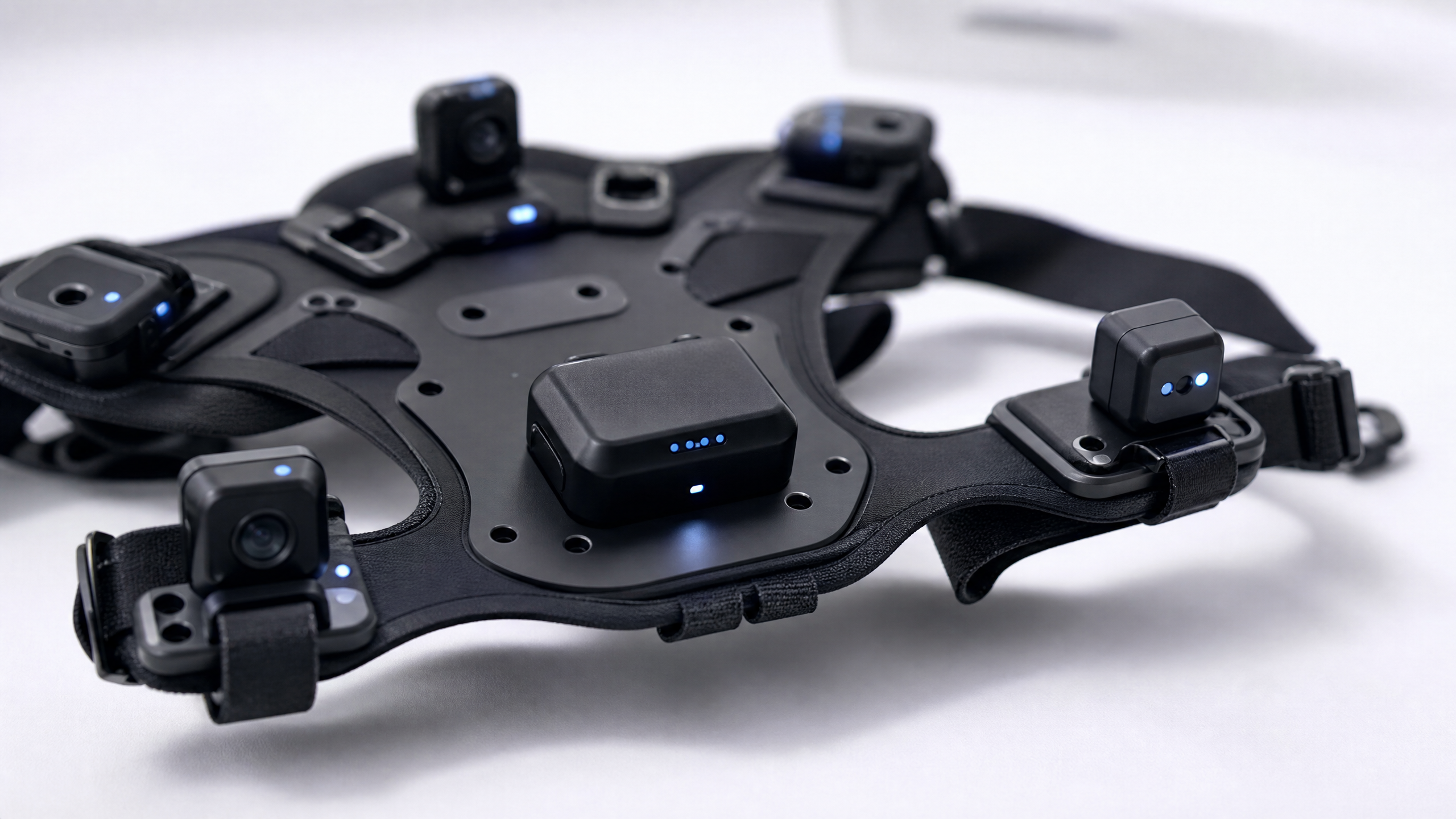
For the technical translator, the implication is clear: the value chain of physical artificial intelligence is inverting. The foundation models are becoming freely available, the hardware is becoming commoditized, and the scarce resource is the high-quality, domain-specific data that bridges the two. The companies that control the data pipelines, whether through instrumented human workers in Shanghai supermarkets or through wearable sensor rigs at academic conferences, will capture the majority of the economic value created by the autonomous systems that consume their data.
The reality of this transition is visible not in a pristine laboratory, but in the narrow aisles of a Shanghai supermarket. A human worker, wearing a sensor rig that tracks every micro-movement of their hands and eyes, reaches out to align a row of plastic bottles on a shelf. The data flows silently into a server, capturing the subtle physics of friction and weight, digitizing the human intuition required to perform a mundane task, and feeding the machine that will eventually take their place.