Weekly Exhibitions Wrap-Up: The Global Stress Test
The first week of August 2026 served as a synchronized global stress test for embodied artificial intelligence, with major convenings in Las Vegas, Beijing, Tsukuba, and Malmo evaluating different layers of the technology stack. The simultaneous focus on enterprise deployment, autonomous competition, data collection, and algorithmic efficiency indicates that the ecosystem has moved beyond localized research into coordinated global commercialization.

The first week of August 2026 served as a synchronized global stress test for embodied artificial intelligence, with major convenings in Las Vegas, Beijing, Tsukuba, and Malmo evaluating different layers of the technology stack. The simultaneous focus on enterprise deployment, autonomous competition, data collection, and algorithmic efficiency indicates that the ecosystem has moved beyond localized research into coordinated global commercialization.
The AI4 conference in Las Vegas, which concluded on August 6, functioned as the commercial clearinghouse for the North American robotics sector. With 12,000 attendees and nearly 400 exhibitors showcasing live demonstrations, the event marked a decisive shift in the artificial intelligence narrative. For the past three years, the discourse has been dominated by generative software and large language models. In Las Vegas, the consensus among enterprise buyers and technology vendors was that 2026 is the year of the robot. The focus has migrated from generating text on a screen to generating physical action on a factory floor.
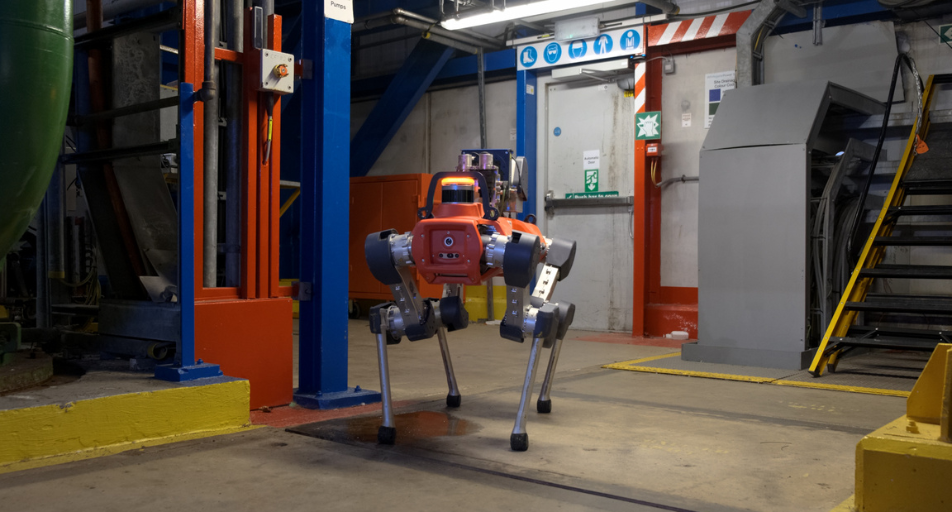
For the supply chain operator, the significance of AI4 was not the novelty of the hardware, but the maturity of the integration conversations. Companies like Agility Robotics utilized the venue to demonstrate the enterprise readiness of their platforms, moving past controlled laboratory videos to discuss service level agreements, maintenance schedules, and facility integration. The exhibition floor served as a physical due diligence environment, where procurement teams could evaluate the durability of the actuation systems and the responsiveness of the control software under the chaotic conditions of a crowded convention center. The ability to survive the exhibition floor is now the minimum viable requirement for entering a commercial pilot program.
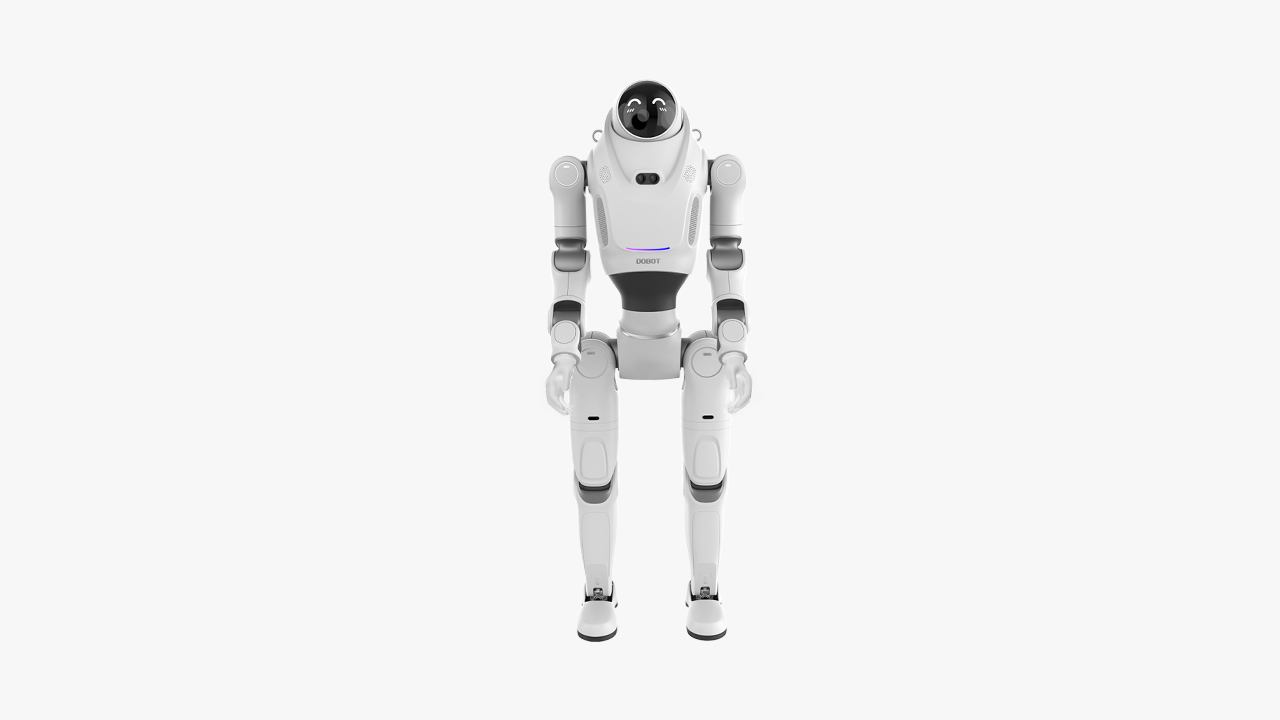
This commercial focus in North America was mirrored by an aggressive technical stress test in Asia. While Las Vegas hosted the enterprise buyers, Beijing hosted the engineering talent pipeline. The CRAIC national finals for humanoid robots brought 213 university teams and 350 machines into a single venue for the first full-size competition conducted entirely without remote control. The transition from teleoperated demonstrations to true autonomy represents a critical threshold for the Chinese robotics ecosystem.
The Beijing competition forced the hardware to rely entirely on on-board processing and local reasoning models to complete industrial tasks and navigate language-driven interactions. For the global supply chain, this event is a leading indicator of where the technical bottlenecks remain. When 350 robots are forced to operate autonomously in a competitive environment, the systemic failures become immediately apparent. The competition highlighted the fragility of current sensor fusion techniques and the latency issues inherent in translating language model outputs into physical actuation.
However, the CRAIC finals also serve a strategic national purpose. By standardizing the competition around industrial tasks, the Chinese government is aligning its academic research directly with the needs of its manufacturing base. The students competing in Beijing are not building speculative research projects; they are building the control architectures that will be deployed in automotive plants and electronics factories within the next 24 months. The supply chain operator must view this event not as a student competition, but as the proving ground for the next generation of industrial automation software.
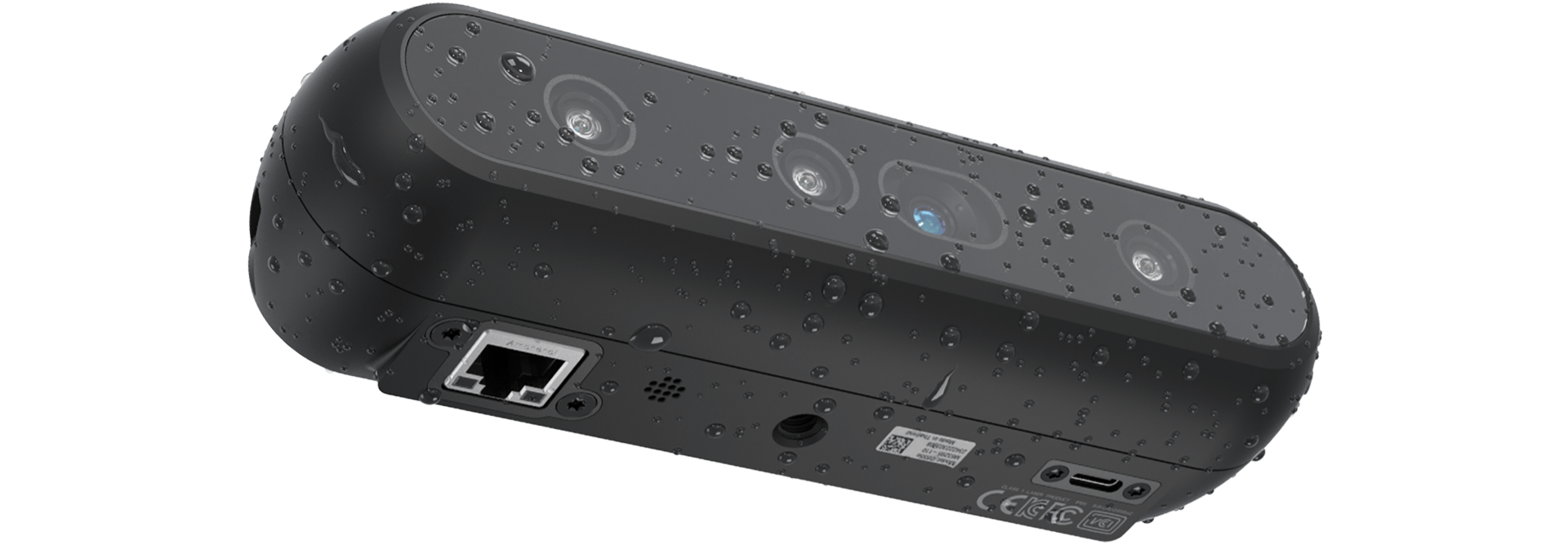
The challenge of training these autonomous systems was the primary focus at ROSCon JP 2026 in Tsukuba, Japan. At this developer-focused convening, the emphasis shifted from the robots themselves to the infrastructure required to teach them. Orbbec introduced a robot-free data collection platform, utilizing wearable sensor rigs to capture human demonstrations from a first-person perspective. This approach acknowledges a fundamental reality of physical artificial intelligence: the most efficient way to generate high-quality training data is not to use a clumsy robot, but to instrument a human expert performing the task perfectly.
The data collection strategies showcased in Japan feed directly into the algorithmic research presented at the European Conference on Computer Vision, known as ECCV, in Malmo, Sweden. The European ecosystem has largely ceded the hardware manufacturing race to Asia and the foundation model race to the United States, focusing instead on algorithmic efficiency and specialized industrial applications. At ECCV, researchers from NAVER Labs Europe presented a methodology for achieving high-speed robot navigation using a single scalar extracted from a frozen, pre-trained Vision Transformer.
This research addresses a critical commercial friction point: the cost of deployment. Currently, deploying a mobile robot in a new facility requires extensive mapping, environment-specific retraining, and significant computational overhead. The European approach seeks to eliminate this retraining requirement, allowing a robot to navigate a novel environment using a generalized understanding of space derived from a pre-trained model. If successful at commercial scale, this technique would dramatically reduce the integration time and the computational cost of deploying autonomous systems across multiple facilities.
The synchronized global testing of physical artificial intelligence is occurring against the backdrop of a rapidly fragmenting regulatory environment. The United States Federal Communications Commission's expansion of its Covered List to ban foreign-made mobile robots weighing more than two kilograms has introduced a new variable into the exhibition calculus. Companies that demonstrate their hardware at events in Las Vegas must now also demonstrate that their supply chain complies with the new national security requirements. For Chinese manufacturers, this means that the American exhibition circuit is no longer a viable route to the North American market. Their focus will shift entirely to events in Asia, Europe, and the Middle East.
This regulatory fragmentation will reshape the exhibition calendar within the next twelve months. Events in allied nations will increasingly serve as neutral ground where buyers from restricted markets can evaluate hardware they cannot directly import. The exhibition circuit is no longer just a commercial marketplace; it is a geopolitical arena where the boundaries of the accessible supply chain are publicly negotiated.
The synchronized events in Las Vegas, Beijing, Tsukuba, and Malmo illustrate the distributed nature of the modern robotics ecosystem. No single region controls the entire stack. The United States is driving the enterprise commercialization and the foundation models; China is driving the hardware manufacturing and the autonomous stress testing; Japan is driving the data collection and the precision components; and Europe is driving the algorithmic efficiency. The supply chain operator must integrate these disparate geographic strengths to build a viable commercial product, but the regulatory boundaries now determine which combinations are permissible.
The next major test of this fragmented integration will occur in late August at the World Robot Conference in Beijing, where the global ecosystem will converge to evaluate production yields and supply chain maturity. The companies that can demonstrate compliance with multiple regulatory regimes while maintaining competitive pricing will secure the contracts. Those that cannot will find their addressable market shrinking with each new executive order.
The exhibition circuit of August 2026 has revealed that the robotics industry is no longer a unified global market. It is a collection of regional ecosystems, each optimizing for different constraints, connected by a shrinking set of permissible trade relationships. The supply chain operator who can navigate this fragmented landscape, sourcing components from compliant suppliers, demonstrating at the right events, and certifying for multiple regulatory frameworks, will capture the premium that complexity creates. The era of the single global supply chain for robotics is over; the era of the geopolitically aware integrator has begun.